


Politics
Senedd criticises ‘nowhere near acceptable’ pace of cladding repairs


DEVELOPERS have fully fixed only four out of 163 at-risk buildings in Wales more than eight years on from the Grenfell disaster, which claimed the lives of 72 people.
The warning came as the Senedd debated a building safety bill which excludes powers to enforce legally binding deadlines on developers to finish the work.
Labour’s John Griffiths chairs the Senedd’s housing committee which warned progress on remediation “has been far too slow and this should not be allowed to continue”.
Urging ministers to accelerate progress as the bill cleared the first hurdle in the Senedd, Mr Griffiths called for changes to include legally enforceable deadlines and penalties.
He told Senedd Members: “It cannot be right that residents are left to continue the difficult battle to resolve safety issues through no fault of their own.”

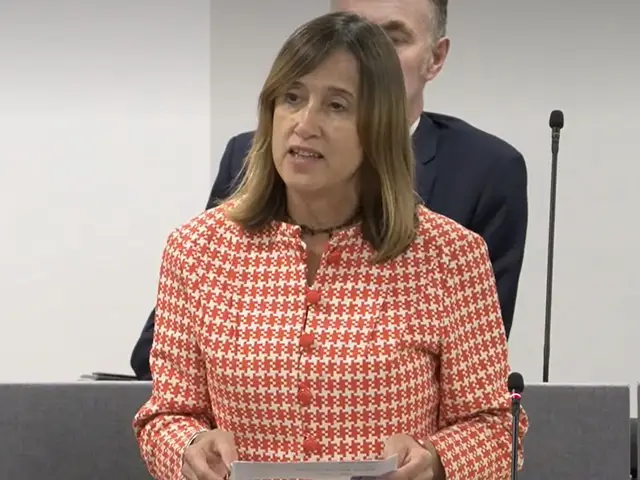
Jane Dodds, the Liberal Democrats’ leader in Wales, warned innocent leaseholders remain trapped in homes they cannot sell and faced with costs they cannot bear.
She said: “We’ve got 163 buildings that developers are responsible for remediating. And then we hear that only four of those buildings have been completed. Four out of 163.
“The Welsh Government has stated remediation won’t cost leaseholders but it already is. It’s costing them their mental health. It’s costing them their emotional wellbeing.”
She added: “The commitment by developers to at least start works by the end of 2026 is not legally binding. It’s dependent on developer goodwill. And where has that goodwill gotten us? Well, four completed buildings out of 163.”

Ms Dodds stressed it is “absolutely vital” that leaseholders and tenants are not made to carry the costs of the new building safety system for Wales proposed under the bill.
She pleaded with ministers: “Give this legislation the teeth it needs to protect people right now and hold developers accountable. Because if we don’t, we could be back here in another eight years or, perish the thought, thinking that there could be another Grenfell.”
Plaid Cymru’s Mabon ap Gwynfor echoed her concerns, saying: “This pace is nowhere near acceptable. Residents have already waited too long.”

Rhys ab Owen, an independent, pointed to the plight of constituents living only a stone’s throw away from the Senedd who have lived in fear for nearly nine years.
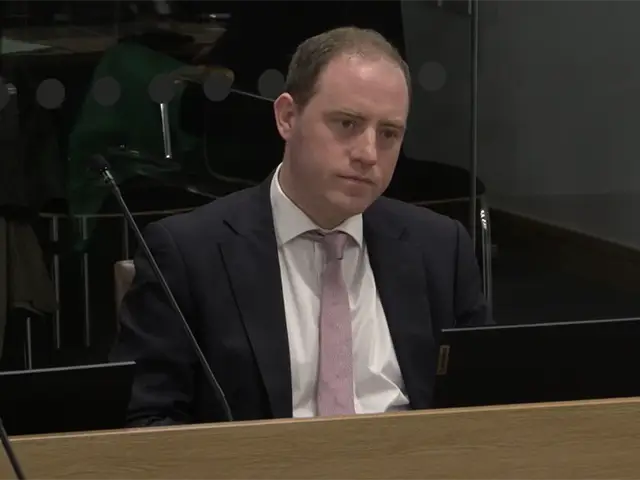
He criticised an overreliance on future regulations and warned a lack of clear costings meant politicians were effectively being asked to vote for a “blank cheque”.
Mr ab Owen called for a cap on costs for leaseholders similar to that in the 2022 Act across the border, arguing: “English victims should not be enjoying better protection.”
Joel James, the Conservatives’ shadow housing secretary, warned the new building safety regime risks failing before it starts due to a lack of trained inspectors.
He told the Senedd: “The bill can look good on paper but it won’t amount to much if we don’t have trained, capable people to carry out the inspections and the enforcement.”
Mr James also expressed concerns that piling “complexity” onto thousands of lower-risk, category three buildings – those under 11 metres – could stifle housing supply.

Meanwhile, Mike Hedges, who chairs the Senedd’s legislation committee, criticised the “sheer extent” of powers being handed to ministers rather than set out in the bill.
He warned these ‘Henry VIII powers’ allow the Welsh Government to rewrite laws without full scrutiny, placing the “balance of power inappropriately in favour of the executive”.
Jayne Bryant, Wales’ housing secretary, acknowledged leaseholders’ frustrations about the pace of remediation but she insisted the bill was not the right place to fix historic defects.

She said: “I must be clear: amending this bill would not deliver the programme more quickly.” However, the minister pledged to “continue to identify ways of unblocking barriers and speeding up the pace of remediation”.
Ms Bryant rejected calls to exempt category three buildings from the rules, arguing evidence shows they have higher rates of fire casualties than purpose-built blocks. “Watering down or dropping the requirement for these buildings would be perverse,” she said.
She told the Senedd: “The Grenfell Tower tragedy is a poignant and devastating reminder of the necessity of getting building safety right. Sadly, recent events in Hong Kong have served to underline the potential terrible results of external fire spread.”
Following Tuesday’s (December 9) stage-one debate, Senedd Members supported the general principles of the bill which now moves onto the amending stages.



THE UK DEPUTY Prime Minister Angela Rayner visited Cardiff on Friday (Mar 13) alongside Justice Secretary David Lammy as part of a visit focused on community safety, probation services and cooperation between the UK and Welsh governments.
During the visit, the Deputy Prime Minister travelled to the Dusty Forge community hub in Ely, where she met members of the public involved in local community projects.
The centre provides a base for a range of services aimed at strengthening community ties and helping people rebuild their lives. Rayner also met staff from the Probation Service who work from the hub, discussing their role in supporting offenders back into society and helping reduce reoffending.
While at the centre, the Deputy Prime Minister spoke with local campaigner Donna Hurley, often referred to locally as the “Queen of Ely”. Their conversation focused on the importance of community cohesion and the role community hubs can play in supporting people leaving prison to turn their backs on crime.
Following the visit to Ely, Rayner travelled to the Senedd in Cardiff Bay where she was given a tour of the Welsh Parliament building.

She later held talks with Huw Irranca-Davies MS, the Deputy First Minister of Wales.
The meeting centred on how the governments in London and Cardiff can work together more closely to improve public services and create a more effective and fair justice system.
Discussions also touched on cooperation around probation services and youth justice, areas where responsibilities between the UK and Welsh governments intersect.
The visit forms part of ongoing efforts to strengthen collaboration between the two governments on issues affecting communities across Wales.



LEGAL action against a landowner, who repeatedly failed to comply with an enforcement notice served back in 2023, has been backed by Pembrokeshire’s national park.
Members of Pembrokeshire Coast National Park’s March development management committee meeting were asked to back delegated authority for prosecution proceedings in the magistrates’ court for failure to comply with steps required to be taken by an enforcement notice on land to the south of Parc Yr Eglwys, Brynhenllan, Dinas Cross.
A report for the committee said that, in May 2023, the park received a complaint that a green field in the open countryside had been stripped of its vegetation and turned into a mobile home park by the new landowners.
Following a site inspection, a planning contravention notice was served in relation to the removal of hedgebanks/hedgerows, widening of the existing access, alterations to ground levels, construction of a track and the siting of a storage container.
After that, a 2024 retrospective planning application was received by the park seeking retention of the hardstanding area, siting of storage container and additional landscape works, which was refused that May.
“As no voluntary steps were taken to remedy the breach of planning control and no appeal made against the refusal of planning permission, the Authority considered it expedient to issue and serve an Enforcement Notice as the development and use of the land resulted in an unnecessary incursion into the rural countryside which causes a significant visual intrusion to the detriment of the special qualities of the National Park,” the report said.
An enforcement notice was service in January 2025, but, the following month, the landowner lodged an appeal with Planning & Environment Decisions Wales, which was dismissed that June; the enforcement notice taking effect.
A further application, seeking permission for a small-scale seasonal campsite on the land was received in June 2025, subsequently refused that October; officers confirming to the landowner the enforcement notice remained in effect, running through to January 3 of this year.
A site inspection undertaken by officers on January 6 confirmed the breach of planning control continued, the report added.

This was followed by a further planning application seeking to regularise the development on January 21.
That application was refused on March 9.
The report concluded: “The landowner has had multiple opportunities to regularise the development through both retrospective applications and an appeal against the enforcement notice. Those processes have not resulted in permission being granted nor compliance being achieved.
“The continued failure to comply with the enforcement notice undermines the integrity of the planning system and public confidence in its proper operation.
“It also results in an unnecessary incursion into the rural countryside which causes a significant visual intrusion to the detriment of the special qualities of the National Park.
“Officers therefore consider it expedient and in the public interest to pursue prosecution proceedings should the breach remain unresolved.”
Members backed the recommendation.

PLANS for a B&Q ‘click and collect’ pod at a Pembrokeshire supermarket, to save customers having a make a round trip of nearly 60 miles to the nearest home improvement store, have been approved.
In an application to Pembrokeshire County Council, B&Q Ltd, through agent Pyrke Planning, sought permission to install a modular ‘Click and Collect’ pod, with associated livery and signage, on the access road to Haverfordwest’s Portfield Road Tesco Extra superstore.
The application included a related scheme for signage for the proposal.
A supporting statement said: “This planning application seeks permission for the installation of a Click and Collect pod to be operated by B&Q Limited within the car park of the Tesco Extra store at Portfield Road, Haverfordwest.

“It does not involve any construction but simply the placing of a modular unit within the car park which, together with dedicated collection spaces, will take up 12 parking spaces and be situated within the customer car park.
“B&Q Limited (B&Q) is the UK’s largest home improvement retailer, serving both the general public and tradespeople. It supplies a wide range of DIY, home improvement and garden products, primarily from its stores across the UK but also through its online website.
“The trial of a new fulfilment service – B&Q Collect – in partnership with Tesco, is another step forward in their evolution. It gives customers greater choice over how they collect and return their items and helps make it easier to do their home improvement projects.
“B&Q does not have a store in Haverfordwest, with the nearest outlets being situated in Carmarthen (28 miles), Llanelli (37 miles) and Swansea (46 miles).
“It is consequently proposed to introduce a click and collect option for DIY customers and local tradespeople to allow next day collection of products which it is inconvenient for people to have delivered at home and to remove the need for a minimum c.50-mile plus round trip to one of the established stores.”
No objections to the proposal were raised by Haverfordwest Town Council.
The application, and the related signage scheme, were conditionally approved by county planners.



Sport6 hours ago
France crowned Six Nations champions after extraordinary final-day drama
Ramos penalty in Paris seals title as Ireland fall just short and Wales end losing run FRANCE were crowned 2026...


News10 hours ago
Fishguard linked to allegations in Many Tears Animal Rescue investigation
Claims about puppies arriving through Pembrokeshire port emerge as licensing probe continues FISHGUARD has been named in allegations linked to...


Local Government1 day ago
Investigation confirmed after inspectors visit Many Tears Animal Rescue
Licensing authority declines to comment as police confirm attendance at Carmarthenshire rescue centre AN INVESTIGATION is underway following a visit...


Business2 days ago
Work set to begin on £50m hydrogen plant in Milford Haven
A MAJOR new hydrogen production facility worth around £50 million is expected to begin construction in Milford Haven later this...


Education3 days ago
Manorbier school closure approved while insurance claim still unresolved
Council confirms negotiations with insurer ongoing following 2022 fire PEMBROKESHIRE COUNTY COUNCIL has confirmed that negotiations with its insurer over...


Crime4 days ago
‘Knife attack’ at Spittal property leaves man in hospital
POLICE have arrested a woman following what is being described as a ‘knife attack’ at a property in Spittal on...


Community4 days ago
Pembrokeshire to receive its first banking hub in Pembroke Dock
LINK, the UK’s Cash Access and ATM network, has today announced local people and businesses in Pembroke Dock will benefit from a new banking...


Health5 days ago
Future of Withybush Hospital petition sparks urgent call for Senedd debate
CALLS have been made for an urgent debate in the Senedd over the future of services at Withybush Hospital as...


Sport6 days ago
Sean Bowen set for historic Welsh clash at Cheltenham Gold Cup
PEMBROKESHIRE jockey Sean Bowen could be part of a historic all-Welsh showdown when he lines up in the Cheltenham Gold...


Community6 days ago
Tenby still waiting as Wales hits 50 rural mobile mast upgrades
Seaside town plagued by signal congestion again absent from latest government-backed coverage improvements A NEW milestone in the UK Government’s...
-

 Health2 days ago
Welsh Ambulance Service to host bi-monthly Board meeting
-

 News1 day ago
Rayner and Lammy visit Wales to discuss justice and community safety
-

 Local Government4 days ago
Register now to vote in May’s Senedd election
-

 Crime6 days ago
Former Pembrokeshire Army officer stripped of MBE after fraud conviction
-

 Crime5 days ago
E-bike rider who sped through pedestrian alley sentenced by court
-
Community6 days ago
Tenby still waiting as Wales hits 50 rural mobile mast upgrades
-

 Community6 days ago
Carmarthenshire woman celebrates 100th birthday surrounded by family
-

 Entertainment5 days ago
How the Cheltenham Festival Captivates Racing Fans Every Year