


Health
Welsh NHS leaders hail GP contract deal as “vital step” in strengthening primary care


Agreement secures investment, digital upgrades and better patient pathways
WELSH NHS leaders have welcomed the successful conclusion of the new General Medical Services (GMS) contract for 2025-26 — and key elements of 2026-27 — describing it as a “positive example of social partnership” at a pivotal moment for general practice.
The deal, negotiated between Welsh Government, the Welsh NHS Confederation and GP representatives, sets out new investment and commitments for frontline primary care, including accelerated digital transformation through the NHS Wales App and strengthened support for population-level health management.
Darren Hughes, director of the Welsh NHS Confederation, said the agreement comes at a crucial time for GP services across Wales.
He said: “NHS leaders welcome this agreement as a positive example of social partnership in action. We also welcome the commitment to accelerating digital transformation for patients through the NHS Wales App and the measures agreed in the contract to enable enhanced population health management, such as diabetes management.”
Mr Hughes added that GPs and their multidisciplinary teams remain “the front door to the NHS,” and stressed that investment in general practice is essential if Wales is to treat more people closer to home.

“Evidence shows investing in primary and community care reduces demand on hospitals and emergency care and delivers returns of £14 for every £1 invested. To enable this shift ‘upstream’ from hospital-centred care to integrated services in the community, we must develop care pathways and joint performance measures that address the full needs of individuals,” he said.
Background: Why the GP contract matters
General practice forms the foundation of the Welsh NHS, handling millions of patient contacts every year. According to the latest official figures for 2023-24:
- Over 29 million calls were received by GP practices
- 18 million appointments took place
- 11 million of these were face-to-face
- More than 200,000 home visits were carried out
- 78 million prescriptions were dispensed
- Over 14,000 medication reviews took place
Demand has continued to rise while GP numbers have come under sustained pressure, particularly in rural areas such as Pembrokeshire, Ceredigion and Powys, where recruitment remains a long-running challenge. Practices in West Wales have repeatedly reported difficulties filling vacancies and increasing reliance on multidisciplinary teams, including nurse practitioners, pharmacists and physiotherapists.
The new GMS contract is therefore seen as a key mechanism for stabilising the sector, supporting digital access, improving chronic disease management, and helping to deliver the Welsh Government’s community-by-design programme, which aims to shift care away from hospitals and into community settings.

A recent survey by the Welsh NHS Confederation found that 74 per cent of NHS leaders support moving resources from acute hospital services into primary care, community-based services, mental health and social care, reflecting growing consensus around early intervention and prevention.
What comes next
The Welsh Government is expected to outline further detail in the coming months on how investment will be delivered at practice level, including support for digital tools, workforce development and shared performance measures with health boards.
With winter pressures mounting and hospitals facing record demand, NHS leaders say the success of the new GP contract will be central to improving access, reducing waiting times and ensuring patients in communities such as Pembrokeshire, Carmarthenshire and Ceredigion can receive timely, local care before conditions escalate.

The Welsh NHS Confederation represents all seven local health boards, the three NHS trusts, Health Education and Improvement Wales, and Digital Health and Care Wales.


THE WELSH AMBULANCE SERVICE is preparing to host its bi-monthly Board meeting – and the public are invited.
Join the meeting on Thursday 26 March via Microsoft Teams to hear senior leaders cover a full agenda, including approval of the Integrated Medium-Term Plan for 2026-29, which outlines what the organisation will prioritise and deliver, how it will use its resources and how it will continue to improve care for the people of Wales over the next three years.
Board members will approve the initial revenue budget for the year ahead and receive an update on current financial performance.
The Board will also hear from Mr Clarke from Cwmbran, who describes an experience of trying to access help via 999 for his late father who was terminally ill.
There will also be an opportunity to pose a question to the Board.
Chair Colin Dennis said: “Board meetings give you the opportunity to really get to know our ambulance service, with a clear view of how important decisions are shaped and the processes behind them.
“They also create a forum to hear directly about ongoing work, explore how we can strengthen support for the Trust’s staff and patients, and connect with the people responsible for shaping those decisions.”
Click here to watch the Board meeting on Thursday 26 March 2026 from 9.30am.
This link will be active from 10 minutes before the meeting starts.
To pre-submit a question, please email [email protected] by no later than Wednesday 25 March 2026.An agenda will be available on the Trust’s website in the days prior to the meeting.

PHARMACIES across Wales carried out more than 600,000 clinical consultations for a wide range of common health issues over the last twelve months, according to the latest community pharmacy services statistics.
Almost 346,000 people used the Common Ailments Service, which offers free advice and treatment for twenty-seven common conditions and is available in ninety-nine per cent of pharmacies across Wales.
Figures covering April 2024 to March 2025 show that more than 462,000 Common Ailments Service consultations took place during the period – the highest number ever recorded.
The most frequent reasons people sought help from their local pharmacy included sore throats, hay fever, conjunctivitis and dermatitis.
Pharmacies also carried out more than 53,000 consultations specifically for sore throat treatment, around 33,000 consultations for contraception advice and treatment, and over 121,000 consultations to provide emergency supplies of medicines.
During those emergency consultations pharmacists issued more than 189,000 prescription-only medicines to patients who had run out of medication and were unable to obtain a new prescription in time.
In addition to these consultations, pharmacies across Wales dispensed more than eighty million prescription items over the same twelve-month period.
The Common Ailments Service allows people to receive treatment closer to home while helping free up GP appointments for patients with more complex or urgent medical needs.
Health Secretary Jeremy Miles said: “Community pharmacies play a vital role in providing healthcare across Wales.

“Nearly half a million consultations in a single year shows just how much people value being able to walk into their local pharmacy and get the help they need quickly, without having to wait for a GP appointment.
“We are working to ensure more people can receive convenient care closer to home, and expanding access to these services is a key part of that.
“The right care, in the right place, at the right time — that is what people in Wales want, and what our pharmacies are delivering.”


A NEW report has urged the Welsh Government to work more closely with voluntary organisations to ensure communities are better prepared for future emergencies.
The call comes from the Senedd’s Public Accounts and Public Administration Committee, which examined how lessons from the COVID-19 pandemic have shaped Wales’ current emergency planning.
The report highlights the crucial role played by voluntary groups during the pandemic, particularly in supporting vulnerable people and responding quickly to rising community needs.
Clair Swales, Chief Executive of the Powys Association of Voluntary Organisations (PAVO), welcomed the committee’s findings and its recommendation that government bodies strengthen collaboration with the voluntary sector and commissioning organisations.
The recommendation includes making greater use of long-term funding arrangements to support infrastructure investment and improve the sector’s ability to respond to sudden surges in demand during emergencies.

Giving evidence to the committee last November, Swales warned that continued financial pressures across the sector could weaken its ability to respond effectively in future crises.
She said: “If I was asked to bring the third sector together to respond to an emergency at this moment, I could. However, future involvement may become more challenging as the sector continues to face significant financial and capacity pressures.”
The committee’s report, published on Tuesday (Mar 11), explored how the Welsh Government and public bodies responded to the pandemic and what improvements have been made since.
It also considered findings from Module 1 of the UK COVID-19 Inquiry, which examined resilience and preparedness across the UK.

Swales said the report recognises that the work carried out by voluntary organisations during the pandemic came at a significant cost to the sector.
She added: “Evidence from a number of voluntary organisations shows the sector is facing considerable funding and resource challenges.
“We will continue to work with commissioners and the Powys third sector to maximise opportunities, represent the sector’s voice in policy and investment discussions, and ensure rural communities are considered when funding and commissioning services.”
The report has been submitted to the Welsh Government and will be debated by Members of the Senedd during a plenary session on Wednesday (Mar 18).
Powys Association of Voluntary Organisations is the County Voluntary Council for Powys and operates offices in Newtown and Llandrindod Wells.



Sport8 hours ago
France crowned Six Nations champions after extraordinary final-day drama
Ramos penalty in Paris seals title as Ireland fall just short and Wales end losing run FRANCE were crowned 2026...


News12 hours ago
Fishguard linked to allegations in Many Tears Animal Rescue investigation
Claims about puppies arriving through Pembrokeshire port emerge as licensing probe continues FISHGUARD has been named in allegations linked to...
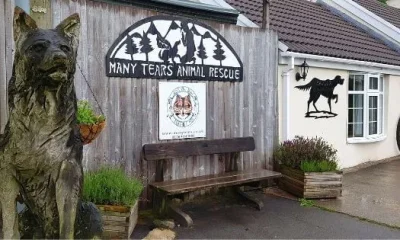

Local Government1 day ago
Investigation confirmed after inspectors visit Many Tears Animal Rescue
Licensing authority declines to comment as police confirm attendance at Carmarthenshire rescue centre AN INVESTIGATION is underway following a visit...


Business2 days ago
Work set to begin on £50m hydrogen plant in Milford Haven
A MAJOR new hydrogen production facility worth around £50 million is expected to begin construction in Milford Haven later this...


Education3 days ago
Manorbier school closure approved while insurance claim still unresolved
Council confirms negotiations with insurer ongoing following 2022 fire PEMBROKESHIRE COUNTY COUNCIL has confirmed that negotiations with its insurer over...


Crime4 days ago
‘Knife attack’ at Spittal property leaves man in hospital
POLICE have arrested a woman following what is being described as a ‘knife attack’ at a property in Spittal on...


Community4 days ago
Pembrokeshire to receive its first banking hub in Pembroke Dock
LINK, the UK’s Cash Access and ATM network, has today announced local people and businesses in Pembroke Dock will benefit from a new banking...


Health6 days ago
Future of Withybush Hospital petition sparks urgent call for Senedd debate
CALLS have been made for an urgent debate in the Senedd over the future of services at Withybush Hospital as...


Sport6 days ago
Sean Bowen set for historic Welsh clash at Cheltenham Gold Cup
PEMBROKESHIRE jockey Sean Bowen could be part of a historic all-Welsh showdown when he lines up in the Cheltenham Gold...


Community6 days ago
Tenby still waiting as Wales hits 50 rural mobile mast upgrades
Seaside town plagued by signal congestion again absent from latest government-backed coverage improvements A NEW milestone in the UK Government’s...
-

 Health2 days ago
Welsh Ambulance Service to host bi-monthly Board meeting
-

 News1 day ago
Rayner and Lammy visit Wales to discuss justice and community safety
-

 Local Government4 days ago
Register now to vote in May’s Senedd election
-

 Crime6 days ago
Former Pembrokeshire Army officer stripped of MBE after fraud conviction
-
Community6 days ago
Tenby still waiting as Wales hits 50 rural mobile mast upgrades
-

 Community6 days ago
Carmarthenshire woman celebrates 100th birthday surrounded by family
-

 Crime5 days ago
E-bike rider who sped through pedestrian alley sentenced by court
-
Sport6 days ago
Sean Bowen set for historic Welsh clash at Cheltenham Gold Cup