


News
Funding opens for Welsh Marine and Fisheries Scheme with up to £1.85m available


UP TO £1.85 million in funding is now available to support Wales’ marine, fisheries and aquaculture sectors through the Welsh Marine and Fisheries Scheme, the Welsh Government has announced.
The scheme is designed to promote sustainable growth across the fisheries and aquaculture industry while helping coastal communities to prosper. The application window opens today (Wednesday, January 7) and will remain open for 12 weeks, closing on March 31.
A wide range of projects can be supported under 11 separate funding categories. Eligible activities include improving aquaculture sites, investing in equipment on vessels to reduce emissions and increase energy efficiency, and securing professional advice on issues such as environmental sustainability, business development and marketing.
Applicants may also seek funding for optional health and safety equipment on board vessels or at land-based sites.
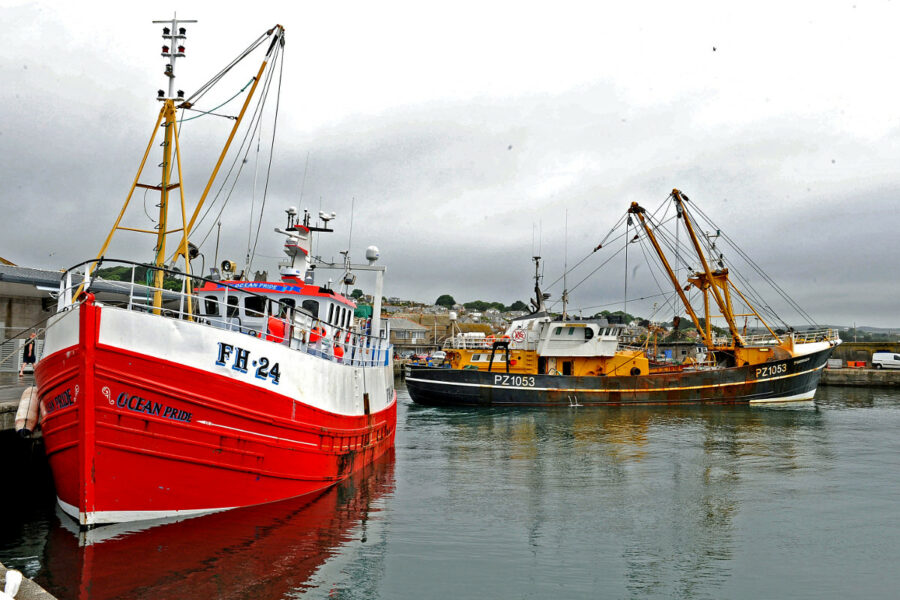
In the previous funding round, grants were awarded for harbour infrastructure improvements, marine research projects, fishers’ health and wellbeing initiatives, and new processing equipment. Smaller items such as ice machines, ice flakers, weighing scales and cool boxes were also funded.

Deputy First Minister with responsibility for Climate Change and Rural Affairs, Huw Irranca-Davies, said the sector played a vital role in Wales’ economy and future food security.
“Our aquaculture, marine and fisheries sector brings many important benefits,” he said. “It provides a low carbon, high-quality protein food source, supports future food security, and delivers high-skilled jobs.
“This scheme is designed to create opportunities within the marine environment, coastal communities and sustainable seafood across the whole supply chain, from production to processing and marketing.
“I would encourage those with an interest to make use of the funding to pursue growth, diversification and innovation.”

Jim Evans MBE, of the Welsh Fishermen’s Association, said the scheme had already proved transformative.
“In the previous round, fishermen and women in Wales were able to access funding with free end-to-end guidance and support provided by the Wales Animateur Pilot,” he said. “The fund has been transformative for individual fishermen, women and seafood businesses throughout Wales.
“There is already significant interest in future rounds, including vessel improvements, non-mandatory safety equipment, adding value, energy efficiencies and health, safety and wellbeing initiatives. I would encourage all fishing, aquaculture and seafood businesses in Wales to contact the Animateurs for support with project and business ideas.”

Applicants must be registered with Rural Payments Wales (RPW) Online, where application and claims processes are managed.
Free, independent support is available through the Welsh Fisheries Animateur Pilot, funded by the Welsh Government in collaboration with the Welsh Fishermen’s Association. Applicants can contact the Fisheries Animateur on 01736 362782, by text on 07864 087119, or by email at [email protected].


THE WELSH GOVERNMENT has called on health boards to improve access to eating disorder treatment and strengthen early intervention services as part of Eating Disorders Awareness Week.
Mental Health and Wellbeing Minister Sarah Murphy said earlier support can have a “significant positive impact” on people living with eating disorders, as she outlined progress made across Wales and future plans to improve services.
The update comes as part of the Welsh Government’s wider Mental Health and Wellbeing Strategy, launched last year, which focuses on prevention, earlier intervention and tackling the wider causes of poor mental health.
The Minister said eating disorders are complex conditions influenced by biological, psychological and social factors, requiring a cross-government approach to prevention and treatment.
Schools also play an important role, with Welsh Government guidance highlighting the need for supportive environments and targeted help for pupils experiencing disordered eating or poor body image. Public Health Wales data shows that as of February 2026, 96% of schools — including all secondary schools — are actively planning to meet wellbeing needs.

The Welsh Government has also promoted its “Seek Help Now” campaign, which highlights that more than 1.25 million people in the UK are affected by eating disorders, yet only around one-third seek formal help. Campaign materials have been shared with healthcare providers, schools and third-sector organisations to encourage earlier support.
Healthcare staff training has also been expanded, with a new foundation-level e-learning course developed by Health Education and Improvement Wales to help professionals identify and respond to eating disorders more effectively.
Ministers say investment has continued in early support services, including more than £110,000 in funding for the BEAT Wales helpline in 2025, helping people access advice while waiting for specialist care.
Across Wales, health boards have expanded services, supported by more than £2 million in funding through NHS performance improvement programmes aimed at improving access, quality and outcomes.
Work is also underway to develop a national early intervention service model based on the FREED approach (First Episode Rapid Early Intervention for Eating Disorders), with flexibility for local needs.
While most patients are treated in the community, the Welsh Government confirmed that eight specialist adult inpatient beds were secured in Wales in 2024 to allow more people to receive care closer to home.
The NHS Joint Commissioning Committee is now exploring options for intensive day treatment services, with modelling work expected to report in the spring.

A research and evidence network has also been established to improve outcomes and ensure services are based on the latest evidence.
Sarah Murphy said she has written to all health boards urging continued leadership focus to reduce waiting times and implement early intervention services once national specifications are finalised.
All health boards have confirmed their commitment to the programme.

A SPECIAL screening of the British documentary Fighters was recently hosted at the Senedd in Cardiff Bay by local MS Samuel Kurtz, in partnership with Great Britain Disability Boxing and Pembroke and Pembroke Dock Amateur Boxing Club.
The powerful film explores themes of disability, identity and resilience through the world of amateur boxing. It follows several participants, including Amelia, a young deaf boxer preparing for her first competitive bout, and Matt Edwards, a lower-limb amputee determined to secure his amateur boxing licence as the first step towards achieving his ambition of turning professional.
The documentary also highlights the wider barriers disabled people can face in both sport and everyday life, while showcasing the positive impact of inclusive opportunities.
Samuel Kurtz MS said: “Sport is a fantastic social mobiliser, and working with Chris to bring this film to Cardiff Bay has been an immense pleasure. Fighters is one of the most inspiring projects I’ve ever been involved in. It shows not only what can be achieved in the ring, but what is possible when barriers are challenged and opportunities are opened up.”
Chris McEwen of Pembroke and Pembroke Dock Amateur Boxing Club — who features in the film — attended the screening alongside supporters of disability sport from across Wales.
The club was named Parasport Club of the Month in 2021 in recognition of its work supporting people with disabilities and continues to run a wide range of inclusive boxing sessions across Pembrokeshire.
Praising his commitment, Mr Kurtz added: “Chris is a passionate advocate for boxing and for our community. He works tirelessly to ensure that opportunities in sport are open to everyone, regardless of ability.”
Chris McEwen said: “Boxing should be accessible to all. This film shows the determination it takes to break down barriers, but it also demonstrates why inclusive clubs matter. Our aim is simple — to ensure that anyone who wants to take part feels welcome and supported.”
The screening brought together campaigners, athletes and community leaders, reinforcing the importance of keeping sport open, inclusive and accessible for everyone.
Photo caption: Samuel Kurtz MS with Chris McEwen, local dignitaries and supporters of Fighters at the Senedd (Pic supplied).
Ministry of Defence
Aberporth fears raised after Russian claims and spy ship incidents off Welsh coast

CONCERNS are being raised in West Wales after a community meeting was announced over claims that Aberporth has previously been identified as a potential Russian military target.
Campaign groups have circulated material stating that the Ceredigion site was included on a list of UK locations referenced by a senior Russian political figure in 2022, prompting calls for discussion about the risks associated with defence-related activity in the area.
Aberporth is home to West Wales Airport and a major unmanned aerial vehicle (UAV) testing range, where defence contractors operate alongside civilian aviation projects. The site has long been linked to UK drone development programmes.

The issue has resurfaced amid wider geopolitical tensions and follows previous incidents in Welsh waters involving suspected Russian military activity.
In November last year, The Pembrokeshire Herald reported that a suspected Russian sonar device had been recovered off the coast near Skomer Island, just months after a Russian intelligence-gathering vessel was monitored operating off the Pembrokeshire coastline. RAF surveillance aircraft and a Royal Navy warship were deployed to track the vessel during that incident.
While there is no evidence of any specific threat to Aberporth, defence analysts have warned more broadly that modern conflicts increasingly involve long-range precision weapons and infrastructure targeting.
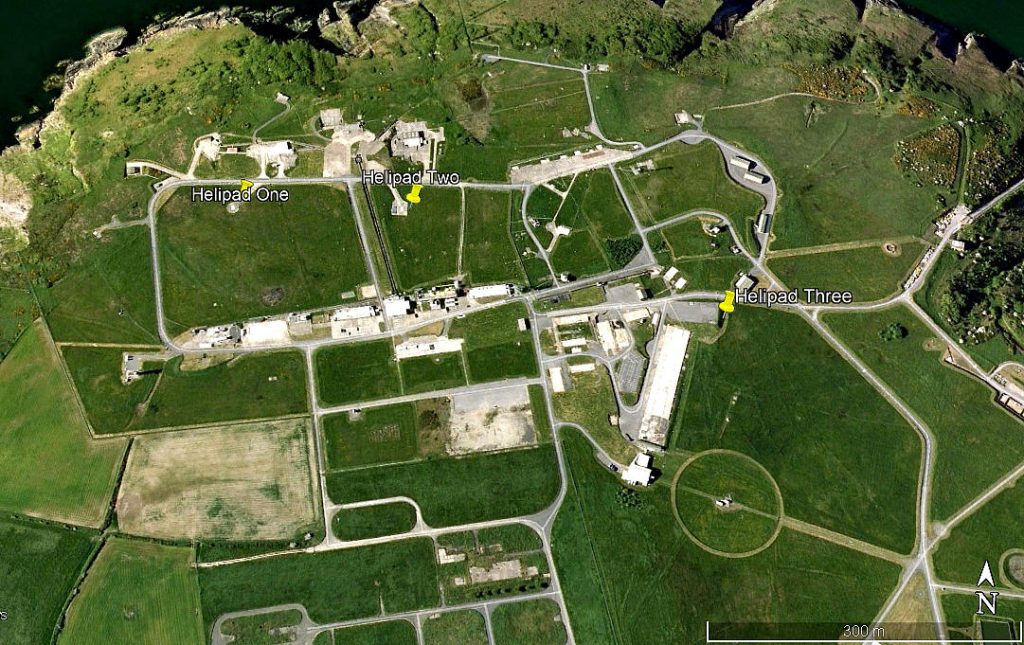
In December 2022, Dmitry Rogozin — a former deputy prime minister of Russia — published a map on social media naming a number of UK defence-related locations in response to British support for Ukraine. Among the sites referenced was Aberporth, due to its links with drone testing and defence contractors.
Security experts note that such statements are often political rhetoric rather than operational military targeting plans.
Nevertheless, the presence of defence-related infrastructure in rural communities can raise concerns locally, particularly when international tensions are high.

Campaigners argue residents should be fully informed about the implications of military-linked development in the region and the potential risks it could bring.
A public meeting organised by campaign groups is scheduled to take place at Aberporth Village Hall on Friday evening.

The Ministry of Defence does not comment on specific security arrangements but has previously stated that the UK maintains robust measures to protect national infrastructure and works closely with NATO allies to monitor threats.
Government defence policy documents also acknowledge that long-range missile threats and hybrid warfare — including intelligence-gathering activity near critical infrastructure — are increasing challenges for Western nations.
The debate comes as defence and security are expected to feature prominently in political discussions ahead of the next UK Strategic Defence Review.




News12 hours ago
Senedd backs assisted dying legislation in historic vote
POLITICIANS in the Senedd have voted in favour of legislation that could allow assisted dying services to be provided through...


Crime17 hours ago
Manchester men deny aggravated burglary after armed raid on dog breeder
Prosecution says machete-armed gang carried out “carefully planned” attack TWO men have gone on trial accused of involvement in an...


News19 hours ago
Labour and Plaid criticised over £1.2m anti-racism ‘metaverse’ project
Figures revealed in Senedd questions as political row intensifies ahead of election THE WELSH GOVERNMENT has come under political pressure...


Business23 hours ago
Local Senedd member hears retailer concerns ahead of election
INDEPENDENT shop owners in Pembrokeshire have warned that rising costs and increasing pressures could threaten the future of small high-street...


Charity2 days ago
Charity launches bid to save Foley House with new community cooperative
A PEMBROKESHIRE charity has launched an ambitious bid to restore Foley House, one of Haverfordwest’s most significant historic buildings, through...


Crime2 days ago
Man who threatened to kill Herald editor given suspended prison sentence
A PEMBROKESHIRE man who sent a message threatening to kill Pembrokeshire Herald editor Tom Sinclair has been given a suspended...


Health2 days ago
Senedd debate called on NHS crisis as Welsh Conservatives demand emergency action
Row intensifies over waiting times, A&E pressures and hospital service changes THE WELSH CONSERVATIVES have brought forward a Senedd debate...


News2 days ago
Abuse and intimidation in politics threatening democracy, new report warns
Three quarters of Welsh politicians say they have felt unsafe in their role ABUSE and intimidation directed at politicians is...


Crime3 days ago
BBC documentary reveals local man murdered mother then lived with her body
A NEW BBC documentary examining one of Pembrokeshire’s most disturbing crimes will be broadcast this week — and includes contributions...


Sport3 days ago
Late heartbreak as Scotland snatch victory in Cardiff thriller
Wales 23 – 26 Scotland WALES suffered agonising late heartbreak at the Principality Stadium on Saturday (Feb 21) as Scotland...
-

 Health6 days ago
Withybush loses emergency surgery in shock health board decision
-

 Health6 days ago
Health board confirms major hospital changes across west Wales
-

 Health4 days ago
Concerns grow over Bronglais stroke plans as politicians demand clarity
-

 Health6 days ago
Health board: Changes will bring “resilience and sustainability” to West Wales services
-
 Local Government3 days ago
Candidate who withdrew from Hakin race will still appear on ballot paper
-

 Business6 days ago
Mounting complaints: More Computer Solutions Wales customers claim losses
-

 Crime7 days ago
Sexual assault allegation to be tried
-

 Local Government4 days ago
First Minister left red-faced as Labour candidate pulls out during Hakin campaign visit