


Crime
Baby C case: Court hears injuries were “catastrophic” as victim impact statements read


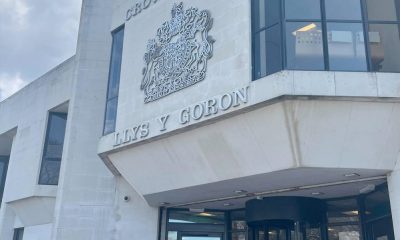
A MAN convicted of a series of violent and sexual offences against a baby aged no more than 10 weeks has been back before Swansea Crown Court today (Friday, January 16) for sentence, as the prosecution set out the “horrific” impact on the child and his family.
Christopher Phillips was found guilty after a contested trial in which he denied responsibility and blamed others, including the baby’s father and the child’s mother, the court heard.
Opening the sentencing hearing, the prosecution said the jury convicted Phillips of causing grievous bodily harm with intent, including multiple fractured ribs and a bleed on the brain. He was also convicted of two counts of assault by penetration of a child under 13, as well as an assault occasioning actual bodily harm linked to bruising to the child’s testicle.
The most serious sexual count related to an incident on January 23 to 24, 2021, which the prosecutor said caused a deep laceration described by doctors as a catastrophic injury. The court was told the baby required morphine, which expert evidence suggested was “very, very rare” for a child of that age.
The earlier penetration count involved an injury the prosecution said was already healing.

The prosecutor told the judge that Phillips made no admissions in police interviews and continued to deny wrongdoing during the trial, but now accepts he was responsible for the injuries. However, the prosecution urged the court to take a “critical eye” to his account, saying he still did not explain the mechanism of what happened and had blamed other people for a prolonged period.
Victim personal statements were then placed before the court on behalf of the child, who is too young to speak for himself.
The child’s grandmother described the case as the kind of story “you may hear on the news” but said being directly involved “changes you forever.” She said the baby’s injuries could not be erased by any prison sentence and told the court the family lost almost a year with him while he was placed with foster carers during family court proceedings.
The statement said the child was fearful around men after the injuries and that the impact had been “devastating” for the wider family. The grandmother also described the trauma of the baby’s father being arrested at the outset of the investigation and treated as a suspect.

A statement from the baby’s father, read out in court at his request, described the pain of learning about the injuries after being arrested on January 24, 2021. He said he was “shattered” and had to face police questioning while fearing his son might not survive.
He told the court the baby was flown by air ambulance for surgery and that surgeons had considered fitting a colostomy bag due to the severity of the injury, but were ultimately able to repair it. He said the baby later showed distress when being changed on raised changing tables and became anxious during potty training, needing comfort.
The father said his son is now five and that the family cannot yet know the long-term psychological impact. He said the child has been referred for assessment as the family has noticed difficulties with frustration, compulsions, and anxiety-driven behaviours.

He also described the lasting effect on him, saying he has been diagnosed with post-traumatic stress disorder and continues to receive support. He said one of the hardest issues he faces is deciding what to tell his son in future about what happened and when.
The court was also told Phillips had previous cautions for burglary and for importing a psychoactive substance, as well as a later conviction for importation of a psychoactive substance.
In submissions on sentence, the prosecution said the most serious offences carry a maximum of life imprisonment, and invited the court to treat the case as at “the upper end” of harm and culpability given the age and vulnerability of the baby, the severity of the injuries, and the period over which the offending occurred.
Sentencing is expected to follow after the court has heard from the defence and considered reports and legal submissions.
THE CASE CONTINUES


Public urged to hang up and verify calls using a different phone
AN INCREASING number of reports have been received of criminals impersonating police officers in an attempt to trick victims into handing over cash or bank cards — either directly or via a courier.
The fraudsters use sophisticated and convincing tactics to gain trust. They may already have basic personal information, such as a victim’s name and address, which can often be easily obtained online, making the call appear legitimate.
Rebecca Williams, Fraud Safeguarding Officer, said: “These criminals are extremely convincing and may even suggest that the victim dials 999 to verify their identity. However, they remain on the line and do not disconnect the call, meaning when the victim attempts to ring the police, they are still speaking to the fraudster.
“We strongly advise anyone who receives a suspicious call to use a different phone — such as a mobile — to verify the caller’s identity, or to contact a trusted friend or family member before taking any action.
“If you have received a call like this, or have been persuaded to send money, please do not feel embarrassed or ashamed. These criminals use coercive and manipulative tactics to exploit trust and create panic.
“Dyfed-Powys Police are here to support you. We are continuing to assist victims who have lost tens of thousands of pounds through this scam.”
Police have issued a clear reminder that officers will never:
• Ask you to withdraw cash, send money or hand over your bank cards
• Send a courier to collect cash, bank cards or valuables from your home
• Contact you unexpectedly and request that you withdraw money as part of an investigation
Anyone who receives a suspicious call is urged to hang up immediately and report it to police or Action Fraud.


Class A drugs, cash and suspected supply items seized during warrant in Aberystwyth
POLICE have charged two people following a drugs warrant executed at a property in Penparcau, Aberystwyth.
Officers carried out the warrant under the Misuse of Drugs Act on Friday (Feb 27), as part of an operation targeting the supply of illegal substances in the area.
During a search of the address, police recovered a quantity of Class A drugs, cash and items believed to be linked to drug dealing.
Gareth Farr, aged 45, of no fixed abode, and Chloe Evans, aged 38, of Penparcau, have both been charged with possession with intent to supply Class A drugs.
The pair appeared before Haverfordwest Magistrates’ Court on Monday (Mar 2), where they were remanded in custody pending further court proceedings.
Two other individuals arrested in connection with the investigation have been released on bail while enquiries continue.
PC Sturdy, from the Neighbourhood Policing and Prevention Team, said: “This warrant forms part of our continued efforts to disrupt the supply of illegal drugs in our communities. Drug-related activity causes significant harm, and we remain committed to targeting those involved.”
Police are urging anyone with information about suspected drug activity to contact Dyfed-Powys Police, or to report anonymously via Crimestoppers on 0800 555 111 or online.

THE POLICE investigation into the serious incident which happened on Felindre Road, Pencoed, in the early hours of Saturday, February 28, is now being treated as murder.
We can confirm the 58-year-old man who was critical in hospital passed away earlier today – his family are being supported by specially trained officers at this time, and our thoughts are with them.
The Major Crime Investigation Team at South Wales Police is now leading the investigation, and the 26-year-old man arrested remains in police custody.
Detectives investigating the incident are appealing to anyone who may have been in the vicinity of Felindre Road, Pencoed, between midnight and 5am on Saturday to get in touch.
Motorists are urged to their check dashcams for any footage which may be relevant.

Detectives would like to speak to two potential witnesses – two elderly people who are believed to have walked along Felindre Road between 12.30am and 4am on Saturday.
Detective Inspector Graham Williams, from the Major Crime Investigation Team, said: “Sadly, a 58-year-old man has died in hospital following the incident on Saturday morning. Our thoughts are with his family at this time and they are being supported. I would like to reassure the local community that we have somebody in custody and are not looking for anybody else at this time. I thank everyone in the community who has helped our investigation so far, and I urge anyone with information which may be relevant to our investigation – particularly the two potential witnesses – to get in touch.”
If anybody does have information, they should contact 101 quoting reference 2600063517. Alternatively, they can submit information via the Major Incident Public – https://mipp.police.uk/operation/62SWP26C30-PO1



Health7 hours ago
Davies and Kurtz attack ‘fantasy hospital’ pledge for west Wales
Senedd Members demand immediate investment in Withybush and Bronglais as election campaign intensifies SENEDD Members Paul Davies and Samuel Kurtz have launched a fresh...


Health17 hours ago
Hywel Dda warns of ‘significant pressure’ as A&E departments remain packed
Patients urged to use NHS 111 as Withybush, Glangwili and Bronglais face continued strain HYWEL DDA University Health Board has...


News1 day ago
War stops Qatar gas: Milford Haven LNG supplies disrupted
UK energy security concerns grow after shutdown at major export facilities ENERGY bills in the UK could rise sharply after...


Community2 days ago
Martyn Butler dies aged 71 months after Haverfordwest visit
Co-founder of Terrence Higgins Trust attended local plaque unveiling honouring friend Terry Higgins A LEADING figure in the UK’s response...

Crime2 days ago
Nine deny Class A drugs conspiracy as case set for Crown Court trial
Eight remanded in custody as four-week trial fixed for May 18 NINE people have denied conspiring to supply Class A...


Community2 days ago
No asylum seekers housed in west Wales hotels, latest Home Office figures show
WEST Wales currently has no asylum seekers being housed in hotels, according to the latest figures published by the Home...


Community4 days ago
St David’s Day parade brings colour and celebration to Haverfordwest
HAVERFORDWEST town centre was a hive of activity today (Friday, Feb 27) as hundreds of children from schools across Pembrokeshire...


News6 days ago
Hoax 999 call sparks massive lifeboat and helicopter rescue — man arrested
Emergency services diverted from real incidents after false report off south Wales coast A MAJOR sea rescue operation involving three...


Crime6 days ago
St Dogmaels man jailed over hundreds of indecent images
Previous convictions for similar offences revealed to court A 57-YEAR-OLD man from St Dogmaels has been jailed for two-and-a-half years...


Health6 days ago
Petition against hospital service changes surges past 6,000 signatures
Public response now far exceeds health board consultation figures A PETITION calling for urgent Welsh Government intervention over services at...
-

 News6 days ago
Welsh Government criticised after Russian-linked drone image used in defence announcement
-

 Business6 days ago
Council reviewing complaints over Computer Solutions Wales as concerns continue
-

 Health6 days ago
Petition calling for Withybush intervention nears 5,000 signatures
-

 Crime6 days ago
Milford Haven pensioner admits sexually assaulting two shop workers
-
News6 days ago
Hoax 999 call sparks massive lifeboat and helicopter rescue — man arrested
-
Health6 days ago
Petition against hospital service changes surges past 6,000 signatures
-
Crime6 days ago
West Wales man jailed for murder of five-month-old baby
-

 Charity6 days ago
Big Bash brings community together to support grieving children