


Health
MS calls for corridor care data to be published in Wales

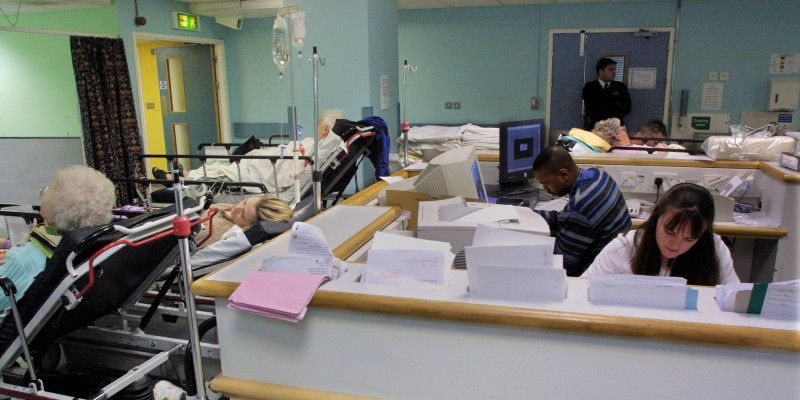
Conservatives say ministers must be held to account as health chief confirms figures are not routinely available
CONSERVATIVE MS Andrew RT Davies has demanded Senedd ministers begin collecting and publishing data on “corridor care” in Welsh hospitals, after the Welsh Government confirmed it is not currently able to provide routine figures.
Mr Davies raised the issue in the Senedd during questions to Health Minister Jeremy Miles, asking whether information is being gathered on patients being cared for in corridors and, if so, how many people are affected.
Mr Miles told MSs the data is not currently available in a form that can be published routinely, but said the Welsh Government is “trialling approaches” which would put ministers in a position to provide regular publication.
The exchange comes amid ongoing concern across Wales about severe pressure in emergency departments and delays in moving patients into appropriate ward beds — a situation that can result in people waiting for treatment, assessment or admission in areas not designed for patient care.
The term “corridor care” is widely used to describe circumstances where patients receive care in inappropriate settings, often due to a lack of capacity elsewhere. Health bodies and staff representatives have warned that such conditions can affect privacy and dignity, make infection control harder, and place additional strain on staff working in already pressured environments.

Mr Davies said he had been contacted by constituents in the Vale of Glamorgan reporting what he described as unacceptable experiences in local hospitals, adding that frontline NHS staff should not be blamed.
He also linked the issue to wider spending priorities at the Senedd, claiming that services were under strain while ministers pursued other policies, including plans to expand the size of the Senedd and maintain a “Nation of Sanctuary” approach to asylum seekers.
Mr Davies said it was vital that corridor care data was collected and published so that the scale of the problem could be measured and ministers held to account.
Mr Davies said: “I’m frequently contacted by Vale constituents reporting unacceptable experiences in local hospitals.

“This is not the fault of NHS staff – but hospitals are underfunded thanks to resources instead going towards Plaid Cymru separatist and Labour plans for 36 more Senedd members and a Nation of Sanctuary for asylum seekers.
“We must end corridor care – and it’s vital this data is made available to hold Senedd ministers to account.”
In response, the Welsh Government position is that it is working on ways to standardise and publish information on corridor care, but that the data is not yet routinely available across the system.

Opposition parties and health campaigners have argued that without clear national reporting, it is harder for the public and Senedd members to understand how widespread the issue is, whether it is improving, and which hospitals are under the greatest pressure.
The Welsh Government has not yet set out when routine publication will begin, but ministers say the trial work is intended to enable regular reporting in future.


Nearly 200% rise in five years raises alarm among safety experts
ACCIDENTAL poisoning deaths in Wales have surged dramatically, with new safety data showing a sharp increase in fatalities and a growing risk to older people living at home.
Figures released by the Royal Society for the Prevention of Accidents (RoSPA) show 252 people in Wales died from accidental poisoning in 2024, compared with 85 deaths in 2019 – an increase of almost 200 per cent in just five years.
Safety experts say older people are particularly vulnerable. Those aged 65 and over are more than five times more likely to die from an accidental poisoning – excluding narcotics – than the general population.
Even when alcohol-related incidents are excluded, people in this age group remain more than four times as likely to die from accidental poisoning.
Across the UK the trend is also rising sharply. Official figures show 5,770 people died from accidental poisonings in 2024, a 63 per cent increase over the past decade.
Hospitals in England recorded 17,252 admissions linked to non-narcotic poisoning last year, including nearly 5,000 cases involving older adults, who were 55 per cent more likely to require emergency hospital care.
RoSPA warns that people living with dementia face particular dangers inside their own homes because the condition can affect memory, recognition and perception. Everyday household products such as cleaning sprays, laundry detergents and medicines can easily be mistaken for food or drink.
Rebecca Guy, Senior Policy Manager at RoSPA, said: “Families caring for vulnerable relatives can experience genuinely frightening moments. Turning away for just a few seconds and realising someone has swallowed a cleaning product is sadly something some people have experienced.
“These incidents are not freak accidents. They are predictable and preventable events, and our new guidance is designed to help people take simple steps to make their homes safer.”
The charity has released new home-safety guidance aimed at helping families reduce risks, including practical advice on safely storing medicines and household chemicals.
Paul Edwards, Chief Nursing Officer at Dementia UK, said brightly coloured packaging on cleaning products can create confusion for people living with dementia.
“Laundry and cleaning products are often easily accessible in our homes, and many have brightly coloured packaging which can cause confusion for people with dementia, who may mistake them for edible items,” he said.
“One of the challenges of supporting someone with dementia is balancing an individual’s independence with their safety. It is impossible to eliminate risk completely, but these guidelines offer simple steps people can take to reduce the chance of these accidents happening.”
Simon Wheeler, Senior Knowledge Officer at Alzheimer’s Society, said staying safe at home is a key concern for families affected by dementia.
“As dementia progresses, people may find it harder to tell the difference between something that’s safe to eat and something that isn’t,” he said.
“Storing cleaning products safely and out of sight can help reduce the risk of accidents.”
RoSPA is urging households to take simple precautions, including locking away cleaning products, keeping medicines securely stored, and ensuring hazardous substances remain in their original packaging.
Safety experts warn that without greater awareness, accidental poisonings could continue to rise as the population ages and more people live independently at home.

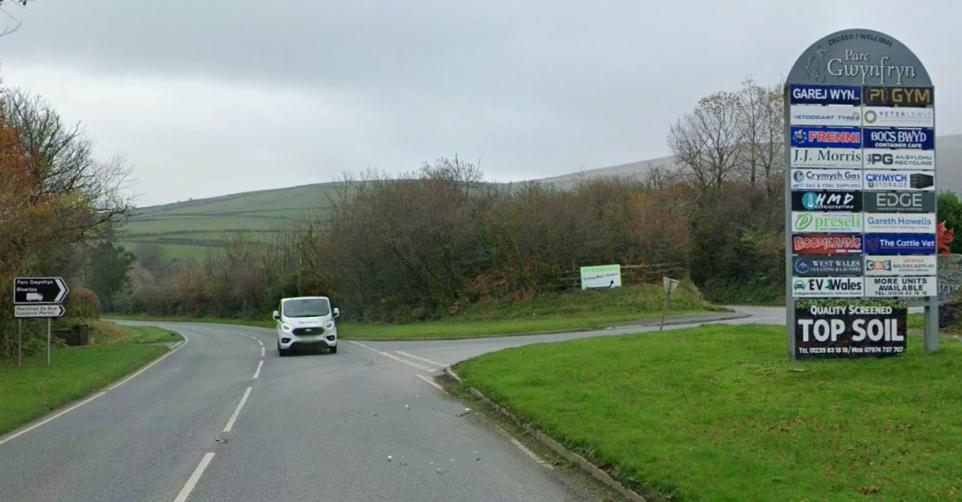
A CALL for approval for the use of Crymych industrial units as a golf simulator, child’s play space and a wellness centre offering a sauna, ice baths, and oxygen therapy has been submitted to county planners.
In an application to Pembrokeshire County Council, Mr and Mrs Evans, through agent Preseli Planning Ltd, seek a partly retrospective permission for the erection of commercial building containing three individual business units, at a former vacant storage yard at Parc Gwynfryn, Crymych.
A supporting statement says: “The building provides three sperate business spaces, two of the units are occupied, one as a golf simulator (7B 2) a second is occupied by a child’s role play and play space (7B 4) and the central unit (7B 3) is currently unoccupied, proposed to be let as a wellness centre.”
The site owners and applicants, Mr and Mrs Evans, are also the operators of the golf simulator enterprise and the original developers of the industrial estate, the statement says.
“The aim of the application is to regularise the existing building and existing and proposed uses. The building was substantially complete May 2025 and first occupied June 2025. Unit 7B2 is occupied by a golf simulator whereby users book slots online and self-serve.

“Unit 7B3 is currently unoccupied but would be occupied by wellness centre once planning permission is granted, consisting of sauna, ice baths, cryotherapy room, oxygen therapy etc. Unit 7B4 is occupied by a new enterprise which offers indoor roleplay space for children, Byd Bach.”
It adds: “In terms of the golf simulator, this is owner managed and the sites proximity to their main office within the site makes managing and attending the unit convenient and enables multiple businesses to be managed by the same members of staff.
“In terms of Byd Bach, this is operated by a local couple who also manage other premises in Crymych, amongst other employment. The site’s proximity to Crymych is therefore important and these arrangements are only successful given that the site is well-related to Crymych.
“The offering would not disrupt existing comparable provision, the closest facility of this kind being in St Clears, well beyond the catchment of this facility.
“The third unit is not yet occupied but would be operated by a local spinal injury sufferer, and athlete, who would benefit from the facilities themselves and offer therapy for others.”
Citing a recently-approved change on use of a building on the industrial site itself to a Hair and Beauty Salon, it said it was considered the development would not have a significant detrimental effect on the overall supply of business units or land in Pembrokeshire or Crymych.
The application will be considered by county planners at a later date.


AN EMERGENCY call for Pembrokeshire’s council to take greater action in safeguarding the future of Withybush hospital is to be heard next week.
At the full council meeting of March 5, an emergency notice of motion by the council’s 11-strong Conservative Party group will demand that the Welsh Government immediately reverses the decision to cease emergency general surgery at Withybush Hospital.
Last year, Hywel Dda University Health Board consulted with its communities on options for change in critical care, dermatology, emergency general surgery, endoscopy, ophthalmology, orthopaedics, stroke, radiology and urology.
It said its Clinical Services Plan focuses on nine healthcare services that are “fragile and in need of change”.
The proposed changes included an option for Withybush patients needing specialist critical care being transferred to Glangwili.
At a recent two-day meeting, the board, amongst its many other decisions, backed changes into emergency general surgery which will see no emergency general surgery operations taking place at Withybush, but a strengthening of the same-day emergency care (SDEC).
A petition against the plans already has more than 4,000 signatures and has met an angry response from local politicians and campaigners.
At the March council meeting, the Conservative council group, led by Cllr Di Clements, will say: “The Welsh Government has powers of intervention in Sections 26-28 of the NHS (Wales Act) 2006 which enables it to intervene in decisions made by a health board, in this case the Hywel Dda University Health Board.”
It says that Pembrokeshire residents “have seen continual downgrading of services over the years, and this has been detrimental to all residents,” adding: “We believe this recent decision is life threatening to those who need emergency surgery and a matter of resident’s safety.
“Every hour lost, on average, survival rates decrease by four per cent. Those who live furthest west and north will be affected the most.”
The group adds: “We are concerned especially that this has the huge potential to affect A&E provision. With limited opportunity for doctors to operate we are concerned that our county hospital will be left with few or no senior surgeons and A&E will be forced to close.”
The group has also questioned the accuracy of figures quoted by the First Minister Eluned Morgan on the number of affected patients, saying: “HDUHB own figures for the changes to emergency surgery put the number at nine per week, not five.”
The group has said it “acknowledges that Pembrokeshire County Council has no control over health services in the county, but the 60 county councillors represent approximately 120,000 people who at some point may need hospital services”.
Group leader Cllr Di Clements said: “I am certain the whole county will support our aim to prevent any more downgrading of services at Withybush.
“We are treated like second class citizens, and it is just not good enough.”



News5 hours ago
Greens oppose US space radar plan for St Davids Peninsula
CANDIDATE CRITICISES DARC PROPOSAL THE GREEN PARTY has voiced strong opposition to plans for a major US military radar installation...

Crime10 hours ago
Chinese intelligence probe reaches Dyfed-Powys Police area
Counter-terror officers arrest man in Powys as part of national security investigation THREE men have been arrested in Wales and...


Crime11 hours ago
Man sentenced after punching convicted paedophile in Haverfordwest pub
A HAVERFORDWEST man has been sentenced after punching a convicted paedophile inside a town centre pub. Haverfordwest Magistrates’ Court heard...

Health1 day ago
Davies and Kurtz attack ‘fantasy hospital’ pledge for west Wales
Senedd Members demand immediate investment in Withybush and Bronglais as election campaign intensifies SENEDD Members Paul Davies and Samuel Kurtz have launched a fresh...


Health1 day ago
Hywel Dda warns of ‘significant pressure’ as A&E departments remain packed
Patients urged to use NHS 111 as Withybush, Glangwili and Bronglais face continued strain HYWEL DDA University Health Board has...


News2 days ago
War stops Qatar gas: Milford Haven LNG supplies disrupted
UK energy security concerns grow after shutdown at major export facilities ENERGY bills in the UK could rise sharply after...


Community2 days ago
Martyn Butler dies aged 71 months after Haverfordwest visit
Co-founder of Terrence Higgins Trust attended local plaque unveiling honouring friend Terry Higgins A LEADING figure in the UK’s response...

Crime2 days ago
Nine deny Class A drugs conspiracy as case set for Crown Court trial
Eight remanded in custody as four-week trial fixed for May 18 NINE people have denied conspiring to supply Class A...


Community2 days ago
No asylum seekers housed in west Wales hotels, latest Home Office figures show
WEST Wales currently has no asylum seekers being housed in hotels, according to the latest figures published by the Home...


Community5 days ago
St David’s Day parade brings colour and celebration to Haverfordwest
HAVERFORDWEST town centre was a hive of activity today (Friday, Feb 27) as hundreds of children from schools across Pembrokeshire...
-

 News6 days ago
Hoax 999 call sparks massive lifeboat and helicopter rescue — man arrested
-
Crime6 days ago
West Wales man jailed for murder of five-month-old baby
-

 Charity6 days ago
Big Bash brings community together to support grieving children
-

 Health6 days ago
Petition against hospital service changes surges past 6,000 signatures
-

 Health6 days ago
Who is responsible for NHS changes affecting west Wales?
-

 Crime6 days ago
St Dogmaels man jailed over hundreds of indecent images
-

 Sport6 days ago
WRU facing vote of no confidence as clubs force extraordinary meeting
-
Crime6 days ago
Pembroke Dock man admits sending sword death threat message