


international news
Iran war escalates as US sinks Iranian warship and missiles fly across Gulf

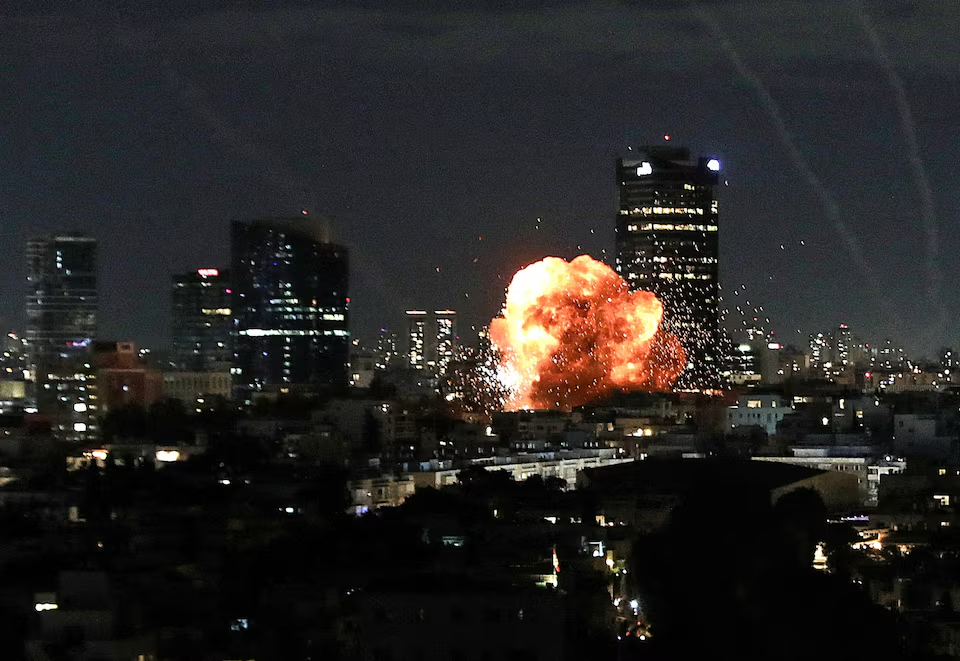
A RAPIDLY escalating war between Iran, Israel and the United States has expanded dramatically across the Middle East, with major airstrikes on Tehran, missile and drone attacks across the Gulf, and the sinking of an Iranian warship in the Indian Ocean marking one of the most dangerous global crises in decades.
The conflict, which began only days ago following joint US–Israeli strikes inside Iran, has now spread across multiple countries and military theatres, drawing in NATO air defences, threatening global oil supplies and triggering international evacuations.
Military analysts warn the situation could develop into a full regional war if the cycle of retaliation continues.
War triggered by assassination of Iran’s supreme leader
The current crisis began after coordinated American and Israeli strikes targeted senior Iranian leadership and military infrastructure.
Among those killed was Iran’s Supreme Leader, Ayatollah Ali Khamenei, a development that has plunged the Islamic Republic into both military confrontation and political uncertainty over who will lead the country next.

The attacks were reportedly planned weeks in advance and targeted command centres, security headquarters and other strategic sites across Iran.
Tehran responded by launching waves of missiles and drones across the region, including attacks on Israel and military installations hosting US forces in Gulf states such as Bahrain, Kuwait and the United Arab Emirates.
Air raid sirens have repeatedly sounded in Israeli cities as interceptors attempt to shoot down incoming Iranian missiles.
Israeli airstrikes hammer Tehran and Lebanon
Israeli forces have continued a sustained bombing campaign across Iran, targeting Revolutionary Guard facilities, police headquarters and other security infrastructure in Tehran.

Explosions have been reported across several districts of the capital as Israeli aircraft and missiles strike strategic targets.
At the same time, Israel has expanded operations against Iranian allies in Lebanon, striking Hezbollah positions and ordering civilians to evacuate areas close to the border.
The Israeli military says the aim is to dismantle Iran’s ability to wage war through its regional proxy networks.

NATO intercepts missile heading towards Turkey
The conflict has also spilled towards NATO territory.
Turkish defence officials confirmed that a ballistic missile launched from Iran crossed Iraqi and Syrian airspace before being intercepted by NATO air defence systems in the eastern Mediterranean.
The missile was destroyed before entering Turkish airspace, and no casualties were reported.
NATO has condemned the attack and warned Iran that further escalation could threaten the security of alliance members.
British military base struck in Cyprus
The war has already touched British military infrastructure.
A drone believed to be Iranian-made struck RAF Akrotiri in Cyprus earlier this week, marking the first attack on the UK’s key Middle East airbase in decades.
The base plays a central role in British operations in the region, and the strike has raised concerns that UK forces could be drawn more deeply into the conflict.
US submarine sinks Iranian frigate
One of the most dramatic developments occurred thousands of miles away in the Indian Ocean.
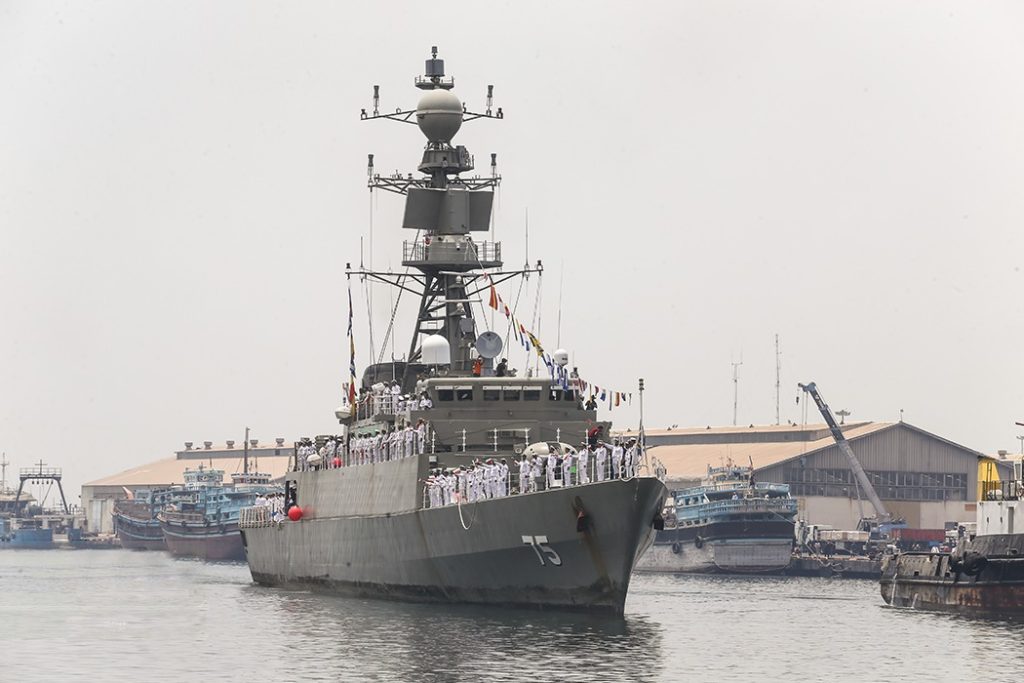
A US Navy submarine torpedoed and sank the Iranian frigate IRIS Dena off the southern coast of Sri Lanka.
The ship was carrying about 180 crew members when it was hit while travelling in international waters.
Sri Lankan naval vessels launched a major rescue operation after receiving a distress call from the stricken vessel.
So far only thirty-two sailors have been rescued, with dozens confirmed dead and many more still missing.
The attack is historically significant — it is the first time since the Second World War that an American submarine has sunk an enemy warship using a torpedo.
US defence officials say the strike was part of a wider campaign to destroy Iran’s naval capability.
Hundreds killed as fighting spreads
Casualty figures across the region are rising rapidly.
Officials say more than a thousand people have been killed in Iran since the bombing campaign began, with further deaths reported in Israel, Lebanon and among American forces deployed in the region.
The United Nations has also expressed alarm after reports that a girls’ school in southern Iran was struck during the early stages of the fighting, killing large numbers of children.
Both Israel and the United States say the strike was not deliberate and that investigations are under way.
Strait of Hormuz disruption sends shock through markets
The conflict is already having major economic consequences.
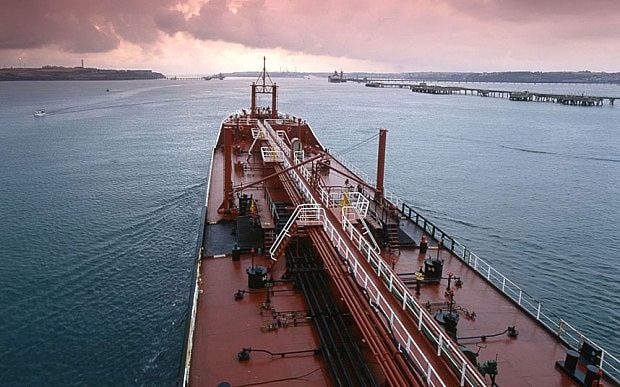
Iran has effectively halted much of the shipping traffic through the Strait of Hormuz — the narrow sea passage through which a large proportion of the world’s oil exports normally pass.
Drone attacks have struck several tankers and maritime traffic has dropped sharply as insurers and shipping companies avoid the area.
Energy analysts say the disruption could trigger global fuel price rises if the crisis continues.
Iran vows devastating retaliation
Iran’s Revolutionary Guard has warned that continued attacks on the country could lead to “widespread destruction” across the Middle East.
Officials in Tehran have vowed retaliation against American and Israeli targets across the region.
At the same time, the country faces a leadership vacuum following the death of its supreme leader, with religious authorities now responsible for selecting a successor.
Some analysts believe the instability inside Iran could intensify the conflict further.
What happens next
Military leaders in Washington say the campaign against Iran could last weeks, with additional strikes expected deeper inside the country.
Israel has also warned that it will target any new Iranian leadership if attacks against Israel continue.
With missile exchanges, naval battles and drone strikes already spreading across multiple countries, the conflict now risks becoming one of the largest wars in the Middle East in decades — with potentially global economic and political consequences.

OIL prices dropped sharply on Friday after Iran announced that the Strait of Hormuz had reopened to commercial shipping, raising hopes that energy supplies could begin to move more freely through one of the world’s most important maritime routes.
The development was welcomed by US President Donald Trump and immediately eased pressure on global markets, with traders reacting to the prospect of more oil and gas reaching international buyers.
The Strait of Hormuz, a crucial passage for global energy exports, has been effectively shut since the US-Israeli bombing campaign in Iran began at the end of February. The disruption has pushed up fuel and energy costs worldwide.
Brent crude fell by more than 10 per cent to just above 89 US dollars a barrel during Friday afternoon trading. European stock markets also rose strongly, with the FTSE 100 up 0.6 per cent at 10,656, Germany’s Dax climbing 2 per cent and France’s Cac 40 gaining 1.7 per cent.
The announcement came as Prime Minister Sir Keir Starmer and French President Emmanuel Macron hosted an international meeting in Paris focused on securing trade routes through the Strait once fighting in the Middle East ends.
Iran’s Foreign Minister Abbas Araghchi said the route would be open to commercial shipping for the remainder of the current ceasefire period.
He said: “In line with the ceasefire in Lebanon, the passage for all commercial vessels through Strait of Hormuz is declared completely open for the remaining period of ceasefire, on the co-ordinated route as already announced by Ports and Maritime Organisation of the Islamic Rep of Iran.”
The United States and Iran are currently observing a fragile truce due to run until April 22, while Israel and Lebanon have entered a separate 10-day ceasefire.
Mr Trump said Tehran had declared the “strait of Iran” to be “fully open and ready for full passage”, but warned that the US blockade of Iranian ports would remain in place until Washington’s dealings with Tehran were fully resolved.
In Paris, Sir Keir said he would do “everything I can” to help restore safe passage through the route, as leaders from around 40 countries and the International Maritime Organisation gathered at the Elysee Palace.
The talks are aimed at building support for an international effort to protect freedom of navigation and restore confidence in commercial shipping.
Before the meeting, Sir Keir and Mr Macron met in the courtyard of the Elysee Palace, where they shook hands and posed for photographs.

The Prime Minister said: “It is very important that we build a coalition of countries around the principle that the ceasefire should be permanent, there should be a deal, and that the Strait of Hormuz is open.”
He was joined by Foreign Secretary Yvette Cooper and Chief of the Defence Staff Sir Richard Knighton, and called for a multinational initiative to safeguard shipping and support mine-clearance work.
Sir Keir said: “We must reassure commercial shipping and support mine clearance operations to ensure a return to global stability and security.”
A further multinational military planning summit is due to take place next week at the UK’s permanent joint headquarters in Northwood, north-west London.
Despite Friday’s diplomatic push, it remains unlikely that countries involved in the talks will send ships into the Strait while the conflict continues, because of the risk of attack from Iran’s coastline.

Historic defeat for Europe’s longest-serving nationalist strongman could redraw Hungary’s place in the West — but the real battle may only just be beginning
VIKTOR ORBAN has conceded defeat in Hungary’s parliamentary election, bringing a dramatic end to the nationalist leader’s 16-year grip on power and delivering what could prove to be the most significant political upset in Europe this year.

Early and partial results put Péter Magyar’s Tisza party well ahead of Fidesz, with Orbán acknowledging a painful loss as record turnout suggested a country no longer willing to settle for more of the same. For many Hungarians, this was not simply a vote to change government, but a decision to break with a political era that had come to define the nation itself.

This was no ordinary election defeat for a sitting prime minister. It was a rejection of an entire system. Orbán did not merely govern Hungary; he remade it in his own image, constructing what he proudly called an “illiberal” state and turning himself into a hero for parts of the global Right. In the process, Hungary became the European Union’s most disruptive and controversial member.
That is why his fall matters far beyond Budapest. The result is significant not just because of who has won, but because of what voters appear to have turned against: entrenched power, allegations of cronyism, democratic backsliding, and a style of politics built on permanent cultural warfare.
The scale of the result is what makes it historic. Reuters reported that with 46 per cent of votes counted, Tisza was on course to win 135 seats in the 199-seat parliament — enough for a two-thirds majority if confirmed. The Associated Press, reporting on later partial returns, said Tisza had more than 52 per cent of the vote with around 60 per cent counted, far ahead of Fidesz on 38 per cent. Turnout was above 77 per cent, described by AP as the highest in post-communist Hungarian history.
That turnout tells its own story. Hungary was not sleepwalking into change; it was straining towards it. After years in which Orbán had seemed electorally untouchable, voters appear to have decided that economic drift, rising living costs and long-running corruption allegations mattered more than the government’s warnings about migrants, war and foreign enemies. Reuters said frustration over economic stagnation and the cost of living helped drive the opposition surge.
Péter Magyar’s rise makes the outcome all the more remarkable. He is not a veteran dissident or a familiar opposition grandee. He is a former Fidesz insider who broke with the ruling camp and then reinvented himself as the vessel for anti-Orbán anger. That gave him an advantage previous challengers lacked: he could not easily be dismissed as an outsider who failed to understand the system he was trying to dismantle. To Orbán loyalists, he is a traitor. To his supporters, he is proof that the rot had begun from within.
For Brussels, this could mark the start of a major reset. Orbán spent years obstructing EU partners over rule-of-law disputes, media freedom, relations with Moscow and support linked to Ukraine. Reuters reported that a Tisza victory could reopen the path to frozen EU funds and shift Hungary’s stance on key European decisions, including those connected to Ukraine. Put simply, one of the EU’s most stubborn blockers may have been removed by his own electorate.
The symbolism reaches well beyond Europe. Orbán became a reference point for nationalist and populist movements across the Western world, admired by figures on the American Right and tolerated elsewhere as a difficult but durable fact of European politics. His defeat is therefore more than a domestic upset. It is a reminder that strongman politics can look invincible until the moment voters decide they have had enough.
But this is where caution is needed. Orbán’s defeat does not necessarily mean Orbánism is finished. Even if Tisza secures a commanding majority, Hungary remains deeply divided, and much of the state, media landscape and political culture has been moulded by Fidesz over a decade and a half. Removing Orbán from office is one thing. Unpicking the loyalties, habits and networks of his era is another entirely. That will be Magyar’s true test.
There is a danger for the victors too. Political earthquakes create expectations that are almost impossible to satisfy. Magyar has campaigned as the man who can clean up the state, restore trust, improve services and bring Hungary back towards the European mainstream. That is a compelling message in opposition. It is far harder in government, particularly in a country where Orbán’s influence has been embedded so deeply. Voters may have delivered a revolution at the ballot box, but revolutions do not, by themselves, produce stable government.
Still, the meaning of the night is already unmistakable. Hungary has not merely changed government; it has rejected the assumption that Viktor Orbán’s model was permanent. After sixteen years in power, the man who made himself the face of Europe’s nationalist resistance to liberal democracy has been brought down not by Brussels, nor by foreign pressure, but by Hungarian voters themselves.

That is what makes this result so powerful — and why its consequences may reach far beyond Hungary.
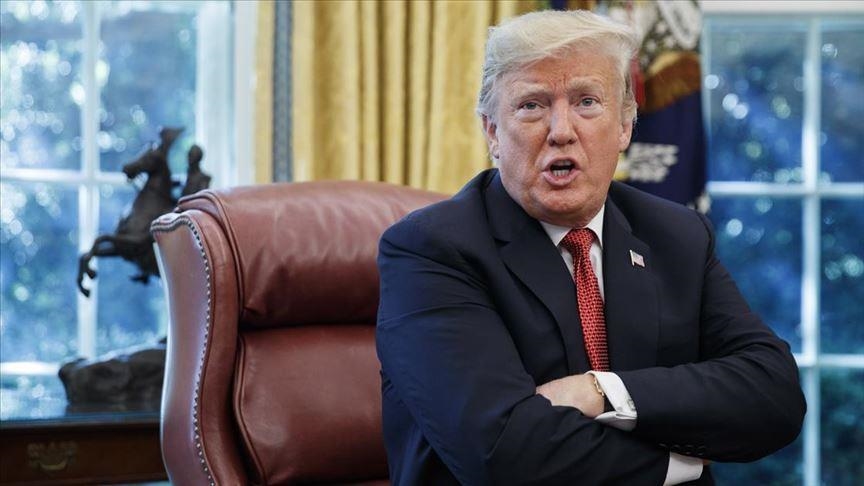
US president says Navy will begin stopping ships in one of the world’s most important oil routes, raising fears of a deeper military and economic crisis
DONALD TRUMP has announced that the United States will begin blockading the Strait of Hormuz after talks with Iran failed to secure agreement on Tehran’s nuclear programme.
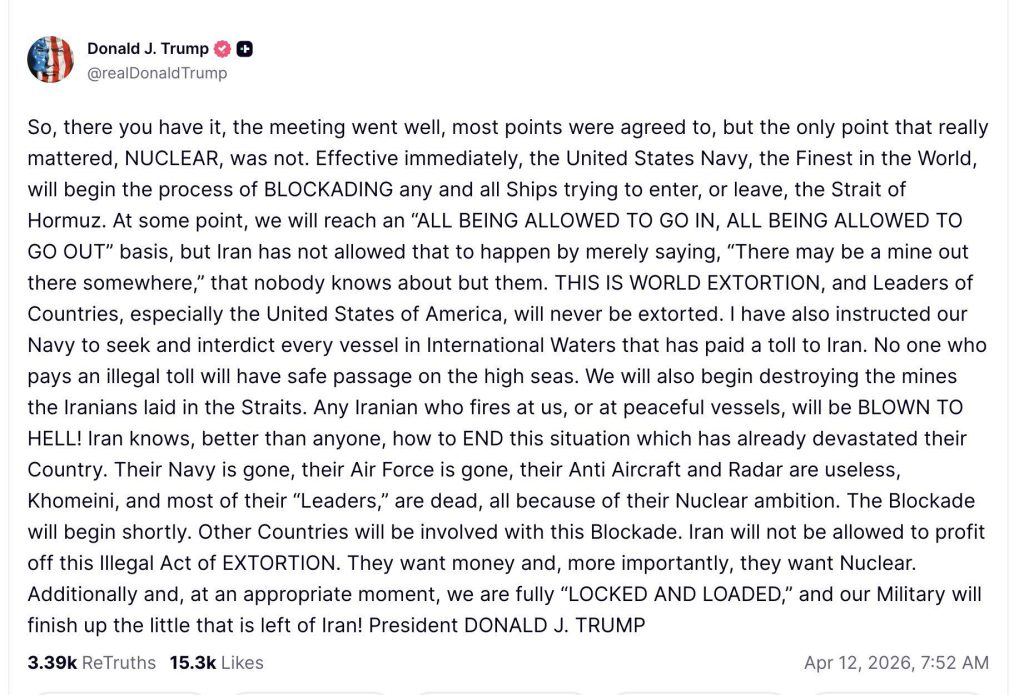
In a strongly-worded statement published on Sunday (Apr 12), Trump said the US Navy would begin the process of blockading “any and all ships” trying to enter or leave the strategic waterway, one of the most important oil routes in the world.
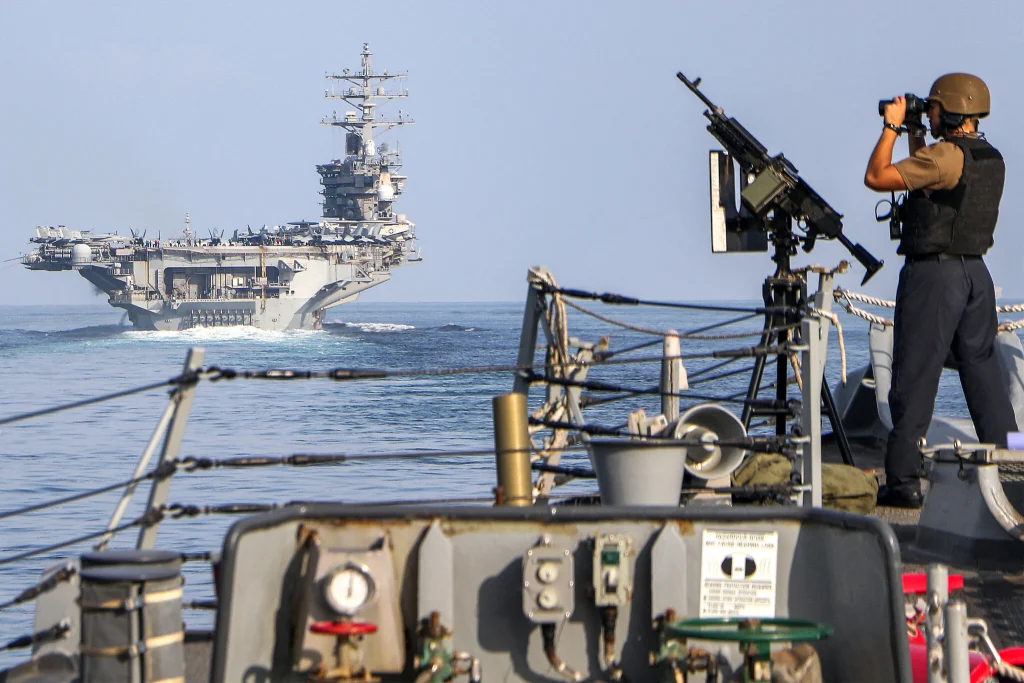
He said talks had gone well overall and that “most points were agreed to”, but claimed the one issue that really mattered — nuclear — had not been resolved.
Trump also said US forces would seek to interdict vessels in international waters that had paid what he described as an illegal toll to Iran. He further warned that mines laid in the strait would be destroyed and said: “The blockade will begin shortly.”
The statement marks a dramatic escalation in the standoff with Tehran and raises the prospect of a wider confrontation in the Gulf, with major implications for global shipping, oil prices and economic stability.
The Strait of Hormuz is one of the most strategically important waterways in the world, with a significant share of globally traded oil passing through it each day. Any prolonged military disruption there is likely to send fresh tremors through international energy markets and could quickly push up fuel costs.
Trump’s announcement came after marathon talks between US and Iranian representatives ended without a breakthrough. While both sides indicated that some progress had been made, the negotiations ultimately stalled over the future of Iran’s nuclear ambitions.
Washington has insisted it wants a firm commitment that Iran will not seek a nuclear weapon or the capability to obtain one quickly. Tehran has maintained that it is not pursuing nuclear weapons, while insisting on its right to civilian nuclear energy.
The collapse of the talks now throws the future of an already fragile ceasefire into doubt and increases fears that diplomacy may be giving way to military pressure.
Trump’s latest remarks were notably more aggressive than earlier comments in which he suggested the United States would soon have the Strait of Hormuz open again. Sunday’s statement went much further, setting out not just a warning but a declared intention to begin military enforcement.
His language was uncompromising throughout, describing Iran’s actions as “world extortion” and warning that any attack on American forces or peaceful vessels would be met with overwhelming force.
He also claimed Iran’s military capacity had already been severely degraded and said other countries would be involved in the blockade effort.

The development is likely to alarm governments and markets around the world. Any attempt to physically stop or search vessels in or around the strait would carry enormous risks, not only of direct military confrontation but also of severe disruption to global trade.
For now, the key question is whether Trump’s declaration becomes an immediate operational reality or is intended as a pressure tactic designed to force Iran back to the table. Either way, the announcement represents one of the most serious moments yet in the latest confrontation between Washington and Tehran.
With tensions rising and the world watching one of its most vital shipping corridors, the danger now is that a diplomatic failure over nuclear talks could spiral into a much broader international crisis


Community3 hours ago
D-Day 82: Milford Haven remembers sacrifice of Normandy landings
COMMUNITIES gathered in Milford Haven on Saturday (Jun 6) to mark the 82nd anniversary of D-Day. The service, held at...

News3 hours ago
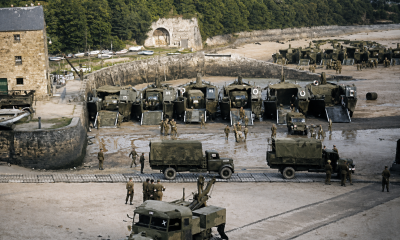
D-Day at 82: The secret Pembrokeshire invasion that helped prepare for Normandy
Forgotten wartime operation saw thousands of troops storm Pembrokeshire beaches in rehearsal for D-Day LONG before Allied troops landed on...


News5 hours ago
Welsh Water hit with £44.7m enforcement package over sewage failures
Pembrokeshire campaigners say regulator’s action vindicates years of concern over pollution in rivers and coastal waters DŴR Cymru Welsh Water...


News1 day ago
Council tax shake-up in doubt as Welsh Government reviews reform plans
Questions over 2028 revaluation as ministers reconsider next steps THE FUTURE of council tax reform in Wales has been thrown...


Crime1 day ago
Paddleboard company owner loses bid to cut sentence over Haverfordwest tragedy
A FORMER paddleboard company owner jailed over the deaths of four people on the Western Cleddau has failed in a...


Community2 days ago
Crisis response dogs launched to support people through trauma and distress
A NEW project using specially trained dogs to support people during moments of trauma, grief and crisis has been launched...

News3 days ago
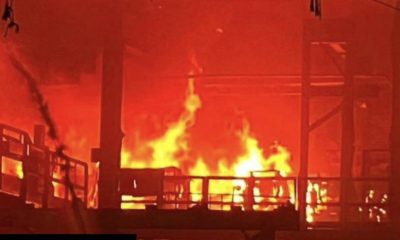
Major fire breaks out at Tata Steel site in Port Talbot
TATA STEEL has confirmed that a major fire broke out at its Port Talbot steelworks on Wednesday night, with emergency...


Community3 days ago
HMS Erebus tragedy links Pembroke Dock ship to Templeton family
DNA breakthrough identifies cabin boy David Young as exhibition marks 200 years since ship’s launch ON MAY 19, 1845, a...


Community3 days ago
Narberth cash machine closures spark urgent access review
CALLS have been made for an urgent review of access to cash in Narberth after two town centre ATMs were...

Health4 days ago
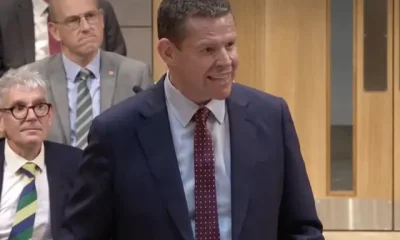
First Minister quizzed on Welsh NHS pressures in his first-ever FMQs
SENEDD Members pressed the First Minister over the state of the health service in Wales, as the Plaid Cymru leader...
-
Crime1 day ago
Paddleboard company owner loses bid to cut sentence over Haverfordwest tragedy
-

 Crime3 days ago
Milford Haven man bit neighbour’s neck near cashpoint
-

 Crime4 days ago
Milford Haven man jailed for illegal Premier League streaming service
-

 Crime4 days ago
Haverfordwest man admits cocaine offence as Crown disputes basis of plea
-
 Local Government4 days ago
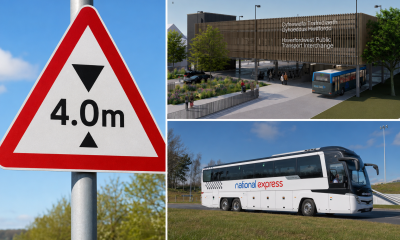
National Express use of new Haverfordwest interchange still subject to risk checks
-

 Crime3 days ago
Pembroke Dock driver avoided jail after drug-drive crash
-

 Crime3 days ago
Dinas Cross man jailed over shop thefts
-

 Community6 days ago
Charles Street to come alive for Milford Haven Founders Day