


Ministry of Defence
‘Houses shake’ as C-17 Globemaster tracked flying low over Haverfordwest


RAF heavy transport aircraft JDW828 carried out training sortie over Pembrokeshire and the south-west
Residents in Haverfordwest reported a large military aircraft flying low over the town at around 11:00am on Monday (Jan 19).
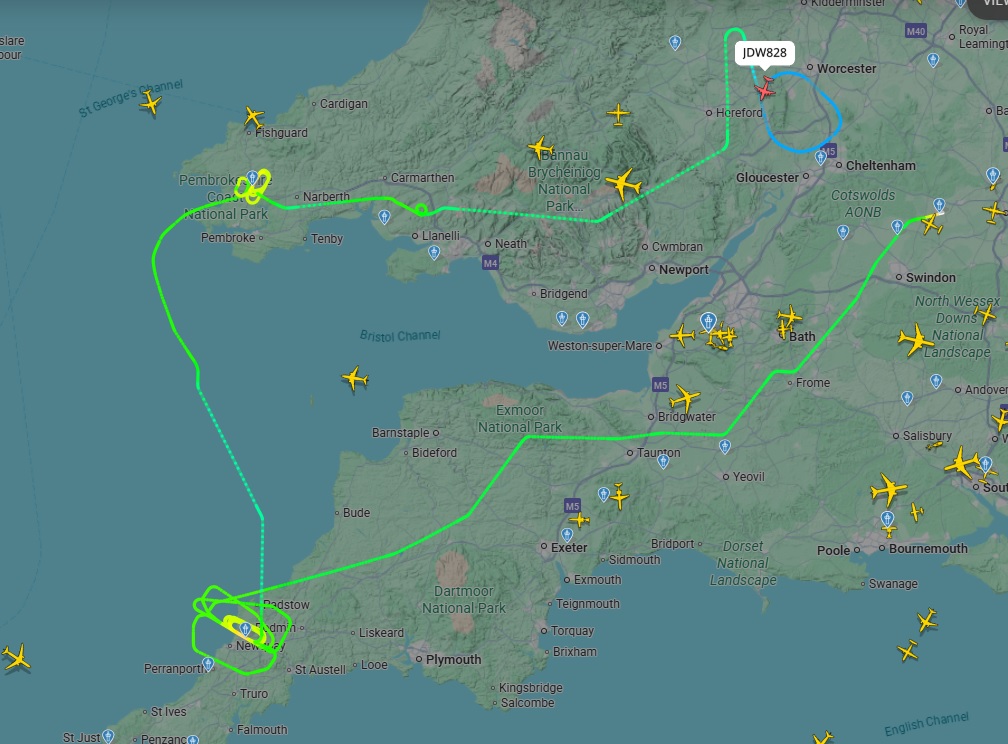
Flight tracking information identified the aircraft as JDW828, a Royal Air Force Boeing C-17A Globemaster III, operating from RAF Brize Norton.

The recorded track showed the aircraft conducting a wide training circuit across the south-west, including repeated manoeuvres over parts of Pembrokeshire and Cornwall, before routing back east.
The C-17 is a heavy-lift transport used by the RAF to move troops, equipment and humanitarian aid, and is regularly seen on training flights across the UK.

One resident said: “It was a awesome sight, so low it was almost at the chimney tops – the house was shaking!”
“Brilliant!”
A request for comment has been sent to the Ministry of Defence.
(Images: Gavin Young/Herald)













Crown Censure authorised after two Royal Tank Regiment soldiers were killed in Challenger 2 explosion in Pembrokeshire nine years ago
THE MINISTRY OF DEFENCE is facing the strongest sanction available to the Health and Safety Executive after two soldiers were killed in a tank explosion at Castlemartin Range in Pembrokeshire.
Cpl Darren Neilson, 31, and Cpl Matthew Hatfield, 27, died when an L30 gun exploded on a Challenger 2 tank during a live-firing exercise on June 14, 2017.
Two other soldiers were injured in the blast, including one who was left with life-changing injuries.
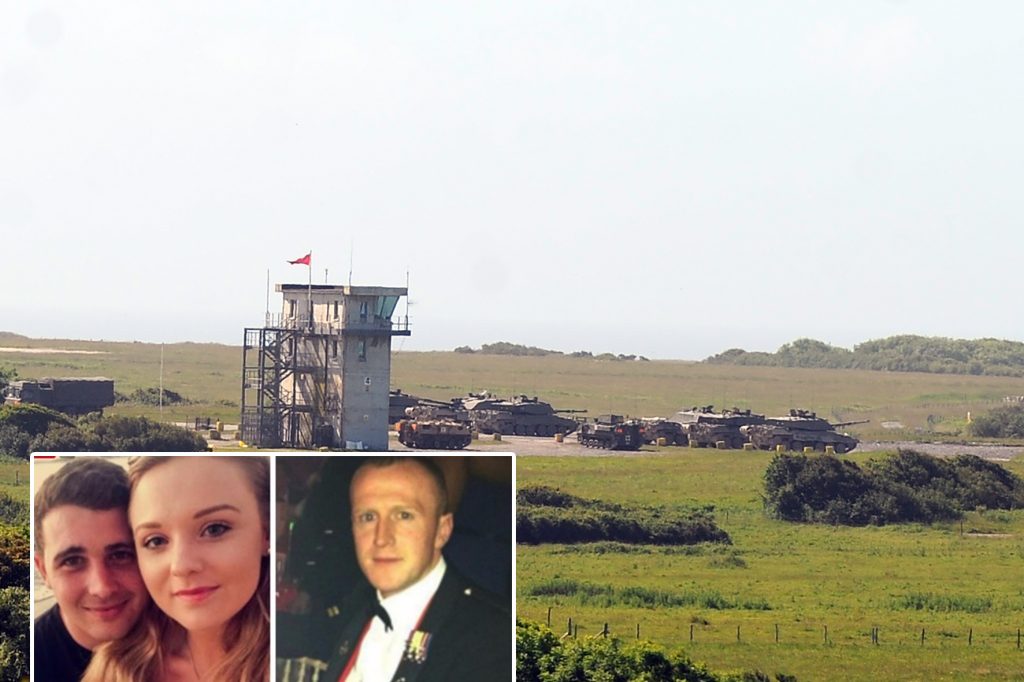
The Health and Safety Executive has now authorised a Crown Censure against the MoD. It has also authorised the prosecution of defence contractor Rheinmetall BAE Systems Land Ltd.
Rheinmetall BAE Systems Land Ltd, formerly BAE Systems Global Combat Systems Ltd, was responsible for producing the safety case for the tank and gun system, HSE said.
The MoD held ultimate responsibility for the health, safety and welfare of its soldiers, and for the suitability and sufficiency of the safety case, HSE added.
HSE has stressed that neither the authorisation of a Crown Censure nor the authorisation of criminal charges represents a finding of guilt.
A Crown Censure is the maximum sanction HSE can issue against a Crown body. Because of Crown immunity, the MoD cannot be prosecuted in the same way as a private company.
If the censure is accepted or confirmed, it will amount to a formal public reprimand and an official record of failure. It does not carry a financial penalty.
The prosecution of Rheinmetall BAE Systems Land Ltd is a separate criminal matter.
HSE said the Crown Censure relates to an alleged failure by the MoD to ensure the health, safety and welfare of soldiers under Section 2 of the Health and Safety at Work Act.
The charge against Rheinmetall BAE Systems Land Ltd relates to an alleged failure to ensure the health and safety of people not in its employment under Section 3 of the same Act.

A formal hearing will now take place in relation to the Crown Censure.

The criminal case against Rheinmetall BAE Systems Land Ltd will follow its own legal process.
The latest decision comes nine years after the fatal explosion at Castlemartin, one of the UK’s main armoured vehicle training areas.
The Herald is seeking answers to a number of questions arising from the HSE announcement.
Why has it taken nine years for the Crown Censure and prosecution decision to be authorised?
When will the formal Crown Censure hearing take place?
Will the MoD accept the Crown Censure?
What is the next legal step in the prosecution of Rheinmetall BAE Systems Land Ltd?
Have the families of Cpl Neilson and Cpl Hatfield been informed of the latest decision?
The Herald has contacted the Ministry of Defence, HSE and BAE Systems/Rheinmetall BAE Systems Land Ltd for comment.
Due to the active criminal proceedings, The Herald is not publishing detailed material from earlier proceedings concerning the circumstances of the explosion.
HSE has said the Crown Censure proceedings against the MoD and the criminal proceedings against Rheinmetall BAE Systems Land Ltd are separate matters.

WELSH defence and aerospace firms could be in line for a share of billions of pounds in new military spending after the UK Government published its long-delayed Defence Investment Plan.
The plan, announced on Tuesday, sets out how the Ministry of Defence will spend almost £300bn over the next four years, including an extra £15bn above the previous settlement.
Prime Minister Sir Keir Starmer said the investment would transform the Armed Forces, strengthen national security and support more than half a million defence-related jobs across the UK by the end of the decade.
But for Wales, the key question is whether the new money will translate into real contracts, skilled jobs and apprenticeships for Welsh companies, or whether the bulk of the spending will be concentrated elsewhere.
At the centre of the plan is a major shift towards drones, artificial intelligence, autonomous weapons and faster battlefield technology.
The Ministry of Defence says more than £5bn will be spent over the next four years on a “drone transformation” for the Armed Forces.
That includes £650m for inexpensive expendable autonomous systems, including drones and uncrewed ground vehicles, to increase the lethality of the Army, Commando Force and Special Forces.
The plan also includes nearly £2bn for a new Digital Targeting Web, designed to connect the Armed Forces more effectively and allow faster decisions on the battlefield.
A further £790m will be spent on protecting the UK and overseas bases from air, drone and missile threats, including new radars, sensors, directed energy weapons and expanded counter-drone systems.
The Government has also committed £11bn to munitions and weapons, including long-range strike weapons, low-cost cruise missiles and one-way effectors. Ministers say at least six new energetics factories will be built by 2030 to increase the UK’s capacity to produce munitions.
For Wales, those commitments are significant because the country already has a sizeable aerospace and defence sector, as well as a specific UK Government-backed plan to grow its role in autonomous systems.
Earlier this year, the UK Government announced a £50m Wales Defence Growth Deal, designed to make Wales a launchpad for next-generation autonomous technology.

That deal was presented as an opportunity to support high-skilled roles and strengthen Wales’ position in areas such as surveillance drones, autonomous systems, cyber security, advanced manufacturing and defence research.
The Defence Investment Plan now becomes the first major test of whether those ambitions are backed by procurement decisions.
Wales already has a substantial defence and aerospace footprint, with major employers including BAE Systems, General Dynamics UK, Airbus, Thales, GE Aerospace, Rolls-Royce and Safran.
The combined aerospace and defence sector in Wales directly employs around 16,000 people, with turnover of £3.7bn and a contribution of approximately £1.5bn in gross value added to the Welsh economy.
Wales is also home to a wider supply chain of engineering, electronics, software, cyber security and manufacturing firms that could potentially benefit from the move towards drones, AI and autonomous warfare.
But industry figures, unions and politicians are likely to ask how much of the promised spending will actually reach Wales.
Welsh Government has previously said Wales receives around 3% of total Ministry of Defence expenditure, with an ambition to increase that to 5% or more as overall defence spending rises.
The new plan will therefore be watched closely by ministers, unions, defence firms, universities and local authorities across Wales.
GMB Union said the Defence Investment Plan provided some stability after months of uncertainty, but warned that workers would judge it by whether it delivered secure jobs and investment.
Matt Roberts, GMB National Officer, said: “Today’s Defence Investment Plan provides some stability for a sector besieged by insecurity.
“The challenge now is delivery. Workers will judge this plan on real jobs, real investment, and real outcomes.
“We must rebuild our own sovereign capability, and strong defence depends on a strong workforce.
“Procurement must prioritise social value and public money must come with the right strings attached, fair pay, decent conditions, and trade union recognition.
“GMB welcomes renewed focus on defence investment, but the real test is whether this delivers jobs, skills, and secure work here in the UK.”
The Government has also announced a new £50bn defence export facility through UK Export Finance, aimed at helping British defence companies win contracts overseas.
That could be important for Welsh firms looking to scale up and compete internationally, particularly if smaller businesses can access support rather than being locked out by larger prime contractors.
The Wales Regional Defence and Security Cluster, launched earlier this year, was designed to bring together small businesses, larger contractors, universities and colleges to strengthen Welsh supply chains and improve access to Ministry of Defence work.
Its role is likely to become more important if the UK’s defence economy shifts further towards dual-use technology, cyber security, artificial intelligence and autonomous systems.
BAE Systems’ Glascoed site in Monmouthshire is one of the best-known defence manufacturing sites in Wales, employing hundreds of people in munitions work.
General Dynamics UK also has operations in south Wales, including work linked to armoured vehicles, tactical communications and systems integration.
Airbus has a major presence in north-east Wales, while Thales, Safran, GE Aerospace and other firms are part of a broader high-value manufacturing and technology base.
The Government says the new plan will also support the Global Combat Air Programme, with more than £8bn over the next four years for the next-generation stealth fighter jet being developed with Japan and Italy.
More than £63bn will be spent over the next four years on the UK’s nuclear deterrent, including Dreadnought and SSN-AUKUS submarines, a new warhead and the purchase of 12 F-35A aircraft.
Those programmes are not Wales-specific, but ministers argue that the wider increase in defence spending should support jobs and supply chains across the UK.
There are also potential implications for west Wales.
Pembrokeshire is home to important military training infrastructure, including Castlemartin Range, while Manorbier has long been associated with air defence training.
Cawdor Barracks near Brawdy has also been the focus of separate Ministry of Defence plans for the proposed Deep Space Advanced Radar Capability project, known as DARC.
Any increase in spending on drones, surveillance, radar, electronic warfare or autonomous systems could raise questions about whether Welsh military sites will receive further investment or new roles.
There may also be interest in whether Welsh ports, marine engineering firms and coastal infrastructure could play any part in the development of uncrewed naval vessels and high-speed military craft.
The Defence Investment Plan includes a shift towards what ministers call a “hybrid Navy”, combining traditional ships with autonomous vessels, AI and uncrewed systems.
Plans include at least six new Common Combat Vessels to act as control hubs for uncrewed systems in the 2030s, alongside high-speed boats for Royal Marine Commandos.
For coastal areas such as Pembrokeshire, that raises a natural question: will maritime defence investment create opportunities for Welsh ports, marine services and engineering businesses?
The plan has been delayed for months amid arguments in Whitehall over money.
Former Defence Secretary John Healey resigned after warning that the funding package fell short of what was needed to protect the UK and meet existing commitments.
Armed Forces Minister Al Carns also quit, saying the plan was not transformative enough in the face of rapidly changing warfare.
New Defence Secretary Dan Jarvis has said the character of warfare is changing rapidly, with uncrewed systems now defining conflicts in Ukraine and the Middle East.
He said the UK had to embrace new technology to give British forces the edge.
Sir Keir said the world was becoming more dangerous and volatile, and that the UK had to rebuild ammunition stockpiles, invest in cutting-edge technology and strengthen the Armed Forces.
The Conservatives have criticised the plan as “too little, too late”, while the Liberal Democrats said the Government had dangerously short-changed the Armed Forces.
Critics have also questioned whether the plan goes far enough to meet NATO expectations and whether the funding will be sufficient to deliver all the ambitions set out in the Strategic Defence Review.
The Government says defence spending will rise from £54bn a year under the previous government to almost £80bn a year by 2029, taking UK defence spending to 2.7% of GDP.
Ministers say the country remains on track to meet NATO defence spending targets by 2035.
There will also be political questions over how the plan is funded, with the Prime Minister saying some capital projects in areas such as roads and energy will no longer go ahead as previously planned.
For Wales, that raises a further issue: whether any Welsh infrastructure schemes could be affected by the wider reprioritisation of public spending.
The Government insists the plan will not take resources away from day-to-day frontline services.
For Welsh industry, however, the immediate question is more practical.
Will the £5bn drone programme include Welsh firms?
Will the new munitions spending benefit existing Welsh sites?
Will smaller companies get a route into defence contracts?
Will universities and colleges in Wales be given funding to train the workforce needed for the new defence economy?
And will west Wales, with its existing military estate and strategic coastal position, see any direct benefit?
The move towards drones and autonomous systems is no longer theoretical. It is already changing warfare.
The question now is whether Wales will be a serious part of that new defence economy, or whether it will once again be left fighting for a small share of UK military investment.

Flag-raising forms part of national show of support for service personnel, veterans, reservists and families
LANDMARC Support Services has raised the Armed Forces Day flag at Castlemartin Training Area to mark Armed Forces Week 2026.
The event, held in partnership with the Defence Infrastructure Organisation, formed part of a national celebration across the Defence Training Estate, with flags being flown at military training establishments across the UK.
Landmarc said the gesture was intended to show appreciation for serving personnel, veterans, reservists, military families and the wider Armed Forces community.
The company works with the Ministry of Defence and DIO to manage and operate the Defence Training Estate, providing training support, rural land maintenance and facilities management to help military personnel train effectively.

Support for veterans
Landmarc has also highlighted its work supporting service leavers as they move into civilian employment.
The company recently held a careers event called Landmarc Pathways: From Service to Second Career, offering service leavers guidance, networking opportunities and information about career routes within Landmarc and beyond.
It said it plans to continue running careers-focused initiatives for members of the Armed Forces community.
Landmarc has also been nominated three times at this year’s British Forces in Business Awards, which recognise former military personnel in second careers and employers who support veterans.
The company has expanded its partnership with X-Forces Enterprise by extending its Guaranteed Interview Scheme for veterans, reservists and military spouses and partners to include the Cadets in Enterprise programme.
The scheme forms part of Landmarc’s commitment to the Armed Forces Covenant, which it re-signed in 2024 after achieving the Defence Employer Recognition Scheme Gold Award.
‘Proud to show support’
Mark Neill, Managing Director at Landmarc, said: “Our recent careers event enabled us to provide practical support to service personnel and veterans preparing for the transition into civilian employment.
“Understanding how to translate military skills for civilian roles, build professional networks and explore new career pathways can make a significant difference to achieving a successful transition.

“As a veteran myself, I know first-hand how important Armed Forces Week is in recognising the contribution of those who serve, as well as the wider Armed Forces community, and we are proud to show our support during this special week.”
Brigadier Hatcher, DIO’s Head of Overseas and Training Region, added: “Armed Forces Week provides an important opportunity to recognise and thank the people who serve as well as their families, veterans and reservists.
“It’s fantastic to see the public, businesses, and fellow service members come together in support. Alongside our colleagues at Landmarc, we are proud to raise the flag at sites across the UK to honour their contribution.”



Crime9 hours ago
Man, 37, found dead following major police response in Pembroke Dock
Death not being treated as suspicious as police make statutory referral to IOPC following active investigation A 37-YEAR-OLD man has...


Community13 hours ago
Household Cavalry drum horse returns home to Pembrokeshire for final farewell
Dyfed Willa Rose, who became Major Juno and the first mare to serve as a Household Cavalry Drum Horse, was...


News1 day ago
Jo Stevens out as Welsh Secretary as Burnham reshapes government
Cardiff East MP repeatedly visited Pembrokeshire to champion clean energy jobs, but her successor inherits unresolved questions over Milford Haven’s...


Crime1 day ago
Teen cleared of attempted murder but guilty of GBH after Milford teacher stabbed
Jury returns 11-1 majority verdict on charge of causing grievous bodily harm with intent, with sentencing set for September 3...


Community2 days ago
French troops march through Fishguard as Britain’s last invasion returns to life
Battle scenes, cavalry displays and a surrender procession brought one of Pembrokeshire’s most extraordinary stories back to the streets MUSKET...


News2 days ago
Andy Burnham promises new politics as he enters Downing Street
New Prime Minister admits politicians have “not been good enough” as he sets out a ten-year plan for Britain and...


Health3 days ago
Two new surgeons appointed as Hywel Dda admits orthopaedic waits remain too long
Health board says it is increasing capacity after figures revealed hip replacement patients waited an average of 64 weeks HYWEL...


Community3 days ago
84-year-old man rescued after falling overboard near Tenby
A MAYDAY call sparked a major nighttime rescue after an 84-year-old man fell from a tender and was swept towards...


Crime4 days ago
Jury hears final arguments in Milford Haven teacher stabbing trial
Defence says there was no motive or intention to kill as judge reviews competing accounts of classroom knife incident SPECIAL...


News5 days ago
Andy Burnham becomes Labour leader and prepares to enter No 10
Former Greater Manchester mayor promises an ‘unashamedly Labour’ government after completing extraordinary return to Westminster ANDY BURNHAM has been formally...
-

 Health2 days ago
Welsh Ambulance Service invites public to AGM and Board meeting
-

 featured10 hours ago
From a father-and-son project to an award-winning campervan business
-
Crime1 day ago
Teen cleared of attempted murder but guilty of GBH after Milford teacher stabbed
-

 Crime1 day ago
What the Milford Haven School stabbing verdict really means
-

 Business2 days ago
Port appoints two new directors as energy and regeneration projects advance
-

 Entertainment2 days ago
Imperial Hotel announces four-day Bank Holiday celebration in Tenby
-
Community13 hours ago
Household Cavalry drum horse returns home to Pembrokeshire for final farewell
-
News2 days ago
Andy Burnham promises new politics as he enters Downing Street