


Comment
Holocaust Memorial Day: The gas chambers didn’t just appear

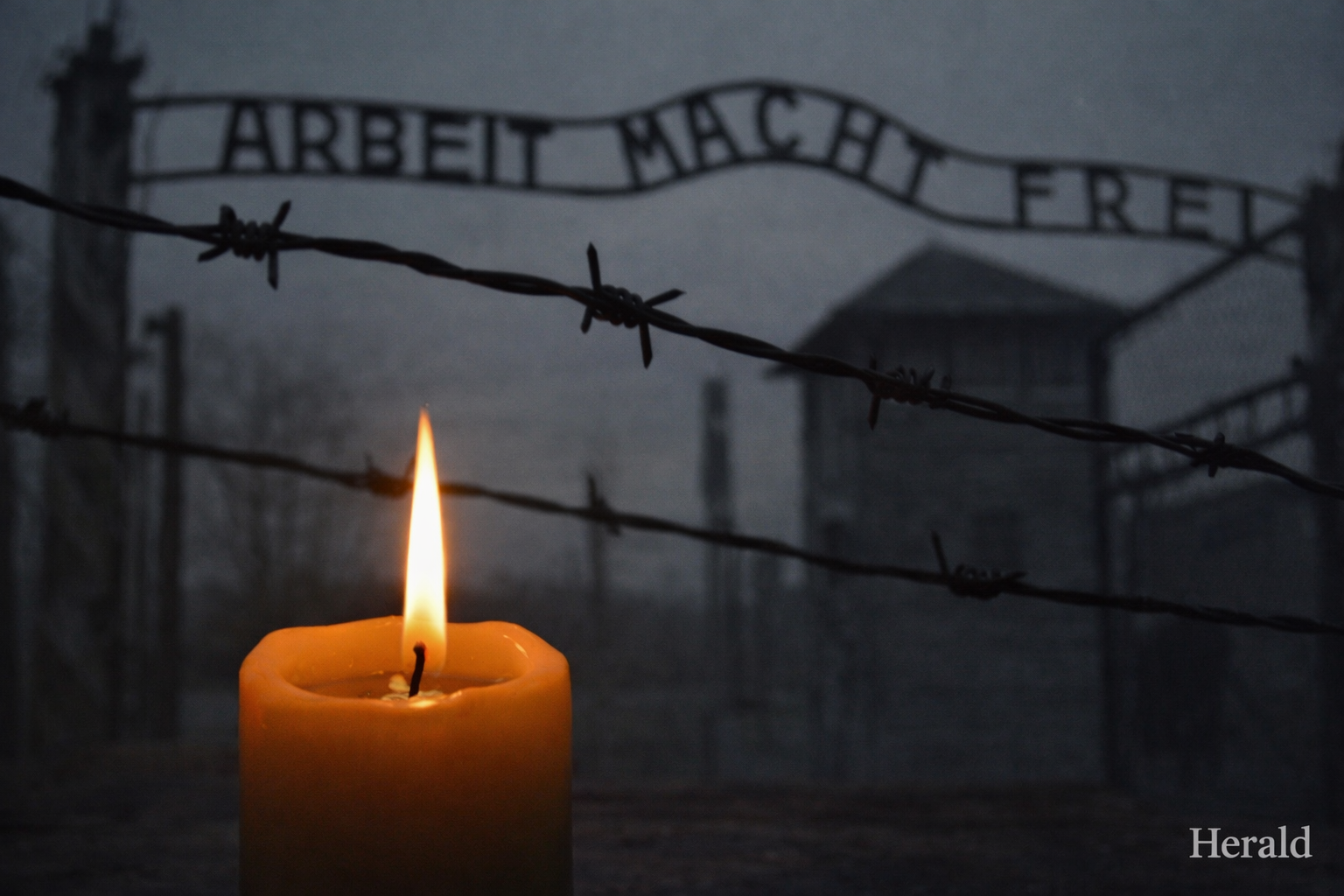
Opinion piece by Herald editor Tom Sinclair
TODAY is Holocaust Memorial Day, January 27, 2026. Across Wales we remember the six million Jews murdered by the Nazis, and the Roma, disabled people, gay men and women, political opponents, and many others the regime labelled undesirable. We light candles, say “never again”, and tell ourselves that kind of evil is locked in the past.
But if remembrance ends at the gates of Auschwitz, we miss the real lesson.
The Holocaust did not begin with gas chambers or cattle trucks. It began in ordinary places, shops, streets, pubs, council chambers, with words that stripped people of their humanity, laws that pushed them to the margins, and propaganda that turned neighbour against neighbour. It began when ordinary people started seeing others as problems, as threats, as not really belonging.
It began with politicians pointing fingers at who to blame.
With newspapers branded enemies of the people.

With courts and rules quietly bent.
With minorities held responsible for hard times.
With cruelty sold as common sense.
And above all, it began with silence.

Last week in Milford Haven, I saw that silence in action.
A shopkeeper, someone who came here from another country, set up a business, pays his way and serves the town, was racially abused inside his own shop. He tried to stop a man walking out with unpaid beer. For doing his job, he was told to “go back home”, told he was not welcome. The thief responded by sweeping stock off the shelves and smashing it onto the floor.
I asked why he did not ring the police. His answer came straight away. “What’s the point? They won’t do anything. It’ll just happen again tomorrow.”

That exchange stuck with me. Not because it was uniquely shocking, but because it felt horribly familiar. No new laws. No uniforms. No symbols. Just raw contempt, casual racism, and the shared understanding that nothing would come of it. A man contributing to the community was made to feel like an outsider in his own workplace, and he had already lost faith that anyone would step in to protect him.
This is how it starts. Abuse becomes normal. Victims stop reporting because experience has taught them the system will not respond. Prejudice is dismissed as “just words” or “banter”. Indifference takes hold.
We are often told not to make comparisons, not to be alarmist, not to link today with that past. Fair enough. History does not repeat itself in neat patterns. But it does move in stages, and the most dangerous stage is the one people fail to notice. The slow normalisation of division, cruelty and disregard.
In towns like Milford Haven, Haverfordwest and Pembroke Dock, places built on hard work and looking out for one another, we know what community means. We have weathered closures, recessions and hardship together. We do not turn away when one of our own is targeted.
Yet when a shopkeeper loses faith that the police or the public will stand with him, something vital erodes. When hate goes unchecked, the ground is quietly prepared for worse.
Holocaust Memorial Day is not about guilt. It is about vigilance. It asks the hardest question of all. Not what monsters once did, but what ordinary people allowed by doing nothing.
The worst crimes in history were not announced in advance. They were built quietly, policy by policy, lie by lie, while too many looked the other way.
That is why we still remember today. And why, in our Welsh towns, remembering must mean refusing silence.
If you see it, say something. If you hear it, challenge it. If someone is targeted, stand with them. Because “never again” only holds if we make it hold, here and now, in the places we live.

WHEN I was studying law at university, constitutional law lectures were easily the most boring part of the course.
Dry cases. Ancient statutes. Endless discussion about parliamentary powers, constitutional conventions and obscure historical arrangements that seemed far removed from everyday life.
At the time, I thought it was all terribly dull.
Looking back now, I realise I had completely missed the point.
Constitutional law is not simply about legal rules. It is about the story of how Britain came to govern itself. Every institution, every convention and every reform is part of a long historical journey stretching back centuries.

This week marks one of those rare moments when that history visibly turns a page.
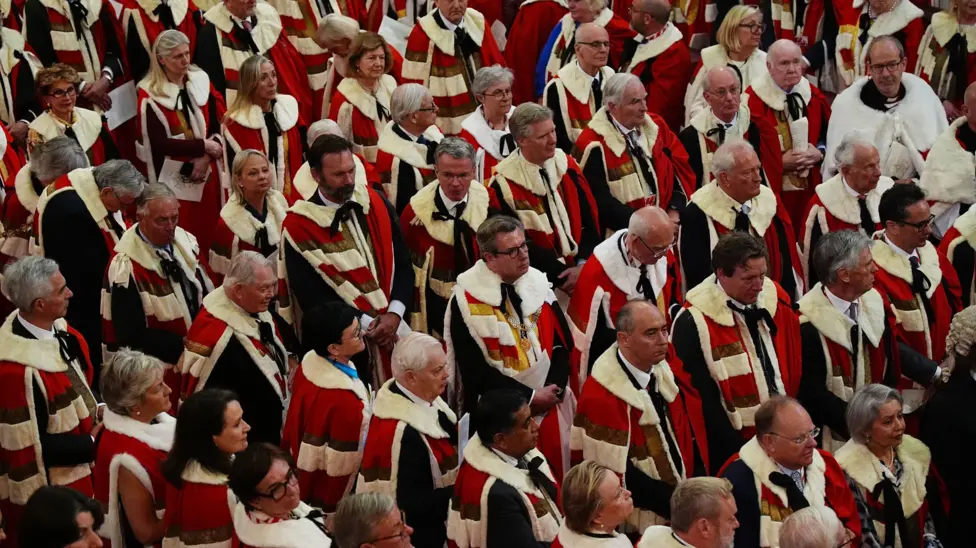
The remaining hereditary peers in the House of Lords are set to lose their automatic right to sit and vote in Parliament. When that happens, a constitutional principle that has shaped British law and government for more than seven hundred years will finally come to an end.
The origins of the Lords lie in the medieval councils summoned by Edward I of England, when nobles and bishops were called together to advise the Crown. Over time, attendance at Parliament became tied to noble titles, and those titles were inherited.
From that point onward, birth carried political power. If your family held a peerage, you could sit in Parliament and help shape the laws of the kingdom.
For centuries that arrangement formed one of the pillars of Britain’s constitutional structure. It survived civil war, revolution, reform acts and the expansion of democracy.
Even the great wave of reform in 1999 only reduced the number of hereditary peers rather than eliminating them entirely.
Now the final remnants of that system are set to disappear.

For critics, the change is long overdue. The idea that someone should help make the law purely because of who their parents were sits uneasily with modern democratic principles.
But the hereditary peers also represented something else — a direct and living connection to the deep historical roots of the British constitution.
Many of those who remained after the reforms of the late twentieth century became respected contributors to parliamentary scrutiny. They were part of the institutional memory of Parliament, carrying with them traditions that stretched back through generations.
The removal of hereditary membership will not fundamentally alter the role of the House of Lords. It will remain a revising chamber that scrutinises the work of the House of Commons.
But symbolically, something important is ending.
A constitutional principle that endured for more than seven centuries — longer than most political systems anywhere in the world — is finally passing into history.
Those constitutional law lectures I once found so dull were not just about dusty legal doctrines.
They were about the slow evolution of the British state itself.
And this week, that story takes another step forward.
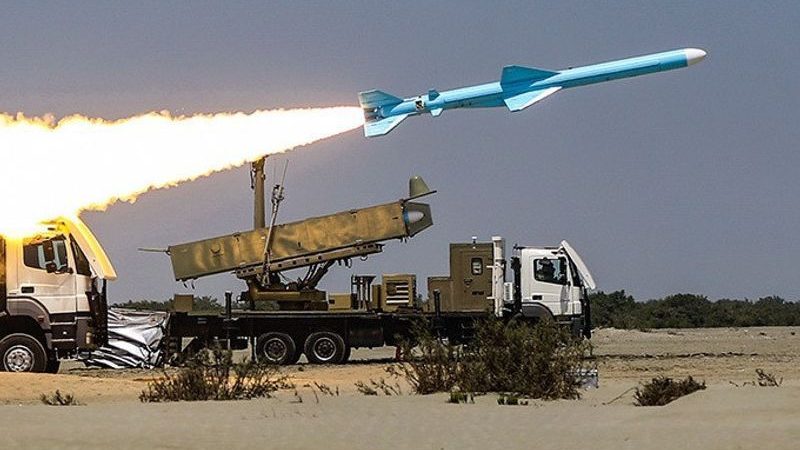
IN THE FIRST weeks of the latest confrontation between the United States and Iran, headlines have focused on airstrikes, missile exchanges and the destruction of Iranian launch sites. Some commentators have rushed to declare that Tehran is already on the back foot.
That conclusion is dangerously premature.
Iran is not Iraq in 2003, nor Afghanistan in 2001. It is a large, heavily populated state with a formidable military doctrine built around survival, endurance and retaliation. Even after weeks of strikes, Iran retains several advantages that make the idea of a quick victory highly doubtful.
A major factor is the sheer scale of Iran’s military resources. The country possesses one of the largest missile arsenals in the Middle East, with hundreds of ballistic missiles capable of striking targets across the region. Alongside this, Iran has developed a substantial drone programme and a wide range of rockets and cruise missiles designed specifically to overwhelm sophisticated Western air defence systems.
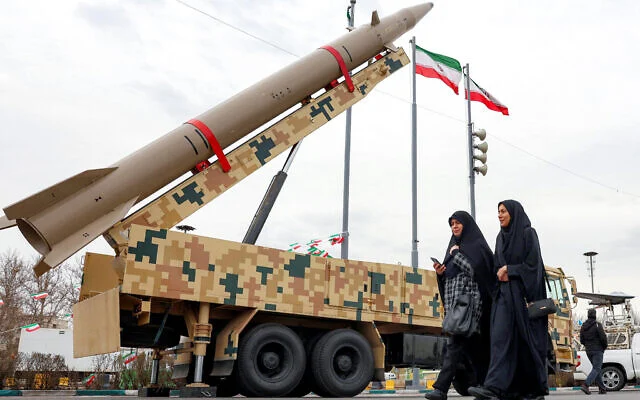
These weapons form part of a layered strategy developed over decades. Iran has constructed underground facilities, often referred to as “missile cities,” where large quantities of drones, missiles and other weapons are stored in tunnels beneath mountains and desert terrain. Even if airstrikes destroy some launchers or storage sites, the system is designed to survive and regenerate.

Geography also makes Iran one of the most difficult countries on earth to invade.
The Zagros Mountains stretch for roughly 1,500 kilometres along Iran’s western frontier — precisely the direction any land invasion from Iraq would likely take. These mountains create narrow passes, chokepoints and defensive high ground that strongly favour defenders and slow mechanised armies.
Iran is also vastly larger than the countries the United States has fought in recent decades. It is almost four times the size of Iraq and has a population of more than eighty million people. Any ground war there would not resemble the rapid march to Baghdad in 2003. It would almost certainly become a grinding and prolonged campaign.
History offers a warning about underestimating Iran’s ability to absorb invasion.

In 1980, Saddam Hussein’s Iraq — backed by many Western and regional powers — launched a full-scale invasion of Iran. The conflict lasted eight brutal years. Despite suffering enormous casualties and economic damage, Iran ultimately survived the war and forced Iraq into a costly stalemate.
That experience shaped Iran’s entire modern military doctrine. The country has built its defence strategy around endurance, attrition and the ability to mobilise large numbers of fighters if necessary.
Iran also holds one of the world’s most powerful economic pressure points: the Strait of Hormuz.

Roughly a fifth of the world’s oil shipments pass through this narrow waterway linking the Persian Gulf to global markets. Iran’s naval strategy focuses on the ability to disrupt or potentially close that route using sea mines, fast attack boats, anti-ship missiles and drones. The geography of the strait, with narrow shipping lanes running close to Iran’s coastline, makes it particularly vulnerable to such tactics.
Even limited disruption to shipping there can push global oil prices sharply higher and trigger wider economic shocks. In other words, Iran does not necessarily need to defeat the United States militarily to inflict serious damage on the world economy.
There is also the wider geopolitical picture to consider.
While Russia and China are unlikely to intervene directly in the conflict, both powers have strategic reasons to see the United States tied down in a prolonged Middle Eastern war. Russia benefits from higher energy prices and from American military attention being diverted elsewhere. China relies heavily on Gulf energy supplies and has developed increasingly close economic ties with Tehran.
Neither country is likely to support a scenario in which Iran is completely defeated or the regional balance shifts decisively in Washington’s favour.
For that reason alone, the conflict is unlikely to remain a simple bilateral confrontation (or trilateral including Israel).
The economic consequences of the conflict could also reshape the political landscape in the United States itself. Rising oil and gas prices are already beginning to feed into inflation and household costs, and history shows that wars which drive up energy prices rarely remain popular for long. If disruption in the Strait of Hormuz continues, American motorists and businesses will feel the effects within weeks.
With mid-term elections approaching, the political pressure on Washington could grow rapidly. Voters are already asking two simple questions: why are we fighting this war, and what exactly is the endgame?
Military technology may give the United States overwhelming air superiority, but wars are not won from the air alone. Iran’s strategy has never been about defeating the United States in a conventional battlefield clash. Instead, it is about making victory so costly — economically, politically and militarily — that outside powers eventually conclude the war is not worth continuing.
That strategy helped Iran survive the Iran-Iraq war in the 1980s.
It may yet shape the outcome of this conflict as well.
For now, the early headlines suggesting Iran is already beaten say far more about wishful thinking than about the realities of war. The uncomfortable truth is that this conflict may only just be beginning — and the question facing the world is no longer how it started, but how it ends.

After a fire destroyed the village school, rebuilding was described as the “preferred option”. Three years later, councillors have voted to close it instead.
WHEN Manorbier Church in Wales VC School was devastated by fire in October 2022, the community did what communities always do in the face of adversity: it rallied.
Teachers carried on teaching.
Parents carried on supporting.
Children carried on learning.
Classes moved into temporary accommodation at Jameston Community Hall and, despite the upheaval, the school community stayed together.
And crucially, the council itself appeared to signal that this was only temporary.
In March 2023 Pembrokeshire County Council announced it had backed what it described as “positive steps towards rebuilding” the school. Council documents went further, describing full reinstatement as the “preferred option.”
Pupils would continue learning in temporary accommodation while rebuilding work took place.
Those words mattered. They created hope.
Not unrealistic hope. Not wishful thinking.
Hope based on what the council itself was saying.

So the community carried on.
Parents campaigned to save the school.
A petition was launched.
The Diocese of St Davids objected to the closure proposals.
Bishop Dorrien Davies visited the school community in their temporary classrooms.
Through all of it, the assumption remained the same: the school would eventually return.

But this week that hope was extinguished.
Despite a consultation in which more than 90 per cent of responses opposed closure, councillors voted to proceed with plans to discontinue the school.
The explanation offered is that the insurance settlement following the fire fell far below the cost of rebuilding the school, while falling pupil numbers and surplus places in nearby schools mean the facility is no longer considered viable.
Those may be the financial and strategic realities the council now faces.
But they do not erase the uncomfortable truth at the centre of this story.
For three years a community was allowed to believe its school would be rebuilt.
Then, quietly, the direction of travel changed.
To be fair, the council now insists that no promise was ever made. The decision in 2023, it says, was simply to commission a feasibility study and explore options.
Technically, that may well be correct.
But leadership is not just about technicalities. It is about clarity, honesty and managing expectations.
If rebuilding was unlikely, the community should have been told that plainly from the start.
Instead, hopeful language about reinstatement allowed a very different belief to take hold — that Manorbier School would one day reopen.
Even Cabinet Member for Education Cllr Guy Woodham acknowledged during Thursday’s debate that those expectations existed.
“There may have been a general perception that a decision had been made to reinstate the school,” he told councillors.
That perception did not appear out of thin air.
It came from the words the council itself chose to use.
The result is a decision that now feels, to many residents, less like an unavoidable policy choice and more like a betrayal.
Manorbier is not simply losing a building. It is losing a village school, a community hub and a Church in Wales education provision that has served generations.
Rural schools across Wales face difficult challenges. Falling pupil numbers and financial pressures are real issues.
But when communities are asked to accept painful decisions, they deserve something in return: honesty.
Communities can cope with difficult truths.
What they struggle to accept is the feeling that they were allowed to hope for something that was never really going to happen.
For the children who continued learning in a community hall after the fire, and for the parents who believed their school would return, that hope has now gone.
And many in Manorbier will be left asking the same question:
Why were we led to believe otherwise?
Cllr Huw Murphy said in the council chamber in December: “If there ever was a template written on how not to deal with a catastrophic incident at a school, we have written it here.”
He’s right.



Education3 hours ago
Milford Haven school plans unveiled but funding not yet secured
PLANS for a new £100 million school in Milford Haven have been unveiled, but the project has not yet secured...


News4 hours ago
Council unveils plans for new state-of-the-art secondary school in Milford Haven
PEMBROKESHIRE COUNTY COUNCIL has revealed plans for a new state-of-the-art school in Milford Haven, promising modern, inspiring learning spaces for...


Health7 hours ago
NHS waiting list falls — but cancer delays and diagnostic backlog worsen
Record progress claimed by Welsh Government as critics warn key targets are still being missed THE NHS in Wales has...


Crime1 day ago
Rapist jailed after ‘abhorrent’ attacks on woman and children
Haverfordwest man told police “women won’t have sex without force” A HAVERFORDWEST man who raped a woman and a young...


News1 day ago
Reform secures first Pembrokeshire councillor in Hakin by-election win
Late Reform candidate takes seat as independent surge and Labour withdrawal shape contest REFORM UK candidate Scott Thorley has won...


News2 days ago
Scott Thorley elected as Pembrokeshire’s first Reform councillor
REFORM UK candidate Scott Thorley has won the Hakin by-election after securing 179 votes. The full result is as follows:...


News2 days ago
Police confirm man has died after being recovered from River Cleddau
Major emergency response in town centre after concerns raised for man in water A MAN has died after being recovered...


Community2 days ago
Davies and Kurtz urge groups to seek employability funding
Community organisations in Pembrokeshire encouraged to apply for new grants supporting skills and job access LOCAL Senedd Members Samuel Kurtz...

News2 days ago
Emergency services flood Haverfordwest after reports of person in river
Town centre sealed off as multi-agency response continues A MAJOR emergency response is underway in the centre of Haverfordwest after...


News2 days ago
Detectives receive surge of new information in bid to identify man found at Powys reservoir
Public response follows release of facial image as officers pursue fresh lines of enquiry DETECTIVES investigating the identity of a...
-

 Health6 days ago
Welsh Ambulance Service to host bi-monthly Board meeting
-

 News5 days ago
Rayner and Lammy visit Wales to discuss justice and community safety
-
 News4 days ago
Fishguard linked to allegations in Many Tears Animal Rescue investigation
-
News2 days ago
Emergency services flood Haverfordwest after reports of person in river
-

 Charity7 days ago
Many Tears Animal Rescue visited by inspectors as police attend in support role
-

 Local Government5 days ago
Investigation confirmed after inspectors visit Many Tears Animal Rescue
-

 Farming7 days ago
Plea to remove decades old ‘unviable’ planning conditions from property
-

 Crime6 days ago
Dangerous driver sentenced following a police chase through Carmarthenshire streets