


Climate
Breaking down barriers between finance and industry in offshore renewables sector

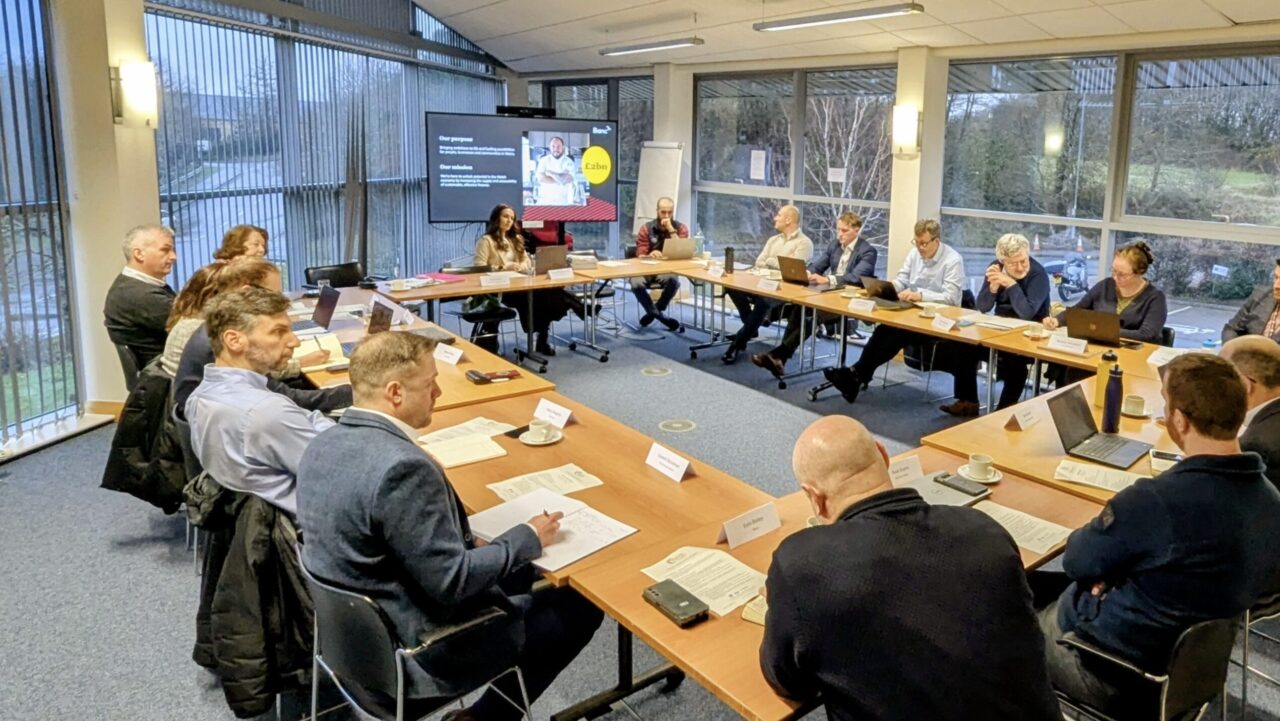
EARLIER this week, Marine Energy Wales brought together senior representatives from national and devolved finance institutions with developers, ports and supply-chain companies operating across Wales’ offshore renewable energy sector for a dedicated finance roundtable in Pembroke Dock. Attendance was limited to premium MEW members to allow for frank, focused discussion.
The session was intentionally designed to be different.
Rather than relying on formal presentations or sales pitches, the roundtable created a facilitated, closed-door space for open dialogue. Finance organisations were able to explain clearly how they operate, what types of projects they can support, and where constraints still exist. Industry participants, in turn, set out the real-world challenges they are facing across tidal energy, floating offshore wind, port infrastructure and supply-chain development.
What emerged was more than information sharing—it was a clearer, shared understanding of how decisions are made on both sides.
From siloed conversations to shared problem-solving
A consistent theme from the discussion was that significant public and institutional finance is now available to support clean energy projects. However, navigating that landscape remains complex, particularly for early-stage developments, smaller supply-chain businesses and emerging technologies.

By bringing the right people into the room at the same time, the roundtable helped to:
- demystify how different finance bodies assess risk, scale and project readiness
- highlight where policy ambition, market signals and investment criteria are not yet aligned
- identify opportunities where better sequencing and coordination of funding could unlock progress
- establish direct relationships that will support follow-up conversations beyond the room
The discussion also surfaced where gaps remain. In particular, the need for clearer market signals and more tailored support for tidal stream and other early-stage marine technologies was repeatedly raised. These are challenges that are difficult to address in isolation, but far more productive to tackle collectively.
The value of convening
For Marine Energy Wales, the roundtable reinforced the importance of our role as a neutral convener for the sector.
Members consistently tell us that access to finance is one of the most significant barriers to progress—not only in terms of capital availability, but in understanding how to engage effectively with funders. At the same time, finance organisations are keen to deepen their understanding of project development timelines, technology risk and the scale of Welsh supply-chain ambition.

Creating space for those conversations is where real value is added.
This is not about Marine Energy Wales brokering individual deals. It is about building shared understanding, reducing friction, and helping to align finance, policy and industry around credible pathways to delivery.
What comes next
This roundtable was not a one-off.

Marine Energy Wales is committed to continuing this work, developing structured and trusted forums where finance, industry and government can engage early, openly and constructively. As Wales moves from ambition to delivery in offshore wind and tidal energy, these relationships and conversations will be critical to ensuring projects are investable, deliverable and anchored in Welsh economic benefit.
We will continue to work with our members and partners to identify priority issues, convene the right voices, and help turn opportunity into tangible outcomes on the ground.


THE LATEST figures are in, and they’re impressive – Wales has pushed its recycling rate up to 68.4% in 2024-25, climbing from 66.6% the previous year. It’s a remarkable turnaround for a country that was recycling just 5% of its waste before devolution.
The boost comes as Wales’ new workplace recycling rules begin to show real results. Businesses, public sector organisations and third sector workplaces across the country are now required to separate key recyclable materials, and it’s making a measurable difference.
Local authorities collected an additional 8,187 tonnes of recyclable material from workplaces this year – that’s a 42% jump compared to last year. Meanwhile, residual waste from workplaces has dropped by 15.8%, meaning thousands of tonnes of valuable materials are being fed back into the economy rather than burned or buried.
The landfill figures tell their own story – just 0.7% of Wales’ waste ended up in landfill in 2024-25, compared to 95% before devolution.
Deputy First Minister Huw Irranca-Davies, who has responsibility for climate change, said: “We continue to build on Wales’ already world class recycling. This shows the huge shift in attitudes over the last few decades; recycling is now a part of who we are as a nation.”
He added: “I’m proud of every person in Wales who has played their part in getting us to where we are today – in our homes and now in our workplaces too. Thank you for joining this collective effort.”
Wales currently sits second in the world for recycling – leading the UK and trailing only Austria in global rankings published by Eunomia Research and Consulting and Reloop in 2024. More than half of Welsh councils hit the 70% recycling target, and over 90% improved their rates year-on-year.
The Deputy First Minister said: “Our recycling track record is something to be proud of as we continue taking action to tackle the climate and nature emergency and grow the green economy. But let’s not be complacent. Being number one in the world for recycling is within our grasp if we keep up the momentum.”

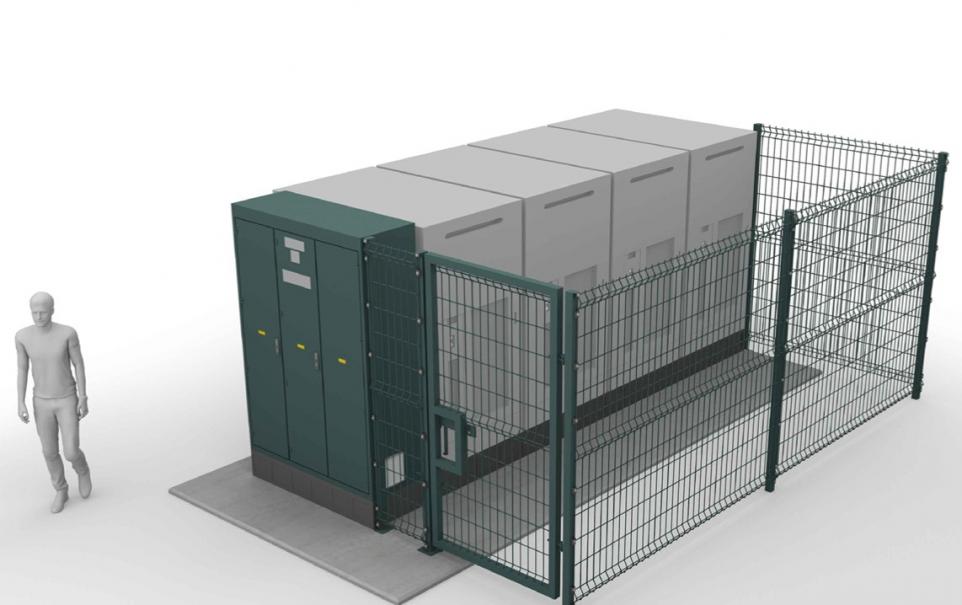
FURTHER micro energy storage facility ‘battery box’ schemes in Pembrokeshire have been considered by county planners, with one backed and one withdrawn by the applicants.
In two separate applications to Pembrokeshire County Council, AMP Clean Energy sought permission for micro energy storage projects on land at Waterloo Industrial Estate, Eastern Avenue, Pembroke Dock, and land between Steynton Road and Sheffield Drive, Milford Haven.
A supporting statement accompanying each application says: “AMP Clean Energy is developing Battery Boxes across the UK to provide a low carbon, flexible and de-centralised store of electricity that benefits local communities, businesses, and homes.”
It says the battery boxes import electricity from the local electricity network when demand for electricity is low or when there are high levels of renewable energy available, exporting it back during periods of high demand to help address grid reliability issues prompted by an increase of intermittent (wind and solar) generation.
AMP Clean Energy says it is developing up to 1,250-plus Battery Boxes in the UK over the next three years and, to date, has received planning consent for more than 80 such schemes.
It says each box, which takes up roughly two car parking spaces, stores 800kWh of electricity, giving the potential to power 200 homes for four hours where there is a supply disruption.
The battery box schemes are part of a raft of applications in the county.
AMP was previously granted approval for schemes on land between King Street and Meyrick Street, Pembroke Dock and land in between Castle Quarry and Haven Court, Pembroke.
AMP Clean Energy was also recently granted permission for micro energy storage projects at on a verge at the Bridge Innovation Centre, Pembroke Dock, and land to the south of Withybush Road, Withybush Industrial Estate, Haverfordwest.

However, a scheme for a micro energy storage project on land at Fishguard Leisure Centre Car Park, near Ysgol Bro Gwaun was refused by the council’s planning committee late last year.
That scheme was refused, against an officer recommendation of approval, after concerns were raised including being in “an unsafe, unsustainable and unnecessary location,” and the “nightmare scenario” of a fire as children were leaving the school, with was disputed by AMP’s agent.
The latest Pembroke Dock application was conditionally approved but the Milford Haven scheme has been withdrawn.


A PETITION call for backing for a Pembrokeshire council group looking at its previous climate change commitment will be heard by councillors.
Last July, councillors agreed to set up a group to review its own decision to declare a climate emergency some six years ago.
In May 2019, the council declared a climate emergency following a notice of motion by Cllr Joshua Beynon, committing to becoming a zero-carbon local authority by 2030.
At the July 2025 meeting of Pembrokeshire County Council, a successful notice of motion by the late Cllr Mike Stoddart called for the establishment of a working group to review that decision.
That led to a recent petition, by Lynda Duffill of West Wales Climate Coalition, which attracted 725 signatures, calling on the council to reaffirm its Declaration of a Climate Emergency, and retain the ambition to deliver Net Zero Council operations by 2030.
That petition was considered at the October meeting of full council; members agreeing the working group be asked to ensure the petition is included as evidence in its consideration of the matters referred to it by the council resolution in July 2025.
This led to a further petition, concerned at a potential increase in council tax from a re-affirmation of a Declaration of a Climate Emergency.
The latest e-petition, on the council’s own website, created by Carolyn Ellis, reads: “We call upon all elected members of Pembrokeshire County Council to support and to take seriously the working group tasked with the review of the ‘climate emergency’ called in 2019 (by the-then 21-year-old councillor Joshua Beynon) and to question the hefty funds needed to spend on ‘net zero’.
“We refer to the recent petition by the West Wales Climate Coalition which purports to speak for the residents and council tax-payers of Pembrokeshire.
“There is potentially a far higher number of residents who do not share this unsubstantiated view and who are extremely concerned about the potential for huge hikes in council tax, especially if this tax is linked in future to the carbon efficiency of homes and businesses.
“This was hinted at as a possible lever for encouraging ‘compliance’ with decarbonising homes in the ‘Better Homes, Better Wales, Better World’ report. Therefore, not only could we be faced with more taxes, but also inevitable deterioration in service provision by PCC.”
The current petition runs to March 26, and has attracted 253 signatures to date.

Any petition of between 100 and 499 signatures triggers a debate at one of the council’s Overview and Scrutiny Committees, and any over 500 a debate at full council.



Health3 hours ago
Consultation reveals lack of public trust in health board
EARLIER this week, Hywel Dda UHB published the results of a consultation into the future configuration of its clinical services....


Community4 hours ago
Specialist team searches River Teifi in ongoing hunt for missing man
A SPECIALIST search team has carried out a renewed and highly technical search of the River Teifi in Cardigan as...


News1 day ago
Wales’ first minister keeps distance from Starmer before May vote
Senedd race not Westminster THE FIRST MINISTER has moved to draw a clear dividing line between the Welsh Labour campaign...

News1 day ago
Kurtz raises Gumfreston flooding in the Senedd as petition deadline nears
LOCAL Senedd Member Samuel Kurtz has raised the long-running flooding problems affecting the B4318 at Gumfreston in the Senedd, as...


Community2 days ago
Anchor re-dedicated to mark 30 years of US–Haverfordwest ties
Service honours shared history, service and friendship on the Quayside A SYMBOL of Haverfordwest’s wartime and Cold War connections with...


Business2 days ago
Senedd urged to act as Welsh pubs fall further behind England on business rates
Industry leaders warn of closures and job losses as pressure mounts on ministers to pass on funding PUBS across Wales...


Crime2 days ago
Haverfordwest man jailed for online death threat
A Haverfordwest man has been sentenced to a year in prison after sending a threatening message online. Michael Carruthers, 34,...


Community2 days ago
Storm Chandra: Morning impacts across Pembrokeshire
HEAVY overnight rain and strong winds brought by Storm Chandra have caused disruption across Pembrokeshire, with fallen trees and localised...


Business3 days ago
Business voices heard as Kurtz and Davies urge action on business rates
LOCAL businesses from across West Wales have voiced serious concerns about the impact of business rates at a dedicated roundtable...


Crime3 days ago
Milford Haven man appears in court charged with burglary and GBH
Bail granted with tagged curfew and ban from Pembrokeshire A MILFORD HAVEN man has appeared in court charged with burglary...
-

 Health7 days ago
Hywel Dda board to consider refreshed health strategy to 2040
-
Health5 days ago
Health Board to decide on future model for nine clinical services
-

 News1 day ago
Caldey still unsafe, survivors warn — despite Abbey’s reform claims
-

 Business6 days ago
New planning rules could block Welsh pubs from running pop up campsites
-

 Crime6 days ago
County lines gang operating from Chessington to west Wales jailed
-

 Health6 days ago
Pembroke Corn Store footpath overlooking castle closed after landslip
-

 Entertainment7 days ago
Paws-ibly dog-free show comes to Torch Theatre
-

 Community6 days ago
Council to hear Pembrokeshire genocide pensions petition