


Business
Welsh business activity returns to growth as optimism hits 16-month high


Output rises in January amid sustained increase in new orders
WELSH firms returned to growth in January, with business confidence climbing to its highest level in 16 months, according to the latest Cymru Growth Tracker from NatWest.
The Wales Business Activity Index — a seasonally adjusted measure of month-on-month changes across manufacturing and services — rose to 50.3 in January, up from 49.4 in December. Any reading above 50 signals growth, ending a four-month run of contraction for the Welsh private sector.
The improvement was supported by a continued rise in new orders, although the pace of expansion eased and remained only modest overall.
Business optimism strengthened for the third consecutive month, reaching its highest point since September 2024. Firms said they were hopeful that increased investment would help drive growth throughout 2026, despite ongoing concerns about the impact of higher prices on customer demand.
However, inflationary pressures remained elevated. Input costs rose at the joint-fastest pace since last August, matching December’s four-month high and remaining historically strong. Of the 12 UK regions monitored, only Northern Ireland recorded a sharper increase in cost pressures.

Welsh companies raised their selling prices for the second month in a row in an effort to pass on higher costs. The rate of price increases was the steepest since May 2025 and broadly in line with the UK average.
Despite the return to growth, staffing levels continued to fall. Workforce numbers declined at the fastest rate since December 2024 — the steepest reduction of any UK region — as firms cited financial pressures and cost control measures.
Backlogs of work fell at a marked pace, faster than in December, suggesting businesses were able to work through outstanding orders as output improved.
Jessica Shipman, Chair of the NatWest Cymru Board, said Welsh businesses were showing “growing optimism about future output”, but warned that cost pressures remained significant and were contributing to job losses.

Although activity returned to growth, the rate of expansion in Wales remained well below the UK average, and confidence levels were slightly weaker than the national trend.



WELSH food and drink has been promoted to thousands of international buyers in Japan — but producers in Pembrokeshire appear to have been left out of the spotlight.
A Welsh Government-backed delegation travelled to Foodex Japan 2026 in Tokyo, one of the largest food and drink exhibitions in Asia, attracting more than 70,000 industry professionals.
The event is designed to open doors to lucrative export markets, with Welsh Lamb, craft spirits and speciality foods presented as premium products for overseas buyers.
But despite Pembrokeshire’s strong agricultural base, seafood industry and growing reputation for artisan produce, no businesses from the county were among those showcased.
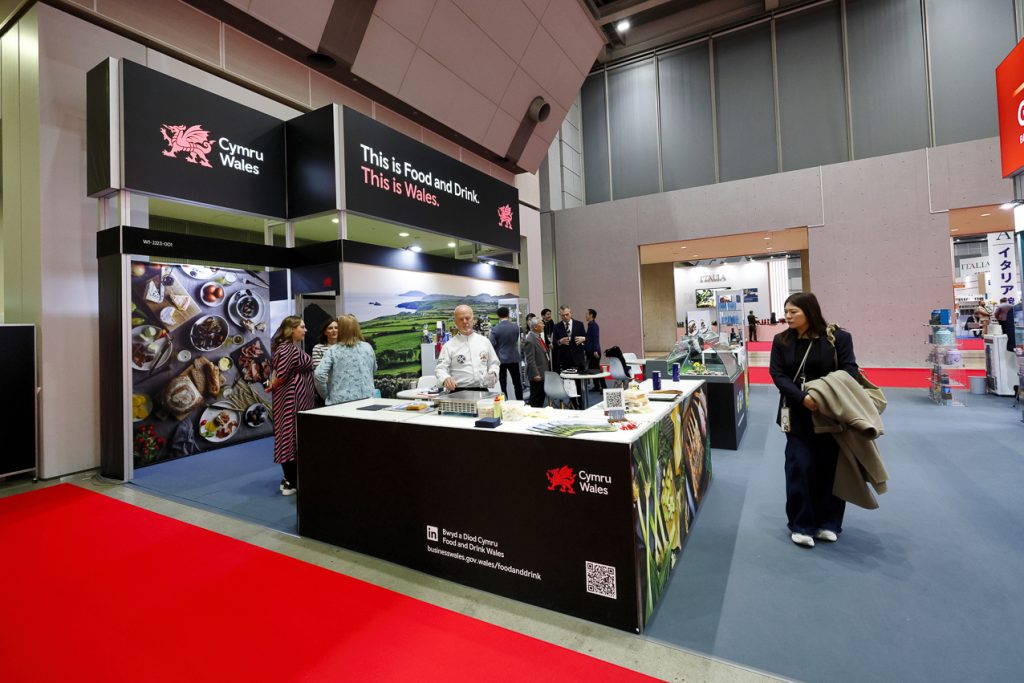
Global push — local absence
The delegation included Hybu Cig Cymru and Golden Road Gin, alongside a number of established Welsh brands and Japanese importers already working with Welsh suppliers.

While PGI Welsh Lamb — much of it produced in West Wales — was a central feature, the absence of Pembrokeshire-based producers raises questions about who is actually benefiting from the push into global markets.
For many local farmers, export growth is often presented as essential to the future of the industry. Yet access to those opportunities remains uneven, with smaller producers frequently lacking the scale or support to break into international supply chains.
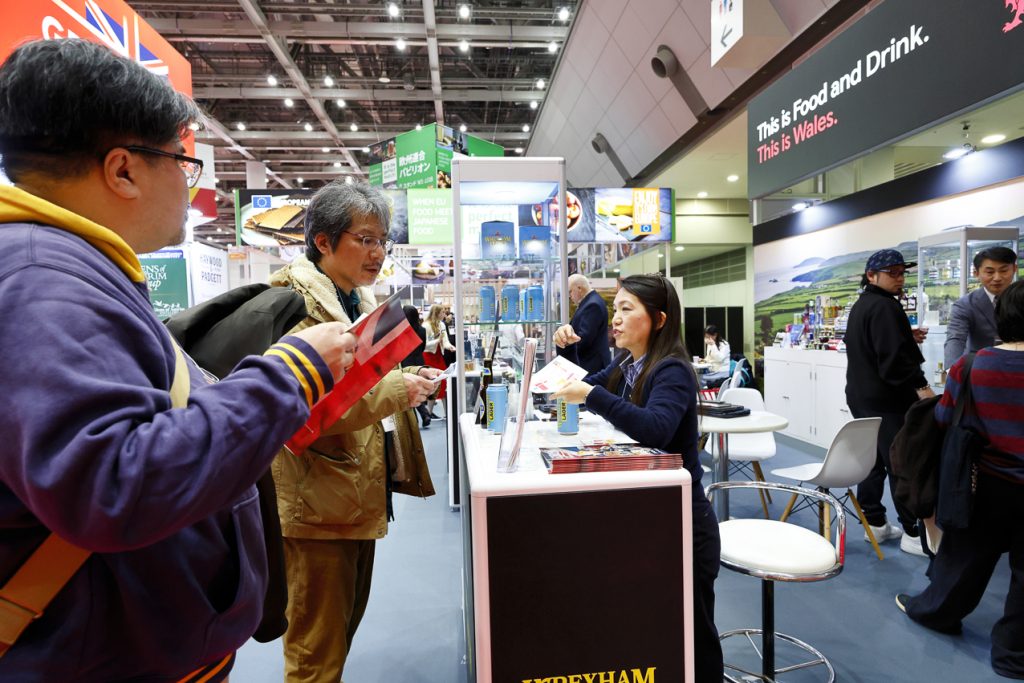
Big talk, familiar questions
Deputy First Minister Huw Irranca-Davies MS praised the showcase, saying Wales had an “exceptional food and drink story to tell” and highlighting the importance of building international partnerships.
But on the ground in Pembrokeshire, producers continue to face mounting pressures — from rising costs and labour shortages to ongoing uncertainty around agricultural policy.

The Herald understands that while export events generate headlines, many small and medium-sized businesses struggle to translate that exposure into actual contracts.

Missed opportunity for West Wales?
The Japanese market is known for its demand for high-quality, traceable food — exactly the kind of produce Pembrokeshire is well placed to supply.
From lamb and dairy to seafood landed at Milford Haven, the county has the raw ingredients to compete on the global stage.

However, without stronger support to help local businesses access export networks, there is a growing risk that the benefits of international promotion will remain concentrated among a relatively small group of producers.
The real test
Events like Foodex Japan may boost Wales’ profile overseas — but the real measure of success will be whether that translates into meaningful opportunities for communities at home.
For Pembrokeshire’s farmers and food producers, the question is no longer whether Welsh food can succeed globally.
It is whether they will be given a seat at the table.

THE CONSTRUCTION sector in Wales is entering 2026 with cautious optimism, supported by continued public sector investment and a pipeline of major infrastructure and energy projects, according to a new report.
Analysis by Rider Levett Bucknall suggests that long-term commitments to energy transition, digital infrastructure and transport upgrades are helping to stabilise the market, despite ongoing global uncertainty.
Major projects highlighted in the report include the proposed Wylfa small modular reactor, the green industrial transition at Port Talbot, and the development of AI Growth Zones. These schemes are expected to create significant opportunities for contractors across Wales, particularly in infrastructure and energy resilience.
However, the report warns that short-term challenges remain. Global pressures, including instability in the Middle East, continue to create uncertainty, while longstanding domestic issues such as planning delays are still affecting progress.
Daniel Walker, an associate at the consultancy based in Cardiff, said that while activity levels remain steady, structural barriers are slowing delivery.
He said: “Across Wales, on-site construction activity remains steady, with visible progress across major centres including Cardiff, Swansea and several valley towns. However, structural challenges remain. Planning delays, particularly those linked to sustainable drainage system approvals, continue to slow early-stage progress on both private and public sector schemes.
“Despite this, and wider geopolitical uncertainty, the market has seen a slight increase in project starts over the past quarter.”
Public sector spending continues to underpin much of the activity. The report notes that devolved fiscal powers have unlocked an additional £505 million for infrastructure and local development, supporting projects in education, healthcare and transport.
Wales is also emerging as a growing hub for digital and energy infrastructure. Investment in data centres is ongoing, while preparatory work linked to Wylfa and the decarbonisation of steel production at Port Talbot is expected to drive demand for construction in the coming years.
Infrastructure remains one of the strongest-performing sectors, supported by transport upgrades and early work associated with the proposed Crossrail Cymru programme. Industrial and energy-related construction is also expanding as Wales accelerates its shift towards low-carbon industries.
In contrast, the high-end residential market has softened, although affordable housing and build-to-rent developments continue to perform more strongly.
The consultancy is currently involved in the Cowbridge Road East scheme in Cardiff, a project aimed at delivering affordable and sustainable housing. It said work is ongoing to ensure the scheme remains viable while helping meet demand for new homes.

The report concludes that, despite ongoing challenges, the combination of public investment, energy transition projects and digital growth places the Welsh construction sector on a broadly positive footing for 2026 and beyond.
Tender price inflation is forecast to remain stable, with a projected rate of 3.4% in Wales for 2026, slightly below the UK average of 3.45%.
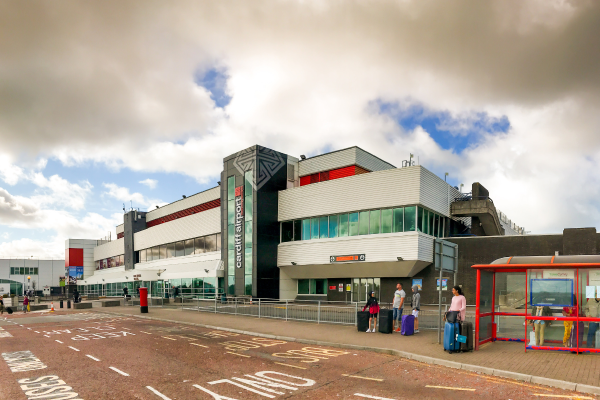
CARDIFF AIRPORT has outperformed some of the UK’s busiest hubs for flight punctuality over the Easter period, according to new analysis — but longstanding concerns over its size, routes and public funding continue to cast a shadow over its future.
The study, based on Civil Aviation Authority data from April periods between 2022 and 2025, found that Cardiff Airport recorded a delay rate of 23.8% for departing flights. This placed it ahead of several major UK airports, including Heathrow Airport (26.4%), Gatwick Airport (26.0%), Edinburgh Airport (27.2%) and Newcastle International Airport (25.8%).
The figures, compiled by travel analysts Locals Insider, examined more than 650,000 flights across 24 UK airports, offering a snapshot of performance during one of the busiest travel windows of the year.
Smaller airport, smoother operations
Supporters say the findings highlight Cardiff’s reliability at a time when many passengers face disruption at larger, congested hubs.
A spokesperson for Locals Insider said the airport’s performance “paints a reassuring picture for Welsh travellers”, particularly as passenger numbers are expected to rise over Easter and new routes are introduced.
However, the data also reflects the scale difference between Cardiff and the UK’s largest airports. Over the four-year period analysed, Cardiff handled just 1,918 April flights — compared with nearly 148,000 at Heathrow alone.
This disparity means smaller airports can often maintain better punctuality simply due to lower traffic volumes and reduced pressure on infrastructure.
Wider challenges remain
Despite the positive figures, Cardiff Airport continues to face scrutiny over its long-term viability and performance.
The airport has been owned by the Welsh Government since 2013, and has received significant public investment in an effort to boost connectivity and economic growth.
Critics argue that passenger numbers remain relatively low and that the airport struggles to compete with nearby Bristol Airport, which offers a far wider choice of destinations and attracts millions more travellers each year.
There have also been ongoing questions about whether public funding represents value for money, particularly at a time of pressure on public services.
Growth and opportunity
Supporters of the airport point to signs of recovery and growth, particularly following the pandemic, with increased passenger demand and efforts to expand routes.
They argue that Cardiff plays a vital strategic role for Wales, providing international connectivity, supporting tourism, and contributing to the regional economy.
While the latest punctuality data offers a positive headline, the broader challenge remains whether Cardiff Airport can translate operational reliability into sustained growth and greater passenger numbers.
As the busy Easter travel period approaches, the airport may be performing well on timekeeping — but the debate over its future is far from settled.



Charity4 hours ago
Milford Haven charity honoured with King’s Award for voluntary service
A PEMBROKESHIRE charity supporting vulnerable young people has received one of the highest honours in the UK for voluntary work....


News1 day ago
Plaid Cymru launches bid to lead next Welsh Government
Party positions itself as ‘government-in-waiting’ ahead of May election PLAID CYMRU has formally launched its campaign for the 2026 Senedd...


Crime1 day ago
Police appeal after attempted child abduction in Haverfordwest
DYFED-POWYS POLICE has launched an appeal for witnesses following a reported attempted abduction of a 12-year-old girl in Haverfordwest. The...


Crime2 days ago
Gunshot fired by police during incident in Milford Haven
A POLICE officer discharged a firearm during an incident in Milford Haven on Saturday evening (March 28), prompting an investigation...


Community3 days ago
Three Amigos Easter Run roars through Pembrokeshire
MOTORCYCLE enthusiasts turned out in force today (Saturday, March 28) as the popular Three Amigos Easter Run returned to the...


Education4 days ago
Ysgol Henry Tudor reassures parents over Sikh ceremonial kirpan
School says religious item worn by pupil is secured, symbolic and non-functional YSGOL HENRY TUDOR has moved to reassure parents...


Crime5 days ago
Teen jailed after starting fire while others slept
Fire set in shared home left sleeping residents at risk and caused £130,000 damage A TEENAGER who started a fire...

Health5 days ago
GP crisis driving NHS pressure in Wales, Senedd report warns
Falling GP numbers and funding gaps blamed for worsening hospital delays THE NHS crisis highlighted earlier this week is being...


News6 days ago
Reform reveals west Wales candidates for Senedd battle
Monkton councillor tops Pembrokeshire list as party confirms Carmarthenshire names and includes Haverfordwest councillor in unwinnable Swansea spot REFORM UK...


Health6 days ago
Clash over Withybush Hospital services as Paul Davies challenges First Minister
A HEATED exchange in the Senedd has laid bare growing tensions over the future of hospital services in west Wales....
-

 News6 days ago
Welsh Government outlines progress on flood resilience plans
-

 Community5 days ago
Hero female officer keeps job after sexual touching finding
-
Education4 days ago
Ysgol Henry Tudor reassures parents over Sikh ceremonial kirpan
-

 Crime7 days ago
Police stop car in Pennar as three arrested in drugs investigation
-

 Business5 days ago
Popular Italian restaurant hit with £278,000 tax bill plus £186,000 fine
-
Health6 days ago
Clash over Withybush Hospital services as Paul Davies challenges First Minister
-

 Crime6 days ago
Hakin motorist banned after drink-drive crash
-
Health5 days ago
GP crisis driving NHS pressure in Wales, Senedd report warns