


Sport
Mental health training extended to rugby clubs across Wales


Concerns grow over rising suicide rates among men aged 35–55
MENTAL health awareness training is being rolled out to rugby clubs across Wales as officials warn that too many men are continuing to struggle in silence.
The programme is designed to help teams, coaches and players recognise the signs that someone may be experiencing mental health difficulties, and to provide practical guidance on how to offer support at an early stage.
In Wales, the highest suicide rates are among men aged between 35 and 55. Ministers believe that providing safe, supportive environments within sports settings — where both physical and mental wellbeing are encouraged — could play a vital role in prevention.
The training forms part of wider Welsh Government efforts to strengthen suicide prevention, alongside more than £2 million of investment into the National Centre for Suicide Prevention and Self-harm Research at Swansea University.
The online course, delivered by UK Coaching in partnership with the mental health charity Mind, has already attracted more than 400 football clubs across Wales. Rugby clubs are now being urged to follow suit.

Speaking at a male suicide prevention summit held at Rodney Parade in Newport, Mental Health Minister Sarah Murphy said early intervention was essential.
She said: “It is crucial men have access to support before reaching crisis point.
“Sport can play a valuable role in reaching men who are struggling with their mental health. We want more sports clubs to learn how to provide their players, teams and staff with support at an early stage.”
The summit, organised by the Welsh Government, brought together organisations including the Dragons, Sport Wales, Samaritans, Mind, Lads and Dads and 2Wish.

The expansion of training into sports clubs aligns with the ambitions set out in Wales’ Suicide Prevention and Self-harm Strategy, launched last year, which aims to improve access to help while reducing stigma around mental health.
Officials say progress has already been made in widening access to support, with more than 230,000 contacts made to the NHS 111 “press 2” mental health service since its launch in Wales in 2022, allowing people to seek help without a GP referral.
Rhys Blumberg, chief executive of Dragons RFC, said the club was proud to host the summit.

He said: “We were delighted to host the male suicide prevention summit at Rodney Parade as we take mental health awareness very seriously for all our players, coaches and staff.
“As a professional rugby club that represents a huge area of Wales, we are always keen to expand the work we do to offer advice and guidance on mental health.
“We welcome news that awareness training is being rolled out to rugby clubs across Wales to provide people with the skills to help support others in the most appropriate way.”
Sports Minister Jack Sargeant added: “Sports clubs are so much more than places to play – they are places where friendships are formed, where people find belonging, and where we can look out for one another.
“With more than 400 football clubs already signed up, I know our rugby clubs will embrace this opportunity with the same enthusiasm, and I encourage them to get involved.”


Chair Richard Collier-Keywood under pressure amid growing turmoil in Welsh rugby
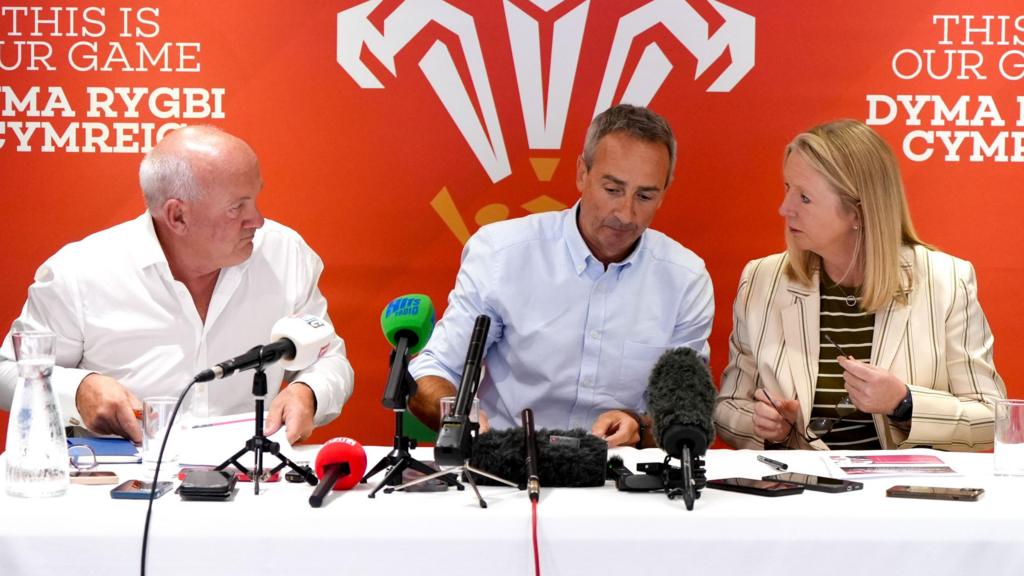
THE WELSH RUGBY UNION is set to hold an extraordinary general meeting (EGM) after community clubs formally triggered a vote of no confidence in chair Richard Collier-Keywood.
The governing body confirmed it had received a formal requisition from member clubs, led by the Central Glamorgan Rugby Union (CGRU) district, calling for the meeting to take place. Under WRU rules, 10% of member clubs, around 30 of the nearly 300 across Wales, are required to force an EGM.
In a letter dated February 22, CGRU honorary secretary Derek Davies confirmed the district had secured sufficient backing to meet that threshold.
The WRU must now verify the request to ensure it complies with its constitution and articles of association. Within 21 days of receiving a valid requisition, it must give notice of the proposed EGM date. The meeting itself must then be held within 28 days of that notice.
While no date has yet been announced, the WRU has up to seven weeks from February 22 to stage the meeting, meaning it is likely to take place in late March or early April, after the conclusion of the Six Nations Championship.
This will be the fourth EGM in 12 years. The WRU’s last annual general meeting was held at the end of November 2025, underlining the scale of governance tensions within the Welsh game.
The union had previously described calls for an EGM as an “irresponsible first nuclear option” that would cause “significant damage” to Welsh rugby.
What will be debated?
Three key motions are expected to be discussed.
- The first is a vote of no confidence in Collier-Keywood and Professional Rugby Board (PRB) chair Malcolm Wall. A simple majority of more than 50% of attending clubs would be required for the motion to pass.
- A second motion calls for elections to be held for four elected member board positions within 14 days of the EGM, also requiring a simple majority.
- The third seeks to amend how WRU district and council members are elected. That proposal would require a 75% majority to succeed.
In addition, Central Glamorgan has proposed:

An immediate pause on plans to restructure the professional game, alongside a full financial and organisational review.
The creation of a rugby steering group bringing together professional, semi-professional and community representatives, as well as business expertise.
The establishment of a central national academy within three months to oversee talent identification and development for both male and female players.
A proposal that, aside from the WRU chief executive, chair and PRB chair, no directors should receive payment.
A requirement that any future WRU and PRB chair be immersed in Welsh culture, understand Welsh rugby values, ideally speak Welsh and live in Wales.

Political backing for change
The dispute has spilled beyond rugby governance and into the political arena.
According to reporting by ITV News Wales, Labour MP for Swansea West Torsten Bell urged clubs to attend the EGM and use it to “bring an end to the chaos created by the current leadership.”
Fellow Labour MP Carolyn Harris, who represents Swansea East, said transparency and engagement with grassroots clubs were essential, stressing that community voices “matter”.
Meanwhile, Swansea Council leader Rob Stewart has publicly criticised what he described as a lack of clarity from the WRU over its strategic direction, particularly concerning the future of professional rugby in the city.
Professional game at the heart of the storm
The EGM comes during a period of significant upheaval in Welsh rugby.
At the centre of the crisis is the WRU’s stated intention to reduce the number of professional men’s teams in Wales from four to three, as part of its long-term strategy published in October 2025 following what it described as an extensive consultation process.
The union has indicated that no deal relating to its current restructuring discussions will be completed before March 16.
However, the proposal has raised alarm, particularly amid uncertainty surrounding the future of the Ospreys and a proposed deal involving Y11 Sport and Media to purchase Cardiff Rugby.
Swansea Council has applied for a High Court injunction in an attempt to halt the proposed transaction, arguing that the potential loss or weakening of a regional side would have serious implications for the city.
The WRU has argued that structural reform is essential for financial sustainability and elite performance. In a recent statement, it said:
“We recognise that change is challenging, but it is essential for the long-term health of the game in Wales.”
Turmoil on and off the field
On the pitch, Wales have endured a difficult 2026 Six Nations campaign, losing their opening three matches and facing a challenging run-in to the tournament’s conclusion.
For critics, the vote of no confidence reflects frustration not just with results on the field, but with what they see as a disconnect between the WRU’s leadership and the grassroots and regional game.
For supporters of reform within the union, however, the EGM represents a critical juncture: either an endorsement of a painful restructuring process deemed necessary for long-term sustainability, or a rejection of the current leadership’s mandate to carry it out.
With divisions deepening across community clubs, regional teams and political stakeholders, the forthcoming meeting could prove a pivotal moment for the future direction, and governance, of Welsh rugby.
Cover pic: Welsh Rugby Union chairman Richard Collier-Keywood

RUNNERS of all abilities are being invited to lace up their trainers for the Llys-y-Frân 10km, a brand-new event at Llys-y-Frân Country Park raising funds for the Pembrokeshire Coast Charitable Trust.
Delivered in partnership with AspireX Events, the scenic trail race will take participants around the reservoir and surrounding countryside — offering a challenge for experienced runners and those attempting their first 10km alike.

Organisers say they are excited to bring the popular Run the Trails Series to Pembrokeshire, with the iconic location providing a stunning backdrop for the event.
Pure West Radio has signed up as media sponsor and will be promoting the race ahead of the big day, including live coverage from the venue.
Health Aspire is supporting the event as venue hire sponsor.

The Trust is also offering free charity places for runners who pledge to raise £250, helping fund conservation, heritage and access projects across the Pembrokeshire Coast National Park.
👉 There are also sponsorship opportunities available for local businesses wanting to get involved.
🔗 Sign up here:
https://www.aspirexevents.com/e/rtt-llys-y-fran-trail-10k-14972
📩 For sponsorship or charity places contact:
[email protected]

Wales 23 – 26 Scotland
WALES suffered agonising late heartbreak at the Principality Stadium on Saturday (Feb 21) as Scotland produced a second-half comeback to claim a 26–23 victory in a pulsating Six Nations encounter.
In what was comfortably Wales’ most competitive performance of the championship so far, Warren Gatland’s side led for the majority of the contest and looked on course for a morale-boosting win before relentless Scottish pressure in the closing stages turned the match on its head.
The defeat leaves Wales still searching for a first victory of the campaign, while Scotland remain firmly in contention near the top of the table.
Fast Welsh start
Wales began with urgency and physical intent, clearly determined to impose themselves after heavy defeats earlier in the tournament. Their forward pack carried with aggression, winning the gainline battle and providing quick ball for the backs.
Early territorial pressure eventually told when prop Rhys Carré crashed over from close range following multiple phases near the Scottish line. The try lifted the Cardiff crowd and gave Wales early confidence.
Scotland initially struggled to find rhythm but remained dangerous in broken play. Winger Kyle Steyn crossed to keep the visitors in touch after a sharp attacking move, though Wales continued to look the more cohesive side.
The home team extended their advantage before the interval with one of the best passages of attacking play seen from Wales in this year’s competition. Quick hands and accurate support lines created space out wide, allowing Josh Adams to finish clinically in the corner.
With the conversion added, Wales went into half-time leading 17–5, having controlled both territory and physical exchanges.
Momentum swings after the break
The second half began with a noticeable shift in momentum. Scotland increased their tempo and began to play with more width, with fly-half Finn Russell growing increasingly influential.
Russell’s tactical kicking pinned Wales back inside their own half, while his distribution began to unlock the Scottish backline. That pressure produced results when Darcy Graham finished a well-constructed move to reduce the deficit and spark Scottish belief.
Wales responded with determined defence and briefly steadied themselves with penalty points, but Scotland were now controlling possession and territory for long stretches.
Russell then crossed himself after orchestrating a slick attacking move involving multiple phases and quick support runners, bringing Scotland within striking distance and setting up a tense final quarter.
Late pressure proves decisive
As the clock ticked down, Wales clung to a narrow lead but were forced into repeated defensive sets inside their own 22. Scotland’s forwards hammered away at the line through pick-and-drive phases, testing Welsh discipline and defensive organisation.
The decisive moment came in the closing minutes when replacement hooker George Turner forced his way over from close range after sustained pressure near the Welsh line. The score put Scotland ahead for the first time in the match.
Although there were nervy moments late on, Scotland’s defence held firm to secure the victory and silence the home crowd.
Encouragement despite defeat
For Wales, the result will feel particularly cruel given the improvement shown. Their physicality, defensive commitment, and attacking cohesion were significantly better than in previous rounds, and for long periods they matched — and at times outplayed — a strong Scottish side.
However, crucial moments ultimately proved costly. Missed tackles, turnovers under pressure, and an inability to clear their lines during the closing stages allowed Scotland back into the contest.
There were positives in individual performances, particularly in the Welsh pack and back-three, but the frustration of another narrow defeat was evident at full-time.
Scotland title hopes alive
For Scotland, the win represents another significant step forward under Gregor Townsend and keeps their Six Nations title hopes alive heading into the final rounds.
Their resilience, attacking ambition, and ability to capitalise on late opportunities proved decisive, with Russell once again central to their attacking threat.
Wales must now regroup quickly ahead of their next fixture, with signs of progress offering some encouragement despite the disappointment of defeat.


News30 minutes ago
Hoax 999 call sparks massive lifeboat and helicopter rescue — man arrested
Emergency services diverted from real incidents after false report off south Wales coast A MAJOR sea rescue operation involving three...


Crime4 hours ago
St Dogmaels man jailed over hundreds of indecent images
Previous convictions for similar offences revealed to court A 57-YEAR-OLD man from St Dogmaels has been jailed for two-and-a-half years...


Health4 hours ago
Petition against hospital service changes surges past 6,000 signatures
Public response now far exceeds health board consultation figures A PETITION calling for urgent Welsh Government intervention over services at...


Crime1 day ago
Milford Haven pensioner admits sexually assaulting two shop workers
76-year-old touched victims and kissed one on the neck, court hears A MILFORD HAVEN man has admitted sexually assaulting two...


News2 days ago
Senedd backs assisted dying legislation in historic vote
POLITICIANS in the Senedd have voted in favour of legislation that could allow assisted dying services to be provided through...
Crime2 days ago
Manchester men deny aggravated burglary after armed raid on dog breeder
Prosecution says machete-armed gang carried out “carefully planned” attack TWO men have gone on trial accused of involvement in an...


News2 days ago
Labour and Plaid criticised over £1.2m anti-racism ‘metaverse’ project
Figures revealed in Senedd questions as political row intensifies ahead of election THE WELSH GOVERNMENT has come under political pressure...


Business2 days ago
Local Senedd member hears retailer concerns ahead of election
INDEPENDENT shop owners in Pembrokeshire have warned that rising costs and increasing pressures could threaten the future of small high-street...


Charity3 days ago
Charity launches bid to save Foley House with new community cooperative
A PEMBROKESHIRE charity has launched an ambitious bid to restore Foley House, one of Haverfordwest’s most significant historic buildings, through...
Crime3 days ago
Man who threatened to kill Herald editor given suspended prison sentence
A PEMBROKESHIRE man who sent a message threatening to kill Pembrokeshire Herald editor Tom Sinclair has been given a suspended...
-

 Health7 days ago
Withybush loses emergency surgery in shock health board decision
-
Health7 days ago
Health board confirms major hospital changes across west Wales
-

 Health6 days ago
Concerns grow over Bronglais stroke plans as politicians demand clarity
-

 Health7 days ago
Health board: Changes will bring “resilience and sustainability” to West Wales services
-
 Local Government4 days ago
Candidate who withdrew from Hakin race will still appear on ballot paper
-

 Crime4 days ago
BBC documentary reveals local man murdered mother then lived with her body
-

 Local Government5 days ago
First Minister left red-faced as Labour candidate pulls out during Hakin campaign visit
-

 Entertainment5 days ago
New theatre show explores realities of motherhood in Pembrokeshire