


Business
First-class stamp price to rise to £1.80 despite Royal Mail delivery concerns


Cost of posting letters has more than doubled in six years as service continues to miss targets
THE PRICE of a first-class stamp will rise to £1.80 from next month, as Royal Mail pushes ahead with another increase despite ongoing criticism of the postal service’s reliability.
From April 7, the cost of sending a first-class letter will increase by 10p, while the price of a second-class stamp will rise by 4p to 91p.
The latest rise means the cost of a first-class stamp has more than doubled in six years, increasing by 137% since 2020, following eight separate price hikes.
Second-class stamps have also risen sharply, with six increases during the same period.
Delivery targets repeatedly missed
The announcement comes as Royal Mail continues to face criticism for failing to meet its delivery performance targets.

Consumer group Citizens Advice said the price rise was difficult to justify while service standards remain poor.
Anne Pardoe, head of policy at Citizens Advice said: “More than half a decade has gone by since Royal Mail last met its delivery targets. For many people, sending important letters has become a gamble.
“People can’t be certain if essential documents, including medical appointments, will arrive on time.”
She warned that proposed changes to delivery schedules could worsen the situation.

“Higher prices must come with higher standards,” she said. “Ofcom should not simply approve these increases while service levels continue to fall.”
MPs raise concerns over postal delays
Royal Mail has also been summoned to appear before MPs after complaints about postal delays and reports that letters are sometimes delivered in batches rather than daily.
The last time the company met its annual first-class delivery target was in 2019–20.

Royal Mail cites rising costs
Royal Mail says the increases are necessary due to falling letter volumes and rising delivery costs.
Richard Travers, managing director of letters at Royal Mail said: “We carefully consider price changes to balance affordability with the rising cost of delivering mail.
“People are sending far fewer letters than they used to — around 70% fewer than twenty years ago — while the number of addresses we deliver to has increased by four million, bringing the total to 32 million across the UK.”
He added that the average UK adult now spends around £6.50 a year on stamps.
Changes to second-class service
Royal Mail is also pressing ahead with wider reforms to the postal service.
Last year, regulator Ofcom approved plans allowing the company to remove Saturday deliveries for second-class letters, replacing them with deliveries every other weekday.
The changes are currently being tested in 35 delivery offices across the UK.
Talks between Royal Mail and the Communications Workers Union (CWU) about how the reforms should be rolled out ended without agreement earlier this week, though negotiations have been extended.
Royal Mail says changes to the universal service are needed to ensure the long-term future of the postal system.
Despite the price rises, the company argues that UK stamp prices remain below the European average, which it says is around £1.93 for first class and £1.56 for second class.



When it comes to sustainable growth, you need to focus on creating a long-term development strategy instead of just chasing short-term wins. A big win here and there is never a bad thing, but to ensure ongoing success, investing in strategies that drive a consistent stream of income from multiple revenue sources is necessary.
So, if you’re looking for ways to grow in the B2B market, consider these four strategies:
Targeted Marketing
Understanding your ideal client is the key to effective B2B marketing. Having this clarity gives more purpose to your marketing, allowing you to tailor your messaging so it actually resonates with your audience.
Once you’ve identified your target market, publishing things like insightful articles, research reports, and case studies, and distributing them through relevant channels for that audience, will help you build credibility and attract higher quality leads in bigger quantities.
Multi-Channel Engagement
B2B buyers typically interact with brands in multiple places, from search results through to industry events, before making a purchasing decision or engaging in a sales conversation. Businesses that rely on a single channel risk missing numerous opportunities for lead generation.

Multi-channel strategies can include anything. For example, a LinkedIn campaign alongside email outreach and search engine optimisation. This multi-channel approach increases visibility and reinforces your credibility, which over time leads to better brand recognition and more leads.
Aligning Sales With Marketing
Marketing and sales are both incredibly important, but if there’s a disconnect between the two, it can diminish the effectiveness of them both. Regular communication between departments allows marketing teams to understand who is converting, giving them the insights they need to refine their campaigns and attract similar audiences. Likewise, sales teams can benefit from marketing resources and data insights that support their outreach.
Consistent Pipeline Development
A sustainable B2B growth strategy requires a steady pipeline of opportunities. Consistent lead generation allows sales teams to meet revenue targets, and this is where partnerships and specialised support can make a difference. Many organisations choose to work with external experts such as The Lead Generation Company, who can supplement their efforts and implement ongoing lead generation programmes that continuously drive success.
Implementing Sustainable Growth Strategies Doesn’t Happen Overnight
Forming and putting new processes in place takes time and you may not see results straight away. But by engaging in targeted marketing, diversifying your channels, ensuring sales and marketing departments remain aligned, and developing pipelines consistently, growth will follow.

A CONSULTANCY’S director of planning believes the “devil is in the detail” when it comes to the impact of the Infrastructure (Wales) Act 2024 and its new Significant Infrastructure Projects (SIPs) regime.
Steve Ottewell, who joined Caulmert late last year, says that while the ambition behind the reforms is clear, practical challenges could shape how successful the new process proves.
Replacing Developments of National Significance and other consenting routes, the streamlined system is designed to speed up planning decisions and make Wales more attractive to investors.
SIPs will cover major schemes in energy, transport, water, and waste, requiring a single infrastructure consent that consolidates multiple authorisations for large-scale developments on land and offshore.
Projects must meet defined thresholds to qualify – for example, 35-50MW for solar and wind schemes, or 10-million cubic metres capacity for new or altered dams/reservoirs.
The intention is to create a modernised one-stop shop, similar to the Development Consent Order (DCO) process introduced in England under the Planning Act 2008.
However, Steve remains cautious, saying: “Advisors and clients alike must tread carefully. There is nothing wrong with the ambition of the new regime, but it does raise some questions and concerns.
“It is only when fresh methods are operational do we know the impact they will have. Does the bottleneck that is currently in one area of the procedure now just move to another step, for example.”
Welsh ministers will also have discretion to bring projects that fall below the thresholds into the SIP regime.
Steve continued: “On paper, this flexibility is welcome because it enables schemes that are strategically important, but not technically captured by the definitions, to benefit from the streamlined process.
“There is, however, ambiguity around the criteria ministers will apply when exercising this. Is it purely a matter or scale, or will policy alignment and political priorities weigh more heavily?
“This lack of clarity means developers face uncertainty at the very first step regarding whether to prepare for a SIP application or proceed through local planning.

“Misjudging this route could waste months of preparation and expose projects to challenge.”
Applications will be submitted to Planning and Environment Decisions Wales (PEDW), which will examine cases on behalf of Welsh ministers. Inspectors will review evidence from all stakeholders, with ministers making the final decision in most instances.
Steve said: “If a significant volume of projects are classed as SIPs, either because thresholds are broad or because ministers exercise their discretion liberally, the burden will fall squarely on these bodies.
“PEDW already manages a heavy caseload of appeals and inquiries, and the SIP regime adds a layer of complexity and intensity.
“Examinations under the act will demand specialist expertise, rigorous environmental assessment, and careful handling of compulsory acquisition powers.”
Despite the challenges, Steve views the act as a bold step towards modernising infrastructure planning in Wales.
Key to this is making the right choice at the outset regarding whether to pursue the SIPs route, seek optional designation, or remaining within local planning.
He explained: “Advisors can provide clarity here, mapping project characteristics against statutory thresholds and ministerial guidance, and framing proposals to resonate with Wales’ sustainability agenda.
“Working together, clients and advisors can ensure that the country’s new regime delivers not just on efficiency, but on its promise of sustainable growth and investment confidence.
“The team at Caulmert can help with any questions or queries you might have.”
Founded in 2008, Caulmert is on track to meet an ambitious growth and development plan.
Its expertise in a variety of engineering, environmental, planning, and project management disciplines is supported by its use of Building Information Modelling (BIM) to ISO 19650 standard on many of its projects.
For more information visit www.caulmert.com

A NEW employment support programme aimed at helping disabled people and those with health conditions find work is being rolled out across Wales.
The UK Government has confirmed that Mid Wales, North Wales and South West Wales will receive funding under the Connect to Work scheme, part of its wider Pathways to Work initiative designed to help people with complex barriers secure employment.
The announcement forms part of a £300 million expansion of the programme across England and Wales, which ministers say will provide tailored employment support to more than 75,000 people.
Under the plans, Mid Wales will receive up to £3.9 million to help around 1,000 people find work. North Wales will receive up to £13.3 million to support around 3,550 people, while South West Wales will receive up to £14.4 million to help approximately 3,850 residents.
The funding takes the total investment in the programme to more than £950 million. Funding for South East Wales is expected to be confirmed at a later date.
Connect to Work provides one-to-one employment support delivered in local community settings such as cafés, parks or community hubs. Participants are matched with employment advisers who help identify suitable roles, support job applications and work with employers to ensure appropriate workplace adjustments are made.
The UK Government says the programme aims to address economic inactivity linked to health conditions, with around 2.8 million people across the country currently out of work due to long-term illness.
Employment Minister Dame Diana Johnson said the initiative would give people who have been “written off and left behind” the support they need to move into secure work.
She said: “This government believes in the potential of every person in every part of the UK. Connect to Work gives people tailored support to move into good jobs and out of poverty.”

Secretary of State for Wales Jo Stevens said the scheme could improve financial stability and quality of life for many people.
She said: “Providing targeted help for people to get into work means a more financially stable future and a better quality of life for many.
“The tailored support offered by Connect to Work services in Wales will ensure anyone who can work is supported to get the right job for them.”
The programme is being delivered locally through councils and partner organisations. A spokesperson for the Welsh Local Government Association said councils are well placed to provide specialist employment support and link the scheme with other local services, including education, health and housing.
Connect to Work forms part of the UK Government’s wider £3.5 billion “Get Britain Working” package, which includes reforms to Jobcentres, new youth employment guarantees and expanded health-and-work programmes.
People who are out of work due to disability, health conditions or other complex barriers can access the scheme through self-referral or referrals from healthcare professionals, local authorities or voluntary organisations.


News2 hours ago
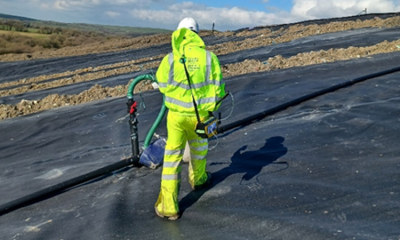
MS warns Withyhedge landfill should not be allowed to take more waste
Concerns raised over permit variation as NRW consultation opens A LOCAL Senedd Member has warned that the controversial Withyhedge landfill...


News23 hours ago
Reform energy policy raises questions for Milford Haven and Celtic Freeport ambitions
PLANS outlined in Reform UK’s Welsh manifesto have sparked debate over how the party’s energy policies could affect the future...


Crime1 day ago
Man who threatened to kill police during Milford Haven standoff avoids jail
Judge tells defendant his ‘erratic and reckless’ behaviour caused serious disruption to emergency services A MILFORD HAVEN man who threatened...


Crime1 day ago
Police investigating nightclub assault in Saundersfoot
POLICE are appealing for information following a serious assault at a nightclub in Saundersfoot which left two people with significant...


News2 days ago
Greens oppose US space radar plan for St Davids Peninsula
CANDIDATE CRITICISES DARC PROPOSAL THE GREEN PARTY has voiced strong opposition to plans for a major US military radar installation...


Crime2 days ago
Chinese intelligence probe reaches Dyfed-Powys Police area
Counter-terror officers arrest man in Powys as part of national security investigation THREE men have been arrested in Wales and...


Crime2 days ago
Man sentenced after punching convicted paedophile in Haverfordwest pub
A HAVERFORDWEST man has been sentenced after punching a convicted paedophile inside a town centre pub. Haverfordwest Magistrates’ Court heard...


Health3 days ago
Davies and Kurtz attack ‘fantasy hospital’ pledge for west Wales
Senedd Members demand immediate investment in Withybush and Bronglais as election campaign intensifies SENEDD Members Paul Davies and Samuel Kurtz have launched a fresh...


Health3 days ago
Hywel Dda warns of ‘significant pressure’ as A&E departments remain packed
Patients urged to use NHS 111 as Withybush, Glangwili and Bronglais face continued strain HYWEL DDA University Health Board has...


News4 days ago
War stops Qatar gas: Milford Haven LNG supplies disrupted
UK energy security concerns grow after shutdown at major export facilities ENERGY bills in the UK could rise sharply after...
-

 Community23 hours ago
Whitland Post Office re-opens under new management
-

 Community7 days ago
St David’s Day parade brings colour and celebration to Haverfordwest
-

 Crime4 days ago
Nine deny Class A drugs conspiracy as case set for Crown Court trial
-

 Health4 days ago
Welsh Labour launches Senedd campaign with £4bn hospital pledge
-
Crime1 day ago
Man who threatened to kill police during Milford Haven standoff avoids jail
-

 Community4 days ago
Increasing number of LGBTQ+ households fostering in Wales
-
Health3 days ago
Davies and Kurtz attack ‘fantasy hospital’ pledge for west Wales
-

 Sport4 days ago
New arrival celebrated at Bridge Meadow