


Comment
Manorbier deserved honesty — not false hope


After a fire destroyed the village school, rebuilding was described as the “preferred option”. Three years later, councillors have voted to close it instead.
WHEN Manorbier Church in Wales VC School was devastated by fire in October 2022, the community did what communities always do in the face of adversity: it rallied.
Teachers carried on teaching.
Parents carried on supporting.
Children carried on learning.
Classes moved into temporary accommodation at Jameston Community Hall and, despite the upheaval, the school community stayed together.
And crucially, the council itself appeared to signal that this was only temporary.
In March 2023 Pembrokeshire County Council announced it had backed what it described as “positive steps towards rebuilding” the school. Council documents went further, describing full reinstatement as the “preferred option.”

Pupils would continue learning in temporary accommodation while rebuilding work took place.
Those words mattered. They created hope.
Not unrealistic hope. Not wishful thinking.
Hope based on what the council itself was saying.

So the community carried on.
Parents campaigned to save the school.
A petition was launched.
The Diocese of St Davids objected to the closure proposals.
Bishop Dorrien Davies visited the school community in their temporary classrooms.
Through all of it, the assumption remained the same: the school would eventually return.

But this week that hope was extinguished.
Despite a consultation in which more than 90 per cent of responses opposed closure, councillors voted to proceed with plans to discontinue the school.
The explanation offered is that the insurance settlement following the fire fell far below the cost of rebuilding the school, while falling pupil numbers and surplus places in nearby schools mean the facility is no longer considered viable.
Those may be the financial and strategic realities the council now faces.
But they do not erase the uncomfortable truth at the centre of this story.
For three years a community was allowed to believe its school would be rebuilt.
Then, quietly, the direction of travel changed.
To be fair, the council now insists that no promise was ever made. The decision in 2023, it says, was simply to commission a feasibility study and explore options.
Technically, that may well be correct.
But leadership is not just about technicalities. It is about clarity, honesty and managing expectations.
If rebuilding was unlikely, the community should have been told that plainly from the start.
Instead, hopeful language about reinstatement allowed a very different belief to take hold — that Manorbier School would one day reopen.
Even Cabinet Member for Education Cllr Guy Woodham acknowledged during Thursday’s debate that those expectations existed.
“There may have been a general perception that a decision had been made to reinstate the school,” he told councillors.
That perception did not appear out of thin air.
It came from the words the council itself chose to use.
The result is a decision that now feels, to many residents, less like an unavoidable policy choice and more like a betrayal.
Manorbier is not simply losing a building. It is losing a village school, a community hub and a Church in Wales education provision that has served generations.
Rural schools across Wales face difficult challenges. Falling pupil numbers and financial pressures are real issues.
But when communities are asked to accept painful decisions, they deserve something in return: honesty.
Communities can cope with difficult truths.
What they struggle to accept is the feeling that they were allowed to hope for something that was never really going to happen.
For the children who continued learning in a community hall after the fire, and for the parents who believed their school would return, that hope has now gone.
And many in Manorbier will be left asking the same question:
Why were we led to believe otherwise?
Cllr Huw Murphy said in the council chamber in December: “If there ever was a template written on how not to deal with a catastrophic incident at a school, we have written it here.”
He’s right.

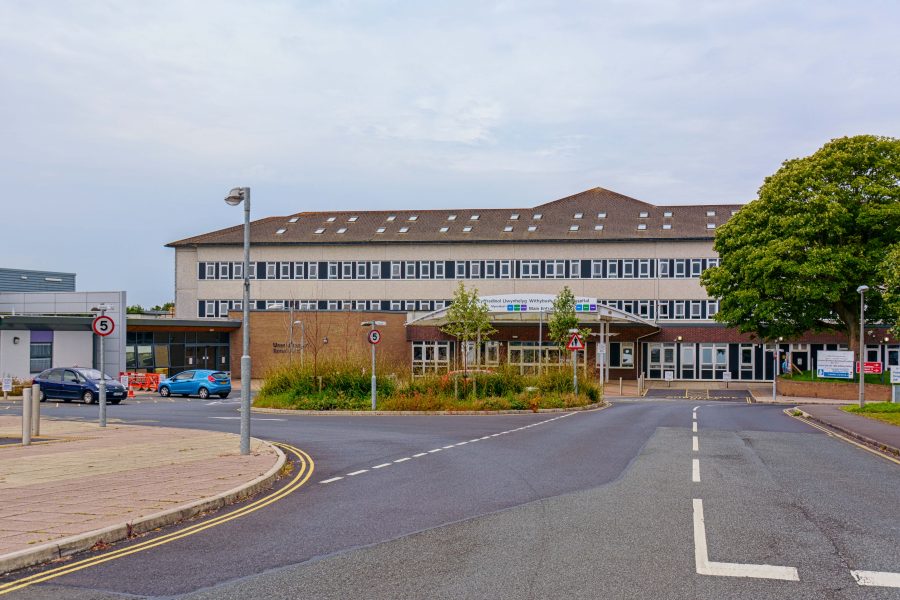
For more than a decade, services at Withybush have been reduced while promises of improvement remain unfulfilled — and public trust is wearing thin
THERE is a growing sense across Pembrokeshire that no matter what promises are made, healthcare services here only ever seem to move in one direction — backwards.
This week’s decision by Hywel Dda University Health Board on February 19, 2026, to remove emergency general surgery from Withybush Hospital is not an isolated event. It is the latest chapter in a story residents know all too well.
For more than a decade, people in this county have watched services gradually disappear: consultant-led maternity, the Special Care Baby Unit, inpatient children’s services — and now emergency surgery.
Each decision has been presented as necessary. Each one justified on grounds of safety, staffing shortages or sustainability.
And yet the outcome is always the same: Pembrokeshire loses something.
At The Herald, we do not make that statement lightly. Since 2014, we have reported on every development — the protests, the packed public meetings, the consultations, the board decisions. We have interviewed senior clinicians, chief executives and health board members.
We know what promises were made. And we have seen what followed.
That long view reveals something individual announcements often obscure. Residents are told changes will improve care or lead to better outcomes. But from the perspective of patients and families, things rarely feel improved.
Travel distances get longer. Waiting times remain difficult. Ambulance pressures continue. Anxiety about access grows — especially for those in remote communities facing poor roads, winter weather, or limited transport. For elderly residents without cars, and for families with young children, the strain is real. During tourism peaks, pressures only increase.
Trust, once lost, is hard to rebuild.
One of the deepest frustrations is that assurances of future improvement never quite materialise. The long-discussed new hospital remains years away at best. Recruitment challenges persist. Temporary measures quietly become permanent realities.
What begins as reassurance often ends as another reduction.

None of this denies the genuine challenges facing the NHS. Workforce shortages are real. Rural healthcare is difficult to sustain. Clinical standards must come first.
But fairness matters too.
Pembrokeshire is a large rural county with unique geographic challenges, seasonal pressures and communities that deserve confidence in local services.
People understand healthcare must evolve. What they struggle to accept is a situation where change repeatedly means less provision here.
Local MSs Paul Davies and Samuel Kurtz had warned ahead of the vote that undermining Withybush would cross a “red line.” Paul Davies described the outcome as “appalling but not surprising.” Plaid Cymru’s Kerry Ferguson urged the board to reconsider.
Yet here we are — another acute service shifted away, primarily to Glangwili.
That reality now shapes public confidence. And confidence matters. Healthcare relies not only on clinical outcomes but on public trust. When communities feel decisions are predetermined, consultation loses meaning. When residents believe their county is continually losing out, resentment grows.
The danger is not just political anger. It is disengagement — the belief that nothing will change no matter what people say or do.
Pembrokeshire deserves better than that.
It deserves clarity about the long-term vision for healthcare in the county. Honesty about what can and cannot be delivered locally. Genuine effort to protect services wherever possible.
Withybush still provides a 24-hour emergency department, midwife-led maternity and vital outpatient care. But each loss chips away at confidence in its future.
The people of this county are resilient, pragmatic and realistic. But patience is not unlimited.
When every few years brings another reduction, the question becomes unavoidable:
When do things finally start getting better?


WITH the Senedd election on 7 May fast approaching, one uncomfortable truth stands out: too many voters remain disengaged from Welsh politics.
Recent polling reveals that around half, and often more, of respondents hold no settled view on the leaders seeking to govern them. “Don’t know” has become one of the largest groupings in Wales. That should concern every party.
Democracy rarely collapses in dramatic fashion. More often, it weakens gradually when people stop paying attention, and Wales shows unmistakable early signs of that process.
Wales faces real pressures: strained health services, infrastructure gaps, stagnant wages, rural decline, post-Brexit funding shortfalls, and rising costs for households and businesses. Voters are entitled to feel frustrated.
But frustration without understanding creates a vacuum. And vacuums get filled.


The cost of disengagement
When voters remain unclear about what the Senedd controls and what lies with Westminster, blame shifts too easily. When funding mechanisms are poorly understood, headline figures are readily weaponised. When turnout stays low, organised and motivated minorities gain disproportionate sway.
None of this is healthy.
Turnout in Senedd elections has historically lagged behind Westminster contests. Nearly thirty years after the narrow 1997 referendum that established devolution, Wales still appears uncertain about how deeply it believes in its own national legislature.
That hesitation is dangerous.

Powers that matter, when used well
The Senedd now holds significant powers over health, education, transport, economic development and aspects of taxation. These decisions affect daily life in Pembrokeshire as much as they do in Cardiff or Swansea. When used with imagination and resolve, they have already delivered free school meals, progressive early-years policies, and distinctive approaches to climate and language.
Yet public connection to those powers remains weak.
Younger voters and those in rural communities, already furthest from Cardiff Bay’s orbit, are especially prone to switching off. Yet their futures are most directly shaped by Senedd decisions on education, transport and economic opportunity.
A vacuum waiting to be filled
If voters do not feel informed or invested, they will either stay at home or be drawn to the loudest, simplest message available.
Serious problems rarely have simple answers.
Recent polling volatility suggests frustration is widespread and attention is not entirely absent, merely misdirected. If channelled through informed debate rather than slogans, that energy could reinvigorate participation rather than fragment it.
The forthcoming reforms, expanding the Senedd to 96 Members and introducing a more proportional system across 16 larger constituencies, are intended to strengthen representation. Yet without renewed public connection, even a larger, fairer legislature risks feeling remote rather than responsive.
The duty of all parties, and beyond
The 7 May election is not simply about who becomes First Minister. It is a test of whether the Senedd still commands public engagement.
All parties contesting this election must raise the standard of debate. They should clearly explain what they can change, what they cannot, how Wales is funded, and where they would challenge the UK Government.
The wider political class, including the media, must also accept its responsibility to make Welsh governance understandable. Cynicism thrives where knowledge is thin.
The path forward is clear, if demanding. Parties must publish plain-language manifestos explaining devolved and reserved powers. Broadcasters and publishers must dedicate space to funding and policy mechanics. Civic bodies, from universities to community councils, should host open debates that reach beyond the usual circles. Engagement will not return by accident. It must be rebuilt deliberately.
If Wales switches off, others will shape its future instead.
That is not a position a confident nation should accept. Wales has the capacity for thoughtful self-government. The question now is whether we will choose to exercise it.
by Tom Sinclair, Editor
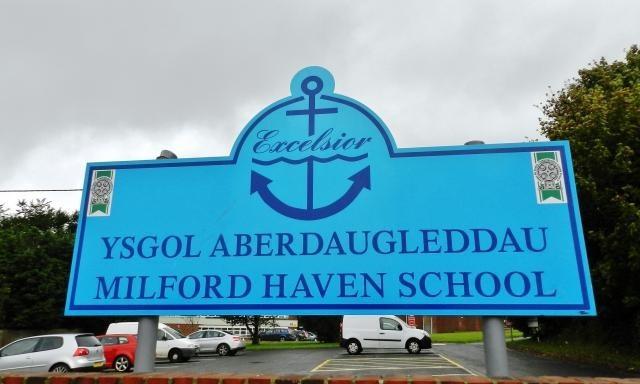
YESTERDAY afternoon (Feb 5), something happened at Milford Haven School that many parents here never expected to see in their lifetime — let alone as the second item on the BBC News at Ten.
Police cars.
Dog units.
Armed officers at the scene.
Not in London. Not in Cardiff. In Milford.
At the end of the school day, phones lit up with messages. Rumours raced around social media faster than facts. For a few uneasy hours, our quiet Pembrokeshire town felt like somewhere else entirely.
And this morning, the aftermath was just as telling.
With the school closed, there were no children walking up the hill, no parents idling at the gates, no buses pulling in. Milford Haven felt unnaturally quiet — less like a weekday and more like a Sunday, or one of those strange mornings during lockdown when the town seemed to hold its breath.
For a place built around its schools and families, that silence said more than any headline.
It is now the second serious school incident in west Wales in recent years, following the stabbing at Ysgol Dyffryn Aman in Ammanford.
That alone should make us pause. Because this cannot become normal.
But here is the uncomfortable truth: what happened yesterday afternoon did not start at 3:20pm.
It didn’t start with one pupil.
And it didn’t start with the police.
It started years ago.
When Estyn inspected the school in November 2025, it placed it in special measures — the formal category reserved for providers facing serious, systemic weaknesses.
Inspectors identified important shortcomings in a significant minority of lessons. Pupils were not making enough progress. Literacy and numeracy were not embedded strongly enough across subjects. Attendance was well below that of similar schools, and persistent absence too high. Leadership was not evaluating performance sharply enough. There was also a growing budget deficit.
None of those issues is headline-grabbing on its own. But taken together, they tell a story — not of one bad day, but of slow, cumulative erosion.
Several factors have likely contributed to that decline. Changes in leadership over time, the long shadow of the pandemic, and the reality of serving a community with higher-than-average deprivation have all piled pressure on staff and pupils alike.
When improvements aren’t embedded, small problems grow. Attendance slips. Teaching becomes inconsistent. Staff burn out. Pupils fall behind.
None of this suggests crisis or safeguarding failures — but it does help explain how steady erosion can eventually lead to special measures.
To be fair, inspectors also recognised real strengths: a caring and inclusive community, a broad curriculum, positive behaviour in many areas, and pupils who generally say they feel safe, with bullying dealt with when it is reported.
None of this means inspectors were wrong.
But it does mean that short inspection visits can miss what families and staff live with every single day.
Over the past weeks, the Herald has received hundreds of messages and comments from parents describing a very different picture: persistent low-level disruption in corridors and classrooms, intimidation that leaves children anxious, behaviour issues that quietly wear teachers and pupils down day after day. These are not dramatic incidents that make the news — but they are the background hum that makes school feel less safe, less settled, less fair.
There are wider pressures too.
The county’s specialist pupil referral provision in Neyland — designed to support children who struggle in mainstream settings: is itself under strain. When alternative provision is stretched thin, mainstream schools inevitably absorb more complexity. Teachers are expected to be educators, counsellors, mediators and sometimes de facto security all at once.
That is not sustainable — and it isn’t fair on staff, pupils or families.
None of this is about blaming children. Or teachers. Or one headteacher. It is about systems.
Because when teaching becomes inconsistent, attendance slips, support services are overstretched and families feel unheard, problems do not disappear. They accumulate. Until one day the blue lights are outside the gates.
Milford Haven is not a city. It is a small town where everyone knows everyone. Parents should not feel anxious dropping their children off at school. Teachers should not feel they are firefighting every lesson. Pupils should not feel that disruption or intimidation is simply something you have to put up with.
School leaders and Pembrokeshire County Council have accepted the inspection findings and promised rapid improvements. That commitment matters. But delivery matters more.
Special measures should be a wake-up call, not a stigma. The question now isn’t “who is to blame?” It is much simpler, and much harder:
Where has it gone wrong, and what are we, together, going to do about it? Because armed police at a Pembrokeshire school must never feel routine.
Not here. Not ever.


Community4 hours ago
Councillors vote to close Ysgol Clydau despite community concerns
Petition and protests fail to prevent closure of small rural school near Tegryn PEMBROKESHIRE COUNTY COUNCIL has voted to close...


News6 hours ago
Rescue drama at Swanlake Bay as lifeboats race to aid hypothermic casualty
TENBY lifeboat crews were involved in a dramatic multi-agency rescue on Saturday morning (Mar 7) after a person suffering from...


Sport7 hours ago
Wales show heart in Dublin but Ireland hold firm
Ireland 27 – 17 Wales – Aviva Stadium, Dublin – Guinness Six Nations, Round Four WALES produced their most encouraging...


Community10 hours ago
Farm matriarch who built family poultry business dies aged 90
Tributes have been paid to the woman described as the “heart and soul” of a well-known Pembrokeshire family farm following...


Local Government1 day ago
Clean-up after yacht wrecked on rocks at Lower Town, Fishguard
A YACHT that ran aground on rocks at Lower Town in Fishguard is being cleared by Pembrokeshire County Council after...

News1 day ago
MS warns Withyhedge landfill should not be allowed to take more waste
Concerns raised over permit variation as NRW consultation opens A LOCAL Senedd Member has warned that the controversial Withyhedge landfill...


News2 days ago
Reform energy policy raises questions for Milford Haven and Celtic Freeport ambitions
PLANS outlined in Reform UK’s Welsh manifesto have sparked debate over how the party’s energy policies could affect the future...

Crime2 days ago
Man who threatened to kill police during Milford Haven standoff avoids jail
Judge tells defendant his ‘erratic and reckless’ behaviour caused serious disruption to emergency services A MILFORD HAVEN man who threatened...


Crime2 days ago
Police investigating nightclub assault in Saundersfoot
POLICE are appealing for information following a serious assault at a nightclub in Saundersfoot which left two people with significant...


News3 days ago
Greens oppose US space radar plan for St Davids Peninsula
CANDIDATE CRITICISES DARC PROPOSAL THE GREEN PARTY has voiced strong opposition to plans for a major US military radar installation...
-

 Community2 days ago
Whitland Post Office re-opens under new management
-
 Crime5 days ago
Nine deny Class A drugs conspiracy as case set for Crown Court trial
-

 Health5 days ago
Welsh Labour launches Senedd campaign with £4bn hospital pledge
-
 Health4 days ago
Davies and Kurtz attack ‘fantasy hospital’ pledge for west Wales
-
Crime2 days ago
Man who threatened to kill police during Milford Haven standoff avoids jail
-

 Sport5 days ago
New arrival celebrated at Bridge Meadow
-
 Education5 days ago
School in lockdown after reported phone threat
-

 Farming5 days ago
Farmers still in the dark as SFS launches today