


Business
Pembrokeshire holiday lets by pub to homes plans lodged

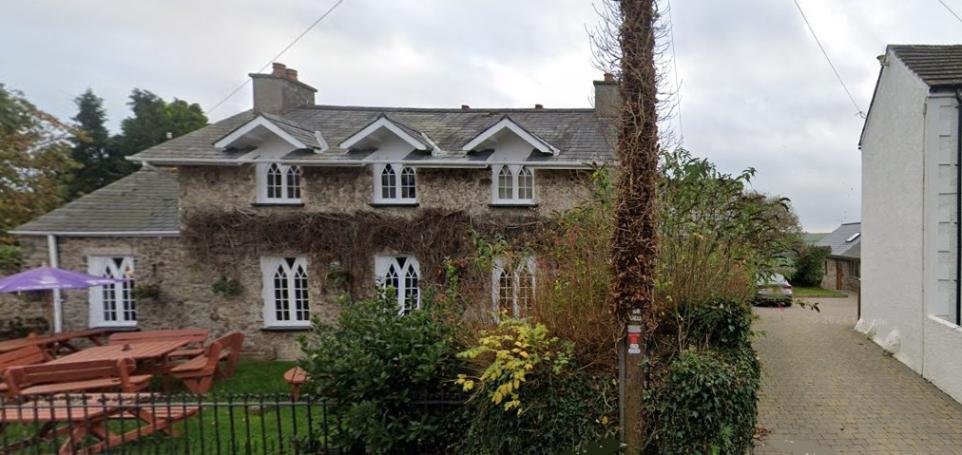
A CALL to convert holiday lets in a Pembrokeshire village to a single home for their owner to downsize has been submitted to county planners.
In an application to Pembrokeshire County Council, Dr Susan Richards, through agent Carl Bentley Architectural Services, seeks permission for a change of use and alteration works from two holiday let units to form one dwelling at Dovecote Cottage, Cosheston, near Pembroke Dock.
A supporting statement accompanying the application says: “This planning application seeks a change of use of the holiday let units known as Dovecote Cottage to form a new dwelling for the applicant to use as her main/only residence.
“The original farm/agricultural buildings at East Farm were converted from old farm outbuildings to self-catering holiday let units in the 1980s and 2010s partly by the previous owner and also partly by the current owner/applicant.”
It says Dr Richards, living at the village’s Little Mayeston Cottage, has been in the village since 2016, and has owned Dovecote Cottage, near the village’s Brewery Inn, since 2017, adding: “The applicant wishes to downsize from the current dwelling and relocate to a central village location to a smaller dwelling and be closer to friends within the village.”

Of the proposals it further says: “The holiday let units are semi-detached single storey traditional farm outbuildings of stone wall construction set under a pitched roof.
“One unit (known as Dovecote Cottage) provides two bedrooms of accommodation for four people, and the other unit (known as The Stable at Dovecote Cottage) provides one bedroom of accommodation for four people. Both units have open plan kitchens / dining and living areas plus separate shower rooms.”
The application will be considered by county planners at a later date.

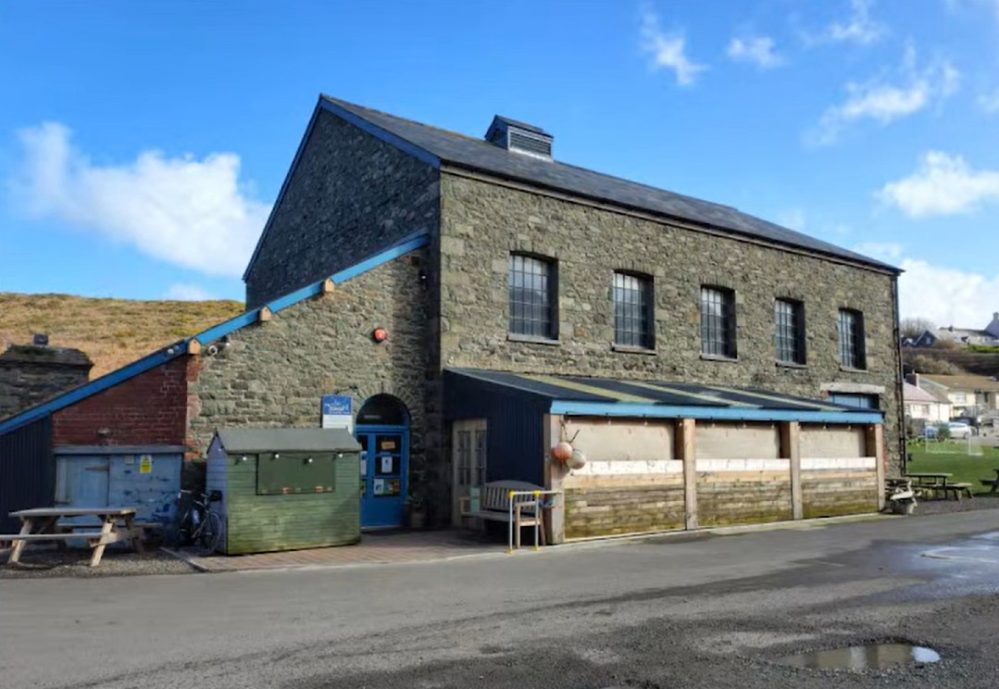
A CALL for works at a Pembrokeshire seaside tearoom, once the site of a Victorian brickworks machinery shed, has been given the go-ahead by national park planners.
In an application recommended for approval at the July meeting of Pembrokeshire Coast National Park’s development management committee, Caroline Jones sought permission to install solar panels to roof over an outside seating area at The Shed Tea Room, Porthgain.
The application, and a related listed building consent call, was for committee consideration as The Shed Tea Room forms part of Ty Mawr, a Grade-II-listed large stone-built former machinery shed owned by the national park itself.

An officer report for members stated: “The Shed Tea Room is a lean-to structure at the west end of Ty-mawr, a Grade-II-listed large stone-built former machinery shed, built c. 1890 to serve Porthgain brickworks. The lean-to itself is built of a mixture of stone and brick, retaining the stump of the brickworks chimney.
“The Shed has been used for retail purposes since 1999, and as a tearoom and restaurant from 2001, after which roof-lights were inserted. The north-western section of the lean-to was incorporated after 2003, when the present timber windows were inserted.
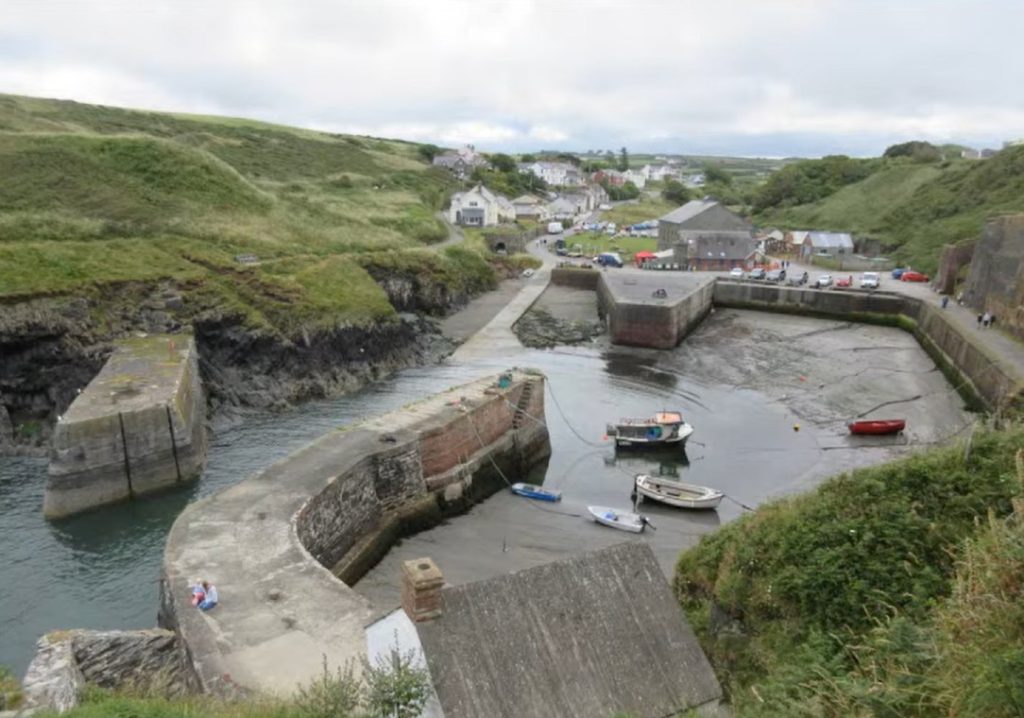
“After 2007, a lean-to scullery was added at the north end, alongside the chimney stump, with a small, fenced compound beyond. The south-western lean-to was added in 2024. The proposal comprises the addition of solar PV panels to the south-western lean-to. The panels – twelve in total – are all-black and frameless. The panels are configurated in a single block covering the majority of the roof, surface mounted on corrugated steel sheeting.
“The scheme is in keeping with the character of the listed building, and its setting in terms of design and form. As such, the application can be supported subject to conditions.”
The recommendation of approval was moved by Cllr Di Clements, and unanimously backed by members; the related listed building consent also moved by Cllr Clements, and again unanimously backed.

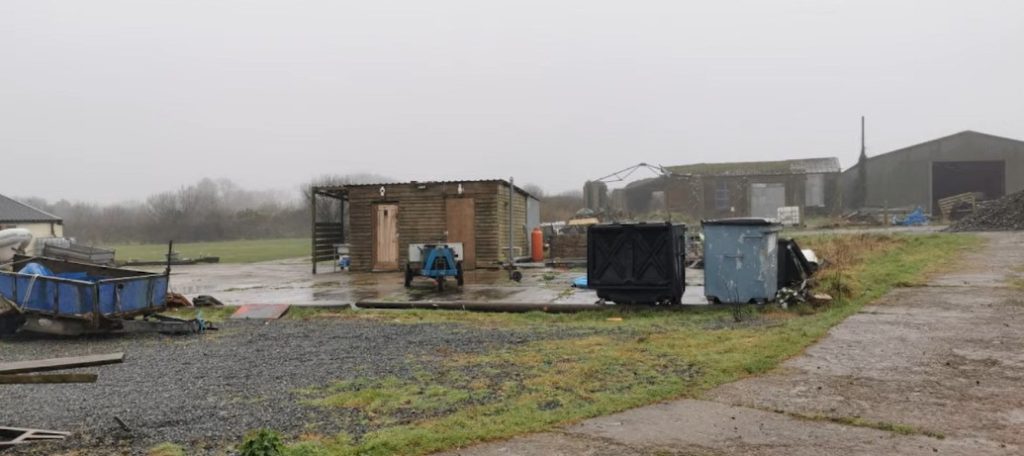
A CALL for a formal seasonal Pembrokeshire campsite with motorhomes camping on the site of a former scrapyard has been given the go-ahead by national park planners.
In an application recommended for approval at the July meeting of Pembrokeshire coast National Park’s development management committee, Mr A Stoddart, through agent Addison Design & Development, sought permission for a change of use of land for the formation of 11 ‘touring caravan’ pitches, tent pitches and the siting of three shepherd’s huts, partly retrospective, on land to the east of Talbenny Hall Farm, Talbenny, near Haverfordwest.

The retrospective element related to the retention of an existing storage shed and facilities building.
The application was for committee consideration as officers had recommended approval despite objections from local community council The Havens.
An officer report for members said a change of use was sought for a a former scrapyard site, “which has been remediated and more recently operated as a seasonal campsite, to provide a seasonal formal camping and glamping site”.
It added: “During the determination of the application, a significant amount of additional information has been submitted in response to consultee comments. In particular, the Local Highway Authority initially objected to the proposal on highway safety grounds pending the submission of further technical information.”
It said those concerns had been withdrawn after further information was received, the scheme before committee as it “relates to a new tourism development in the countryside, and because The Havens Community Council has maintained an objection on highway safety grounds”.
It went on to say: “The site will operate as a medium sized seasonal tourism development between March 31 and September 30 each year. The applicant has confirmed that the three shepherd’s huts will be removed from the site outside the operating season and stored within the existing onsite storage building.
“Officers consider that the previously developed nature of the site, its enclosed landscape setting, seasonal operation and the resolution of technical matters relating to highway safety, ecology and drainage demonstrate overall policy compliance with the requirements [of planning policy] and the proposal is therefore recommended for approval subject to conditions.”

At the meeting, members heard the 2023 submitted scheme had been delayed due to the applicant facing “exceptional personal circumstances”.
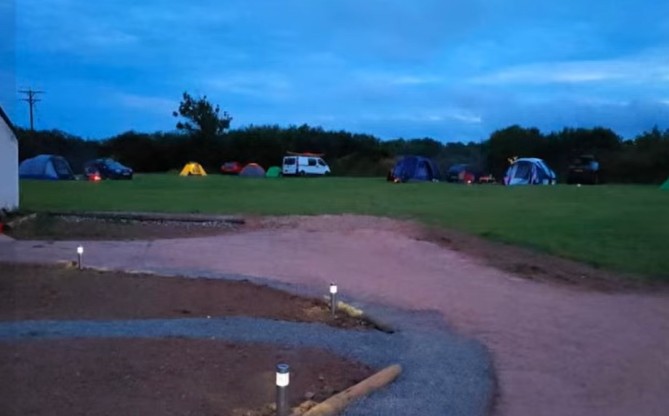
Concerns were raised at the meeting by objector Alison Gibbey on highways grounds, while agent Zac Addison told members the former scrapyard had been transformed into “a beautiful little haven,” the applicant not wanting to be “a nuisance to anybody”.
He said the ‘touring pitches’ would be solely used for motorhomes, with a maximum of 20 tents in the tent pitch area.

Moving approval, Cllr Di Clements reflected it was positive tourism in the county was spreading inland away from “honey pot” coastal areas, suggesting a ‘quiet time’ evening condition be included in any approval.
Members unanimously backed the recommendation of approval, Cllr Mike James commenting: “to have something like this in the rural areas, it’s really good to see this.”


Welsh insolvency specialist says rising costs, shrinking margins and unpaid bills are continuing to place businesses under severe pressure
BUSINESSES across Wales are continuing to face a difficult trading climate as rising costs, falling profits and cashflow pressures take their toll, an insolvency specialist has warned.
Government figures released on Friday (July 17) show there were 1,845 corporate insolvencies in June 2026.
That was four fewer than the 1,849 recorded in May and 10 per cent lower than the 2,048 reported in June last year.
However, Andy McGill, restructuring and insolvency partner at business advisory firm Azets, said the figures remained a cause for concern, with many directors struggling to keep their companies afloat.
Mr McGill, who covers Wales from Azets’ offices in Cardiff, Swansea and St Asaph, said Creditors’ Voluntary Liquidations continued to dominate the figures.
He said: “While 50 fewer took place compared with last month, CVL numbers remain higher than they were before the pandemic, as directors lack the confidence and cash to keep their firms open in a trading climate dominated by rising costs, shrinking margins and political and economic uncertainty.”
Compulsory liquidations also remain higher than they were at the beginning of the year, with creditors increasingly using the courts to recover unpaid debts.

Mr McGill said the patience shown by creditors during the pandemic had largely disappeared, with businesses and public bodies now watching payment deadlines more closely and chasing overdue invoices.
“Everyone is short of money, everyone is watching their payment deadlines and chasing unpaid invoices, and it is likely this will continue in the second half of the year,” he said.
“Times are tough for Britain’s businesses. It costs more to hire staff, profits are falling and cashflow levels are under pressure.
“Firms have been fighting financial fires in one form or another since 2020.”
He said increases in rents, business rates, materials, wages, products and energy had steadily reduced profit margins over the past six years.

Energy bills remained a particular concern for businesses that were unable to pass increased costs on to their customers.
Retailers and hospitality businesses were among those facing the greatest pressure, with some reducing recruitment as they attempted to control costs.
Mr McGill said that although sales volumes may be increasing in some sectors, this did not necessarily mean businesses were making more money.
“Many businesses are having to work harder simply to stand still,” he said.
“Where they can, they avoid passing their costs on to customers, but many simply are not able to do this anymore.”
The construction industry was also being affected by delayed project starts, planning difficulties, late payments, tight margins and rising material costs.
Mr McGill said improved summer weather could help increase construction output, although it remained unclear whether this would be enough to significantly improve conditions within the sector.
He urged company directors worried about their finances to seek professional advice at the earliest opportunity.
“It is a hard call to make and an incredibly tough conversation to start,” he said.
“But doing so while your worries are still new gives you more options and more time to decide your next step than if you wait until the problem becomes more severe.
“It usually gives you a better chance of turning the situation around.”



Crime20 hours ago
Jury hears final arguments in Milford Haven teacher stabbing trial
Defence says there was no motive or intention to kill as judge reviews competing accounts of classroom knife incident SPECIAL...


News23 hours ago
Andy Burnham becomes Labour leader and prepares to enter No 10
Former Greater Manchester mayor promises an ‘unashamedly Labour’ government after completing extraordinary return to Westminster ANDY BURNHAM has been formally...


News1 day ago
Motorcyclist dies following collision near Narberth
Police appeal for witnesses and footage after fatal crash on B4313 at Redstone A MOTORCYCLIST has died following a collision...


Local Government2 days ago
Stepaside school saved as council abandons closure proposal
Governors welcome decision but maintain original plans were based on outdated information STEPASIDE Community Primary School will remain open after...

Crime2 days ago
Footballer given 200 hours’ unpaid work for eye-gouging assault during match
Magistrates heard Robert Hedley put an opposing player in a headlock before gouging at his eyes during a match in...


Community2 days ago
Tenby Summer Spectaculars brought to an end after harbour licence revoked
Round Table says it was willing to make major safety changes but could not secure the access controls needed to...

Local Government4 days ago
Catapult attacks suspected after wildlife deaths at Pembroke Mill Pond
Wildlife Crime Officers are investigating after the town council said around five animals showed signs of deliberate injury WILDLIFE found...


Crime4 days ago
Narberth retailer speaks of shoplifting toll after ‘collectable bear’ stolen
Independent shop owner said rising costs meant businesses could not afford to absorb losses caused by theft A NARBERTH retailer...


Crime4 days ago
Teen accused of attempting to murder teacher says she lied about stabbing
Defendant accepts teacher was terrified and that a knife wound to the head could kill, but denies deliberately attacking her...


Local Government5 days ago
Calls grow for independent investigation into Manorbier school closure
Councillor alleges misleading figures, inadequate insurance and poor treatment of staff CALLS for an independent investigation into the controversial closure...
-
Crime23 hours ago
Milford Haven teacher ‘fought for her life’ during alleged knife attack
-
Crime20 hours ago
Jury hears final arguments in Milford Haven teacher stabbing trial
-

 Crime4 hours ago
Fears wildlife at Mill Pond beauty spot being targeted by catapults
-

 News2 days ago
Welsh broadcasting authority plan sparks row over powers and cost
-
Local Government2 days ago
Stepaside school saved as council abandons closure proposal
-

 Crime2 days ago
Fisherman admits safety offence after death of crewman off Pembs coast
-
 Community2 days ago
Llangwm LitFest returns with tales of slow travel and inclusive writing
-

 Crime2 days ago
Police searching for driver who abandoned car after Haverfordwest pursuit