


News
AM leads debate on safety of children online

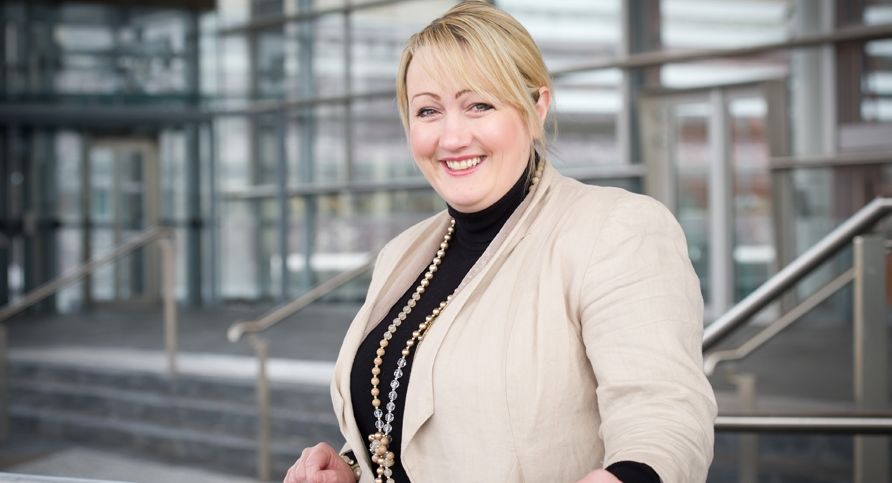
 REBECCA EVANS AM, Assembly Member for Mid and West Wales, has led a debate at the National Assembly for Wales on the safety of children online.
Mrs Evans brought forward the debate at the Senedd to explore the dangers facing children online following a series of tragic and high profile cases tied to internet use, and the publication of several pieces of research highlighting the challenges facing children online.
Mrs Evans told the Assembly that although the role of internet service providers, search engines and social networks in protecting children lay beyond the scope of the Assembly, “to shrug our shoulders and say that the challenges are too big, or that it is just not our job would absolve us from our responsibility to use every opportunity that we do have in Wales to equip children, parents, teachers, youth workers and so on with resilience, knowledge and support, so that they are best able to deal with the challenges faced by children online day in, day out.”
Mrs Evans explored peer-to-peer issues such as bullying and exploitation, as well as stranger dangers including online grooming, and easy access to explicit adult material which may be extreme or violent in its content.
Mrs Evans said: “Most children now have a phone with internet access and nine out of 10 of them say that there are no parental restrictions on its use. For most children, their virtual lives are synonymous with their real lives, and what happens online affects them offline.”

Tackling cyberbullying
After the recent publication of a Funky Dragon survey which found that over a third of 11 to 17-year-olds in Wales who had been bullied had suffered from cyberbullying, Mrs Evans asked the Welsh Government how it was addressing the unique challenges posed by bullying online.
Mrs Evans said: “Online bullying is relentless; it is 24/7 and it follows bullied children everywhere that they go. They carry it around on the phone in their pocket.”
The Children’s Commissioner for Wales Keith Towler has also echoed these concerns. Responding to the debate, the Deputy Minister announced that “As part of the 2013 Anti–bullying Week, from 18 to 22 November, the Welsh Government will be launching a campaign to raise awareness of cyberbullying and to highlight where to go for help.”

A force for good too
Mrs Evans ended her contribution by being clear that she “did not want to give the impression that cyberspace is a wholly dangerous and nightmarish place to be avoided at all costs.”
“In fact,” she said, “it is quite the opposite. Access to the internet can be incredibly enriching. Children can talk to other children thousands of miles away and develop global citizenship and a sense of responsibility to other people on the other side of the planet. They can have fun and stay in touch with friends, and it is a wonderful learning environment and research tool, a gateway to almost limitless knowledge, and a forum to develop skills and ideas.

“By educating children and those who protect and support them about the safe use of the internet, including recognising danger and the importance of privacy settings and content blocks, for example, we can make the internet a much safer place for them. By helping children to put what they see and experience online into context offline we can build their resilience. There is a huge amount of very good work already taking place in Wales by parents, schools, the third sector, police and others, and I would ask the Government to explore how we could bring all of this good practice together to make the internet a safer place for children.”
Mrs Evans looks forward to meeting with the Deputy Minister in order to further discuss actions to ensure the safety of children online.
Let’s talk about sexts
Modern trends such as sexting – the act of sending sexually explicit messages, photographs, or video content, primarily between mobile phones – are causing children’s charities in Wales concern.
Speaking in the debate, Mrs Evans said: “NSPCC Cymru and ChildLine have warned that many children are frequently taking big risks when making and sending sexual texts, photos and videos of themselves. They found that sexting is considered a normal, everyday activity among young people as young as 13 years old, with around a quarter of them having made photographs or videos to send on to others. Barnardo’s Cymru has also identified what it calls peer-based exploitation as an increasing trend.”
Mrs Evans warned that once the image has been sent on, it is out of the young person’s control and told the Assembly that the Internet Watch Foundation has reported that images are regularly shared around school, uploaded to social networks and sometimes find their way on to paedophile websites. In just 40 hours, an IWF analyst found more than 12,000 images of teens that were originally sent as texts on 70 paedophile websites.
Mrs Evans said that after seeing calls about sexting rise by 28% last year, ChildLine has developed a “fantastic app” called Zipit, which provides witty and safe comebacks that children and young people can use to reply when faced with requests for explicit photos. She asked the Deputy Minister for Skills, Ken Skates AM, to consider how the Welsh Government could promote the app and similar resources.
Responding to the debate, the Deputy Minister asked Mrs Evans to meet with him and his officials to discuss in further detail how sexting can best be addressed.
Parents have a big role to play
Mrs Evans told the Assembly that parents were “probably the most important defence that children have against the darkest elements of the internet,” but added that they sometimes needed support to be able to fulfil that role.
She referred to research by web safety organisation Knowthenet which suggested that some parents may be failing to protect their children in cyberspace, simply because they do not understand the net speak that peppers online exchanges.
Mrs Evans said: “For many parents, their understanding of everyday slang starts and ends with ‘LOL’, but they can be sure that their children’s vocabulary is much wider. A Knowthenet survey of 1,000 parents found that the least understood term was ‘LMIRL’, which means ‘Let’s meet in real life’. Also among the least-known acronyms were ‘ASL’, which means age, sex, location and ‘POS’, parents over shoulder.”

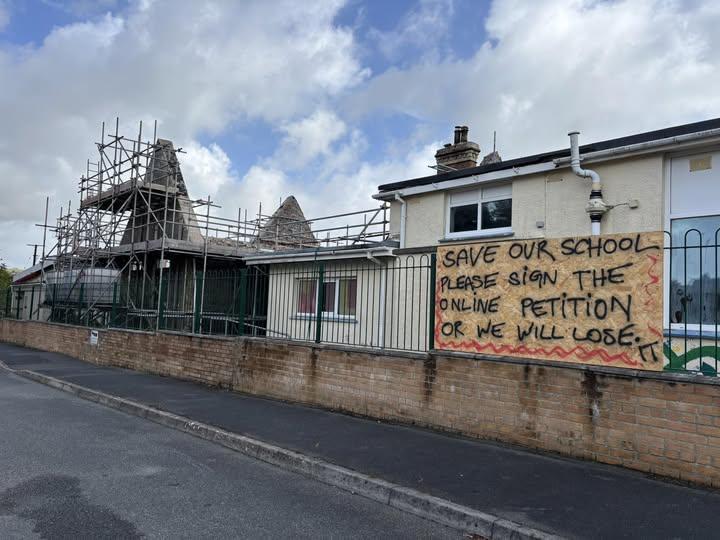
Over 90% opposed closure as insurance settlement falls short of rebuild cost
THE FUTURE of Manorbier Church in Wales VC School has been sealed after Pembrokeshire County Council voted to move forward with plans to close the school – more than three years after a fire destroyed the building and initially raised hopes it would be rebuilt.
The decision was taken during a meeting of full council on Thursday (Mar 5), where members agreed to publish a statutory notice to discontinue the school.

The move follows a consultation which revealed overwhelming opposition to closure. Of the 252 responses received, more than 90% were against shutting the school.

Despite that opposition, council officers recommended proceeding with closure, citing falling pupil numbers, surplus school places in the Tenby area and the financial implications of rebuilding the fire-damaged site.
Introducing the report, Cabinet Member for Education Cllr Guy Woodham acknowledged the difficult circumstances surrounding the decision.
“I want to once again thank the headteacher, governing body, staff, learners, families and the community for supporting the school so admirably during these very challenging times,” he told councillors.
The school building was severely damaged by fire in October 2022, forcing pupils and staff to relocate to temporary accommodation at Jameston Community Hall, where the school has continued operating.
Rebuild hopes raised
In the months following the fire, the council appeared to signal that rebuilding the school was the likely outcome.
In March 2023, cabinet backed what it described as “positive steps towards rebuilding” Manorbier School and approved funding for a feasibility study into reinstating the building.

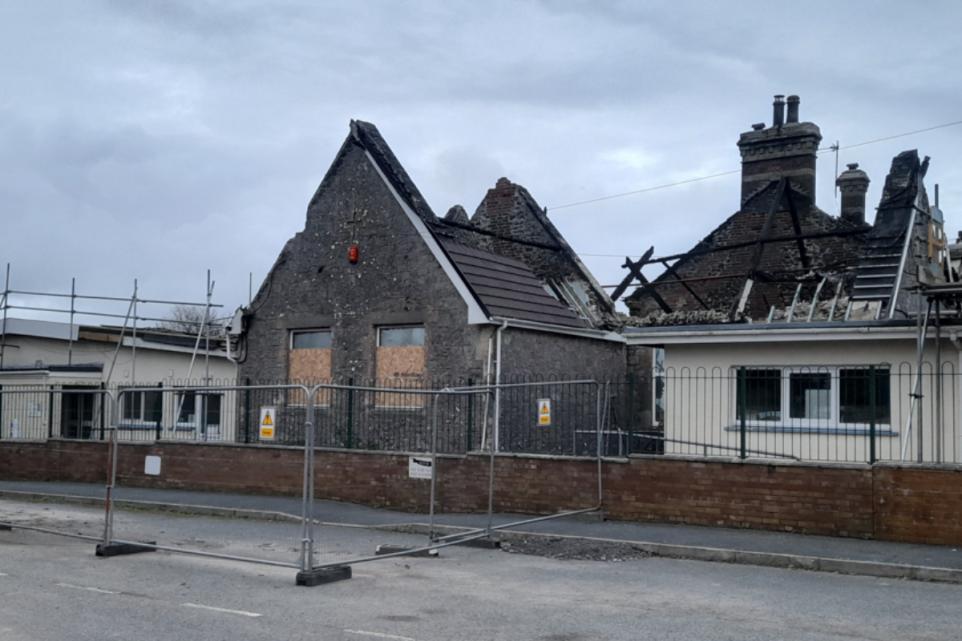
Council reports at the time stated that full reinstatement of the school was the “preferred option.”
Pupils were moved to Jameston Community Hall with the expectation that the school would continue operating there while rebuilding work was completed.
However, after the feasibility work was carried out and a wider review of education provision in the area was undertaken, the council’s approach changed.

Insurance settlement shortfall
During Thursday’s debate, councillors were told the financial reality of rebuilding the school had proved more challenging than first anticipated.
Cllr Woodham said the insurance settlement offered following the fire fell “far below the estimated cost of reinstating the school to a suitable operational standard.”
That gap between the insurance settlement and the cost of rebuilding was a significant factor in the council’s reassessment of the school’s future.
Cllr Woodham also acknowledged that the earlier cabinet decision had led many residents to believe rebuilding was inevitable.
“There may have been a general perception that a decision had been made to reinstate the school,” he told the chamber.
However, he said the 2023 decision had only been to carry out feasibility work and develop a business case.
Falling pupil numbers cited
Council officers also pointed to demographic pressures affecting the wider school system in Pembrokeshire.
The authority says there has been a decline in the pupil population, alongside an increasing number of schools with surplus places.
Officials told councillors that long-term planning decisions must be based on the viability of permanent school sites rather than temporary arrangements.
Forecasts presented to the council suggested there was insufficient long-term growth in pupil numbers to sustain Manorbier School.
Community fears
Many parents and residents had argued the school remained viable before the fire and could still thrive if rebuilt.
Campaigners also raised concerns that closing the school would harm the local community and undermine efforts to attract young families to the area, particularly given recent housing developments nearby.
Transport and road safety concerns were also raised during the consultation, with some residents warning that pupils could face longer journeys on narrow rural roads if the school closed.
Church opposition
The proposal also drew objections from the Diocese of St Davids, which warned about the loss of a Church in Wales school in the area.
A letter from Bishop Dorrien Davies opposing the closure formed part of the consultation evidence presented to councillors.

Earlier this year the bishop visited pupils and staff at the school while they were based in temporary accommodation, praising the quality of teaching and pastoral care despite the difficult circumstances.
What happens next
Thursday’s decision does not immediately close the school but authorises the Director of Education to publish a statutory notice to discontinue the school.
If the process proceeds as expected, the school will eventually close and pupils will be transferred to other schools in the area.
The council has not yet confirmed the value of the insurance settlement or the estimated cost of rebuilding the school, figures which may now come under further scrutiny following the debate.
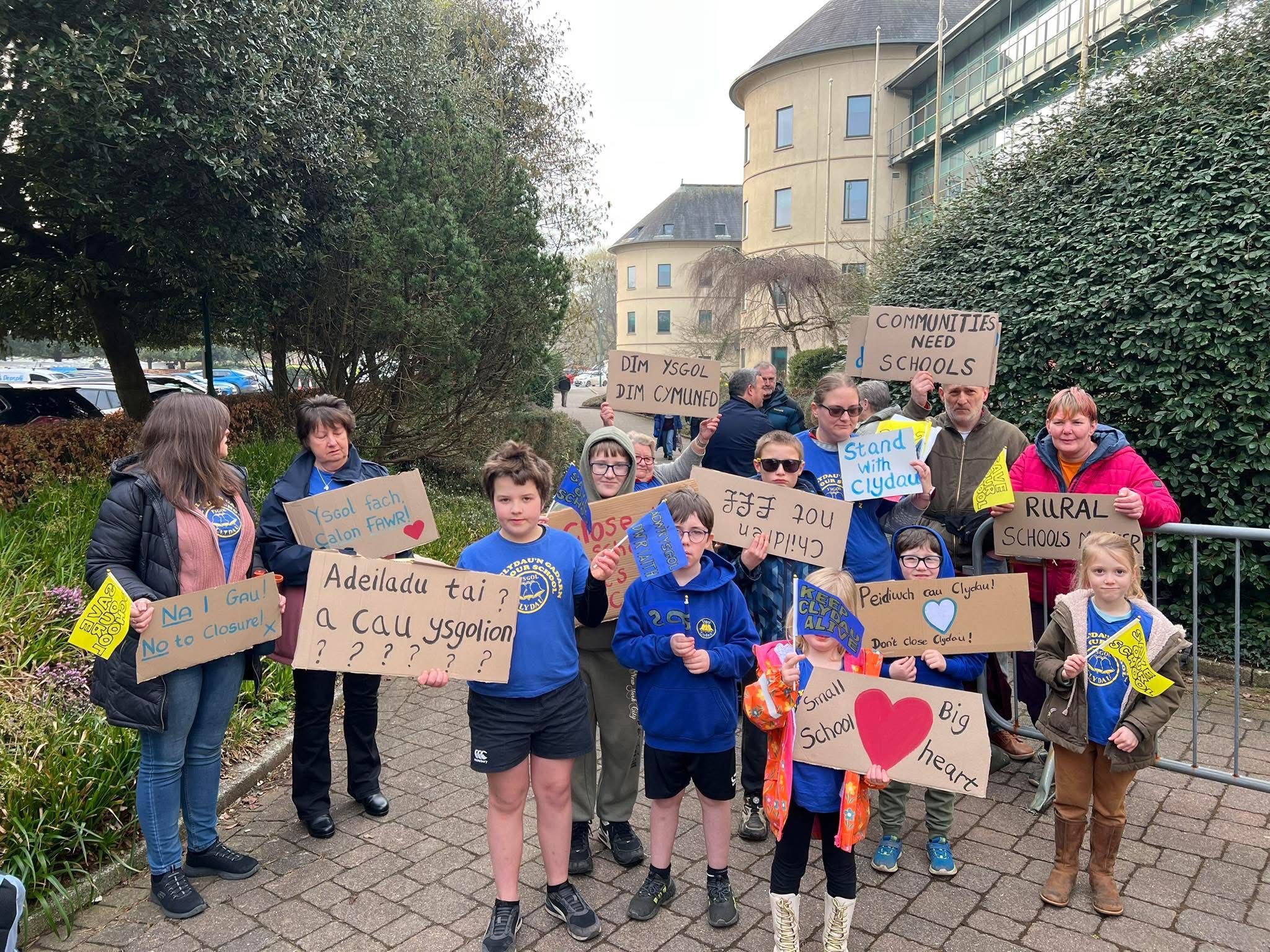
Petition and protests fail to prevent closure of small rural school near Tegryn
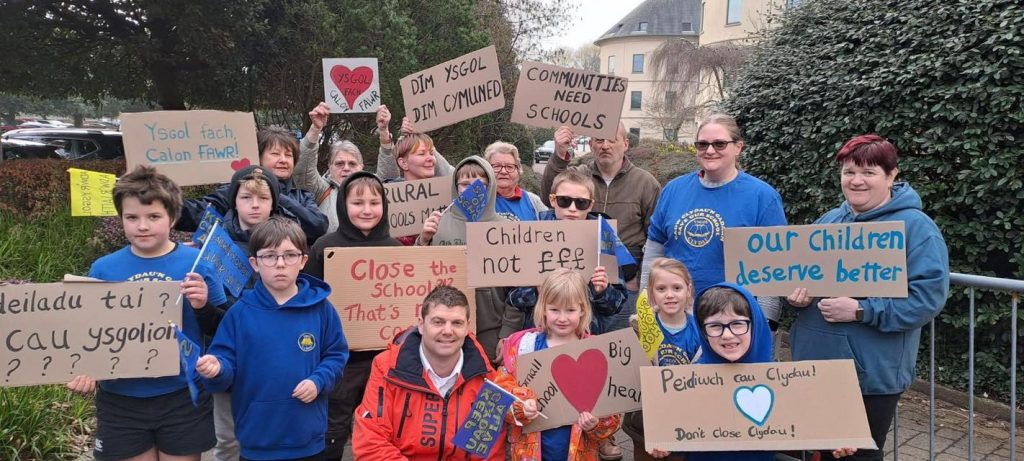
PEMBROKESHIRE COUNTY COUNCIL has voted to close Ysgol Clydau despite strong opposition from parents and residents who argued the rural school plays a vital role in the local community.
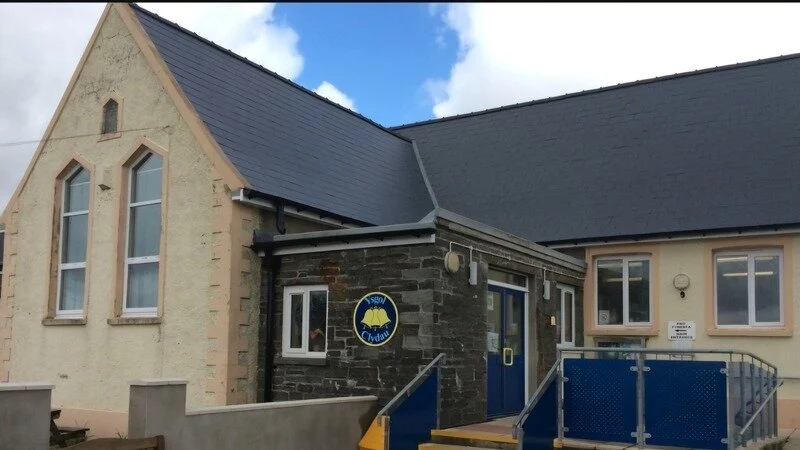
Councillors approved the closure at a full meeting of Pembrokeshire County Council on Thursday (Mar 5), following a consultation process that drew hundreds of responses and a community campaign to save the small rural school near Tegryn.

Addressing the chamber, Cllr Guy Woodham acknowledged the sensitivity of the issue.
“Any proposal to close a school is emotive,” he told councillors, noting that the report before members summarised consultation responses and the council’s responses to concerns raised by parents, residents and other consultees.
One of the most frequently raised issues during the consultation was the role the school plays in local identity and community life. Respondents argued that rural schools often act as a focal point for their communities and help sustain village life.
However, council officers said that while the school contributes to community identity, it currently hosts relatively few community activities. They pointed out that nearby Carnarvon Hall already provides a venue for a wide range of classes and events and could continue to do so if the school closes.
It was also suggested that the school building itself could potentially be used for community purposes if another organisation or group expressed an interest in taking it over.
Concerns were also raised about the potential impact on pupils with additional learning needs (ALN). Parents said the small size of the school provides a nurturing and personalised environment that may be difficult to replicate in a larger setting.
Council officers acknowledged those concerns but said pupils could also benefit from the wider range of resources, specialist staff and development opportunities available in larger schools.
A transition plan will be developed to ensure individual pupils’ needs are identified and supported during and after the move to another school.
Transport and travel times were another major concern raised during the consultation, with parents highlighting longer journeys for pupils and questioning the suitability of arrangements for younger children.
The council said pupils who meet eligibility criteria will receive free school transport, with routes and pick-up arrangements designed with safety and age considerations in mind.

Some respondents also argued that alternative solutions, including federation with other schools, had not been fully considered.
Officers said a number of alternative proposals were examined during the consultation process but were not considered viable.
Residents also raised concerns that planned housing development opposite the school could increase pupil numbers in the future.
However, council forecasts suggest the development would generate only around two additional pupils, which officers said would not significantly affect the school’s viability.
Some parents indicated they might consider home education if the school closes, particularly those with children who experience anxiety or require additional support.
The council said it would provide information and support to help families make informed decisions and ensure they are aware of Welsh-language education options available elsewhere.
Questions were also raised about the financial case for the closure and whether projected savings adequately accounted for increased transport costs and other factors.
Council officers said the financial assessment presented to councillors includes those additional costs.
Some respondents also questioned the fairness and transparency of the consultation process, suggesting the outcome had already been decided.
Officers rejected that suggestion, stating that the consultation had been carried out in accordance with the Welsh Government’s School Organisation Code and that the final decision rested with councillors.
Pupils’ views were also gathered during the consultation through two sessions facilitated by a school improvement adviser, with responses recorded anonymously and included in the consultation report.
The proposal to close the school has been strongly contested over the past year. A petition opposing the closure received more than 600 responses on the council’s website, triggering a debate at County Hall, while campaigners warned the loss of the school would “pluck the heart out of the community”.
Preseli Pembrokeshire MS Paul Davies previously criticised the proposal, describing Ysgol Clydau as a crucial part of the local community and warning that closure could have a significant impact on the area.
Council figures show pupil numbers at the school have declined in recent years, forming part of the authority’s wider review of education provision and surplus school places across the county.
Despite the concerns raised, councillors voted to approve the closure.
Further details about the timeline for the closure and arrangements for pupils currently attending Ysgol Clydau are expected to be confirmed by the council.

CARMARTHENSHIRE County Council has approved its revenue budget for the 2026–27 financial year, including a council tax rise of 4.9% and spending reductions totalling £8.7m.
The increase is lower than the 6.5% originally proposed after a period of public consultation with residents, schools, businesses and other stakeholders across the county.
The reduction was made possible following a £5m saving in employer contributions to the Dyfed Pension Fund and additional funding from the Welsh Government.
Council tax accounts for around 17% of the authority’s income, while approximately 70% of the council’s net budget comes from Welsh Government funding.
Additional funding of nearly £6.5m was allocated to Carmarthenshire as part of an extra £300m released in the Welsh Government’s budget for health and local government.
According to the council, the funding has improved its financial position by almost £3m and removed a previously projected £3.5m budget shortfall.
The authority said more than 1,200 people took part in the consultation process, including residents, school staff, town and community councils, trade unions, scrutiny committees and young people.
As a result of the consultation and the improved financial position, the council said the final budget includes amendments worth £850,000 and reverses some previously proposed cuts.
Among the changes are the removal of £160,000 of planned reductions to highways spending and a decision to halve the proposed increase in school meal charges.

Plans to close the Pendine Outdoor Education Centre in the 2027–28 financial year have also been withdrawn to allow time for further feasibility work.
Proposed savings affecting the Families Together Team have also been removed from the budget.
The council says the final budget will also include additional investment in property maintenance, the modernising education team and further support for Welsh language provision in education, as well as extra funding for highways.

Cllr Alun Lenny, the council’s cabinet member for resources, said the final budget had been shaped by feedback from the consultation.
He said: “The budget strategy approved by full council responds to the valuable feedback raised as part of the public consultation process and ensures, as far as possible, that service levels and standards are maintained.”
The council said the final package attempts to balance maintaining essential services with the financial pressures facing local government.


Community4 hours ago
Councillors vote to close Ysgol Clydau despite community concerns
Petition and protests fail to prevent closure of small rural school near Tegryn PEMBROKESHIRE COUNTY COUNCIL has voted to close...


News6 hours ago
Rescue drama at Swanlake Bay as lifeboats race to aid hypothermic casualty
TENBY lifeboat crews were involved in a dramatic multi-agency rescue on Saturday morning (Mar 7) after a person suffering from...


Sport7 hours ago
Wales show heart in Dublin but Ireland hold firm
Ireland 27 – 17 Wales – Aviva Stadium, Dublin – Guinness Six Nations, Round Four WALES produced their most encouraging...


Community10 hours ago
Farm matriarch who built family poultry business dies aged 90
Tributes have been paid to the woman described as the “heart and soul” of a well-known Pembrokeshire family farm following...


Local Government1 day ago
Clean-up after yacht wrecked on rocks at Lower Town, Fishguard
A YACHT that ran aground on rocks at Lower Town in Fishguard is being cleared by Pembrokeshire County Council after...


News1 day ago
MS warns Withyhedge landfill should not be allowed to take more waste
Concerns raised over permit variation as NRW consultation opens A LOCAL Senedd Member has warned that the controversial Withyhedge landfill...


News2 days ago
Reform energy policy raises questions for Milford Haven and Celtic Freeport ambitions
PLANS outlined in Reform UK’s Welsh manifesto have sparked debate over how the party’s energy policies could affect the future...

Crime2 days ago
Man who threatened to kill police during Milford Haven standoff avoids jail
Judge tells defendant his ‘erratic and reckless’ behaviour caused serious disruption to emergency services A MILFORD HAVEN man who threatened...


Crime2 days ago
Police investigating nightclub assault in Saundersfoot
POLICE are appealing for information following a serious assault at a nightclub in Saundersfoot which left two people with significant...


News3 days ago
Greens oppose US space radar plan for St Davids Peninsula
CANDIDATE CRITICISES DARC PROPOSAL THE GREEN PARTY has voiced strong opposition to plans for a major US military radar installation...
-

 Community2 days ago
Whitland Post Office re-opens under new management
-
 Crime5 days ago
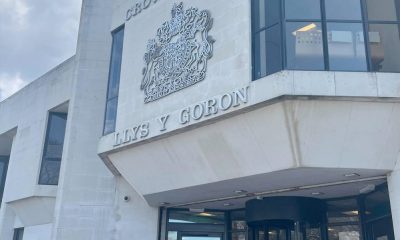
Nine deny Class A drugs conspiracy as case set for Crown Court trial
-

 Health5 days ago
Welsh Labour launches Senedd campaign with £4bn hospital pledge
-

 Health4 days ago
Davies and Kurtz attack ‘fantasy hospital’ pledge for west Wales
-
Crime2 days ago
Man who threatened to kill police during Milford Haven standoff avoids jail
-

 Sport5 days ago
New arrival celebrated at Bridge Meadow
-

 Education5 days ago
School in lockdown after reported phone threat
-

 Sport5 days ago
South Pembrokeshire Short Mat Bowls Association results