


Health
Nurses’ union warns Wales must not lose new recruits after FM job guarantee row


THE ROYAL COLLEGE OF NURSING WALES has warned that Wales “cannot afford” to lose newly qualified nurses after the First Minister refused to give a direct guarantee that student nurses would be given jobs in NHS Wales.
The row followed First Minister’s Questions on Tuesday (Jun 9), when Reform Wales leader Dan Thomas MS asked Rhun ap Iorwerth whether he would guarantee jobs for student nurses when they graduate.
Mr Thomas said it was unacceptable for newly qualified nurses, doctors and paramedics to struggle to find work while the NHS remained under pressure.
The First Minister did not give a direct yes or no answer, but said workforce planning was a “core part” of the Welsh Government’s health strategy.
He told the Senedd: “Putting a robust plan in place to make sure that people who have decided to devote themselves to careers in nursing or medicine or the allied health professions is a core part of our delivery of a workforce strategy.

“That is why my Cabinet Minister for Health and Care has already begun the work of ensuring that we are able to support students to have careers within the NHS.”
Following the exchange, RCN Wales Executive Director Nicola Williams said the union welcomed the First Minister’s recognition of the importance of helping nurses build their futures in Wales.
But she said nursing students had invested years of hard work, commitment and personal sacrifice to qualify.
She said: “At a time when Wales continues to face nursing workforce shortages and increasing demand on health services, it is essential that newly registered nurses are able to secure employment and put their skills into practice.

“RCN Wales has consistently raised concerns about reports of graduate nurses struggling to find substantive posts following qualification. This is not only deeply worrying for those individuals, but also represents a missed opportunity for the NHS to retain talented professionals at the beginning of their careers.”
Ms Williams said RCN Wales would seek assurances at a forthcoming workforce summit that a clear and sustainable plan would be developed to support newly registered nurses into employment.
She added: “Wales cannot afford to lose skilled, motivated nurses at the point they enter the profession.”

Mr Thomas said after FMQs: “Our health service is in desperate need of qualified staff. It is unacceptable that newly qualified nurses, doctors and paramedics are being told to find work outside of Wales.
“I was disappointed that the First Minister could not commit to ensuring these hardworking, qualified professionals can move into the frontline roles our NHS so desperately needs to fill.”
The issue comes amid wider concerns about NHS workforce planning in Wales, with unions warning that a failure to create enough entry-level posts risks losing newly trained staff just as services face growing pressure.


NEW figures suggest people in Wales are more likely than anywhere else in Britain to recognise that alcohol can be addictive.
A YouGov survey found that 86% of respondents in Wales described alcohol as addictive, compared with 78% across Britain.
The figure was higher than Scotland at 83%, the North and Midlands at 81%, the South at 77%, and London at 69%.
Health experts said the findings showed strong public awareness in Wales, but warned that knowledge alone may not prevent risky drinking, particularly during the summer months.
Dr Karen Faulkner, Associate Medical Director at Panthera Clinic, said alcohol remained deeply embedded in British social life.
She said: “Alcohol occupies a unique place in British culture because it is both legal and socially encouraged, which can make it difficult for people to recognise when their relationship with drinking is beginning to change.
“What’s particularly interesting is that most people understand alcohol can be addictive, yet many still underestimate how easily regular drinking can become habitual.”
The NHS advises adults not to drink more than 14 units of alcohol a week on a regular basis, spread over three or more days, with alcohol-free days included.
Dr Faulkner said summer events, holidays, festivals, barbecues, pub gardens and sporting occasions could make drinking feel more routine.
She added: “Dependence often develops gradually and doesn’t always fit the stereotypes people associate with addiction.
“The challenge isn’t necessarily a lack of awareness about alcohol’s risks. It’s recognising when a socially accepted habit has crossed the line into something that’s beginning to have a negative impact on your health, wellbeing or daily life.”
People trying to cut back are advised to plan alcohol-free days, alternate alcoholic drinks with water or soft drinks, set limits before social events, try low or no-alcohol alternatives, and keep track of weekly intake.

Support is available in Wales through DAN 24/7, the Wales Drug and Alcohol Helpline, on 0808 808 2234.

MORE than 720,000 adults in Wales are now living with poor mental health, according to a major new report which warns the nation continues to record the highest levels of psychological distress in the UK.
New analysis released by the Mental Health Foundation on Wednesday (June 10) found that an additional 278,000 adults in Wales are experiencing poor mental health compared to 2009.
The findings show that by 2024, more than one in four adults in Wales (27.3%) were affected – around 720,000 people – placing Wales 2.7 percentage points above the UK average of 24.6%.
The charity said worsening financial insecurity, poverty, austerity measures and the long-term effects of the Covid pandemic are continuing to hit Welsh communities hard.
A report based on 15 years of data from 40,000 people across the UK found Wales has reported higher levels of poor mental health than the UK average in 13 of the last 15 years.
Researchers said the situation worsened significantly after the pandemic, with Wales reaching a peak of 28% in 2022/23 – 5.2 percentage points above the UK average at the time.
Although figures have fallen slightly since then, Wales continues to record the highest levels of poor mental health in Britain.
The Mental Health Foundation said poverty remains a major factor, with around one in five people in Wales living in poverty over the last two decades.
It warned that more than half of those affected are now living in “very deep poverty”, leading to chronic stress, financial hardship and greater mental health difficulties.
Catherine Razzell, Policy and Public Affairs Manager at the Mental Health Foundation, said the findings reveal a “worrying and consistent pattern” in Wales.
“Whilst figures show the levels of poor mental health in other UK nations have tracked together, Wales has diverged from the rest of the UK – this is deeply concerning,” she said.
“Things need to change in order to protect the people of Wales from poor mental health and for the next generation. This is not just on an individual basis, but at a systemic level.”
The charity welcomed the Welsh Government’s planned pilot of the new Welsh Child Payment, known as Cynnal, and said prevention-focused policies would be key to improving outcomes.
However, it said progress would require cooperation between Cardiff Bay and Westminster due to the range of economic and social policies affecting mental wellbeing.
The report, titled The state of mental health, analysed data collected between 2009 and 2024 using the General Health Questionnaire (GHQ-12), a recognised measure used to identify likely mental health disorders across populations.
The Welsh Government has previously pledged to improve mental health support through its cross-government Mental Health and Wellbeing Strategy for Wales covering 2025 to 2035.
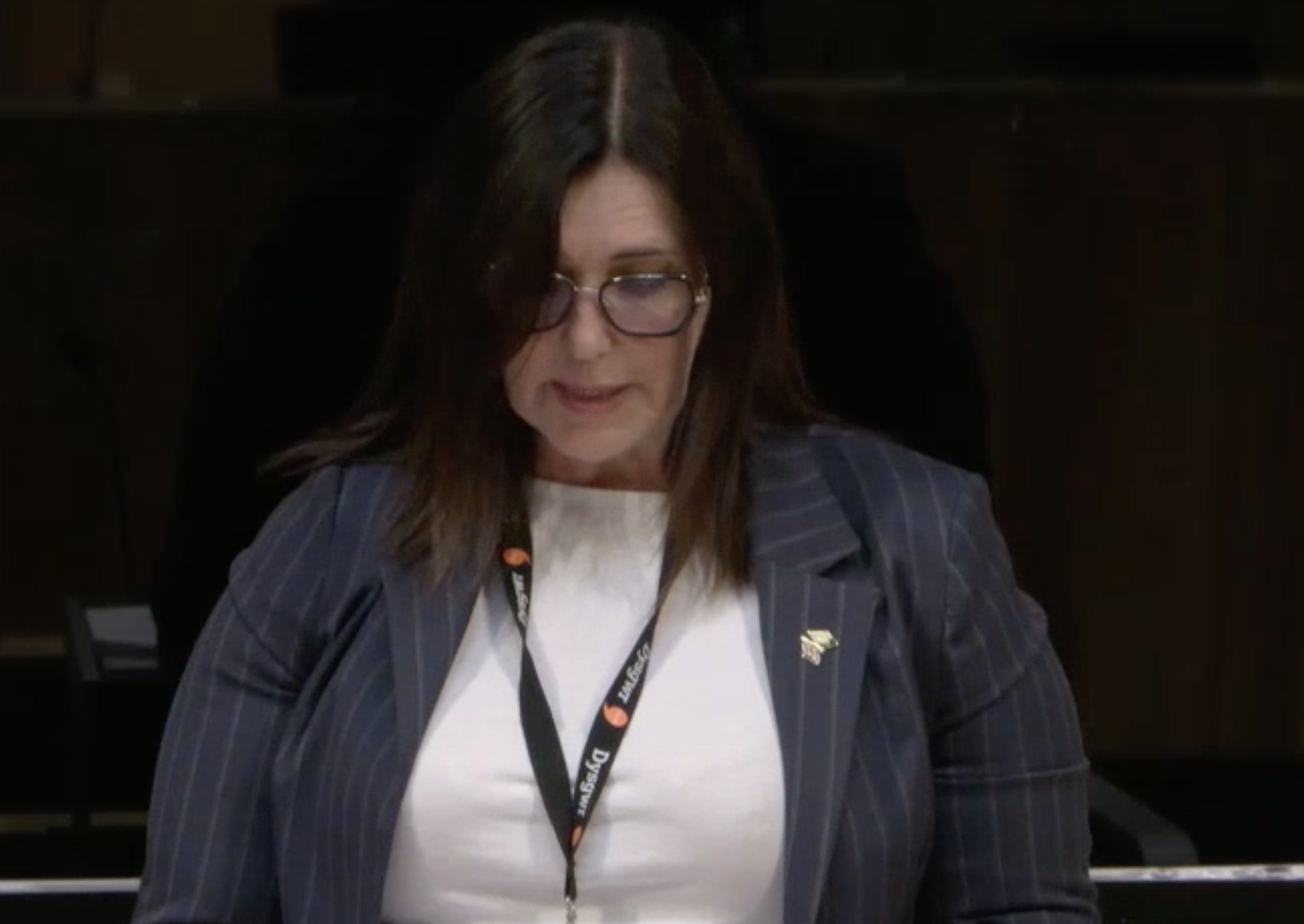
CLAIRE ARCHIBALD MS has challenged the First Minister over pressures facing rural social care in west Wales, warning that families in Pembrokeshire and Ceredigion are being left without the support they need.
The Reform UK Member of the Senedd for Ceredigion Penfro raised the issue during First Minister’s Questions, saying reductions in the clinical role of rural hospitals had not been matched by proper investment in community care.
Ms Archibald, who has previously worked as a carer, said the impact was being felt by patients stuck in hospital, families struggling to secure support, and people unable to spend their final days at home.
She told the Senedd: “Across Pembrokeshire and Ceredigion, Labour has reduced the clinical role in our rural hospitals, but the community care to fill the gap has simply not been put in place.
“The results are delayed discharges, families left struggling, and many people denied the chance to spend their final days at home with their loved ones.
“We have providers across west Wales handing back contracts, refusing referrals and shelving expansion because they cannot recruit the workforce.
“So, after 26 years of Labour-led government supported by your party, isn’t it the truth that rural social care has been neglected and left to pick up the pieces?
“What concrete action will your government take to restore front-line social care in west Wales?”

Following the exchange, Ms Archibald said the issue was not simply about policy, but about real families being placed in impossible situations.
She said: “I have seen first-hand how important good care is, both for the person who needs support and for the family around them.
“When community care is not there, people stay in hospital longer than they need to, families are left fighting for help, and people lose the chance to be cared for at home.
“This is especially serious in rural areas like Pembrokeshire and Ceredigion, where distance, workforce shortages and reduced local services all make the pressure worse.
“For too long, rural social care has been left to carry the burden while services are taken away elsewhere.
“People in west Wales deserve better than warm words. They need clear action, proper workforce planning, and front-line care that actually reaches them.”
Ms Archibald said she would continue pressing the Welsh Government on delayed discharges, care package shortages, workforce pressures and the need to protect services in rural communities.



News5 hours ago
Pendine cliff fall victim recovering after major emergency response
A 22-YEAR-OLD man who suffered serious injuries after falling from cliffs overlooking Pendine Beach is recovering well following emergency surgery....


News1 day ago
First Minister challenged over jobs for student nurses
REFORM WALES has accused the First Minister of failing to guarantee jobs for student nurses in Wales, despite continuing pressure...


Crime1 day ago
Knife blankets call as school staff face rising violence fears
GMB says protective equipment should be considered where risk assessments show staff could face blades SCHOOL staff should be given...


News1 day ago
Claire Archibald secures review of Milford Haven train times
RURAL TRANSPORT CONCERNS RAISED WITH TFW CLAIRE ARCHIBALD MS has secured a review of train times between Milford Haven and...


Crime1 day ago
PCC review calls for stronger youth crime prevention work
REPORT MAKES 13 RECOMMENDATIONS A REVIEW into crime and anti-social behaviour services for young adults has called for stronger prevention...


Crime1 day ago
Families condemn failed appeal by paddleboard boss jailed over Haverfordwest tragedy
RELATIVES SAY LATEST COURT BID HAS REOPENED PAIN AFTER FOUR DEATHS ON WESTERN CLEDDAU THE FAMILIES of victims of the...


Community2 days ago
Forgotten wartime archive found in Pembroke Dock attic after 80 years
Remarkable family collection reveals story of father and son who served through two world wars A REMARKABLE untouched family archive...


Crime2 days ago
Milford Haven woman left with facial fractures after drunken attack
A WOMAN in her late fifties suffered facial fractures after being repeatedly punched through the window of her car during...


Crime2 days ago
Sex offender in senior role at Tenby family hotel
CREST HOTEL GROUP says it is investigating safeguarding concerns after staff at the Imperial Hotel in Tenby raised alarm over...


Sport3 days ago
Runners tackle new route in Ras Y Castell 10k
MORE than 90 runners took to the streets and paths around Cardigan on Friday evening (June 5) for the annual...
-
Crime5 days ago
Paddleboard company owner loses bid to cut sentence over Haverfordwest tragedy
-

 Crime4 days ago
Milford Haven man admits harassment and assault
-

 News4 days ago
Community appeal for privacy after serious emergency in Pendine
-
Community2 days ago
Forgotten wartime archive found in Pembroke Dock attic after 80 years
-
Crime2 days ago
Sex offender in senior role at Tenby family hotel
-

 Business4 days ago
Call for gym and Padel courts at Kiln Park Farm unanimously backed
-
Crime1 day ago
Families condemn failed appeal by paddleboard boss jailed over Haverfordwest tragedy
-

 Community4 days ago
Founders Day hailed a success despite rising costs and extra security