


Politics
New deputy minister for transport addresses need for key infrastructure resilience


THE WELSH Government’s new deputy transport minister has highlighted the need for “key infrastructure resilience” across the country.
Mark Hooper, who was elected to Pen-y-Bont Bro Morgannwg for Plaid Cymru last month announced a “short, focused programme of work to explore realistic options across road, rail and bus interventions”.
There would be, he said, an emphasis on solutions that were “practical, deliverable and capable of making a meaningful difference in the near to medium term”.
Speaking to the Siambr on Tuesday 9 June, Mr Hooper shared that the repeated closures of the Menai bridge in recent weeks were due to the 7.5 tonne vehicle weight limit being exceeded.
He said: “When the weight restrictions are breached, precautionary structural inspections are required, and that, in turn, means closure and disruption to those in the area. Ensuring the safety of the structure, the workforce and the public must come first.”

Mr Hooper said the government is working with North Wales Police and the DVSA to undertake further enforcement action against such breaches.
He also addressed problems with the M4 in south Wales.
The minister said: “Both the Menai crossings and the M4 illustrate the wider challenge of managing ageing infrastructure in the face of increasing demand.
“In the north of the country, we are progressing both immediate measures and longer term options to strengthen resilience across the Menai strait, including considering detailed options for a third crossing.

“In the south of the country, we are undertaking targeted work to identify a clear and deliverable strategy for the M4 corridor.
“Whilst these works can be disruptive, they are necessary to ensure safety and to support the longer term reliability of our transport network.”
Labour’s spokesperson for transport, Vikki Howells, told the minister that Wales needed “firm commitments” to improve infrastructure.

She said: “We need road networks that don’t hold people up, buses that support people getting to work, an accessible train network, a national airport to raise Wales’ global profile and attract inward investment, and we need to ensure that our active travel infrastructure works right across Wales.”
Ms Howells welcomed the early statement on the Menai Bridge crossing but pressed the minister to confirm if work on the bridge would be completed by spring 2027 – as was planned by the previous Labour administration.
The transport minister said the government would “try and keep” to the 2027 date but that it must be careful about suggesting dates that won’t happen.
Noting that as Mr Hooper is new to both the role of transport minister and the Senedd itself, Janet Finch-Saunders announced she won’t “blame [him] just yet” for the “damage” done to transport infrastructure in Wales.
The Conservative spokesperson for enterprise, connectivity and energy said: “Under the last Welsh Labour Government – supported, of course, by your party now, Plaid Cymru – we did see significant damage done to our transport system through a series of misguided policies and decisions.”
Ms Finch-Saunders criticised the prioritisation of active travel schemes, the freezing of major road building projects, and the implementation of 20mph speed limits during the previous Senedd.
She told the minister the “key” to a strong economy and society was a “strong transport system and modern infrastructure.”
The Tory spokesperson called for the building of the third Menai crossing, the delivery of the M4 relief road, and the electrification of the north Wales main line among other projects.
Mr Hooper responded: “One of the things that’s important is that we’re talking about how we make sure that our transport system works for the whole of Wales.
“I think that’s something that’s central to how I want to tackle this job and the things that are really important to me.
“There are things that will be different in the way we approach it, but one of the things that I’m keen for us to do in the relationship that we have, broadly, across this Siambr, is that we work with data.”
Reform UK’s shadow minister for economy and transport, Jason O’Connell, told the Siambr that Wales needs a transport network which enables it to “unleash” its economic potential.
Describing the A55 as the “economic backbone of north Wales”, Mr O’Connell called for the minister to confirm if he intends to widen the A55 “where appropriate” as proposed by Reform.
He also quizzed Mr Hooper on his plans for the M4 stating that Plaid offers “plans for plans” in the statement but have not presented a “firm solution”.
He said: “Motorists have been stuck with a Plaid-backed Labour Government that’s been tough on motorists and soft on infrastructure for the last 27 years.
“They pushed excessive 20 mph speed limits, slowing down the Welsh economy, wasted £150 million of taxpayers’ money on cancelled plans for the M4 relief road.
“Now, Minister, many motorists are waiting with bated breath to see how this new government will treat motorists.”
Pressing the transport minister for his “actual specific plans”, Mr O’Connell described the minister’s statement as “severely lacking in details” – a feature he described as a “hallmark” of the Plaid Cymru government so far.
The deputy cabinet minister pledged to “come back to members in the autumn” with detailed plans, noting that he welcomes the scrutiny under which they will be placed.
He said: “I think what we’re looking at is something that is really going to make a difference to the people of Wales. That’s what we’re intending to do.
“I think that some of these things, there are restrictions around the M4. It’s clear you’ve got the Severn one side and you’ve got mountains and hills the other side, that restrict what you do, with a growing population in the middle of it. So, you need to make things work.”
Mr Hooper also emphasised the importance of public transport in unlocking productivity in Wales.

Community
‘Respect, solidarity, and fairness’ behind government’s plans to tackle poverty and inequality
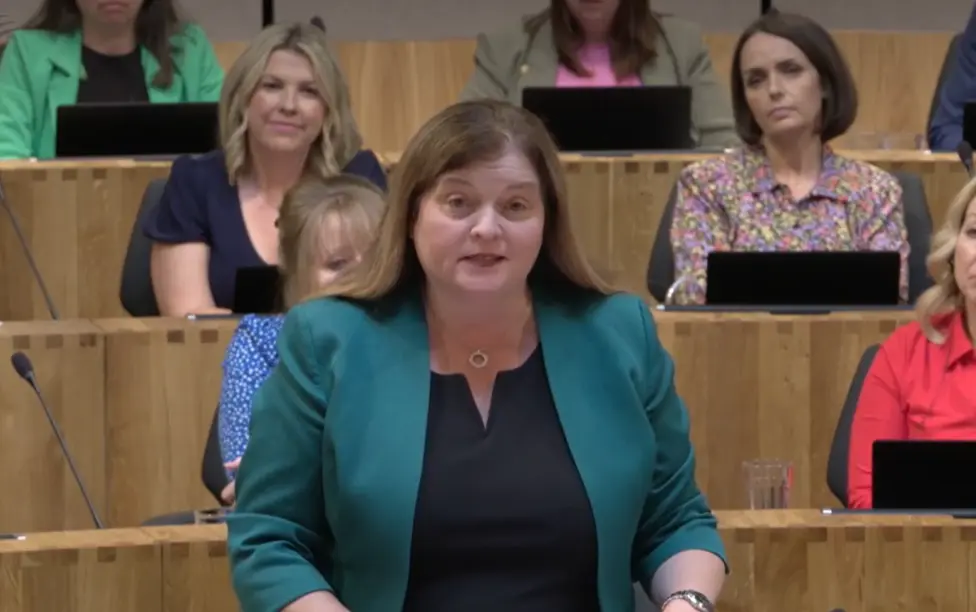
WALES’ new housing minister has said everyone in Wales should have a “safe, warm home” – but admitted “this most basic of needs is out of reach for thousands of people”.
Answering questions from colleagues in the Senedd on Tuesday June 9, Siân Gwenllian set out her priorities – including protecting renters, strengthening local government, and creating a new national development body.
The Gwynedd Maldwyn MS committed to a new “package of measures” to protect private renters in Wales and “ensure fair rents are set so the price of renting a home is as affordable as possible”.
Ms Gwenllian vowed to ensure local authorities are in the “strongest position possible” to achieve this, and outlined plans to establish Unnos – a new national development body tasked with increasing Wales’ social housing supply.
“I am determined to turn ambition into action, delivering the homes people need along with the resilient public services that communities rely on”, she said.
“Together, we will build a fairer Wales where everyone has security and opportunity, a roof above their heads, and vibrant communities to live in.”
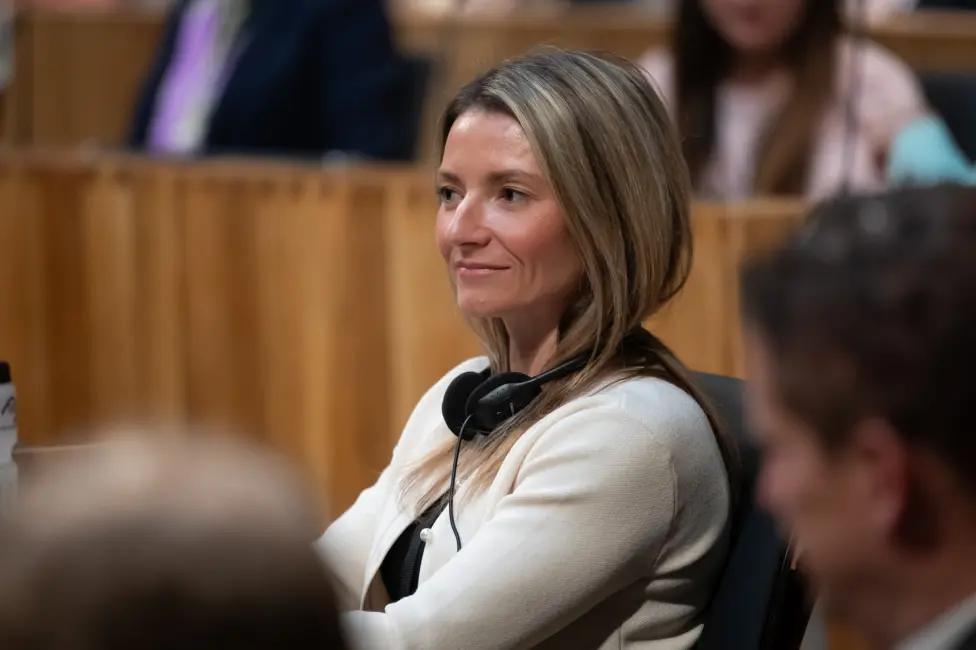
However, Ms Gwenllian’s shadow cabinet counterpart, Reform’s Francesca O’Brien, challenged plans for “another quango” – and hit out at the Labour government’s housebuilding record.
She said: “The Federation of Master Builders have been sounding the alarm in Wales for years. The Government didn’t listen.”
“If the planning system is so broken that you need a brand-new arm’s-length body just to navigate it, then you should fix that broken system first, surely?
“Until we see the detail on this proposed arm’s-length body, I’ll reserve judgment.
“However, let me be clear: this must not become another layer of bureaucracy.”
Ms Gwenllian agreed with Ms O’Brien’s description of a “housing crsis” and said: “The crisis, for me, is clearly highlighted in the numbers of people who are in temporary accommodation.

“As we speak today, there are children on the way home from school to spend evenings in B&B accommodation, in a small room where there are no facilities for cooking, no room to do their homework. That is the reality of the crisis that we are facing.”
Concerns about the proposed Unnos were also raised by Labour’s Jayne Bryant and Peter Fox from the Welsh Conservatives.
Ms Bryant, who represents Casnewydd Islwyn, said: “It would be good to know in what way the establishment of quangos cuts bureaucracy and boosts our economy.”
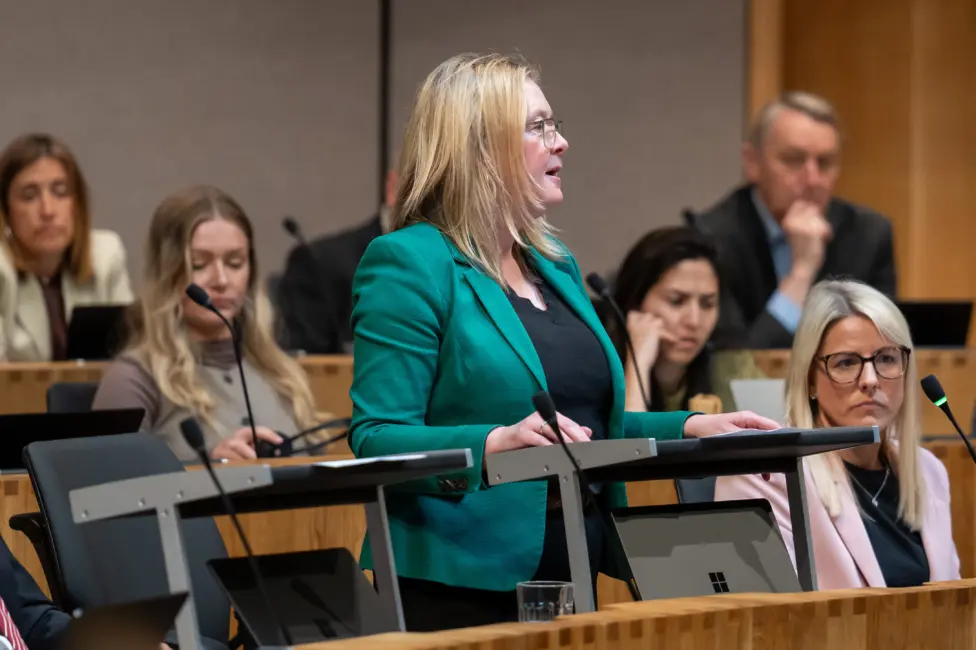
Responding, Ms Gwenllian reiterated her belief that an arm’s-length body like Unnos was needed to increase the speed of delivery in the housing sector.
Drawing attention to the work done by the previous Labour administration, Ms Bryant, who is Labour’s housing spokesperson, quizzed the cabinet minister on her commitments.
Ms Bryant said: “The funding formula is based on a complex mix of indicators, and work was ongoing to update some of those indicators. It would be really good to understand whether that work will continue at pace, or whether it will be stopped while there is a review of the funding formula.”
Ms Gwenllian confirmed that the Plaid administration will be looking at how the funding formula could be reformed, and will be continuing with the work started by Welsh Labour.
Conservative MS Mr Fox pressed Ms Gwenllian on how the government planned to achieve its target of 20,000 social homes by 2030 – noting that the previous Labour administration failed to meet their similar target.
He said: “As it stands, one in every 14 households are waiting for a social home, which means that at the current rate, it would take 35 years to meet that demand.
“Your pledge for a home for all is very much welcome, but the previous Welsh Government failed on its 2021 manifesto commitment… to deliver those 20,000 new low-carbon social homes for rent by the end of the Senedd.
“You’ve said today that you will create 20,000 new social homes by 2030. What makes you so sure that you can meet this target when the previous government failed?”
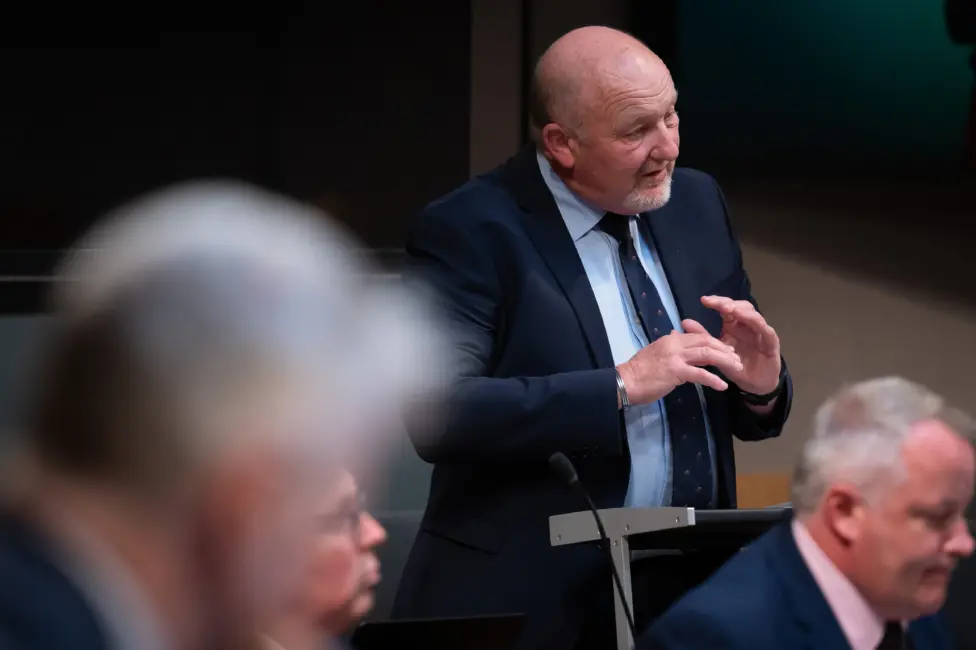
In response Ms Gwenllian acknowledged the “better position” the Plaid administration starts with thanks to the work of the previous Labour government in delivering social homes.
She said: “There are homes that are currently in the pipeline, and there are plans for developing more of them. But we do have to find funding methods that are innovative, and there are models out there that we will be looking at.
“Unnos will provide that vehicle for us to be looking seriously at the long-term barriers and long-term planning issues, and the need for the funding to be allocated on a long-term basis to deliver on that.”
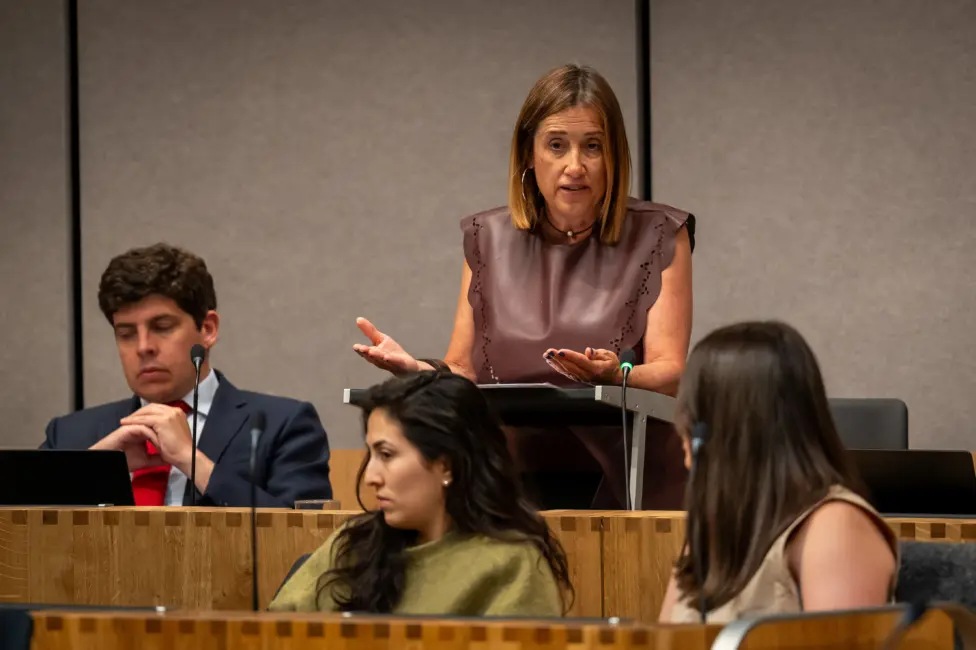
The minister also faced questions on how she will address youth homelessness.
Questioning Ms Gwenllian, Welsh Liberal Democrats leader Jane Dodds highlighted figures from the Children’s Commissioner for Wales, which found housing and homelessness were among children’s top priorities.
Ms Dodds said: “We heard from children about insecure and unsuitable accommodation, lack of adapted or accessible housing for disabled children, poor housing conditions, including damp, mould and overcrowding.
“I also wanted to touch base on those children in our care. We know that a quarter of children leaving our care find themselves homeless.”
She asked the what work was being done to support children, including children in care, and listen to their views and experiences.
In response, Ms Gwenllian said she is creating an action plan to align with the legislation to tackle homelessness, including child homelessness.
She also noted that importance of working with organisations designed to support families before they become homeless, helping them out of homelessness, and ensuring they do not face those struggles again.
She said: “Children are at the heart of that work. I don’t think anyone in this room would want us not to be doing our level best to ensure that no children live in totally unacceptable circumstances.”
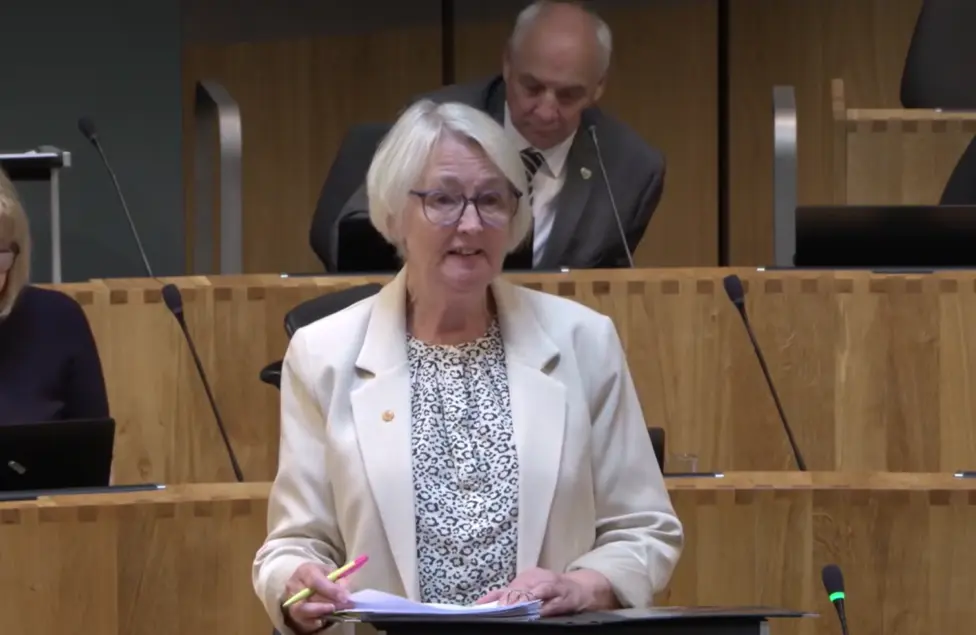
WALES’ new housing minister has said everyone in Wales should have a “safe, warm home” – but admitted “this most basic of needs is out of reach for thousands of people”.
Answering questions from colleagues in the Senedd on Tuesday June 9, Siân Gwenllian set out her priorities – including protecting renters, strengthening local government, and creating a new national development body.
The Gwynedd Maldwyn MS committed to a new “package of measures” to protect private renters in Wales and “ensure fair rents are set so the price of renting a home is as affordable as possible”.
Ms Gwenllian vowed to ensure local authorities are in the “strongest position possible” to achieve this, and outlined plans to establish Unnos – a new national development body tasked with increasing Wales’ social housing supply.
“I am determined to turn ambition into action, delivering the homes people need along with the resilient public services that communities rely on”, she said.
“Together, we will build a fairer Wales where everyone has security and opportunity, a roof above their heads, and vibrant communities to live in.”
However, Ms Gwenllian’s shadow cabinet counterpart, Reform’s Francesca O’Brien, challenged plans for “another quango” – and hit out at the Labour government’s housebuilding record.
She said: “The Federation of Master Builders have been sounding the alarm in Wales for years. The Government didn’t listen.”
“If the planning system is so broken that you need a brand-new arm’s-length body just to navigate it, then you should fix that broken system first, surely?
“Until we see the detail on this proposed arm’s-length body, I’ll reserve judgment.
“However, let me be clear: this must not become another layer of bureaucracy.”
Ms Gwenllian agreed with Ms O’Brien’s description of a “housing crsis” and said: “The crisis, for me, is clearly highlighted in the numbers of people who are in temporary accommodation.

“As we speak today, there are children on the way home from school to spend evenings in B&B accommodation, in a small room where there are no facilities for cooking, no room to do their homework. That is the reality of the crisis that we are facing.”
Concerns about the proposed Unnos were also raised by Labour’s Jayne Bryant and Peter Fox from the Welsh Conservatives.
Ms Bryant, who represents Casnewydd Islwyn, said: “It would be good to know in what way the establishment of quangos cuts bureaucracy and boosts our economy.”
Responding, Ms Gwenllian reiterated her belief that an arm’s-length body like Unnos was needed to increase the speed of delivery in the housing sector.
Drawing attention to the work done by the previous Labour administration, Ms Bryant, who is Labour’s housing spokesperson, quizzed the cabinet minister on her commitments.
Ms Bryant said: “The funding formula is based on a complex mix of indicators, and work was ongoing to update some of those indicators. It would be really good to understand whether that work will continue at pace, or whether it will be stopped while there is a review of the funding formula.”
Ms Gwenllian confirmed that the Plaid administration will be looking at how the funding formula could be reformed, and will be continuing with the work started by Welsh Labour.
Conservative MS Mr Fox pressed Ms Gwenllian on how the government planned to achieve its target of 20,000 social homes by 2030 – noting that the previous Labour administration failed to meet their similar target.
He said: “As it stands, one in every 14 households are waiting for a social home, which means that at the current rate, it would take 35 years to meet that demand.
“Your pledge for a home for all is very much welcome, but the previous Welsh Government failed on its 2021 manifesto commitment… to deliver those 20,000 new low-carbon social homes for rent by the end of the Senedd.
“You’ve said today that you will create 20,000 new social homes by 2030. What makes you so sure that you can meet this target when the previous government failed?”
In response Ms Gwenllian acknowledged the “better position” the Plaid administration starts with thanks to the work of the previous Labour government in delivering social homes.
She said: “There are homes that are currently in the pipeline, and there are plans for developing more of them. But we do have to find funding methods that are innovative, and there are models out there that we will be looking at.
“Unnos will provide that vehicle for us to be looking seriously at the long-term barriers and long-term planning issues, and the need for the funding to be allocated on a long-term basis to deliver on that.”
The minister also faced questions on how she will address youth homelessness.
Questioning Ms Gwenllian, Welsh Liberal Democrats leader Jane Dodds highlighted figures from the Children’s Commissioner for Wales, which found housing and homelessness were among children’s top priorities.
Ms Dodds said: “We heard from children about insecure and unsuitable accommodation, lack of adapted or accessible housing for disabled children, poor housing conditions, including damp, mould and overcrowding.
“I also wanted to touch base on those children in our care. We know that a quarter of children leaving our care find themselves homeless.”
She asked the what work was being done to support children, including children in care, and listen to their views and experiences.
In response, Ms Gwenllian said she is creating an action plan to align with the legislation to tackle homelessness, including child homelessness.
She also noted that importance of working with organisations designed to support families before they become homeless, helping them out of homelessness, and ensuring they do not face those struggles again.
She said: “Children are at the heart of that work. I don’t think anyone in this room would want us not to be doing our level best to ensure that no children live in totally unacceptable circumstances.”
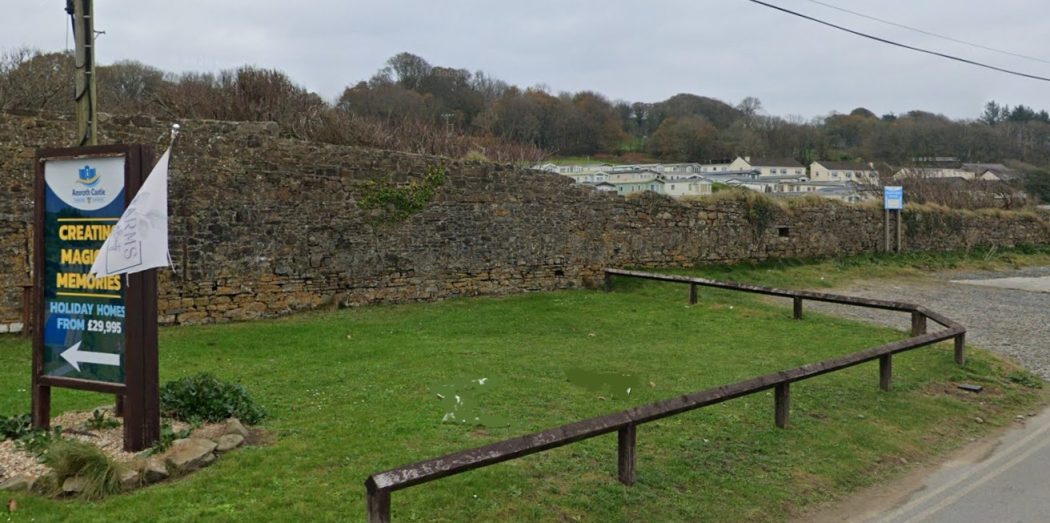
A CALL to allow a south Pembrokeshire caravan site to move to having caravans all-year-round, which led to fears of a precedent that other parks would be able to operate without seasonal restrictions, has been refused.
In an application to Pembrokeshire Coast National Park, Amroth Castle Holidays Ltd, through agent Laister Planning Limited, sought a Certificate of Lawfulness for the use of land for the siting of static caravans for all year occupancy (including as a sole or main place of residence) at Amroth Castle Holiday Park, Amroth.
Local community council Amroth had objected to the call, saying a 12-month use license “would open the park to residential occupation rather than tourism and this was to be resisted”.
It also raised concerns including the application opening “an opportunity to change the caravans to chalets/lodges which are larger in size and will take up more room, potentially extending the area of the park and increasing density”.
It added: “No other caravan/lodge or chalet holiday parks in the Amroth community area of the National Park are allowed to offer 12 months residency on site and so approving this application would set up a precedent for other holiday parks to follow and operate without restriction.”
A supporting statement cited previous permissions at the site in 1967, 1970 and 1985; saying a condition in the latter approval which said the authority “does not authorise” the occupancy of caravans from January 10-Februrary 28 “does not impose a requirement or limitation on the occupancy but instead simply clarifies what the permission authorises”.
“Therefore, going beyond this occupancy would not be a breach of condition and any attempt to enforce it as a prohibition would struggle to identify a breach of planning control. Therefore, it is the applicant’s position that the seven week out-of-season period is not enforced by a planning condition and would be possible to extend such occupancy, provided that it does not amount to a material change use.”
An officer report recommending the certificate be refused, said: “The use of the land as a caravan site was established in the previous planning consents, as mentioned above.
“It was further established through these permissions that the caravans would be limited in number and locations within the site and would be occupied only as temporary accommodation, and not for any period between January 10 and February 28 in any year.”
Dealing with the point raised in the supporting statement, the report said: “Seasonal occupancy conditions are a long-established tool used by planning authorities to distinguish between holiday use and permanent residential occupation. The underlying principle is that a mandatory period of non-occupation breaks the continuity required for a property to be considered a permanent residence. This approach has historically been favoured by many local authorities because it is perceived as readily enforceable through simple site inspections during the specified closed period.”
It said all-year-round caravans at the site “would go above and beyond existing authorisations as established by the 1965, 1967, 1970 and 1985 planning consents,” adding it would “result in a definable character change to the site of a magnitude that would be sufficient to amount to a material change of use requiring planning permission”.
This refusal means that any proposal for year-round caravan occupancy at the site would need a formal planning application.




Crime17 hours ago
Man accused of six rapes including alleged Haverfordwest offence
A MAN has been sent to Crown Court accused of six rapes, including an alleged offence at a Haverfordwest campsite....


News18 hours ago
Childcare row erupts as Plaid faces questions over costs and delivery
Opposition parties clash over flagship pledge as Senedd debate exposes growing divisions PLAID CYMRU’S flagship promise to create what it...


Crime1 day ago
Farmers fined in bovine TB scandal face fresh court action
Hartt family members listed at Haverfordwest Magistrates’ Court over unpaid penalties linked to major cattle prosecution TWO PEMBROKESHIRE farmers convicted...


Crime2 days ago
Pembrokeshire child killer stabbed to death in prison cell, murder trial hears
Kyle Bevan, jailed for the murder of Haverfordwest toddler Lola James, was allegedly stabbed 25 times and left ‘as if...


News2 days ago
Pendine cliff fall victim recovering after major emergency response
A 22-YEAR-OLD man who suffered serious injuries after falling from cliffs overlooking Pendine Beach is recovering well following emergency surgery....


Community2 days ago
Commissioner launches free course to help tackle ageism in Wales
A NEW free learning course has been launched to help people across Wales recognise and challenge ageism. The Older People’s...


News3 days ago
First Minister challenged over jobs for student nurses
REFORM WALES has accused the First Minister of failing to guarantee jobs for student nurses in Wales, despite continuing pressure...

Crime3 days ago
Knife blankets call as school staff face rising violence fears
GMB says protective equipment should be considered where risk assessments show staff could face blades SCHOOL staff should be given...


News3 days ago
Claire Archibald secures review of Milford Haven train times
RURAL TRANSPORT CONCERNS RAISED WITH TFW CLAIRE ARCHIBALD MS has secured a review of train times between Milford Haven and...


Crime3 days ago
PCC review calls for stronger youth crime prevention work
REPORT MAKES 13 RECOMMENDATIONS A REVIEW into crime and anti-social behaviour services for young adults has called for stronger prevention...
-
 Crime6 days ago
Paddleboard company owner loses bid to cut sentence over Haverfordwest tragedy
-

 Crime6 days ago
Milford Haven man admits harassment and assault
-

 News5 days ago
Community appeal for privacy after serious emergency in Pendine
-

 Crime4 days ago
Sex offender in senior role at Tenby family hotel
-

 Community4 days ago
Forgotten wartime archive found in Pembroke Dock attic after 80 years
-

 Crime2 days ago
Haverfordwest pair accused of £80,000 rogue trading frauds
-
Crime3 days ago
Families condemn failed appeal by paddleboard boss jailed over Haverfordwest tragedy
-
Crime3 days ago
Knife blankets call as school staff face rising violence fears