


Business
Retrospective call to keep glamping pod at caravan site

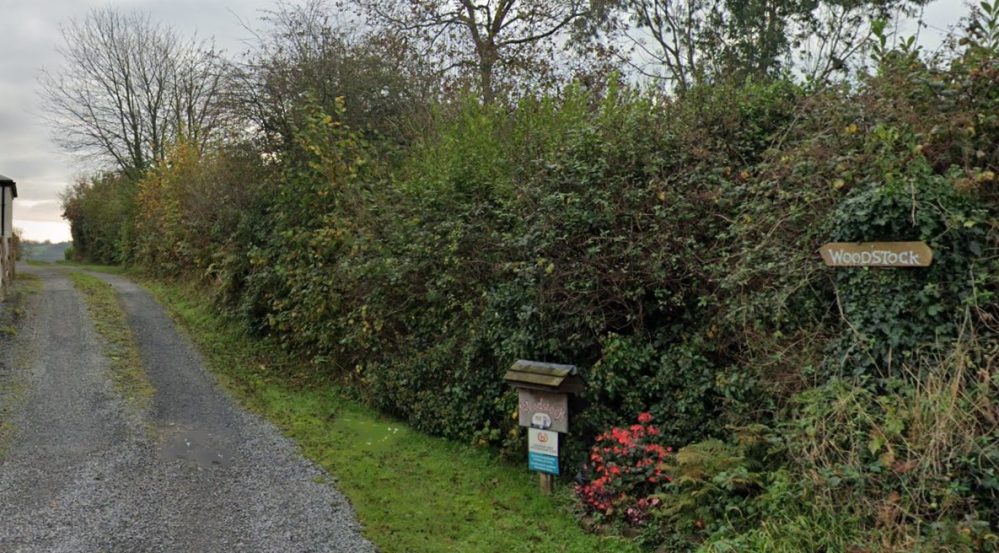
A CALL to let a small rural Pembrokeshire caravan site keep a glamping pod sited without planning permission has been lodged with county planners.
In an application to Pembrokeshire County Council, Janice Palin seeks retrospective permission for the retention of a glamping pod and change of use of land for short-term visitor accommodation at Woodstock, Cold Inn, near Kilgetty.
A supporting statement accompanying the application says the application for the 2023 retrospective scheme follows a conversation with one of the authority’s enforcement officers.
It adds: “The property comprises of the main dwelling and associated garden as well as a caravan site which is a Caravan and Motorhome Club Certificated Location (CL) with a capacity of five caravans or motorhomes. The glamping pod is contained within the garden of the main dwelling.
“The CL is located just south of the glamping pod, separated by a hedgerow. A single car parking space is located just off the main access to the caravan site and a pathway allows access to the pod adjacent to the hedgerow. The glamping pod utilises the existing access for the caravan site from the main road.”

It goes on to say: “The glamping pod has been used for short-term holiday accommodation since June 2023. The structure is capable of removal and does not represent permanent built development. The operation of the glamping pod since 2023, provides valuable evidence regarding its actual impacts.
“During this period there have been no known complaints relating to noise, disturbance, privacy, highway safety, drainage or landscape impact. The operational history demonstrates that the use functions successfully within its setting without giving rise to unacceptable effects on neighbouring occupiers or the wider area.”
It finished: “This development only comprises of one additional glamping pod, a modest diversification and enhancement of an existing tourism enterprise rather than the creation of a brand-new tourism site.
“The glamping pod has already been operating for a number of years and it has contributed to the provision of visitor accommodation within this area of Pembrokeshire. It helps to support the objectives of maintaining a diverse and high-quality tourism offer, whilst still being low-impact and well contained in an enclosed area of a private garden. The proposal provides a different style of accommodation to the existing touring pitches, broadening the range of accommodation available to visitors.”

The application will be considered by county planners at a later date.

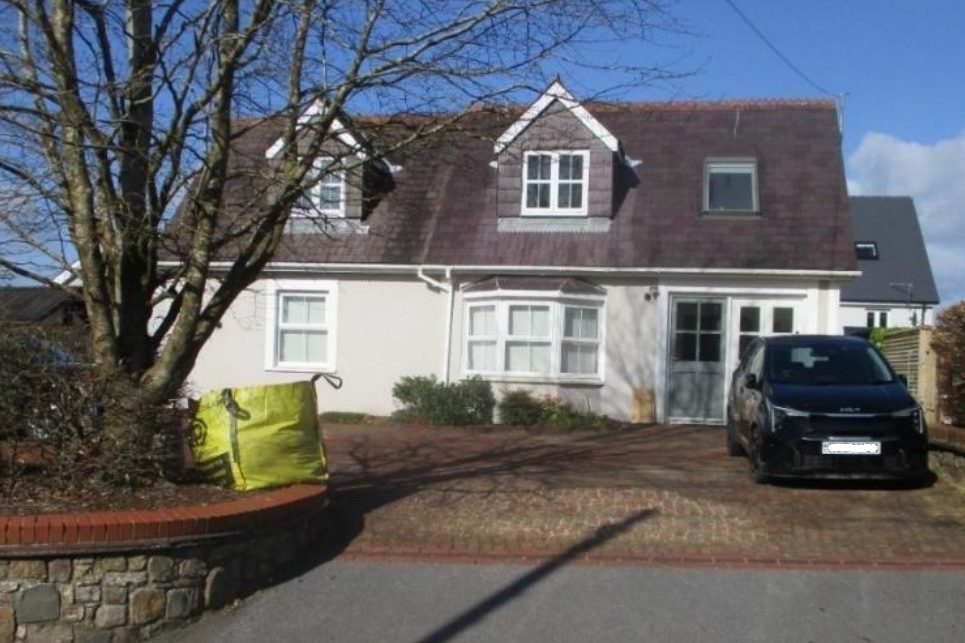
A RESUBMITTED call convert a former architect’s studio into a long-term let after its owner retired has been lodged with Pembrokeshire planners.
In an application to Pembrokeshire County Council, Ken and Sue Morgan, through agent Hayston Developments & Planning Ltd, seek permission for a change of use of redundant office studio / annex at Little Greenway, The Studio, Station Road, Narberth to a long-term residential let.
The application is a resubmission of a previously refused scheme for both a residential and a short-term let, refused earlier this year on grounds that no justification was provided to show the existing building use was no longer viable, the proposed development would result in an increase in nitrogen discharges, and it did not include a Green Infrastructure Statement.
A supporting statement accompanying the latest application says the studio was formerly a successful architectural practice run by Mr Morgan, who has since retired, before he decided to sell the good will to a former staff member.
It said the new owner of the practice organised the business on a work from home basis in Crymych, there now being “no justification for viewing Little Greenway as an employment centre,” adding: “Nor do the applicants wish to see a new office-based activity being available within the grounds of their home.”
It says the applicants’ revised intention is to operate the studio/annex as a long-term let which involves limited management while providing a source of income as well as an additional unit of accommodation within Narberth.
It says, compared with the previous studio use with up to five people present, and the previous two-bedroomed proposal, the current scheme, which includes a green infrastructure statement, would reduce the discharges into the local sewerage network.
It stressed the favouring of a long-term let over previous short-term proposals, following Mr Morgan retiring at the age of 79: “As retirees my wife and I prefer to let the property to a young couple on a long let rather than having regular holiday letting changeovers every week”.
It concluded: “Whilst the use of the studio / annex provided a workplace for up to seven employees, increasing use of computer aided design, the impact of Covid and a desire by Mr Morgan to retire led to the applicant selling his practice to a former employee.
“As a result, the studio / annex can no longer be seen as an opportunity for another office-based enterprise, nor do the owners wish to see such an activity within the curtilage of Little Greenway with the attendant increase in visitors.”
The latest proposals will be considered by county planners at a later date.
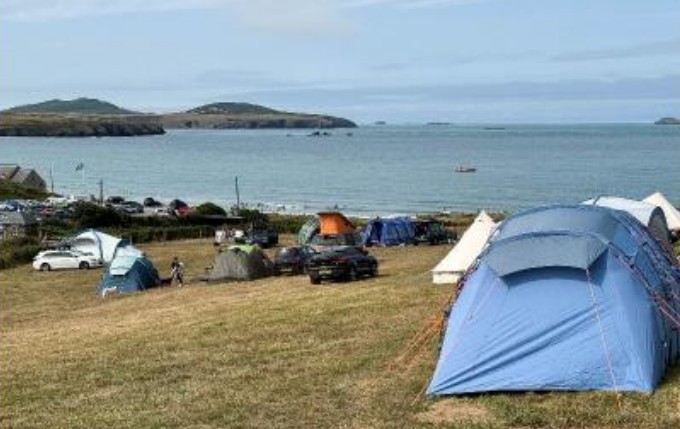
A CALL to allow an overflow campsite to remain at a north Pembrokeshire site, which has been in existence for a century, has been given the go-ahead by the national park.
In an application to Pembrokeshire Coast National Park, John Beer, through agent Hayston Developments & Planning Ltd, sought a Certificate of Lawfulness permission for a field north of Whitesands Camping, Whitesands Bay, St Davids, used as a seasonal overflow tenting site.
An application for a certificate of lawfulness allows an applicant to stay at or keep a development if they can provide proof of occupancy or use over a prolonged period, in this case the applicant saying it has been used between May and September from 2015-2025.
A supporting statement said the campsite forms part of a wider farm holding at Ty Gwyn Farm which has been in the same family for some 400 years; the site and several of the surrounding fields have been used for seasonal camping for many years, going as far back as the 1920s.
It said the southern part of the campsite, for 15 tents and 15 motorhomes/caravans, already benefitted from a 2019 certificate of lawfulness, the latest call for the northern field.
It added: “At various times, the campsite has been the subject of enforcement investigations by the Park Authority, going back to 2014 and more recently in 2019 and 2023.
“It was alleged that part of the field had been used for overflow camping for more than 28 days and therefore that planning permission was required for that change of use of the land. This clearly shows the breach has occurred over 10 years, by PCNP investigations over this time.
“However, in view of the length of time the land in question has been used as a seasonal overflow camping site for tents, it was felt that a certificate of lawfulness would be more appropriate. Hence, this Certificate of Lawfulness application seeks to regularise the use of the application site for this historic use of the land.”
The statement added: “There is evidence of caravan and camping at Ty Gwyn from the early 1900s forward. Indeed, camping has taken place at Whitesands long before anywhere else in the area. By the 1930s, increased demand for pitches justified the building of two toilet blocks on the fields.
“In the late 1930s, and during the Second World War, the size of Whitesands Car Park grew as a result of sand being excavated for ‘the war effort’ (from The Burrows and Car Park), when the Armaments Depot at Trecwn and runways at St Davids and Brawdy Airfields were built.”
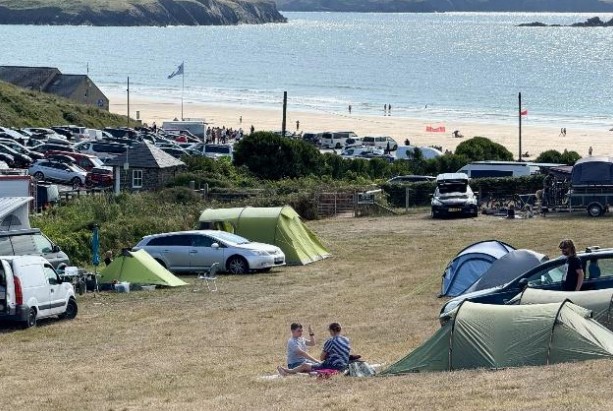
An officer report recommending approval said: “The application is supported by a comprehensive evidence bundle including a statutory declaration by the landowner, 12 witness statements, historic planning decisions, dated photographic evidence spanning the period 2011–2025, historical photographs of the site, site licences and plans identifying the land to which the certificate relates.”
It said two objections had been received, relating to the continuity of the claimed use, the effect of the Covid-19 restrictions on the 10-year period, and whether the application site has genuinely functioned as an overflow camping area, along with general planning concerns.

It said: “Whilst these matters have been noted, they are not material to the determination of a Certificate of Lawfulness except insofar as they assist in establishing the factual nature, extent or continuity of the claimed use.”
It added: “The temporary interruption associated with the Covid-19 pandemic is not considered to amount to a break in the continuity of the claimed use, nor does it prevent the accrual of immunity [under planning rules].”
The certificate of lawfulness application was approved.


Growth expectations among Welsh firms have dropped to their lowest level for 15 months, with only six per cent planning to recruit this summer
ALMOST nine in ten people in Wales believe the Government should do more to support small businesses, according to new research published as confidence among Welsh firms continues to weaken.
The survey found that 87% of Welsh adults wanted stronger government backing for small businesses, up from 84% when the same question was asked two years ago.
Separate tracking by Novuna Business Finance suggests the proportion of Welsh small businesses expecting to grow has fallen from 28% in the spring to 20% during the summer quarter.
That is the lowest level recorded in Wales for 15 months and compares with 32% at the same point last year.
The figures also indicate that many business owners are concentrating on protecting their existing operations rather than expanding.
Around 34% said managing fixed costs was their main priority for securing future growth, while only 5% were preparing to enter new markets and just 6% planned to recruit additional staff.
Rates, energy and tax pressures
Reducing the costs faced by small firms emerged as the strongest theme among Welsh respondents.
Almost a third, 32%, called for lower business rates, although responsibility for the business rates system in Wales lies with the Welsh Government rather than Westminster.
A further 22% wanted corporation tax reduced for smaller companies, while 20% called for a reduction in National Insurance.
Employers have faced increased National Insurance costs, which Novuna said had previously been identified by almost half of small-business owners as a threat to their finances and growth plans.
Energy bills were another major concern. Some 23% of Welsh respondents supported the introduction of a cap on energy costs for small businesses, similar to protections available to domestic consumers.
The condition of town centres and shopping areas also featured prominently, with 27% calling for major government investment to regenerate high streets.
Brexit and overseas trade
Businesses’ ability to trade internationally was another area where respondents wanted changes.
Around 26% said the UK Government should reduce the paperwork and administrative barriers faced by small businesses trading overseas.
A further 23% wanted the UK to reverse Brexit and rejoin the European Union.
Looking towards longer-term workforce development, 15% called for greater investment in apprenticeships and a wider rollout of apprenticeship schemes.
Another 16% wanted additional training and development programmes for small-business owners and their employees.
Jo Morris, Head of Insight at Novuna Business Finance, said small firms remained central to local communities and the wider economy.
She said: “People deal with small businesses most days, a strong small-business sector helps communities work well, and many consumers themselves either run or work for a small business.
“Our Business Barometer data reveals a low point for small-business growth forecasts this month, but, set against these challenges, 62% of Welsh small businesses are still committed to exploring new ways to secure future growth.”
She added that reducing costs and taxation could give businesses greater confidence to invest in equipment, improve productivity and create jobs.
The small-business research was conducted online by YouGov for Novuna Business Finance among 1,000 UK small businesses between July 5 and July 8, 2026.
The consumer polling was carried out on July 17 among a nationally representative sample of 2,000 members of the public. The number of Welsh respondents included in the consumer survey was not stated in the news release.



News14 hours ago
Princess Royal celebrates Pembrokeshire craftsmanship at family-run weaving mill
A Pembrokeshire business that began after a mother grew tired of waiting three weeks for her children’s name tapes has...


Local Government15 hours ago
Burger King could be coming to Haverfordwest as plans submitted
Plans have been lodged for a Burger King outlet at the Morrisons petrol station on Bridge Meadow Lane BURGER KING...


Crime1 day ago
Murder investigation launched into death of Pembrokeshire man in 1991
A 67-YEAR-OLD man has been arrested on suspicion of murder after new potential evidence emerged in connection with a death...


Community2 days ago
‘Paying £29 to reach a cashpoint is absurd’: Narberth’s urgent ATM appeal
Residents, businesses and visitors are being urged to provide evidence after two High Street cash machines were removed, leaving the...


Crime2 days ago
Haverfordwest man jailed for seven years for historic rape and sexual assault of girl
A HAVERFORDWEST man has been jailed for seven years after being convicted of raping and indecently assaulting a girl during...


News2 days ago
Burnham more willing to listen on Welsh devolution, says First Minister
Rhun ap Iorwerth says he will press the new Prime Minister for powers over policing, railways and Wales’ natural resources...


Crime3 days ago
Women jailed after man chased through Milford home and attacked with knives
Kelly Rees receives further 27-month sentence while already serving prison term for notorious taxi robbery TWO women have been jailed...


Crime3 days ago
Mother headbutted and clawed police officers after threatening social worker
Court shown body-worn footage of violent confrontation at Goodwick property A COURT has been shown police body-worn footage capturing the...


Crime3 days ago
Man, 37, found dead following major police response in Pembroke Dock
Death not being treated as suspicious as police make statutory referral to IOPC following active investigation A 37-YEAR-OLD man has...


Community4 days ago
Household Cavalry drum horse returns home to Pembrokeshire for final farewell
Dyfed Willa Rose, who became Major Juno and the first mare to serve as a Household Cavalry Drum Horse, was...
-
Crime1 day ago
Murder investigation launched into death of Pembrokeshire man in 1991
-

 News12 hours ago
Burnham’s first week – what it means for Wales
-
Community2 days ago
‘Paying £29 to reach a cashpoint is absurd’: Narberth’s urgent ATM appeal
-

 Health2 days ago
Record summer waits expose deepening crisis in Wales’ A&E departments
-

 Community2 days ago
Green Flag flies at Manorbier Community Garden for first time
-
 Community2 days ago
Contentious DARC space radar scheme to be decided by Welsh Government
-

 Business2 days ago
Port of Milford Haven named among UK’s best workplaces for women
-

 Business6 hours ago
Certificate of lawfulness granted for Whitesands overflow campsite