


News
Badger and the season of goodwill

AND SO, like a particularly obnoxious curry, December has once again come around to torment poor Badger. This, readers, this is Badger’s least favourite time of year: scarred by decades of exposure to Christmas ‘specials’ Badger is afflicted with chronic tinselitis. The very sound of the word ‘merry’, or worse ‘merrie’, is enough to give Badger fond thoughts of emigration to climes where jolliness and holly-ness is a touch less de rigeur. Events this year have compelled Badger to cast his mind back over the years. Along that journey, Badger has tried to try to discover where it is that this seasonal disorder has its origins. And, readers, it has come to Badger that there is no one, single reason why Badger dislikes Christmas so dyspeptically that the merest scent of a Brussels sprout is enough to engender dyspepsia itself. Badger has memories of finding the tangerine wrapped in tissue paper among the games, toys and annuals that made up his presents on Christmas morning.
Those memories are fond and suffused with recollection of the thrill that Christmas brought to his childhood. Badger remembers Christmas cake iced impenetrably with the type of covering they used on space shuttles; mince pies; fruit puddings and turkey dinners that had a half-life of half a week or more. Even those, readers, even those bring Badger pin-sharp and pleasant recollections of his grandfather sitting in a rocking chair in a crowded cottage reading a Louis L’Amour western and smoking a Kensitas cigarette with nary a thought for the fire hazard caused by doing so after a carbohydrate heavy meal. Badger’s misty-eyed reminiscences are shot through with memories of execrable Christmas television. Dick Emery. Dickbloody- Emery. The great Clive James, it was, who described dear old Dick as “the man of a thousand faces, all of them the same”.
You can’t improve on that type of criticism. Badger isn’t even going to try. Badger’s childhood was, by and large, the era of three channels on the telly, all of which stuck to the same formula throughout Badger’s childhood. Badger says “by and large” because there was always a strike hovering in the air threatening to take BBC or ITV off the air over Xmas. BBC had Billy Smart’s Circus, ITV had Chipperfield’s Circus; there was Val Doonican, Cilla Black, and Peters and Lee. And these shows had viewers not in the millions, but in the tens of millions – although the nature of sampling as it was then meant that these figures were extrapolated from data provided by those taking part in a survey limited to those watching television. Badger can tell you with confidence, readers, that when people say the past was a time when they made their own entertainment, a glance at television schedules from Badger’s childhood will tell you why that was the case.
Crooners and carols and King’s College, Cambridge: these are not a few of Badger’s favourite things. But even the recollection of Dick van Dyke in Chitty-Chitty Bang- Bang, does not explain Badger’s disinclination to join in festive fun. So having discounted appalling television, indigestible food and tangerines in tissue paper, Badger decided to press on with his inquiry to get to the bottom of his end of year malaise. He peeled off the layers of the years like wrapping paper, trying to get to the issue’s kernel without losing the Sellotape that holds his Christmas reminiscences in place. The more he looked, the less he knew.
There were memorably awful Christmas presents: crimes against knitting and crochet that cannot easily be forgiven; the cigarette lighter that damned near cost Badger his eyebrows; thoughtless socks; and games of such stupefying tedium that – even now – when Badger sees a Monopoly Board he can’t wait to find someone wearing a monocle and top hat to beat over the head with one. Badger thought about religion, the root cause of Christmas. Now, readers, Badger has views on religion. Please feel free to worship how and what or whom you want, readers. Badger would rather believe in humanity (in the general, not in the particular: after all, readers, who would willingly believe in Noel Edmonds?).

But no, readers: all that holly and ivy, those little donkeys and the shepherds who washed their socks by night; Badger refuses to judge how he felt about them then by the standards of his adulthood. Neither is Badger going to jump on the bandwagon that blames consumerism and greed for why Christmas is no longer as ‘special’ as it used to be. There was less choice in the gifts Father Christmas would deliver to girls and boys when Badger was a boy, but he does not believe that children now are any more acquisitive and grasping than they were when he was young. It is only that there is a greater range of opportunity than was afforded by the Co-op, WH Smiths and Woolworths. Space-Hoppers or I-Pads: these are symptoms, not causes. And not one of these things, not a one, readers, can Badger say led him to regard Christmas with a jaundiced eye and bitter chuckle. Finally Badger decided that he was looking at the question the wrong way.
What if it was not Christmas that had changed, but Badger? And, if so, what had changed? Looking at the problem that way: Badger came to think that it could be the loss of childhood innocence that has led him to his current predicament. Was there some existential dread at his own mortality or sense of loss to which Badger could ascribe Yuletide ennui. But that, readers, is far too trite and easy. It is the kind of thing a priest or game show host might say in patronising tones to bring home just how magical Christmas is for children. That, readers, would be a cop out.
Then it came to him, readers! In a moment of perfect clarity it came to Badger that the reason he disliked Christmas was because while Badger can be persuaded he will not be compelled. It is the forced jollity to which Badger objects. Badger does not want to be told “smile, it’s Christmas.” Badger would rather find his own reasons to be cheerful, and not just for one season but for all seasons. Goodwill for one season and greed, gluttony and bigotry for the rest? Is that what we want? In Badger’s view either all seasons – all days – are special, or none are. Despite everything, Badger is optimistic about humanity (with the caveat above) and will opt for the former every time. So, this season of goodwill, readers, Badger wishes that you are all at least as happy and no less filled with goodwill towards humankind as you are the rest of the year. Or vice versa, just in case.

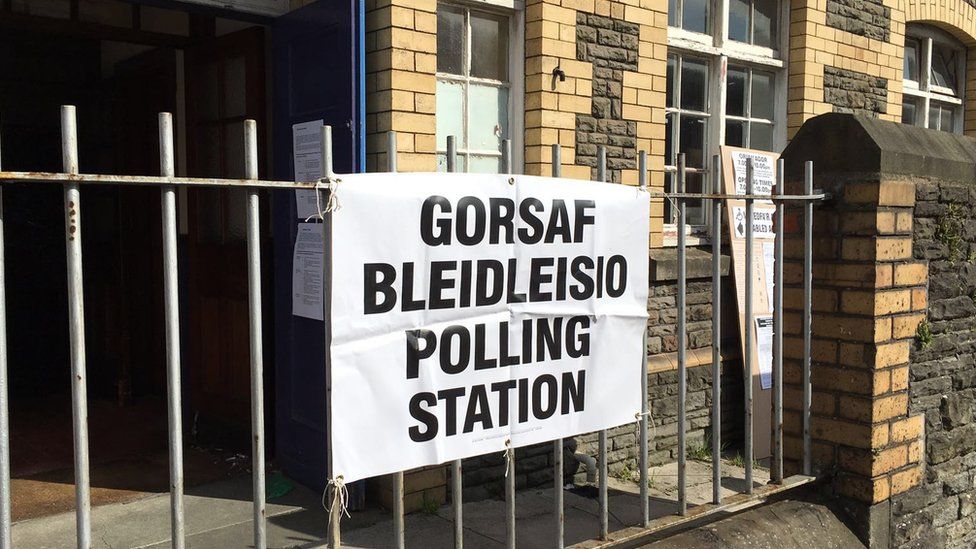
Voters can now check who is standing in their constituency ahead of polling day on May 7
A TOTAL of 675 candidates will contest the Senedd election on May 7, with voters across Wales now able to see exactly who is standing in their area through the newly launched vote.wales website.
The nomination period for candidates closed at 4:00pm on Thursday (Apr 9), and full details of all confirmed candidates are now available online.
At this year’s election, Wales has been divided into 16 constituencies, with each one electing six Members of the Senedd under a closed-list proportional voting system. Voters will receive one ballot paper and will be able to vote either for a political party or for an individual independent candidate.
Under the new system, the number of seats won in each constituency is intended to broadly reflect each party’s share of the vote. That means, for example, that a party receiving around half the vote in a constituency would be expected to win three of the six available seats.
Political parties were allowed to put forward up to eight candidates in each constituency, while individuals were also able to stand as independents.
In total, the 675 candidates standing for election are competing for 96 seats in the next Senedd. They represent 16 political parties, along with 30 independent candidates.
Voters can use the postcode search on vote.wales to find out who is standing in their constituency. The website also allows users to check where their polling station is, what accessibility features are available there, and which constituency they belong to.
People wanting to see who is standing in other parts of Wales can do so through the site’s “Browse by constituency” section.
Vote.wales is a new website created for this year’s Senedd election and is intended to give voters clear and reliable information before polling day. It is managed by the Electoral Management Board for Wales, which is part of the Democracy and Boundary Commission Cymru.

From Thursday, April 16, candidates’ leaflets will also be published on the site, allowing voters to see not only who is standing, but what they are standing for.
The website also includes information on how to vote, who is entitled to vote, and what powers and responsibilities the Senedd has.
Shereen Williams MBE OStJ, Chief Executive of the Democracy and Boundary Commission Cymru, said: “We created vote.wales to give people all the information they need before the Senedd election on May 7.

“Now that candidates have been confirmed across Wales, people can find out exactly who they can vote for with a simple postcode search.
“We’re grateful to all the Returning Officers and election staff across Wales who are working so hard to deliver this election. It’s thanks to their hard work that people can now go to vote.wales to see who is standing in their constituency.
“If you have any questions about this election, vote.wales is the place to go. Voting confidence starts here.”
Who is standing?
In the Ceredigion Penfro constituency, voters will be choosing from candidates representing the Welsh Conservatives, Gwlad, the Heritage Party, Plaid Cymru, Plaid Werdd Cymru, Reform UK, Welsh Labour and the Welsh Liberal Democrats, along with three independents.
For the Welsh Conservatives, the candidates are Paul Windsor Davies, Samuel Deri Kurtz, Claire Victoria George, Brian Andrew Murphy, Gill Evans and Claire Malaina Jones.
Gwlad has selected Gwyn Wigley Evans, while the Heritage Party candidate is Elizabeth Davies.
Plaid Cymru has put forward Elin Jones, Kerry Ferguson, Anna Nicholl, Cris Tomos, Colin Nosworthy, Clive Davies, Owain Jones and Matt Adams.
Plaid Werdd Cymru is standing Amy Nicholass, Tomass Jereminovics, James Henry Purchase, Morgan Hope Phillips, Rosie O’Toole and Kezia Autumn Hine.
Reform UK’s candidates are Susan Claire Archibald, Paul Marr, Michael Timothy Allen, Elisa Bessie Gonzalez Randall, Peter Martin John and Bernard Holton.
Welsh Labour has selected Eluned Morgan, Marc Tierney, Joshua Phillips, Margaret Greenaway, Tansaim Hussain-Gul, Luke Davies-Jones and Peter Huw Jenkins.
The Welsh Liberal Democrats are standing Sandra Louise Jervis, Alistair Ronald Cameron, Tom Hughes, Lee Dennis Thomas John Herring, Andrew Christopher Lye and Maggie Robinson.
The independent candidates in the constituency are Aaron Carey, George Alexander Chadzy and Paul Haywood Dowson.
Voters have until April 20 to register to take part in the election. Unlike some other polls, photo ID is not required to vote at Senedd elections.

Ben Delo says new overseas donation cap is designed to curb support for Nigel Farage’s party
CRYPTOCURRENCY billionaire Ben Delo says he is returning to Britain so he can continue donating millions of pounds to Reform UK, after Labour unveiled plans to cap political donations from Britons living overseas.
Mr Delo, 42, who is currently based in Hong Kong, has already given £4 million to Reform this year. But under new government proposals, overseas electors would be limited to donating £100,000 a year.
The businessman has accused Sir Keir Starmer’s government of trying to tilt the political playing field in Labour’s favour by making it harder for Reform to attract major backing from wealthy British supporters living abroad.
Writing in The Telegraph, Mr Delo said he would relocate to the UK in order to continue funding Nigel Farage’s party and help it build a serious war chest before the next general election.
Mr Delo is widely known as a co-founder of the cryptocurrency trading platform BitMEX, which helped make him one of Britain’s youngest self-made billionaires.

He has also spoken publicly about having Asperger’s syndrome, saying he finds much of modern politics difficult to interpret because of what he sees as evasive and unclear language. He contrasted that with Mr Farage’s more direct style of speaking, which he said he finds easier to understand.
Mr Delo said his financial support could help Reform expand its staffing, improve campaign preparation and spend more on events, advertising and organisation ahead of the next national vote.
He also suggested the new donation cap could be aimed at limiting support from other wealthy overseas backers, including businessman Christopher Harborne, who has also donated substantial sums to Reform.
Mr Delo argued that while Labour continues to benefit from large donations linked to the trade union movement, the new rules would make it harder for rival parties to compete on equal terms.

The government says the proposed changes are part of a wider effort to tighten electoral law and reduce the risk of foreign influence in British politics.
Mr Farage welcomed Mr Delo’s decision, saying the funding would help Reform continue developing as a party that is serious about government and capable of attracting the expertise needed to prepare for power.
Mr Delo said he hoped other wealthy expatriates who want to support political causes in Britain would also consider returning to the UK.

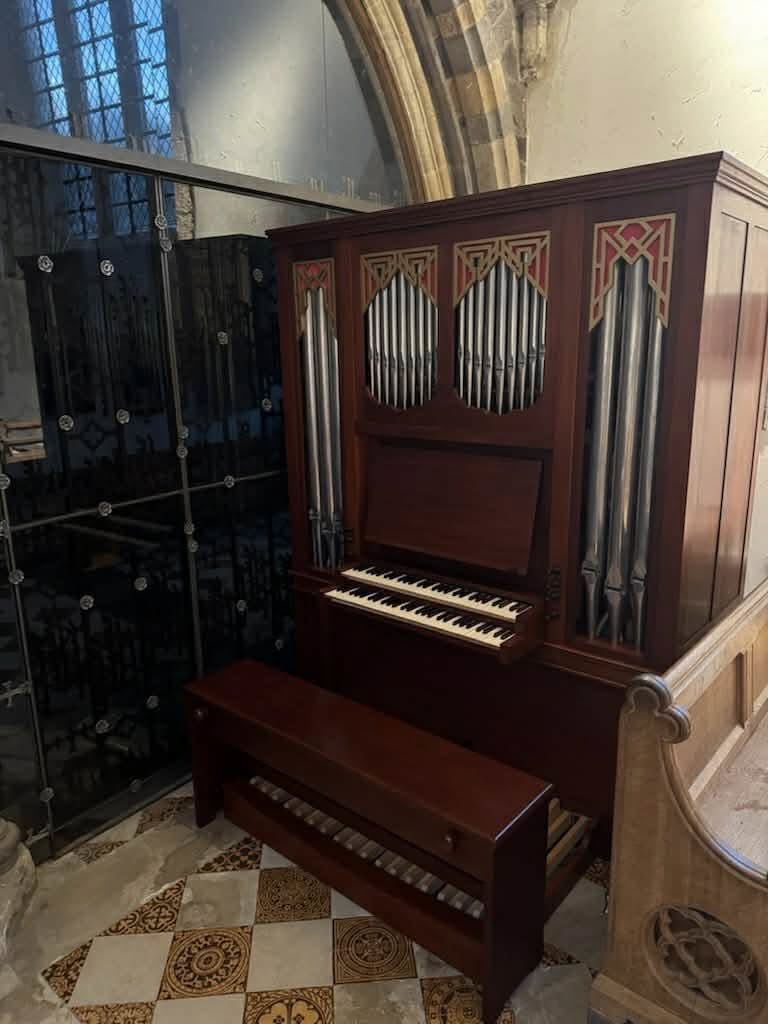
Instrument by Peter Collins now in place as cathedral prepares for tuning and inaugural recital
ST DAVIDS CATHEDRAL CHOIR has announced the installation of a new organ in the Lady Chapel at St Davids Cathedral.
The instrument, a Peter Collins EOS9 organ, has been installed by Gary Owens Organ Builders.
Sharing the news, the choir said it was delighted with the addition of the “beautiful” organ and thanked the builders for their “time, professionalism and energy” in completing the work.
The cathedral says the instrument will now be left to settle for a couple of weeks before receiving its first tuning.
Further details about the dedication of the organ and its inaugural recital are expected to be announced soon.
In the meantime, the organ is open for inspection, while the Lady Chapel is once again available for worship and private prayer.



News16 hours ago
Senedd election candidates confirmed as vote.wales goes live
Voters can now check who is standing in their constituency ahead of polling day on May 7 A TOTAL of...

Crime1 day ago
Police and partners launch summer crackdown after Tenby station stabbings
Extra patrols, more rail security and tougher action promised after violent disorder left four youths injured POLICE and partner agencies...


Crime2 days ago
Drug and weapon charges after Pembroke Dock arrest
Man remanded in custody following Diamond Street vehicle search A MAN has been remanded in custody after appearing at Swansea...

Crime2 days ago
Woman fights order taking four dogs from her
Swansea Crown Court hears appeal after long-running barking dispute in Trefin A PEMBROKESHIRE woman has told Swansea Crown Court that...

News2 days ago
Former county councillor Paul Dowson to stand in Ceredigion Penfro
Ex-Pembrokeshire member says he will offer voters a straight-talking independent alternative at the Senedd election FORMER Pembrokeshire county councillor Paul...

News2 days ago
Plaid Cymru sets out childcare, NHS and child poverty pledges in 2026 manifesto
Rhun ap Iorwerth’s party says plan is radical and fully costed as it bids to lead next Welsh government PLAID...

Community3 days ago
Police intervene after post raises fears of planned Pembroke Dock fight
Extra patrols launched after social media alert in aftermath of Tenby stabbings POLICE intervened after an online warning raised fears...
Crime3 days ago
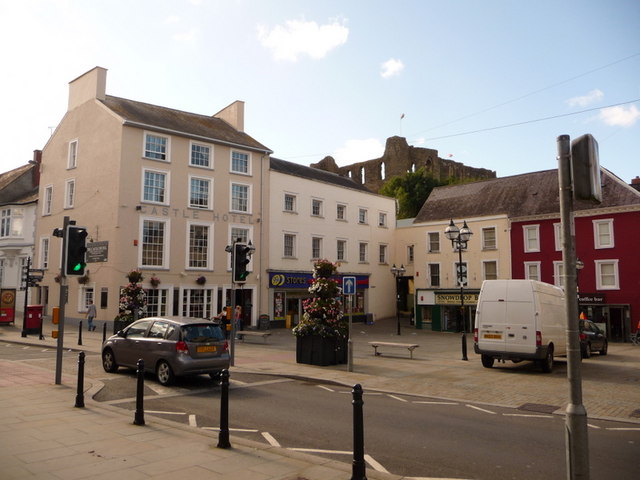
Man arrested after alleged child sexual assault in Haverfordwest
Police enquiries ongoing after incident in Castle Square A MAN has been arrested after an alleged sexual assault of a...

Crime4 days ago
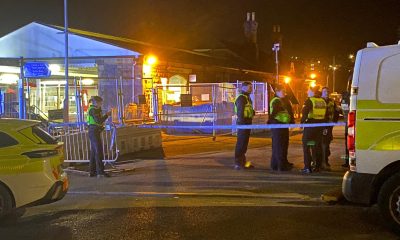
Four youths stabbed at Tenby railway station as two arrested
British Transport Police lead investigation after serious disorder involving group of youths FOUR youths suffered stab wounds during a major...

News4 days ago
Major emergency response in Tenby after incident near train station
Witnesses report injuries as police and ambulance crews remain at scene on Warren Street POLICE and ambulance crews remain at...
-
Crime4 days ago
Four youths stabbed at Tenby railway station as two arrested
-
 News7 days ago
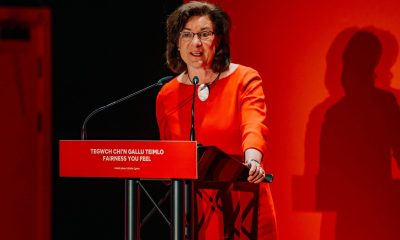
Eluned Morgan targets Haverfordwest as Welsh Labour fights to hold its ground
-
 Community7 days ago
Johnston FC pays tribute after sudden death of Rhyan Nolan, 27
-

 Local Government5 days ago
Bridge works on Neyland-Burton road to continue into late April
-

 News5 days ago
Haverfordwest County AFC faces High Court winding-up threat from HMRC
-
 Entertainment4 days ago
Little Pigs at Home offers a peaceful sanctuary escape in Pembrokeshire
-

 Sport7 days ago
Haverfordwest County Under-13 girls shine at final FAW festival
-
 News7 days ago
Trail hunting consultation opens as debate grows in Pembrokeshire