


News
Controversy over Cleddau cash

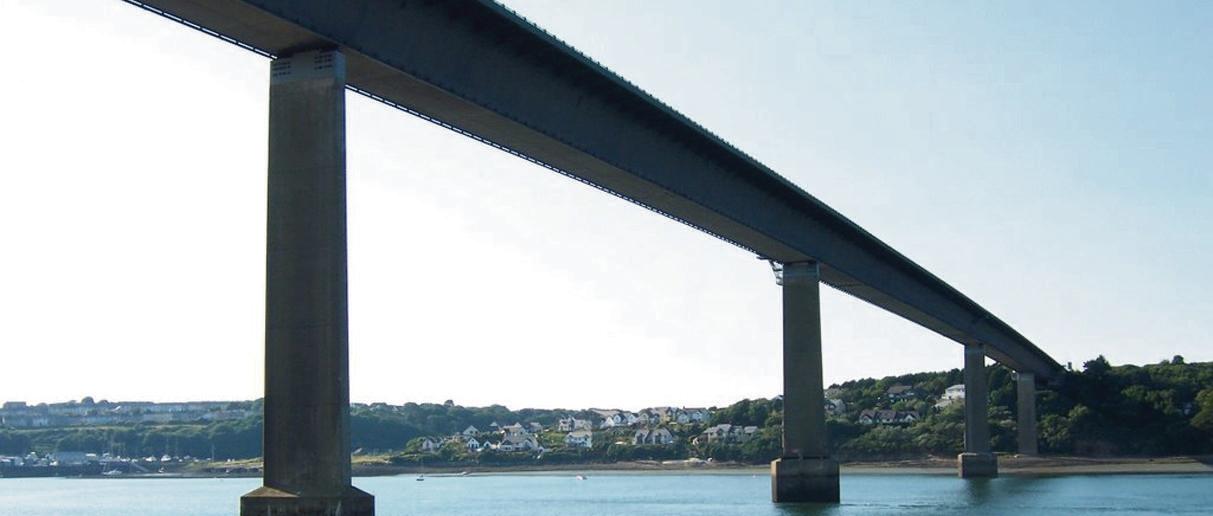
 A DISPUTE about tolls on the Cleddau Bridge has delayed the council’s accounts being signed off by its external auditors.
Councillors have been kept in the dark about the argument and the fact the council has had to seek external legal advice on the issue.
It is alleged that the council has been funnelling between £1.5m and £2m per annum into the council’s revenue services account and not accurately accounting for either the income it receives or the deficit it claims the vital transport link has accumulated over time.
The Pembrokeshire Herald can confirm that the council has been in dispute with the Wales Audit Office (WAO) about the way it accounts for revenue from tolls on the Cleddau Bridge.
The spat turns on the interpretation of part of an Act of Parliament from 1987, The Dyfed Act, which sets out how the Council is supposed to deal with the revenue from bridge tolls it collects. The dispute is also about how the council’s own figures show a large accumulated deficit for operating the bridge, which is more a work of accounting fiction than a true reflection of its financial position.

The Herald has spoken to a person close to the dispute who has told us that one way the council has used the revenue from tolls is to subsidise its Council Tax figures, using the money gathered in tolls to drive down Council Tax bills so that Pembrokeshire has apparently lower Council Tax than other councils.
The Herald further understands that the accumulated deficit shown in the council’s accounts is an issue which is under discussion between the council and the WAO. The picture is obscured by the fact that while the bridge was commissioned in the 1960’s under one local government settlement, there have been two subsequent re-alignments of the local government landscape. Those reorganisations have contributed to the confusion about how to draw up the profit and loss schedule for the bridge, how much it has received in tolls, whether a profit has accrued and, in the event it has, what the council and its predecessors have done with the money.
Our source told us that it’s fair to say the situation is a mess and one partly created by the 1987 Act’s unclear drafting.
With local government re-organisation a hot topic at the moment, the effect of any merger will be that the council will need to both strike a more realistic position in respect of the Bridge’s financial status.

At the same time, in the event of merger with neighbouring authorities the effect of the backdoor subsidy given to Pembrokeshire’s Council Tax will unwind as a sudden and significant rise in Council Tax for the county.
Significantly, members of the council appear to have been kept in the dark about the situation and the potential impact it will have on the council’s financial position going forward.
The Herald understands that the council has sought external legal advice on how to sort out the dispute, which both it and the WAO are keen to resolve.

The Herald asked for a comment from the council about the position of its accounts. A spokesperson told us: “We anticipate the matter will be resolved at the next meeting of the Corporate Governance Committee which will be held before the end of the financial year.”
The WAO said: “We had a formal objection in regard to the accounting for the Cleddau Bridge. This delayed the accounts opinion. That has recently been resolved with the Council and we are awaiting an updated set of accounts, so we can check and certify them in March.”

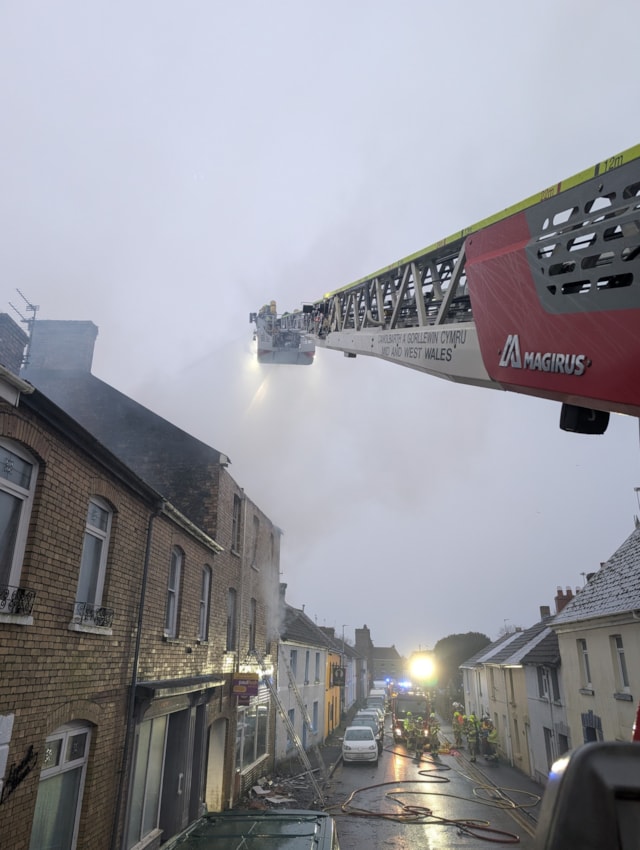
RESIDENTS forced to evacuate their homes following a major fire in Kidwelly have now been allowed to return, as emergency services confirm the scene has been stood down.
The blaze broke out at a property on Lady Street in the early hours of Tuesday (March 24), with emergency services called at around 4:20am. Several neighbouring homes were evacuated as a precaution while firefighters tackled the incident and assessed the safety of surrounding buildings.
In the latest update, Dyfed-Powys Police confirmed that officers have now left the scene and displaced residents were able to return to their properties on Thursday evening (March 26), following work to make the affected building safe.
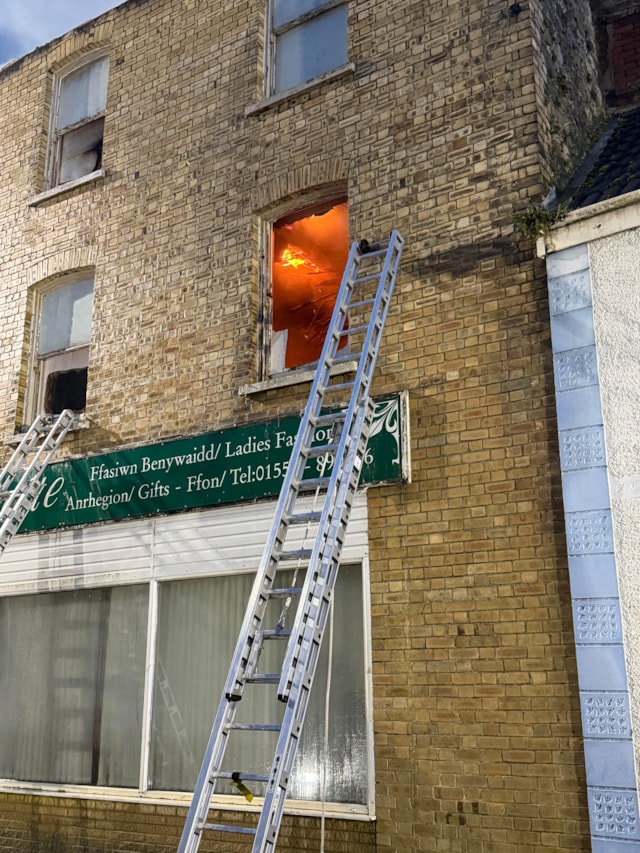
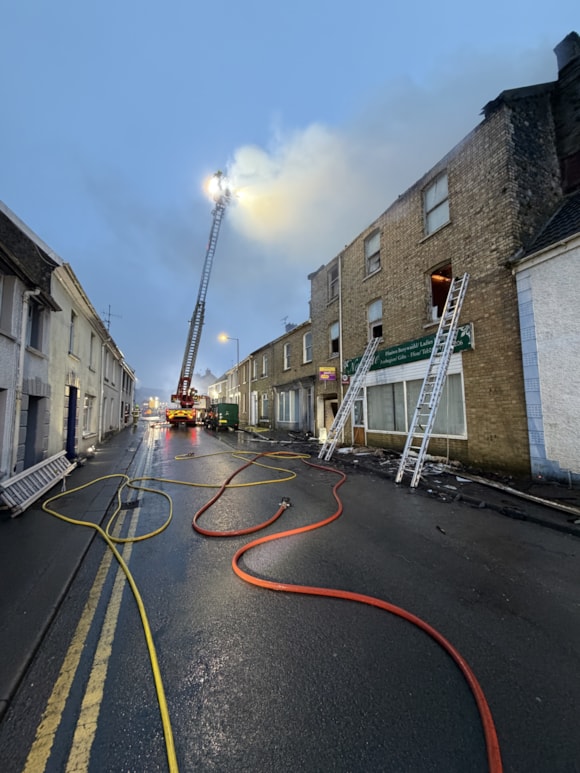
The incident caused significant disruption in the town, with Lady Street remaining closed while further work is carried out to ensure the safety of the highway and surrounding structures.
Emergency services, including Mid and West Wales Fire and Rescue Service, were on the scene for several hours during the initial response. Crews were understood to have dealt with a serious property fire, prompting a large-scale emergency operation in the centre of the town.

While the immediate danger has now passed, authorities have confirmed that investigations into the cause of the fire are ongoing. Police are continuing to appeal for witnesses or anyone with relevant information to come forward.
Officers are particularly keen to hear from anyone who may have CCTV, doorbell, or dashcam footage from the area between 11:00pm on Monday (March 23) and 4:00am on Tuesday (March 24).
Anyone with information is urged to contact police quoting reference 027 of 24/3, either via 101, online, or anonymously through Crimestoppers.
Authorities thanked residents and the wider community for their patience during the incident, which saw homes evacuated and roads closed while emergency services carried out their work.

Further updates are expected as the investigation progresses.
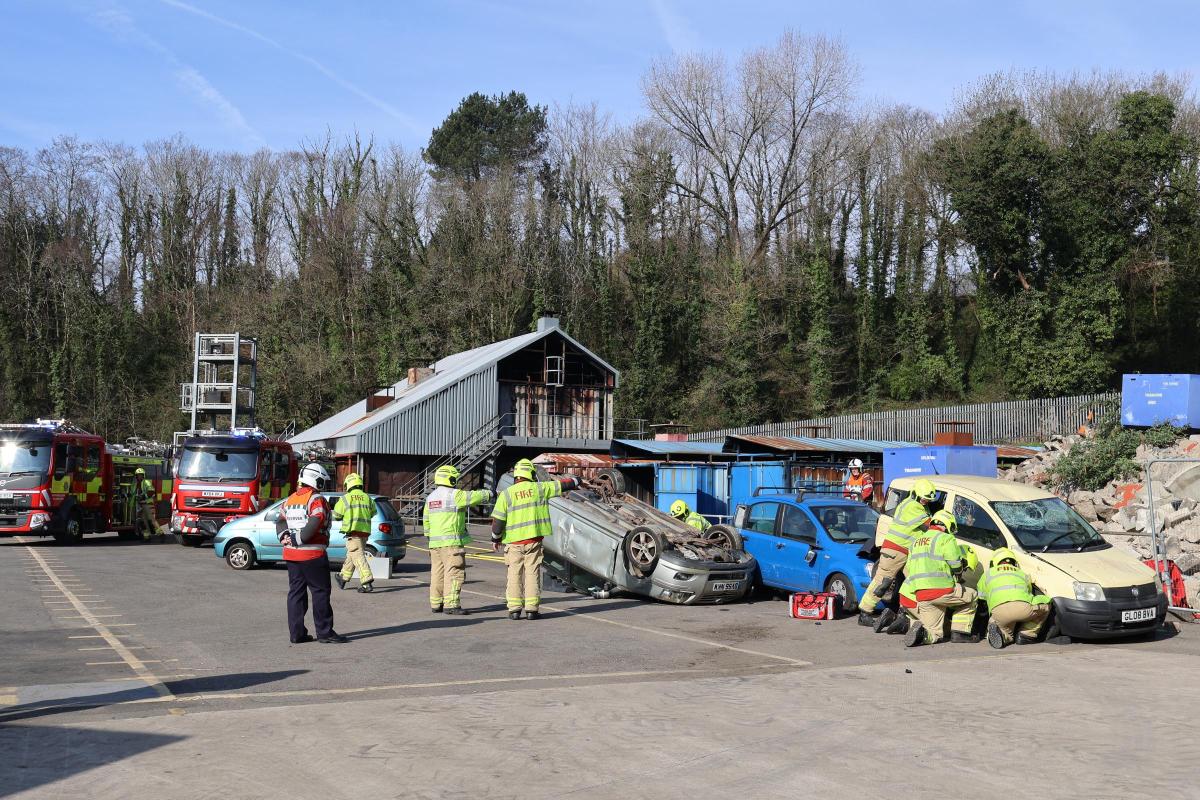
FIREFIGHTERS from across west Wales took part in a large-scale training exercise designed to sharpen operational skills and strengthen teamwork.
Crews from the Western Division of Mid and West Wales Fire and Rescue Service attended the development day at Earlswood Training Centre on Sunday (March 22).
Personnel travelled from stations including Carmarthen, Tumble, Newcastle Emlyn, Milford Haven, Narberth and Pontyates to take part in the exercise.
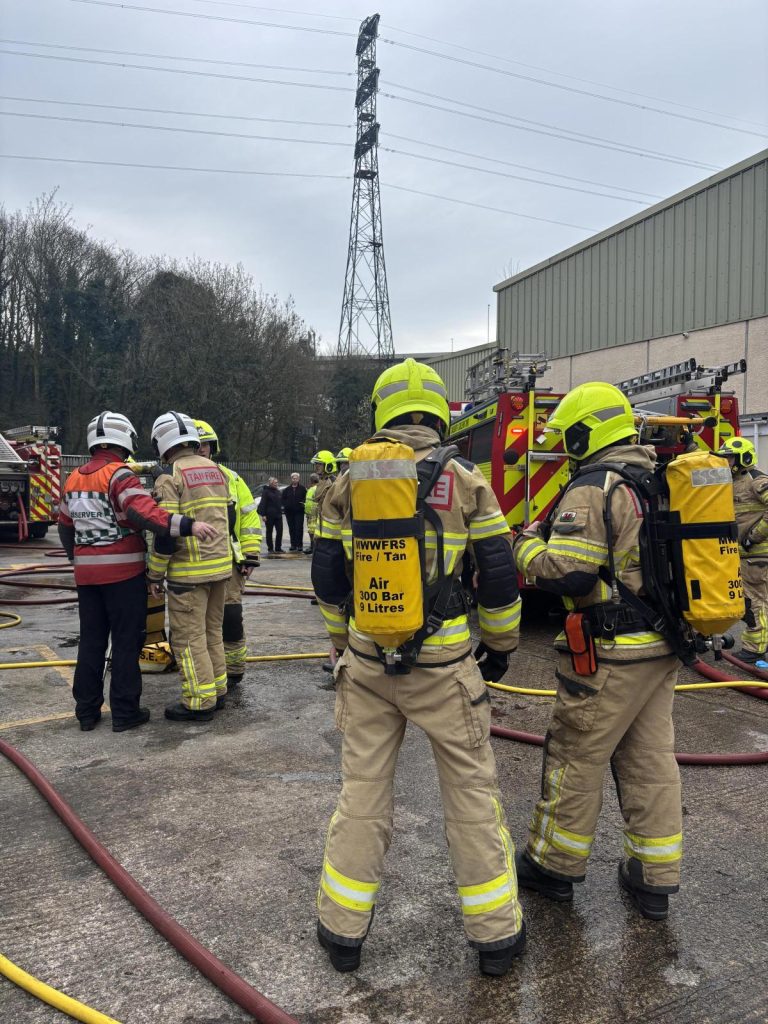
Realistic scenarios
Firefighters were put through a series of realistic scenarios designed to reflect incidents they may face on duty.
These included house fires with people reported inside, kitchen fires, and multi-vehicle road traffic collisions. Crews also carried out specialist line rescue exercises as part of the day.
Support staff played the roles of casualties and members of the public, adding to the realism and allowing firefighters to test their responses in lifelike conditions.
Large-scale finale
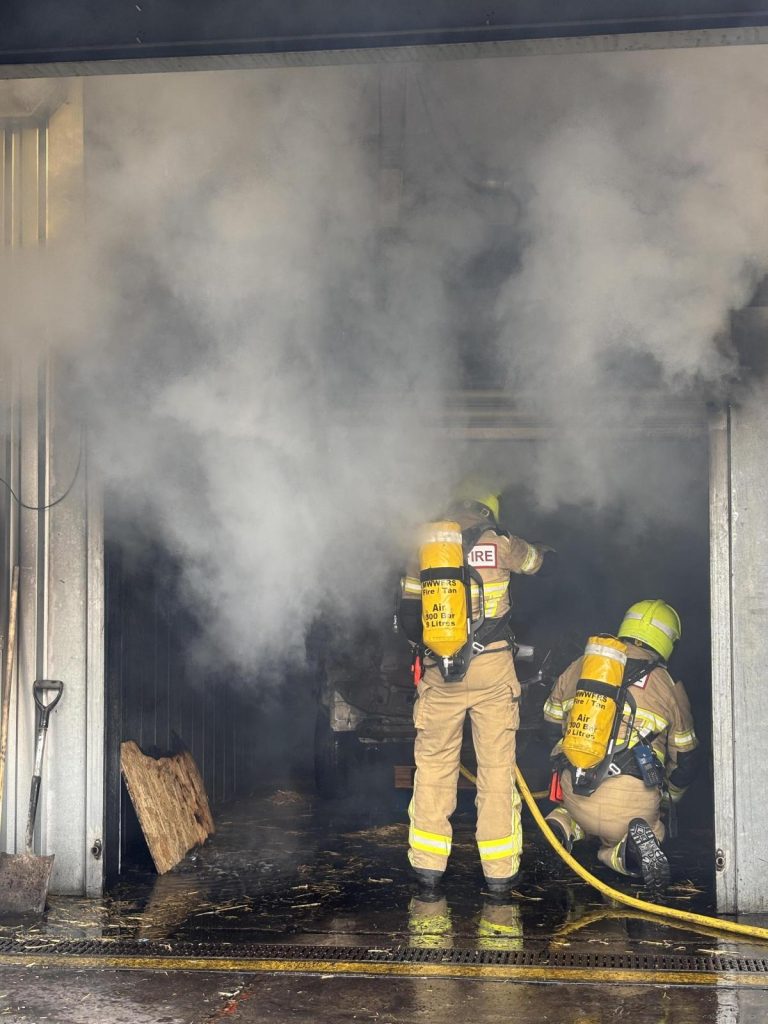
The training culminated in a complex car fire scenario involving a vehicle inside a garage attached to a property, with reports of people trapped.
Teams worked together as they would at a real incident, tackling the fire while carrying out rescues within the building.
Building capability
The exercise was described as a success, helping to build operational confidence and improve coordination between different stations.

It also provided an opportunity for crews to share knowledge and specialist skills, strengthening the overall capability of the service.
The training forms part of ongoing efforts to ensure firefighters remain prepared to respond to a wide range of emergencies across the region.
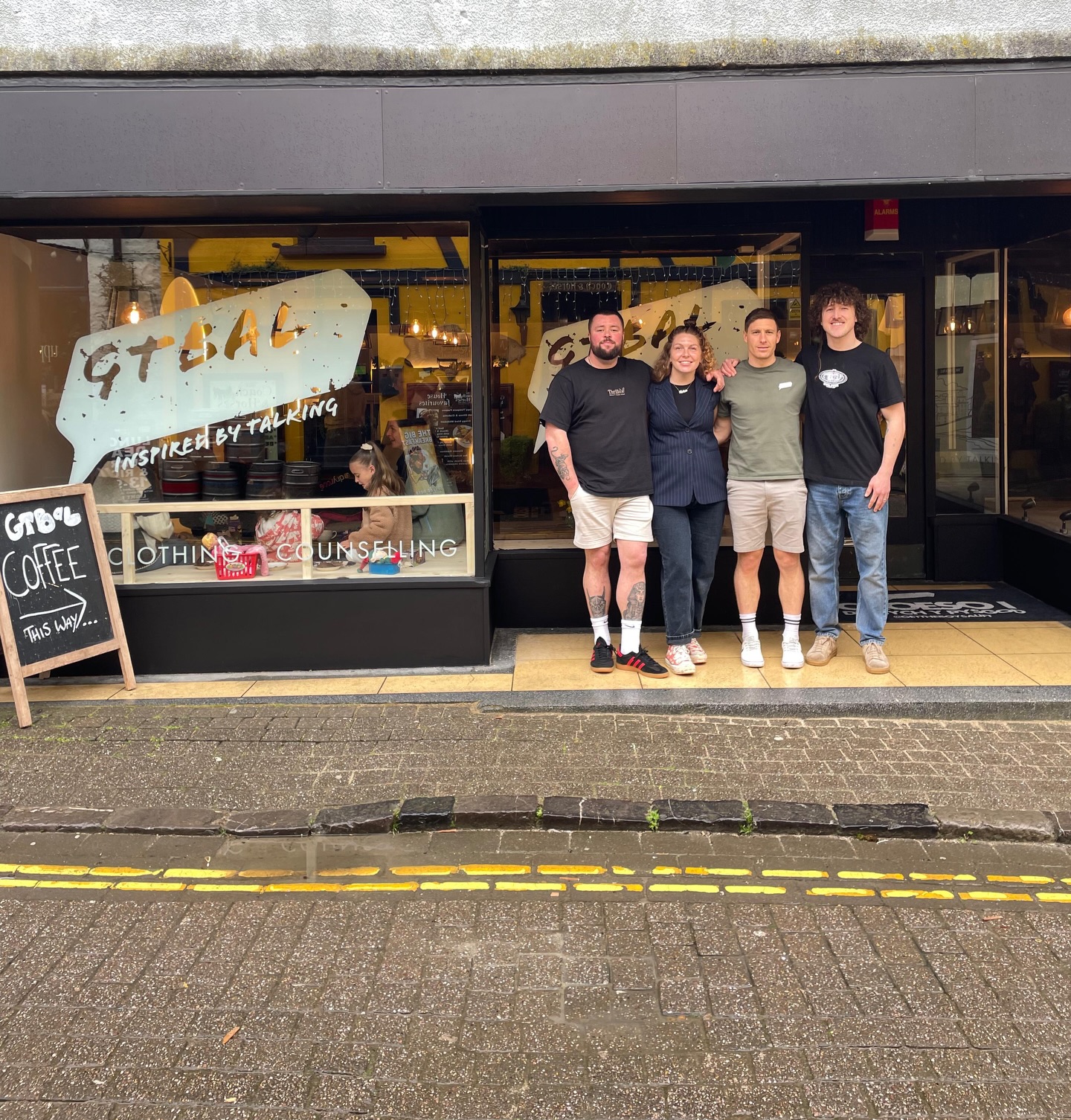
A PEMBROKESHIRE-based mental health charity has expanded its presence with the opening of a second premises in Tenby.
Give The Boys A Lift (GTBAL), a community-focused organisation aimed at supporting mental wellbeing, has launched its new shop as part of its growing mission to create safe, welcoming spaces for conversation and connection.
The charity, which has built a strong local following, uses its café-style venues as a way to engage with the public and encourage open discussion around mental health — particularly among men.
Community effort
The team behind GTBAL said the new opening reflects a collective effort from staff and supporters alike.
A spokesperson said: “This one feels special. Not just because we’ve opened another space, but because of how we’ve done it. Every single member of our team has played a part — ideas, effort, care, and decisions. This has been a proper collective.”
They added: “To our community, thank you will never quite cover it. The support we receive day in, day out, is what allows this to exist.”
More than just a shop
While serving coffee and refreshments, the charity says its venues are about far more than what’s on offer behind the counter.
“Our baristas are the heartbeat of this,” the spokesperson said. “The smiles, the conversations, the moments they give to people — that’s what makes this more than just a coffee shop.”
New staff joining the Tenby location have also been welcomed as part of what the organisation describes as the “GTBAL family”.
Behind the scenes
The team also highlighted the work that goes on behind the scenes to keep the organisation running.
“From the outside, it might look easy going — and we’re proud that it feels that way — but behind it is a lot of hard work, a lot of care, and a lot of belief in what we’re building,” the spokesperson said.
Looking ahead
With its second site now open, GTBAL says it is continuing to grow its reach across Pembrokeshire.
“We’re just getting started,” the spokesperson added.



Community5 hours ago
Three Amigos Easter Run roars through Pembrokeshire
MOTORCYCLE enthusiasts turned out in force today (Saturday, March 28) as the popular Three Amigos Easter Run returned to the...

Education1 day ago
Ysgol Henry Tudor reassures parents over Sikh ceremonial kirpan
School says religious item worn by pupil is secured, symbolic and non-functional YSGOL HENRY TUDOR has moved to reassure parents...

Crime2 days ago
Teen jailed after starting fire while others slept
Fire set in shared home left sleeping residents at risk and caused £130,000 damage A TEENAGER who started a fire...

Health2 days ago
GP crisis driving NHS pressure in Wales, Senedd report warns
Falling GP numbers and funding gaps blamed for worsening hospital delays THE NHS crisis highlighted earlier this week is being...

News3 days ago
Reform reveals west Wales candidates for Senedd battle
Monkton councillor tops Pembrokeshire list as party confirms Carmarthenshire names and includes Haverfordwest councillor in unwinnable Swansea spot REFORM UK...

Health3 days ago
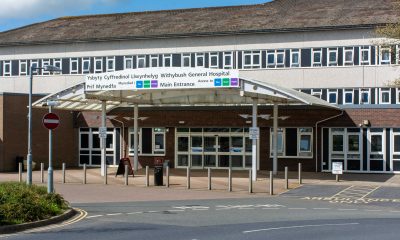
Clash over Withybush Hospital services as Paul Davies challenges First Minister
A HEATED exchange in the Senedd has laid bare growing tensions over the future of hospital services in west Wales....


Crime4 days ago
Police stop car in Pennar as three arrested in drugs investigation
Suspected drug driver report leads to major police response and multiple arrests DRAMATIC scenes were reported in Pennar on Monday...

Business4 days ago
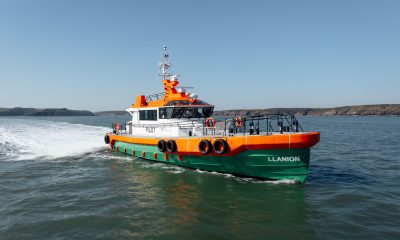
New pilot vessel Llanion arrives at Milford Haven
State-of-the-art 22-metre craft marks reset after £3.6m pilot boat controversy THE PORT OF MILFORD HAVEN has taken delivery of a...


Community5 days ago
Sycamore Gap legacy tree to take root in Pembrokeshire landscapes
A SAPLING grown from the famous Sycamore Gap tree is set to become part of Wales’ protected landscapes — with...


Business5 days ago
Could Primark be coming to Haverfordwest? Major retailer in talks for former Wilko site
Council confirms advanced discussions as speculation grows over high street boost HAVERFORDWEST could soon see a major high street revival,...
-

 Business4 days ago
Taxi fare shock in Milford Haven as drivers switch to meters
-
Business5 days ago
Could Primark be coming to Haverfordwest? Major retailer in talks for former Wilko site
-
 Crime6 days ago
Child rapist found with abuse images after moving to west Wales
-
 Community2 days ago
Hero female officer keeps job after sexual touching finding
-

 Crime7 days ago
Milford Haven drug dealing pub boss who boasted of ‘best coke around’ jailed
-
 Health4 days ago
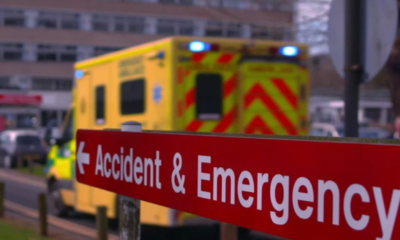
Average of 18 deaths a week in Wales linked to A&E delays, figures reveal
-

 Sport6 days ago
Haverfordwest secure bonus-point win over title-chasing Tumble
-

 Local Government5 days ago
Milford Haven set for £200m investment with schools, leisure centre and rail upgrade
Louis Riel
March 4, 2015 at 4:24 pm
\”I need to seek external advice\” said the Head Of Legal Services when asked if she took her tea with sugar.
Tomos
March 5, 2015 at 9:37 am
So the one “excuse” to pay BPJ a fortune – lowest taxes in Wales – was down to us having to pay to cross the bridge i.e we were paying is now shot to pieces as well.
Now we’re in a position to ask – Why on earth was BPJ ever taken on, why was he not sacked, why was he protected – You have no reasons, no justifications – we need to learn from IPiGs mistakes otherwise we are eestined to make the same mistakes again and again
ieuan
March 8, 2015 at 1:47 pm
As head of Legal services she should know here job, it’s what she’s paid for!
I smell a cover up
John Hudson
March 24, 2015 at 8:03 am
Given that the Leader is on record at the last Council meeting as saying that the Council’s Accounting methodology for the Bridge has not changed:-
why The Auditor required The Council to seek Legal advice to substantiate the accounting entries in respect of the Bridge, an unusual step.
Why the Statutory Trading account for the Cleddau Bridge
was amended from the Draft 2013/14 Accounts figures by the exclusion of an amount in respect of a “notional” annual deficit, changing an annual net loss of £4.3m to a profit of £1.1m.
If, as the Leader would like us to believe, that Council is as usual, infallible, why it is taking so long to issue the report so that the Council’s Corporate Governance Committee can meet in order approve the Council’s 2013/14 Accounts and The Auditor can sign off the Accounts.
Why surplus toll income, over and above that required to meet annual Bridge operational expenses is applied to reduce the Council’s budget requirement and hence Council Tax.
Prior to the Auditor’s refusal to sign off the Accounts in respect of the Bridge, The Council had completed an in depth scrutiny and review of the financial prospects for the Bridge which concluded the exercise had covered all issues to do with the Bridge and all was well.