


News
£141m investment in fossil fuels criticised



MASS data released this week by Pembrokeshire Friends of the Earth (Oct 30) reveals that Pembrokeshire Council (as part of the Dyfed Council Pension Fund) has £64.8million of public money directly invested through workers pension funds in fossil fuel companies like BP and Shell with a further projected £76.5million in indirect fossil fuel investments.
The research shows that Pembrokeshire County Council has over 8% of its pension fund directly invested in fossil fuels, and money is invested into multinational fossil fuel companies including BP, Shell and BHP Billiton
Eleanor Clegg of Friends of the Earth said: “Many people working for Pembrokeshire Council will be concerned to learn that their future is tied up with such a risky and polluting industry. When governments do act to prevent dangerous climate change, the business model for fossil fuel companies will be over, and that day is fast approaching. And, if oil and gas companies keep on drilling in their final days, it will make climate change far worse – it is the right decision both financially and ethically for Pembrokeshire County Council to divest as soon as possible.”
This is the first time that the £231 billion investments of local government public money have ever been broken down and released publicly, and their exposure to fossil fuels quantified. The data shows that overall the 192 councils in the UK have £14 billion invested in fossil fuels via their pension funds. Three quarters of these direct fossil fuel shareholdings are in only ten companies, headed by BP and Shell.
80% of fossil fuel reserves need to remain in the ground to avoid catastrophic climate change. Consequently, there has been growing concerns about the long-term financial risks of fossil fuel investments. A recent analysis found that California’s public pension funds, CalPERS & CalSTRS, incurred a combined loss of over $5 billion in the last year alone from their holdings in the top 200 fossil fuel companies.

Friends of the Earth said in a statement: “This data offers the residents of Pembrokeshire the information they need to ask why the Council is choosing to invest in risky oil, gas or coal. Instead the Council could reinvest this money into building new homes, clean renewable energy or public transport.”
Eleanor Clegg also told The Herald: “Most fund members and taxpayers won’t be happy to learn that their money is funding climate change. As local residents we’ll be calling on the council to stand on the right side of history and divest from fossil fuels.”
She added: “Oxford and Bristol City Councils have already taken a lead in making fossil free commitments, joining 40 cities internationally and larger institutions like the Norwegian Government Pension Fund. There are 389 institutions globally – including universities, faith groups, health groups and governments – that have committed to divest. Local residents who would like to join the local campaign to convince Pembrokeshire Council to divest from fossil fuels should get in touch.”
A spokesman for Pembrokeshire County Council said in response: “Many commentators from the public and media get confused with the fact that it is the Dyfed Pension Fund and not Carmarthenshire, Pembrokeshire or Ceredigion individually. All investments are on behalf of the Dyfed Pension Fund – not any individual employer. There are approximately 50 employers in the fund.”

The spokesman added: “The Dyfed Pension Fund Statement of Investment Principles (SIP) details the Fund’s ‘Social, Environmental and Ethical Considerations’. Paragraph 5 states: The Pension Panel recognises that social, environmental and ethical considerations are among the factors which investment managers will take into account, where relevant, when selecting investments for purchase, retention or sale. The managers have produced statements setting out their policies. The managers have been delegated by the Panel to act accordingly.
“The Pension Fund is a member of the Local Authority Pension Fund Forum (LAPFF), which is one of the leading voices in corporate governance and responsible investment in the UK.
“Before making investments in fossil fuel companies the investment managers assess a wide range of factors, including, the political stability of the region where its reserves lie, the financial regimes it operates in, the life and quality of its reserves, its operational record, quality of the management, its financial strength, sensitivity to volatile energy prices and its market valuation.




TAXI passengers in Milford Haven are facing a sudden jump in fares, as drivers increasingly switch on their meters and charge full council-approved rates.
One Herald reader said a short return trip from Milford Haven to Neyland cost £30 — around double what he expected to pay.
But drivers insist the prices are not new — they are simply the official tariff now being applied.
Under Pembrokeshire County Council rules, the standard daytime fare starts at £4 for the first mile (£5 after 6pm), rising by around £3 per mile thereafter. Waiting time is also charged, meaning even short return journeys can quickly add up.
Higher rates apply in the evenings, at weekends and on bank holidays.

End of the £3 taxi
Milford Haven has long been known for cheap taxis, with short in-town journeys often costing as little as £3 — far below official rates.
That was down to competition, older vehicles, and the need to keep prices low in a town where many rely on affordable transport.
Drivers say those days are now over.
One local driver told The Herald: “People got used to cheap fares, but that was never the real price. Now we have to use the meter or we’re losing money.”

Fuel costs biting
Most taxis run on diesel, now around 170p per litre locally. For drivers covering long distances each day, the increase has hit hard.
Global tensions in the Middle East have pushed up oil prices, feeding directly into higher fuel costs in the UK.
With fare increases requiring a lengthy council process, many drivers say they have no option but to charge the full tariff.

Vulnerable hit hardest
The change is being felt most by those who rely on taxis the most.
Elderly residents, people on low incomes and those without access to a car are now facing higher everyday travel costs.
There has been no recent increase in Pembrokeshire’s official taxi fares, which have remained broadly unchanged since 2022.
The difference is simple: drivers are now charging them.
As one put it: “We’re not putting prices up — we’re just finally charging what we’re supposed to be charging.”

Support for bereaved children among local causes chosen in Pembroke Dock
LIDL colleagues in Pembroke Dock have chosen a Pembrokeshire children’s bereavement charity to receive a community donation as part of the retailer’s expanded investment programme across Wales.
Staff at the store selected Sandy Bear Children’s Bereavement Charity as one of two local organisations to receive a £500 donation. The charity provides specialist support to children and young people up to the age of 25, helping them cope with loss and rebuild confidence.
Sandy Bear was chosen in recognition of its work supporting bereaved families across Pembrokeshire, including more than 20 families in the Pembroke area.
Ben Rees, shift manager at the Pembroke Dock store, said the scheme allows staff to support organisations making a real difference locally.
Martin Jones, business development manager at Sandy Bear, said: “Behind every child we support is a story of loss that no family should have to face alone. Support from local businesses like Lidl means we can continue to be there when families need us most, helping children understand their grief and find a way forward.”
Colleagues also selected Pembrokeshire and Carmarthen Mind, which provides mental health support through community programmes and wellbeing initiatives across the region.
The donations form part of Lidl GB’s wider community investment programme, which has supported more than 145 causes in Wales since 2022, contributing over £188,000 to local charities.
Alongside financial donations, charities linked to Lidl stores also receive support through the retailer’s ‘Feed it Back’ scheme, run in partnership with Neighbourly. The initiative redistributes surplus food, providing the equivalent of more than 2.3 million meals in Wales since 2016.
Lidl GB chief executive Ryan McDonnell said the programme empowers staff to support causes that matter most to their communities.
The retailer says its wider community work in Wales includes investment in initiatives such as its Foodies programme, which promotes healthy eating in schools and has reached more than 25,000 children across the country.

NEARLY 1,000 deaths in Wales have been linked to long waits in accident and emergency departments, according to new data.
Figures published by the Royal College of Emergency Medicine (RCEM) estimate that 965 deaths in 2025 were associated with patients waiting 12 hours or more for care. That equates to around 18 deaths a week and marks an increase of 29 compared to 2024.
The RCEM has described the situation as a “tragedy” that should send shockwaves through the political system.
Dr Rob Perry, Vice President of RCEM in Wales, said his thoughts were with the families affected.
He said: “My heart goes out to the loved ones of anyone who died following long waits in emergency departments.
“These are often some of the most vulnerable patients — those who are seriously ill or injured and in need of urgent admission. They should be receiving timely care, but too often they are left waiting the longest.”
Dr Perry said the figures point to a wider failure across the healthcare system, highlighting a lack of hospital beds and what is known as “exit block” — where patients cannot be discharged due to delays elsewhere in the system.
He said improving patient flow through hospitals, rather than diverting people away from emergency departments, is key to tackling long waits.
With Senedd elections approaching, the RCEM is urging political parties to prioritise increasing hospital capacity and addressing overcrowding in emergency departments.

A Welsh Government spokesperson said too many people are still waiting too long for emergency care.
They said: “Long stays in emergency departments are distressing for patients and their families and can lead to poorer outcomes, particularly for older people and those with complex needs.
“We have made clear that health boards must improve patient flow, eliminate 12-hour waits and end care being delivered in temporary spaces.

“We are working with the NHS, local authorities and partners to reduce pressures by expanding community-based care and increasing social care capacity.
“We remain committed to improving outcomes for people who need emergency treatment.”
Sandy Harding, Associate Director of Nursing, Policy and Professional Practice, Royal College of Nursing Wales said: “These findings are deeply disturbing and reflect our members’ experience in our 2025 report On the frontline of the UK’s corridor care crisis.
“Every day, our members are witnessing the consequences of a system under extreme and sustained pressure, where patients are waiting far too long in environments that are not fit for safe, dignified care.
“Corridor care has become an all-too-common reality in our hospitals, with patients being treated in inappropriate spaces without the privacy, monitoring, or resources they need. This is not what patients deserve, and it is not what nursing staff are trained to deliver.
“Behind the figures are real people – patients whose conditions can deteriorate rapidly while waiting and nursing staff who are doing everything they can in increasingly difficult circumstances. The emotional and professional toll on the workforce cannot be overstated.
“We urgently need action to address the root causes of these delays, including improving patient flow, increasing capacity and investing in both health and social care services. Without meaningful intervention, we risk normalising a level of care that falls far below acceptable standards.
“Our Election Manifesto is clear that the next Welsh government must eradicate corridor care as a matter of urgency, and we expect that in the first 50 days of being in office that they:
- commit to publish Corridor Care data by Health Board monthly
- direct NHS Wales to pause the reduction in hospital beds and commission two national reviews, to examine A&E and hospital bed capacity at different levels of patient dependency
- establish care delivered to a patient in a chair for more than 24 hours as a “never event”.”



Business4 hours ago
New pilot vessel Llanion arrives at Milford Haven
State-of-the-art 22-metre craft marks reset after £3.6m pilot boat controversy THE PORT OF MILFORD HAVEN has taken delivery of a...


Business1 day ago
Could Primark be coming to Haverfordwest? Major retailer in talks for former Wilko site
Council confirms advanced discussions as speculation grows over high street boost HAVERFORDWEST could soon see a major high street revival,...


Business1 day ago
Rail investment ‘could unlock 40,000 jobs and £11bn for Wales’ says new report
RAILWAY stations across Wales could help unlock around 40,000 jobs and more than £11 billion for the economy by 2036,...


Local Government1 day ago
Milford Haven set for £200m investment with schools, leisure centre and rail upgrade
Council outlines major plans for town with backing from Welsh Government MILFORD HAVEN is set for a major transformation with...


Community2 days ago
Broad Haven volunteers secure ‘national asset’ status for nature reserve
A SMALL stretch of woodland and former opencast coal mine has been transformed into a nationally recognised biodiversity site, in...


Entertainment3 days ago
Tenby steams up in spectacular style as crowds flock to festival
Colourful parade, towering creations and Victorian flair bring town centre to life TENBY was transformed into a vibrant Victorian fantasy...


Crime4 days ago
Publican jailed for six years for supplying cocaine and cannabis
Milford Haven man sentenced at Swansea Crown Court following drug dealing operation A MILFORD HAVEN publican has been jailed for...


Local Government4 days ago
Poverty summit highlights support efforts across Pembrokeshire
A SUMMIT bringing together key organisations from across Pembrokeshire has highlighted both the scale of local poverty and the work...


Education5 days ago
Milford Haven school plans unveiled but funding not yet secured
PLANS for a new £100 million school in Milford Haven have been unveiled, but the project has not yet secured...


News5 days ago
Council unveils plans for new state-of-the-art secondary school in Milford Haven
PEMBROKESHIRE COUNTY COUNCIL has revealed plans for a new state-of-the-art school in Milford Haven, promising modern, inspiring learning spaces for...
-

 Crime6 days ago
Mother given community order after admitting child cruelty offence
-

 Health5 days ago
NHS waiting list falls — but cancer delays and diagnostic backlog worsen
-
 News7 days ago
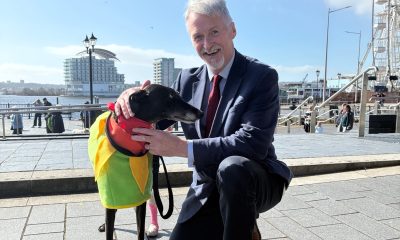
Senedd votes to ban Greyhound racing in Wales to protect animal welfare
-

 News7 days ago
Senedd vote to ban greyhound racing hailed as ‘landmark moment’ by charities
-

 News6 days ago
Reform secures first Pembrokeshire councillor in Hakin by-election win
-

 Crime6 days ago
Woman stole from pharmacy despite ban, court hears
-

 News7 days ago
Could Pembrokeshire hold the key to St Patrick’s lost birthplace?
-

 Crime5 days ago
Illegal workers found at Cardigan takeaway after immigration raid
tom
October 21, 2015 at 1:08 pm
the pension fund managers have a legal obligation to ensure a decent return, it’s not to support the green ecoterrorists idea of their perfect world where we rely on the sun and the wind like the good old days of scurvy, the plague and the black death
possible slight exageration to make my point – no different to the greenies there then 🙂
Flashbang
October 22, 2015 at 1:20 am
I thought most green investments were money losing enterprises massively subsidised by the taxpayer. Their stupid wind generators have disfigured the countryside especially in Pembrokeshire.