


Politics
Cameron ‘has failed to make case’ for air strikes


Stephen Crabb: ‘ Clearly we have to take action ‘
PLAID CYMRU leader Leanne Wood has said that the Prime Minister has failed to make the case for UK air strikes in Syria and that many unanswered questions remain.
Ms Wood said: “Plaid Cymru has said that it would listen to the Prime Minister’s case for UK intervention against IS.
“From the outset, Plaid Cymru has insisted that UK military intervention could only be considered in the context of an internationally-agreed peace plan for Syria, one that includes winning the peace as much as the military defeat of IS.
“Plaid Cymru has also insisted that a framework backed fully by the UN is essential, including a Chapter VII resolution. The Prime Minister has failed to deliver this.
“We are also dubious of the Prime Minister’s claim that there are 70,000 moderate Syrian fighters on the ground ready to fight IS – a doubt shared by the Chairman of the House of Commons Defence Committee, amongst many others.
“Dropping bombs from the air will not lead to the defeat of IS. Neither will it the secure peace for the people of Syria or bring stability to the wider region. What is needed is a plan for a process of reconciliation and reconstruction.
“The Party of Wales urges all governments to redouble efforts to secure a comprehensive peace deal for Syria and the wider region. We urge world leaders not to repeat the mistakes of past Western military interventions in the Middle East.
“We call for renewed commitments to support and aid civilians who are suffering as a result of the war, call for pressure to bear on Saudi Arabia and others who are financing IS and we call for practical support for those currently d e f e n d i n g themselves on the ground from IS such as the Kurdish P e s h m e r g a fighters, which must also include a commitment from Turkey to cease attacks upon the Kurds.
“UK military action as currently proposed risks further escalation in Syria and making our own communities at home less secure.
“Unless the Prime Minister addresses all unanswered questions and brings forward a more comprehensive plan, Plaid Cymru cannot support military action.”
On Monday the leader of the opposition in Westminster said that he would allow Labour MPs a free vote on extending British air strikes into Syria. Jeremy Corbyn is opposed to the bombing, and in a letter to Labour MPs said that he felt that Mr Cameron had not explained how the bombings would help Britain’s security.
However, the Shadow front bench team is divided on the matter, with shadow Foreign Secretary Hilary Benn and Tom Watson among those favouring military intervention. Llanelli MP and Shadow Secretary of State for Wales Nia Griffith has said that she is opposed to UK involvement in air strikes, citing the lack of an effective strategy from Mr Cameron as a major factor in this. Ms Griffith said:
“Last week in Parliament I listened very carefully to the Prime Minister making the case for the UK’s involvement in air-strikes on Syria. He spoke eloquently, but it was clear that he did not have an effective strategy for following up the air strikes and bringing the stability that that country so desperately needs. That’s why I spoke up very clearly in Shadow Cabinet against UK involvement in air strikes.
“It is understandable that in the wake of appalling atrocities in Paris, that we should want to do something urgently to combat Daesh / Isis and show solidarity with our allies, but we should beware of simply bombing places like Raqqa in Syria as a knee-jerk reaction, which, as fleeing Syrians have pointed out, would inevitably lead to civilian casualties.
“We all abhor Daesh with their barbaric acts, and their murdering of innocent p e o p l e including m a n y Muslims, b u t military experts h a v e warned that air strikes alone are not sufficient to drive Daesh out of the territory it holds. Far more needs to be done to cut off their supplies of oil and weapons, and to prevent more young people being drawn into their hateful propaganda and radicalisation.
“But in terms of re-taking the parts of Syria they control, we need to have a strategy which includes how and by whom the peace can be secured. The Prime Minister talked vaguely about some 70,000 rebel forces, but they are scattered geographically, and composed of many disparate groups. The Prime Minister could not give us details about their commitment or capacity for taking and holding territory.
“However, we now have signs of a greater determination in the United Nations to tackle the region’s problems, and Russia has shown a willingness to be involved. So where the UK should take a lead would be in furthering the Vienna process, getting commitment from the regional powers and developing a political strategy for the area. That now needs to be the priority. I am not a pacifist, but I shall not be voting for air strikes on Syria.
Ms Griffith’s opposite number, Stephen Crabb, has announced that he is in favour of extending British operations. In an interview shortly after the tragic events in Paris, the Preseli Pembrokeshire MP said: “Clearly the events of recent days have focused people’s minds. I personally don’t know what it is going to take to persuade people further, whether it’s the images of carnage and death we saw on the streets of Paris on Friday night or whether it’s the images of mass graves that have been discovered in Syria or the evidence of rape being used as a weapon of war in Syria, but clearly we have to take action to eradicate the world of this horrific poisonous threat which threatens our lives within this country, this so-called Isil.”
When asked whether ground forces would be required, the Conservative MP reiterated what Mr Cameron said regarding the capabilities of existing forces: “We believe there are troops on the ground to do the job, the Kurdish forces and others who have shown in just recent days how capable they are at defeating Isil on the ground, but the diplomatic strategy is an important one as well.”
Jeremy Corbyn has written to Mr Cameron, urging the Prime Minister to hold a full two-day debate on the subject of military involvement before any vote. It is thought that the Government will not call for a vote unless they are confident of securing a clear majority.


AN EXTRA £22 million in UK Government funding has been announced to support workers and businesses affected by Tata Steel’s transition at Port Talbot, taking the total community support package to £122 million.
The funding uplift means the Tata Steel / Port Talbot Transition Board fund now stands at £102 million from the UK Government, alongside a further £20 million contributed by Tata Steel. Ministers say the additional money could help support up to 1,000 more jobs across the local economy.
Since July 2024, the Transition Board has already allocated £80 million to the Port Talbot area, funding thousands of training courses for individuals and helping nearly 200 businesses to start, expand, invest in new equipment and move into new markets.
The UK Government said the rapid deployment of the funding has helped prevent an increase in unemployment benefit claims during Tata Steel’s shift towards greener steelmaking.
Following strong demand for support, a further £22 million has now been allocated, extending the availability of Supply Chain, Business Start-Up, Resilience and Growth funding into 2026. The announcement was made on Thursday (Dec 18).

Secretary of State for Wales Jo Stevens said the government was determined to continue backing the community through the transition.
She said: “This government has acted decisively to support workers and businesses in Port Talbot, allocating the entire £80 million in initial funding quickly into the community to ensure that whoever needed support could access it.
“Grants have been delivered swiftly to meet the needs of local people, businesses and communities, and there is evidence that our approach is working. But we want to make sure that as many people as possible have continued access to support with the extra £22 million for local businesses into the new year.
“We said we would back workers and businesses affected by the transition at Port Talbot and are delivering on that promise.

“It remains a difficult time for Tata Steel workers, their families and the community, but we will continue to support them.”
Ms Stevens announced the funding increase during a visit to Port Talbot-based engineering firm JES Group, which has received Transition Board support. She also toured the JES Academy, which is providing training for dozens of former and current steelworkers.
Justin Johnson, Director of JES Group and The Skills Academy, welcomed the announcement.

He said: “I want to express our gratitude to the UK Government for establishing the original Transition Fund and for now having the foresight to increase the level of support at such a critical moment.
“This uplift will make a significant difference to supply-chain companies like ours. As Tata Steel transitions to electric arc furnace steelmaking, businesses like JES must transition alongside it, while also diversifying into new sectors to reduce reliance on what was once our core work.
“We believe the history of steelmaking in Port Talbot is far from over and that a brighter, greener future lies ahead, but while that future takes shape, diversification is essential.
“The journey has not been easy, and it is far from over, but this additional support creates real opportunities for stability and growth. I also want to recognise Business Wales and Neath Port Talbot Council’s economic development team for their guidance and practical assistance.”
The Transition Board was established to protect jobs and the local economy during Tata Steel’s move to greener steel production. Information on applying for support is available via the Tata Steel Transition Information Hub.
The UK Government has also committed £2.5 billion to rebuild and decarbonise the UK steel industry, with a national Steel Strategy due to be published in early 2026. This includes £500 million already allocated to Tata Steel for the electric arc furnace now under construction at Port Talbot.

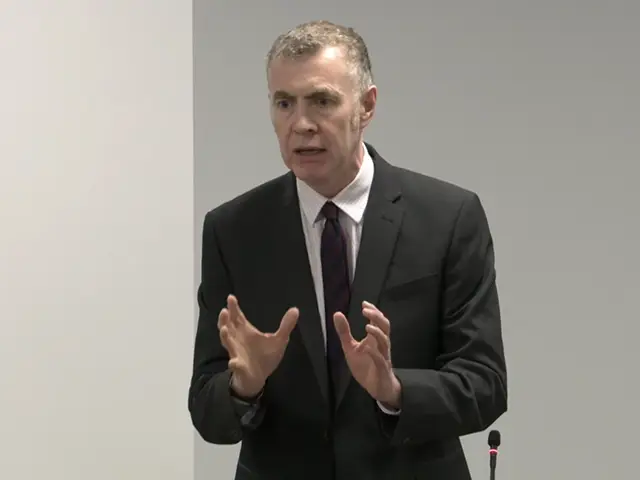
THE PROSPECT of merging Wales’ four police forces into a single mega-force has resurfaced, as politicians scrambled to respond to reports of an overhaul of policing in the new year.
Adam Price raised reports that Home Secretary Shabana Mahmood is considering cutting the number of police forces in Wales and England from 43 to 12 through mergers.
The former Plaid Cymru leader told Senedd members the reforms would represent the “biggest upheaval” of police forces since the 1960s.
Warning the Welsh Government was not consulted on plans to scrap police and crime commissioners, he said: “No change should happen – a merger for example – without full Senedd scrutiny and a Welsh democratic mandate.”
Mr Price suggested an all-Wales model – merging the four police forces, similar to what happened in Scotland in 2013 – could have benefits but said governance would be critical.
During topical questions on Wednesday December 17, he argued a single police force would need to be accountable to the Senedd, with powers over policing devolved to Wales.
The MP-turned-Senedd member urged the UK Government to rule out any cross-border mergers involving a Welsh force being absorbed into an English one.
Responding for the Welsh Government, Jane Hutt described the widespread media reports as “unhelpful, unconfirmed speculation”. But she confirmed the UK Government is expected to publish a white paper in the new year.

She committed to engaging with Sarah Jones, the UK policing minister, who was attending a meeting of the Welsh policing partnership board the next day (December 18).

Ms Hutt told the Senedd she has been assured the UK Government recognises the differing governance arrangements between Wales and England.
Conservative Altaf Hussain urged the Welsh Government to take the opportunity to abandon calls for devolving powers over policing and justice to Wales.
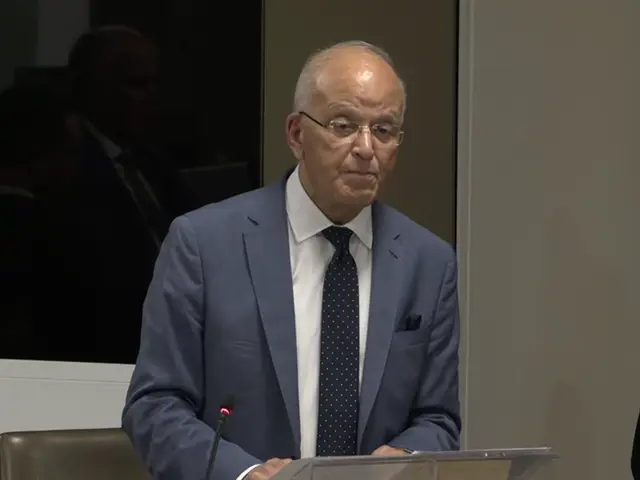
Dr Hussain said: “There is merit in having a single unified police force for England and Wales – if only to tackle dysfunctional forces like Gwent Police, who have allowed a culture of misogyny to persist amongst their officers and leaders.”

Ms Hutt suggested reforms would present a natural opportunity to consider the role of the Welsh Government and Senedd in terms of accountability for policing in Wales. She said the focus is on a phased approach, beginning with powers over youth justice and probation.
Jane Dodds, the Liberal Democrats’ leader in Wales, called for a clear timetable for the devolution of youth justice and probation. “We need more devolved powers,” she said.
Labour’s Alun Davies agreed, accusing UK ministers of putting Ms Hutt in an “invidious position” of responding to hearsay about a fundamental public service. He said: “This is the second time in two months… this simply isn’t good enough.”
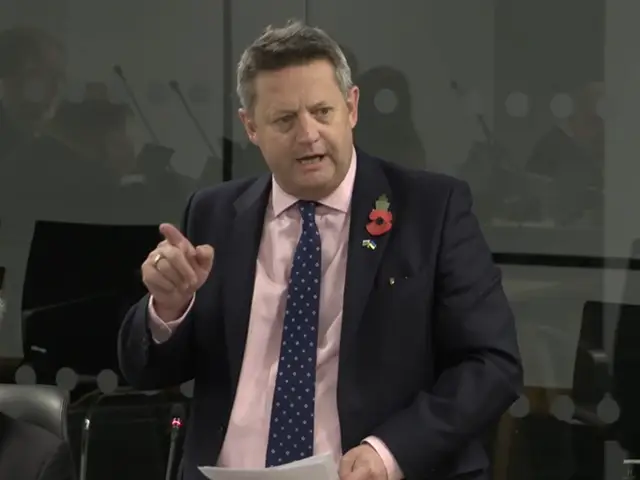
Mr Davies criticised Labour colleagues in the UK Government for “clearly” not recognising calls for policing to be devolved and biting the bullet. “That needs to happen,” he said, adding: “It needs to happen as soon as possible.”
The former minister told the Senedd: “We certainly don’t want to see the nationalisation of policing that’s just been proposed by the Conservatives. We’ve never had a national police force in the UK – we don’t want one today.”
It was “groundhog day” for the Conservatives’ Mark Isherwood who reminded the chamber of the then-Assembly’s review of policing in 2005 when mergers were floated previously.
He said: “To recognise the regional cultural and geographical differences that exist within Wales, all agreed that Wales must be policed in regions.”
But Rhys ab Owen, who sits as an independent, argued Wales’ four police forces “make no sense at all” with Police Scotland showing a unified force can “flourish”.
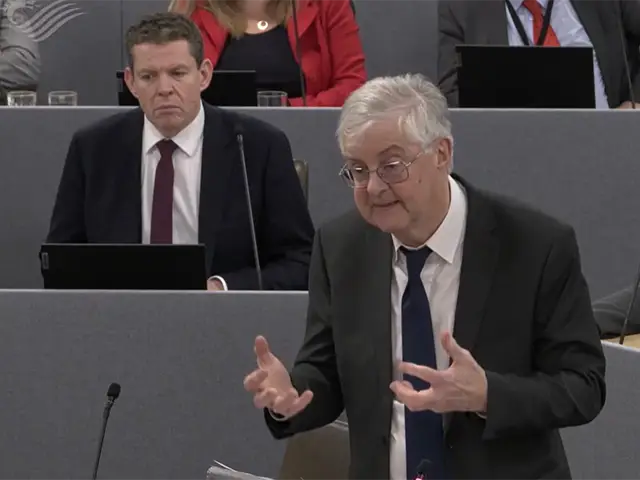
THE SENEDD has backed the Welsh Government’s “imperfect” £27bn draft budget following a late deal to prevent a “catastrophe” for public finances.
The 2026/27 spending plans passed with 24 in favour, 13 against and Plaid Cymru’s 13 members abstaining as part of a near-£300m deal with the Welsh Government. Ministers will unveil the final budget in the new year before a further crunch vote on January 27.
But scrutiny committees warned inflation based on “outdated” forecasts could see real-terms cuts, criticising a lack of preventative spending and “business as usual” funding for culture.
Leading scrutiny on December 16, Peredur Owen Griffiths, who chairs the Senedd’s finance committee, sounded the alarm about inflation figures underpinning the draft budget.
He warned that while health and councils would receive uplifts, these were based on forecasts from March that are already outdated.
Calling on ministers to publish an assessment of inflationary pressures alongside the final budget, he said: “Some areas face real-terms cuts unless funding increases.”
The Plaid Cymru politician also urged the Welsh Government to develop a plan to close a “persistent productivity gap” compared with the UK average.
Peter Fox, the Conservative chair of the health committee, said the NHS initially faced a “historically low” uplift of only 0.5% in real terms before the deal was struck.
Mr Fox made a compelling case for extra funding for “vital” palliative and end-of-life care services as well as more money for respite care for unpaid carers.

While welcoming an extra £180m for health and social care, he warned of a system buckling under pressures in relation to waiting times, staffing and an ageing estate.
“It’s essential to balance these short-term demands with longer-term transformation,” he said, calling for assurances funding for prevention is not lost to immediate firefighting.
This sentiment was echoed by Delyth Jewell, the Plaid Cymru chair of the culture committee, who lamented that the arts sector faces another year of “more of the same” real-terms cuts.
She pointed out that spending on culture in Wales ranks among the lowest in Europe.
Llŷr Gruffydd, chair of the climate change committee, raised concerns about infrastructure, pointing to the transport secretary’s admission that Wales has the UK’s oldest bus fleet.
Mr Gruffydd also criticised cuts to biodiversity, noting a 3.9% fall in day-to-day resource spending and an 8% reduction in longer-term capital funding amid a “nature emergency”.
Meanwhile, John Griffiths, who chairs the local government committee, welcomed a minimum 4% increase for councils but warned “frustrations continue” over the funding formula, which relies on data from the 1991 census.

He said: “We remain concerned that local authorities are still in a vulnerable position and continue to face the prospect of council tax rises, service cuts and job losses.”
His Labour colleague Buffy Williams, chair of the education committee, warned ministers failed to publish a specific children’s rights impact assessment for the 12th year in a row.
Heledd Fychan, Plaid Cymru’s shadow finance secretary, defended her party’s decision to abstain, arguing rejecting the budget could have led to thousands of job losses, council tax rises of 22% and the “very real prospect of bankruptcy for some of our councils”.
“This was a budget that, if it was left unamended, would have proved catastrophic for Wales,” she said, dismissing suggestions Plaid Cymru was “propping up” Labour.
But her Conservative counterpart Sam Rowlands criticised the budget as a failure that “does nothing” to get Wales’ economy moving nor get to grips with long NHS waiting lists.
Reform UK’s Laura Anne Jones added that the “cosy arrangement” between Labour and “their little helpers” Plaid Cymru “smacks of a government that has run out of ideas.”
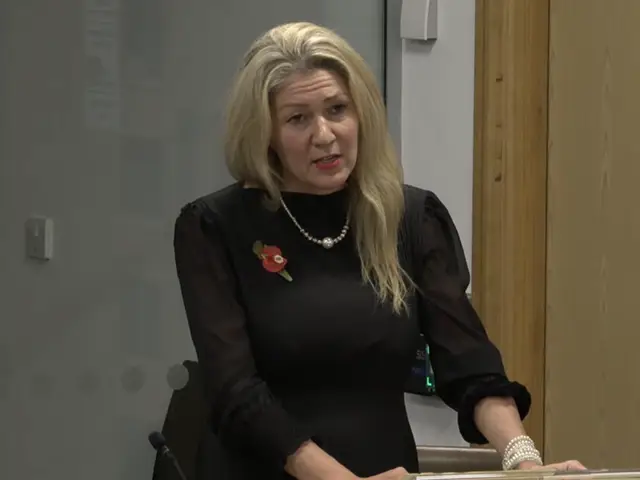
Closing the debate, finance secretary Mark Drakeford insisted the budget deal was “good news for Welsh citizens” because the “catastrophe” of a failed budget has been avoided.
“We have secured that more ambitious set of outcomes,” he said, pointing to the £180m extra for health and social care as well as a £112m for councils as part of the deal.



Community gathers to remember Corrina Baker
Lanterns and balloons released in emotional acts of remembrance FAMILY, friends and members of the local community came together to...


Teenager charged following rape allegation at Saundersfoot nightclub
Incident reported at Sands Nightclub in early hours of Sunday DYFED-POWYS POLICE is investigating an allegation of rape following an...


Milford Haven man jailed after drunken attack on partner and police officers
A MILFORD HAVEN man who launched a violent drunken assault on his partner before attacking two police officers has been...


Court hears historic child sex abuse claim emerged after ‘tarot reading’
Judge reminds jurors there is no standard timeframe for victims to come forward as trial reaches final stage A JURY...


Rape allegation investigated at Saundersfoot nightclub
Police appeal for witnesses after incident reported in early hours of Sunday DYFED-POWYS POLICE are investigating an allegation of rape...

Milford ground worker denies historic child sex abuse charges at Crown Court
Accused tells jury claims did not happen as trial hears evidence about alcohol use and alleged controlling behaviour A MAN...


Three inmates deny murder of Lola James killer at Wakefield prison
THREE prisoners have denied murdering child killer Kyle Bevan, who was found dead in his cell at HMP Wakefield. Bevan,...


Dyfed-Powys Police reassure communities after Bondi Beach mass shooting
Officers monitor local tensions following terror attack on Jewish event in Sydney DYFED-POWYS POLICE have issued reassurances to communities across...


Search under way in Pembroke Dock for missing man Lee
Coastguard, RNLI and rescue helicopter launched as fears grow he entered the water A MAJOR search and rescue operation is...


Search under way in Pembroke as man reported missing
Rescue teams battle worsening weather ahead of amber rain warning A MULTI-AGENCY search and rescue operation is under way in...
-
Crime14 hours ago
Milford Haven man jailed after drunken attack on partner and police officers
-

 News4 days ago
Dyfed-Powys Police launch major investigation after triple fatal crash
-
Crime2 days ago
Man sent to Crown Court over historic indecent assault allegations
-
 Crime1 day ago
Man charged with months of coercive control and assaults
-
Crime4 days ago
Man spared jail after baseball bat incident in Milford Haven
-
Crime12 hours ago
Teenager charged following rape allegation at Saundersfoot nightclub
-

 Crime2 days ago
Milford Haven man admits multiple offences after A477 incident
-

 Education7 days ago
Teaching assistant struck off after asking pupil for photos of her body