


News
Court dismisses painter’s appeal

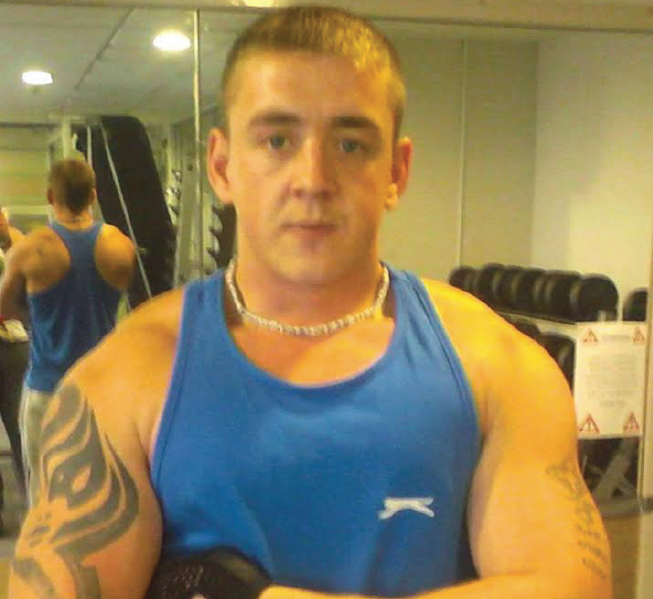

Brutal attack: Scott Younger, 27
AN INDUSTRIAL PAINTER jailed for a appalling attack on a defenceless man in the street, was lucky to escape with only a 16-month jail term, the Court of Appeal has ruled this week.
Scott Alexander Younger, 27, from Milford Haven, was put behind bars at Swansea Crown Court last August after he admitted attacking Wayne Davies, causing grievous bodily harm.
Mr Davies was left with a shattered jaw – needing the insertion of surgical plates – after he clashed with Younger in the centre of Haverfordwest in March 2014.
Younger, of Lower Hill Street, felled Mr Davies with a punch, Mr Justice Haddon-Cave told London’s Appeal Court on Thursday (Jan 28).
He then finished his victim off with a savage kick as he lay helpless on the ground.

Younger and Mr Davies had fallen out over a “trivial amount of money”, the court heard.
The attacker had chased his victim “a long way” before launching the assault.
Mr Davies needed extensive surgery to treat his fractured jaw, and was still suffering the effects 17 months after his ordeal. But Younger’s case reached the Appeal Court today as his legal team challenged his sentence, claiming it was much too harsh.
Lawyers argued he had been sentenced on the wrong basis and had never in fact laid a foot on Mr Davies.

But Mr Justice Haddon-Cave said: “This was a nasty street attack which included a severe blow which broke the victim’s jaw. There was then a kick while the victim was defenceless on the ground. In our judgment, a 16-month sentence cannot in any way be considered manifestly excessive.”
The appeal was dismissed.



WEST WALES passengers could get direct trains to Bristol before the end of the year — but the plan has sparked a row between the Welsh Government and Great Western Railway.
Transport for Wales wants to introduce new services from Milford Haven or Fishguard, running through Carmarthen, Llanelli, Swansea and Cardiff to Bristol Temple Meads.
The proposal would mean passengers from Pembrokeshire and Carmarthenshire could travel directly to Bristol without having to change trains at Cardiff Central.
TfW hopes to run the service every two hours from Monday to Saturday, with some trains starting in west Wales and one beginning in Cardiff. The aim is to launch the route by December 2026.
The plan would be particularly significant for Pembrokeshire, where rail links remain limited and passengers travelling to England often face long journey times and inconvenient changes.
It could also improve access for people using Fishguard Harbour for ferry connections to Ireland, as well as students, workers, tourists and families travelling between west Wales and the West Country.
However, Great Western Railway, which already operates services between Cardiff and Bristol, has raised concerns about the impact on its income and existing services.
GWR said the new TfW trains were likely to have a “significant effect” on its revenue and could affect services in the Bristol area.
The Welsh Government has reacted angrily, accusing GWR of trying to disrupt improvements for passengers.
Deputy Minister for Transport, Mark Hooper said it was “extremely disappointing” that GWR would seek to “disrupt these plans to improve things for passengers on both sides of the Severn”.
He said: “If Great Western Railway’s objection succeeds, it would negatively impact tens of thousands who could benefit from this service.
“I will be writing to the UK Transport Minister to urgently ask for clarification and call for some common sense on this issue.”

For many west Wales passengers, the current journey to Bristol involves changing at Cardiff, adding inconvenience and uncertainty to already long journeys.
A direct service from Milford Haven or Fishguard would mark a major improvement for communities along the west Wales main line, including Haverfordwest, Whitland, Carmarthen, Llanelli and Swansea.
GWR said it welcomed enhancements for passengers, but added that any changes must not be “detrimental to existing services or already agreed future services which will serve south Wales”.
The final decision on TfW’s application will be made by the Office of Rail and Road.

Historic 198kHz transmission to end this month as amateur radio enthusiasts prepare farewell events
THE BBC is to switch off its historic Long Wave radio service later this month, bringing to an end almost 92 years of broadcasting on 198kHz.
The service, which currently carries BBC Radio 4 programming, will cease transmission at 1:00am BST on Saturday, June 27.
The closure will see the shutdown of the BBC’s remaining Long Wave transmitters at Droitwich in Worcestershire, Westerglen near Stirling, and Burghead overlooking the Moray Firth in Scotland.
The move marks the end of one of Britain’s most iconic broadcasting technologies, which has played a vital role in national communications since the 1930s. Long Wave radio became a trusted source of news, entertainment and emergency information for generations of listeners, particularly in rural and coastal communities where signal reliability was valued.
In Pembrokeshire, the loss of Long Wave will be felt particularly keenly in rural villages, coastal communities and farming areas where FM, DAB and mobile signals can still be patchy. For many older listeners, boat users and people living in more remote parts of the county, 198kHz has remained one of the few reliable ways to receive BBC Radio 4, weather updates and national information when other services fail.
The decision has prompted tributes from radio enthusiasts and amateur operators across the UK, many of whom see the switch-off as the end of an era in British broadcasting.
To mark the occasion, the Radio Society of Great Britain (RSGB), working alongside the BBC Amateur Radio Group, will operate special amateur radio stations in the days leading up to the closure.
Volunteers are being sought to activate a special callsign during the final week of broadcasting and on the day the transmitters are turned off.
In addition, three amateur radio clubs will operate commemorative special event stations on June 27 to celebrate the remarkable legacy of the Long Wave network before the signal finally falls silent.
For many listeners, BBC Radio 4 Long Wave has remained a familiar companion, particularly for specialist programming, shipping forecasts and rural audiences, even as digital and internet services increasingly dominate broadcasting.
The end of Long Wave broadcasting will leave only digital, FM, DAB, television and online platforms carrying BBC Radio 4 content.
Photo caption:
End of an era: The BBC’s Long Wave transmitter network, including the historic 198kHz service, will be switched off on June 27 after almost 92 years of broadcasting (Pic: RSGB/BBC Amateur Radio Group).

NHS LEADERS have welcomed the new Welsh Government’s health and care priorities, saying they are ready to work with ministers to help turn the plans into action.
The Welsh NHS Confederation said many of the priorities set out by the Cabinet Minister for Health and Care reflected the concerns of NHS leaders across Wales.
Darren Hughes, director of the Welsh NHS Confederation, said the organisation particularly welcomed the proposed ten-year digital strategy, describing it as “an essential lever for improvement”.
He said: “NHS leaders welcome the new cabinet minister’s statement on health and care priorities, and we look forward to the minister’s response to our offer to convene leaders to take these priorities forward.
“Many of the minister’s priorities chime with those of NHS leaders and we especially welcome the 10-year digital strategy as an essential lever for improvement.”
Mr Hughes said a whole-government and whole-system approach would be needed if Wales is to make progress on integrating health and social care.
He added that workforce planning, performance frameworks and financial arrangements should cover both the NHS and social care sectors.
He said: “Although targeted intervention to reduce waiting lists is welcome, truly sustainable progress will be driven by looking at the wider NHS estate as key to unlocking productivity and efficiency gains.
“The new government is certainly saying a lot of the right things. Time will tell as to how intentions will turn into delivery and NHS leaders look forward to working with the Welsh Government and wider partners to transform health and care for the people of Wales.”
The Welsh NHS Confederation represents all organisations making up the NHS in Wales, including the seven local health boards, three NHS trusts and two special health authorities.



Health11 hours ago
First Minister quizzed on Welsh NHS pressures in his first-ever FMQs
SENEDD Members pressed the First Minister over the state of the health service in Wales, as the Plaid Cymru leader...


Community19 hours ago
Historic paddle steamer Waverley to return to Fishguard this month
THE WORLD’S last seagoing paddle steamer will return to Fishguard this month as part of her annual visit to South...


Local Government21 hours ago
National Express use of new Haverfordwest interchange still subject to risk checks
A RUMOUR that National Express coaches may struggle to use Haverfordwest’s new transport interchange has been denied by Pembrokeshire County...


Crime22 hours ago
Milford Haven man jailed for illegal Premier League streaming service
A MILFORD HAVEN man who supplied illegal Premier League streams and loaded Firesticks to almost 2,000 customers has been jailed...


Community2 days ago
RNLI lifeguards rescue beachgoers during busy heatwave weekend
FOUR PEOPLE RESCUED AS RIP CURRENTS AND OFFSHORE WINDS HIT PEMBROKESHIRE BEACHES RNLI lifeguards in Pembrokeshire rescued four people and...


Local Government2 days ago
Council and school staff pay row could hit Pembrokeshire services
COUNCIL workers, carers and school support staff in Pembrokeshire could be drawn into a growing UK-wide pay dispute after GMB...


Health2 days ago
Hywel Dda to hold second consultation on future of stroke services
A SECOND phase of public consultation is to be held on the future of stroke services across Hywel Dda University...


Community2 days ago
Warning as algal blooms mistaken for sewage on Welsh coast
Beachgoers urged to avoid contact with suspicious foam and report pollution concerns NATURAL RESOURCES WALES has issued summer advice to...

News3 days ago
Yacht towed to safety after engine failure off Tenby
A YACHT was towed to safety by Tenby RNLI after suffering total engine failure around 15 miles south-east of the...


Crime4 days ago
Haverfordwest sex offender jailed over child abuse material
Registered offender used library computers to hide social media accounts A HAVERFORDWEST sex offender who used public library computers to...
-

 Health6 days ago
Paul Davies warns health board over Withybush and Bronglais services
-
Crime6 days ago
Carmarthenshire man sent to Crown accused of 33 historic sexual offences
-

 Crime7 days ago
Steynton motorist banned after drink-drive collision
-

 Crime7 days ago
Warrant issued for man accused of taking wild goldfinches
-
 Crime7 days ago
Dock man given suspended prison sentence for third drink-drive offence
-
Crime22 hours ago
Milford Haven man jailed for illegal Premier League streaming service
-

 Crime6 days ago
Suspended prison sentence for man who left dogs without vet care
-

 News6 days ago
Vehicle destroyed in early morning fire in Pembroke