


News
County flooding chaos follows ‘biblical’ storm


 GALE FORCE winds coupled with unusually high tides have caused widespread flooding along the mid and West Wales coast in the past week.
Areas of Fishguard, Cardigan, Aberaeron, Amroth and Laugharne have all been affected.
Dyfed-Powys Police posted on Twitter that it had closed a number of roads in Amroth, Newgale, Aberystwyth and Borth. Drivers were also advised to avoid coastal areas and told not to attempt driving through flood water.
Rebecca Evans AM has welcomed the news that Minister for Natural Resources, Alun Davies AM, has ordered a review into the recent flooding.
Mrs Evans said: “I wrote to the minister on Saturday asking how the Welsh Government intends to review the recent flooding, so I am pleased that

the minister has responded so quickly by announcing that he has asked Natural Resources Wales to carry out a swift review with the immediate priority being to identify and assess any damage so that repair work can be prioritised.”
Mrs Evans continued: “My thoughts are with everyone who has been affected by the flooding. I am grateful to the staff of Natural Resources Wales, local authority staff, and the emergency services across the region for the way in which they have sought to prepare for the flooding, and keep everyone informed and safe during what has been a very tough few days for people living in coastal areas.
“I am also grateful to the many community groups, volunteers and good neighbours who have pulled together to offer shelter and assistance to residents and business owners affected by flooding along the mid and West Wales coast.”
“It is important that repair work is completed as soon as possible, before the start of the main tourist season in the spring.”

 AM Joyce Watson met with Fishguard residents and Pembrokeshire Council’s chief highways officer to discuss the on going situation this week. Councillor Pat Davies took Mrs Watson to the worst affected area of Lower Fishguard to speak to residents.
Mrs Watson said: “Mr Randal Davies, of Bridge Street, said it is the worst flooding he has seen in 47 years.
“In Quay Street, Mr and Mrs Jackson told us it is the worst storm for 63 years. Their house was flooded and Mrs Jackson, who relies on her stair lift, was stranded upstairs when the electricity was knocked out. Thankfully, the fire service and local contractors responded quickly, and the heating and power is back on.

“It is heartening that neighbours are rallying to help and support each other – strong community spirit makes all the difference at a time like this.”
On Tuesday, a specialist team from Natural Resources Wales started work at Newgale Beach, to clear the Brandy Brook from sand and shingle, which has completely blocked the brook following days of extremely high tides.
THE WORK was in conjunction with Pembrokeshire County Council, who has also started work to clear the coastal road at Newgale, which has been closed since last Friday after waves left rocks and debris blocking access.

Natural Resources Wales teams are also continuing work to clear large volumes of shingle and debris from the Tresilley Stream on Amroth Beach.
The Royal Voluntary Service has also asked members of the public to call on their older friends, family and neighbours to check that they are safe and have everything they need.
David McCullough, Chief Executive of Royal Voluntary Service, said: “Severe weather can have a devastating effect on the health and safety of older people, so it’s vital that friends, family and neighbours check in on older people in their town and offer to help where they can. Simple things like making sure older people have enough food in the house and offering someone a lift to a doctor’s appointment or to the shops can make a huge difference during the inclement weather.”
Royal Voluntary Service volunteers will continue to provide services in the local area through the bad weather, as well as assisting the emergency services team by offering refreshments and comfort to people affected by the storms, floods and power cuts.
Woman rescued from swollen river
A YOUNG woman had to be rescued from a river in the early hours of the morning on Thursday, January 9.
Mid and West Wales Fire and Rescue Service were called to rescue the woman from Freeman’s Way near the County Hall Offices at around 1.14am. It comes as the Met Office put out another weather warning for most of Wales following more heavy rain.
A Welsh Ambulance Service spokesperson said: “We were called at 1.09am to an incident near County Hall, Haverfordwest.
“An emergency ambulance was dispatched to the scene, and a woman in her 20s was taken to Withybush General Hospital.”
Charity issues urgent warning following extreme weather
THE ELECTRICAL SAFETY Council is issuing a warning in Pembrokeshire following extreme weather conditions that has led to flooding in many areas. The charity is urging all residents whose homes have been affected by high water levels to take care when cleaning up, especially around electricity which can cause further damage or put people at risk. Water and electricity can be a lethal combination, and with more rain on its way the Electrical Safety Council wants all homeowners to be aware of the risks of combining the two. Wiring and electrical appliances that have been affected by water can at best stop working and at worst cause an electric shock.

“When faced with flooding damage it can be tempting to jump straight in as it’s natural to want things back to normal as quickly as possible”, explains Penny Walshe from the Electrical Safety Council, “but it is important to make sure your home is electrically safe before you do anything else.
“If the water damage to electrics is relatively minor and caused by clean water, i.e. from a burst water pipe or tank, then the cables will need to be dried and affected electrical accessories such as sockets, switches and plugs will need to be replaced. But if there is major flooding damage caused by contaminated water, i.e. sewage, then there is a chance that affected parts of the house will need to be rewired. Take a step back and call in a registered electrician to assess the damage before you try and fix anything else.”
The Electrical Safety Council is urging homeowners affected by floods to follow these top tips to deal with the damage quickly and safely:
- Don’t touch any sources of electricity – such as switches or appliances – when standing in flood water.
- Ask your supplier to turn off your electricity and don’t turn it back on until it is safe to do so.
- Make sure all electrical equipment affected by flood water has been checked by an electrician before you use it again.
- Ask a registered electrician to carry out an Electrical Installation Condition Report (EICR)* to check the condition of electrical wiring in your home.
- If your home needs to be rewired, ask about raising the height of newly installed electrical equipment above any future expected flood level.
[slideshow_deploy id=’2354′]



STAFF at OC Davies used pedal power to cycle an incredible 453 miles as part of a fundraising event marking two major anniversaries.
The Cardigan-based dealership is celebrating 40 years as a Renault dealer in 2026, while the Wales Air Ambulance marked its 25th anniversary on St David’s Day (Mar 1).
To celebrate the milestones – and the launch of the new vehicle registration plate – the dealership held a community open day at its Cardigan site, raising £2,102 for the lifesaving charity.

As part of the event, staff and supporters took on a spin bike challenge to cycle the equivalent of 104 miles – the distance between OC Davies’ three dealerships in Cardigan, Neyland and Carmarthen.
However, the participants far exceeded expectations.
During the 12-hour challenge, which ran from 8:00am to 8:00pm, a total of 37 people took part and collectively cycled an impressive 453 miles.
Over the years, OC Davies has now raised more than £6,600 for the Wales Air Ambulance Charity.
Nicola Lewis from OC Davies said: “We are incredibly proud to have raised £2,102. This fantastic amount exceeded all our expectations and shows just how supportive our community has been.
“The success of the event has inspired us to keep the momentum going and continue raising money for Wales Air Ambulance throughout the rest of the year.
“We currently have an Easter egg lucky dip running in the dealership and we’re also planning to raise further funds later in the summer at some outdoor events we’ll be taking part in.”
More than 200 visitors attended the open day and around 900 tickets were sold for a grand raffle.
Prizes were donated by local businesses including The Cliff Hotel & Spa, Tom Samways Butchers, U Melt Me, Tonnau, Theatr Mwldan, Folly Farm Adventure Park and Zoo, and The Queen’s Hall.


Additional prizes were also donated by the Scarlets and Swansea City FC.
Nicola added: “The open day was wonderfully supported by local businesses and members of the community, which helped make the event so special.
“We were overwhelmed by the generosity and support from businesses in Cardigan and beyond who kindly donated prizes for our grand raffle.”
The spin bikes used during the challenge were loaned by Neil Fulstow Fitness Coaching, with additional support from Clive Evans and Clive Davies.
The charity’s mascot Biggles also made an appearance during the day – even taking a turn on the DJ decks.
Emily Bell, Wales Air Ambulance’s Regional Fundraising Co-ordinator, said: “A huge congratulations to the staff at OC Davies, who smashed their original target while raising an incredible amount for our charity.
“It was a lovely open day which I was delighted to attend. OC Davies found a wonderful way to mark both anniversaries.
“Wales Air Ambulance needs to raise £13 million every year to keep our helicopters flying and our rapid response vehicles on the road. Fundraisers like this help ensure we can continue to be there for the people of Wales when they need us most.”
Wales Air Ambulance is a consultant-led service delivering hospital-standard treatment at the scene of an incident.
Through its partnership with the Emergency Medical Retrieval and Transfer Service (EMRTS), NHS consultants and critical care practitioners can provide advanced treatment including anaesthesia, blood transfusions and minor surgical procedures before transporting patients to the most appropriate hospital.
As a pan-Wales service, its crews travel across the country to deliver lifesaving emergency care wherever it is needed.
For more information visit www.ocdavies.com.
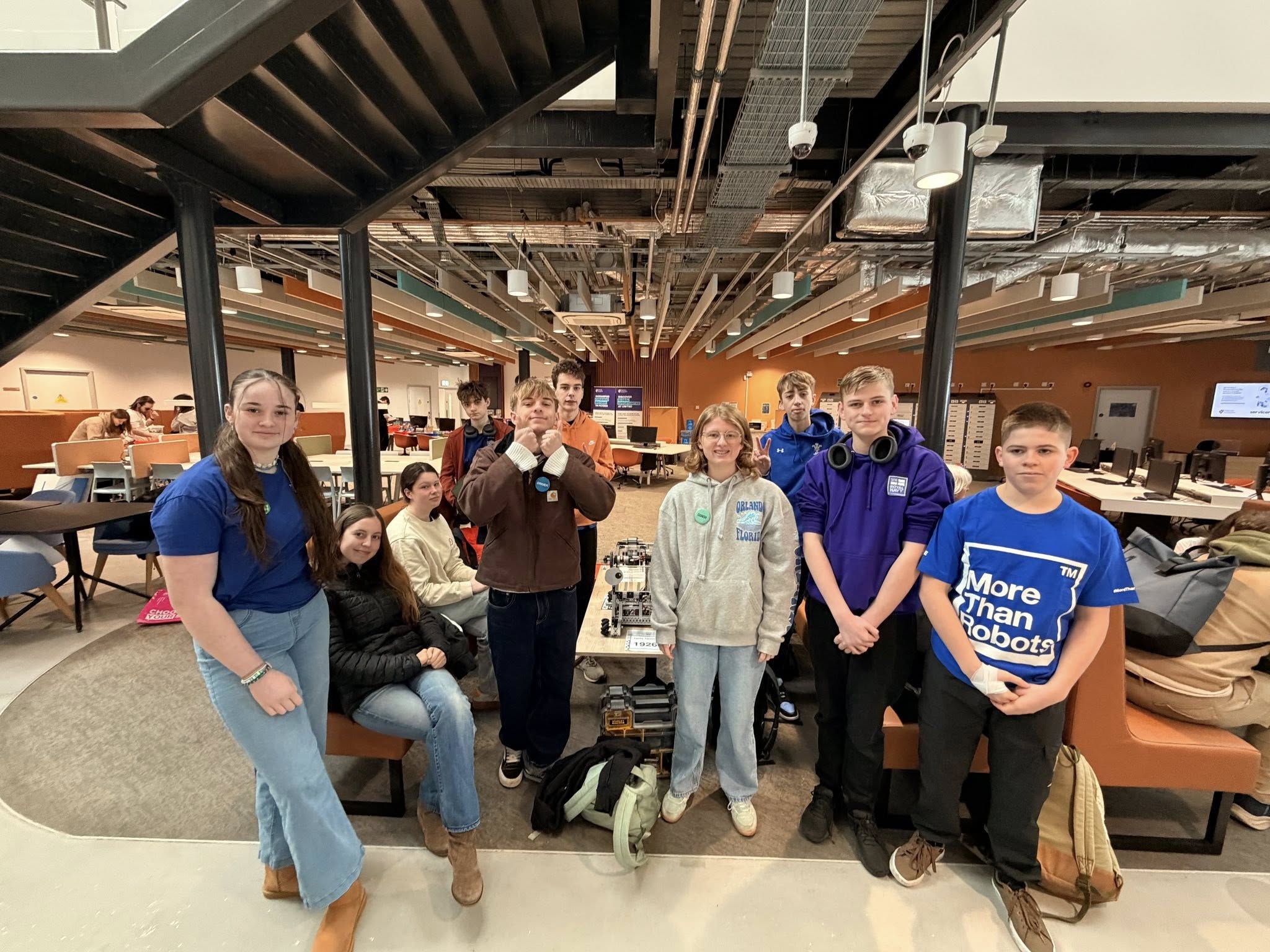
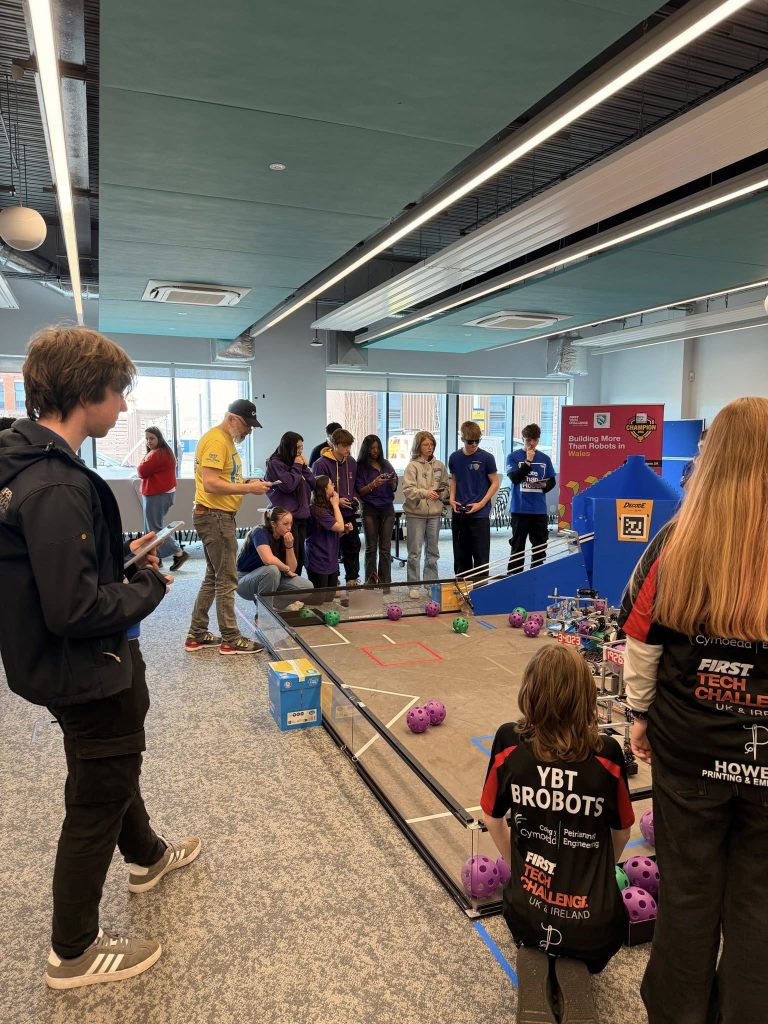
STUDENTS from Ysgol Greenhill in Tenby have taken part in the FIRST Tech Challenge UK & Ireland competition, showcasing their engineering and computing skills at a national robotics event.
The Tenby Techno Team travelled to the University of Wales Trinity Saint David’s School of Applied Computingwhere teams from across the UK and Ireland gathered to compete in the international robotics programme.
The competition challenges students to design, build and programme robots capable of completing tasks on a specialist arena, testing both technical ability and teamwork.
The Tenby team said they were proud to be competing and were supported during the event by former computing students Issac, Ieuan and Finley, who returned to help the team as volunteers.

Organisers of the programme say the FIRST Tech Challenge aims to inspire young people to pursue careers in science, technology, engineering and mathematics while building practical problem-solving skills.
The team also thanked Valero Pembroke Refinery and Tenby Round Table for sponsoring the project, along with Marc Ingram, who provided advice and guidance during the build and preparation stages.
More updates from the competition are expected as the event progresses.

PET owners are being warned to avoid buying lilies this Mother’s Day after experts said the popular flowers can be fatal to cats.
The warning has been issued by the RSPCA ahead of Mothering Sunday (March 15), with the charity urging people to choose pet-friendly flowers instead.
RSPCA animal welfare expert Lauren Bennett said: “Flowers are a lovely gift for Mother’s Day, and like many people I enjoy receiving them whatever the occasion. But sadly some flowers and plants can be toxic to our pets, so it’s important to avoid these where animals are present.

“Lilies are a particular concern because they are so popular at this time of year, yet many people do not realise just how dangerous they are to cats. Even small amounts of petals can be deadly, and the leaves, pollen and even the water from the vase can pose a serious risk.
“It is vital that people understand lilies can be lethal to cats. Even cutting the stamens out once they have opened is not enough. A small amount of pollen can transfer to a cat’s fur and when they groom themselves, they can quickly become seriously ill.”
The charity says cat owners can help prevent accidental poisoning by choosing alternative flowers when buying bouquets this weekend.
Lauren added: “Cats can suffer terribly after lily poisoning and it is heartbreaking for owners to witness. Thankfully it is easy to avoid. We all want to treat mums this Mother’s Day, but if they are also cat mums, please do not buy them lilies.”
The RSPCA also warned that other plants including daffodils, tulips, holly and hyacinths can be toxic to cats and dogs.
Even flowers considered non-toxic can still cause stomach upset if eaten, so the charity advises keeping all plants and bouquets well out of reach of pets.

The charity added that chocolate poisoning remains the most commonly reported type of animal poisoning, and people are being urged to keep Mother’s Day treats away from curious pets.
Lauren said: “If you suspect that your pet has eaten chocolate, contact your vet immediately for advice. Your vet will want to know how much chocolate your pet has eaten and what type it was. If possible, keep the packaging and have your pet’s weight to hand.”
Signs of possible poisoning in pets can include depression, loss of appetite, vomiting, diarrhoea, breathing difficulties, twitching or seizures.
The RSPCA is encouraging pet owners to share the advice to help keep animals safe during the Mother’s Day celebrations.
For more information about toxic substances affecting pets, visit the Veterinary Poisons Information Service website.


Local Government6 hours ago
Investigation confirmed after inspectors visit Many Tears Animal Rescue
Licensing authority declines to comment as police confirm attendance at Carmarthenshire rescue centre AN INVESTIGATION is underway following a visit...


Business1 day ago
Work set to begin on £50m hydrogen plant in Milford Haven
A MAJOR new hydrogen production facility worth around £50 million is expected to begin construction in Milford Haven later this...


Education2 days ago
Manorbier school closure approved while insurance claim still unresolved
Council confirms negotiations with insurer ongoing following 2022 fire PEMBROKESHIRE COUNTY COUNCIL has confirmed that negotiations with its insurer over...


Crime3 days ago
‘Knife attack’ at Spittal property leaves man in hospital
POLICE have arrested a woman following what is being described as a ‘knife attack’ at a property in Spittal on...


Community3 days ago
Pembrokeshire to receive its first banking hub in Pembroke Dock
LINK, the UK’s Cash Access and ATM network, has today announced local people and businesses in Pembroke Dock will benefit from a new banking...


Health4 days ago
Future of Withybush Hospital petition sparks urgent call for Senedd debate
CALLS have been made for an urgent debate in the Senedd over the future of services at Withybush Hospital as...


Sport5 days ago
Sean Bowen set for historic Welsh clash at Cheltenham Gold Cup
PEMBROKESHIRE jockey Sean Bowen could be part of a historic all-Welsh showdown when he lines up in the Cheltenham Gold...


Community5 days ago
Tenby still waiting as Wales hits 50 rural mobile mast upgrades
Seaside town plagued by signal congestion again absent from latest government-backed coverage improvements A NEW milestone in the UK Government’s...


Crime6 days ago
Man raped 15-year-old girl in caravan while she was on family holiday in west Wales
Jury convicts Pendine man after court hears he raped intoxicated teenager in caravan during family holiday A MAN who raped...


Community6 days ago
Crash sparks fresh questions over future of former Haverfordwest library
CONCERNS have been raised about the future of a distinctive Haverfordwest building after a car crashed into it last week,...
-

 Health1 day ago
Welsh Ambulance Service to host bi-monthly Board meeting
-

 Local Government3 days ago
Register now to vote in May’s Senedd election
-

 Health6 days ago
Women’s health services ‘expanding’ across mid and west Wales says Health Board
-

 News6 hours ago
Rayner and Lammy visit Wales to discuss justice and community safety
-

 Comment7 days ago
Manorbier deserved honesty — not false hope
-

 Crime5 days ago
Former Pembrokeshire Army officer stripped of MBE after fraud conviction
-

 Cymraeg6 days ago
Commissioner’s five-year report highlights key opportunities to strengthen Welsh language
-
Community5 days ago
Tenby still waiting as Wales hits 50 rural mobile mast upgrades