


Community
Cast a line and join the adventure

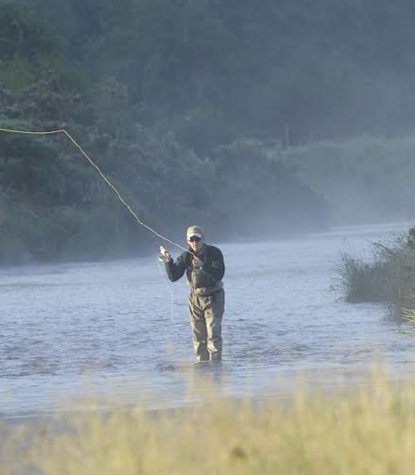

WHAT could be more relaxing than a day’s fishing? A few peaceful hours away from the rat race, spent alone in tranquil surroundings or perhaps an adrenalin-fuelled battle with nature is more your style.
Whichever you prefer, now is the time to start planning for the new season and take advantage of the wonderful fishing opportunities across Wales.
Rob Evans, Freshwater Fisheries Advisor for Natural Resources Wales (NRW), said: “Whether you’re an experienced angler or a complete novice, Wales has something to offer everyone who wants to cast a line.
“Fishing provides a healthy recreational activity for both young and old to enjoy and the variety of physical activity involved in different types of angling makes it a sport for everyone.”
Visit Wales has designated 2016 as the Year of Adventure, and is encouraging both visitors and residents of Wales to try something new and fishing is an ideal way of getting involved.

Rob explained: “For the experienced angler there’s always something new to try – whether it’s one of our breathtaking lakes like Llyn Tegid in Snowdonia and Llangorse in the Brecon Beacons or our wonderful rivers like the Teifi in west Wales and the Wye in the east.
“And for those new to the sport there are hundreds of communitybased angling clubs across Wales providing good value angling and plenty of information online providing help and guidance for anglers of all abilities.”
Tony Rees, of Angling Cymru, added: “It is important that anglers purchase a rod licence and fishing permit as it is this money that will fund projects for improvement to fishing and fish stocks.
“Licence fees also help to fund introductions for new anglers through qualified coaches in Wales.” NRW sell approximatel 55,000 rod licences sold annually in Wales raising some £1.2 million. All revenue is received by

NRW and spent on providing a fisheries service in Wales, and the good news is that there has been no increase in the cost of the licence again.
Rob said: “Whether you are an experienced fisherman or new to the sport you will need a rod licence to fish and the 2016 licences can be purchased on-line, over the counter at all Post Offices and by telephone.
“If you are under 12-years-old you will not need a licence and concessions are available for older as well as less – able anglers.

“In 2015 NRW reported more than 120 people for a variety of fishing offences, the majority of which related to fishing without a rod and line licence.
“We take illegal fishing seriously and we have the legal powers to apprehend individuals, seize any illegal equipment connected to the offence and report them for fisheries offences. If anyone else sees any illegal fishing or something suspicious they should call our hotline on 0800 80 70 60. All information is used in our fight against illegal fishing and poaching.”


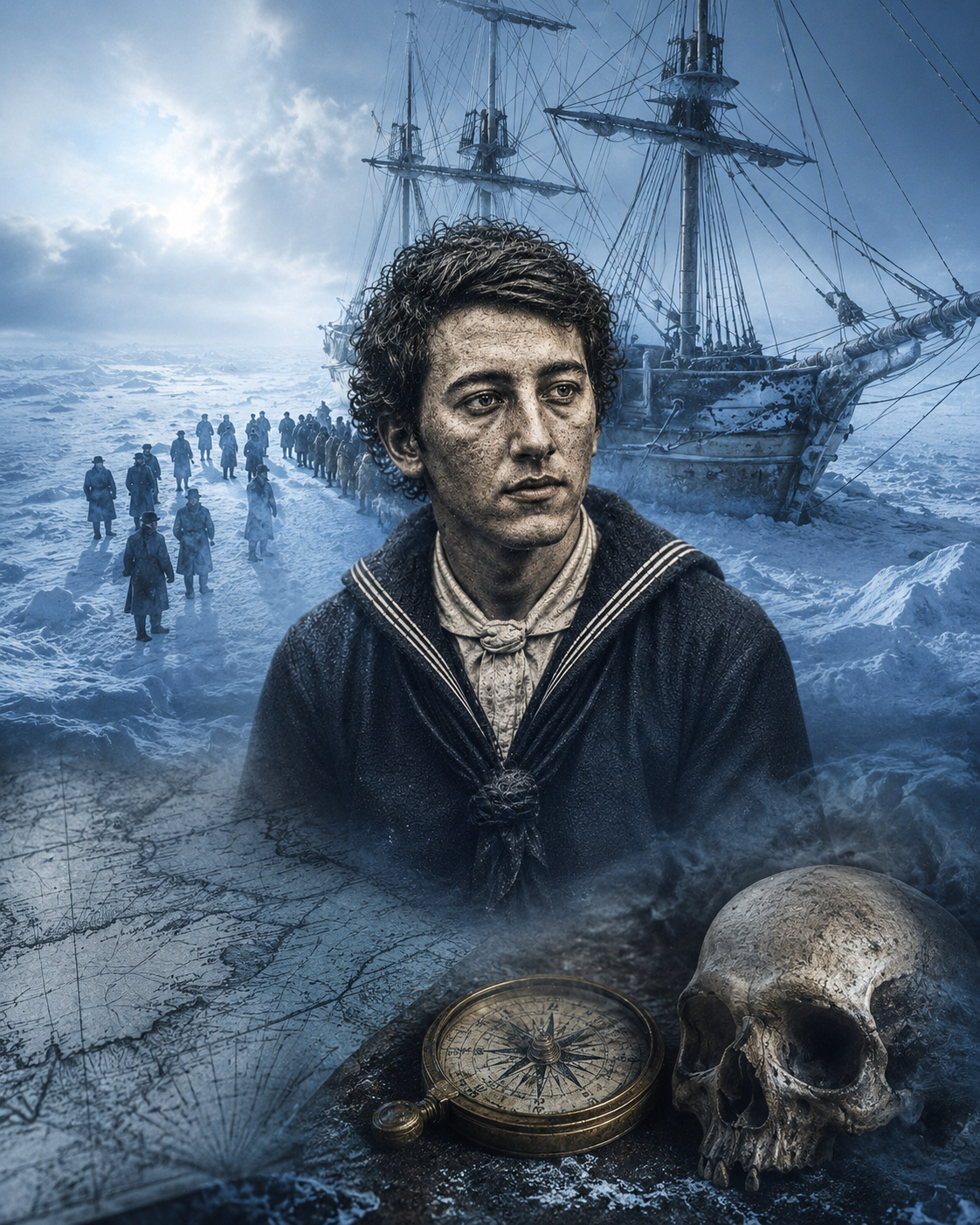
DNA breakthrough identifies cabin boy David Young as exhibition marks 200 years since ship’s launch
ON MAY 19, 1845, a handsome 17-year-old boy boarded the Pembroke Dock-built ship HMS Erebus to begin one of the most tortuous and tragic voyages in modern history.
David Young, like all the other crew members around him, was full of excitement and an unquenchable determination that their Arctic expedition would be equally as successful as Erebus’s previous voyage to Antarctica. There, under the leadership of Royal Navy Captain Sir James Clark Ross, the ship smashed through approximately 134 miles of ice to discover the South Magnetic Pole.
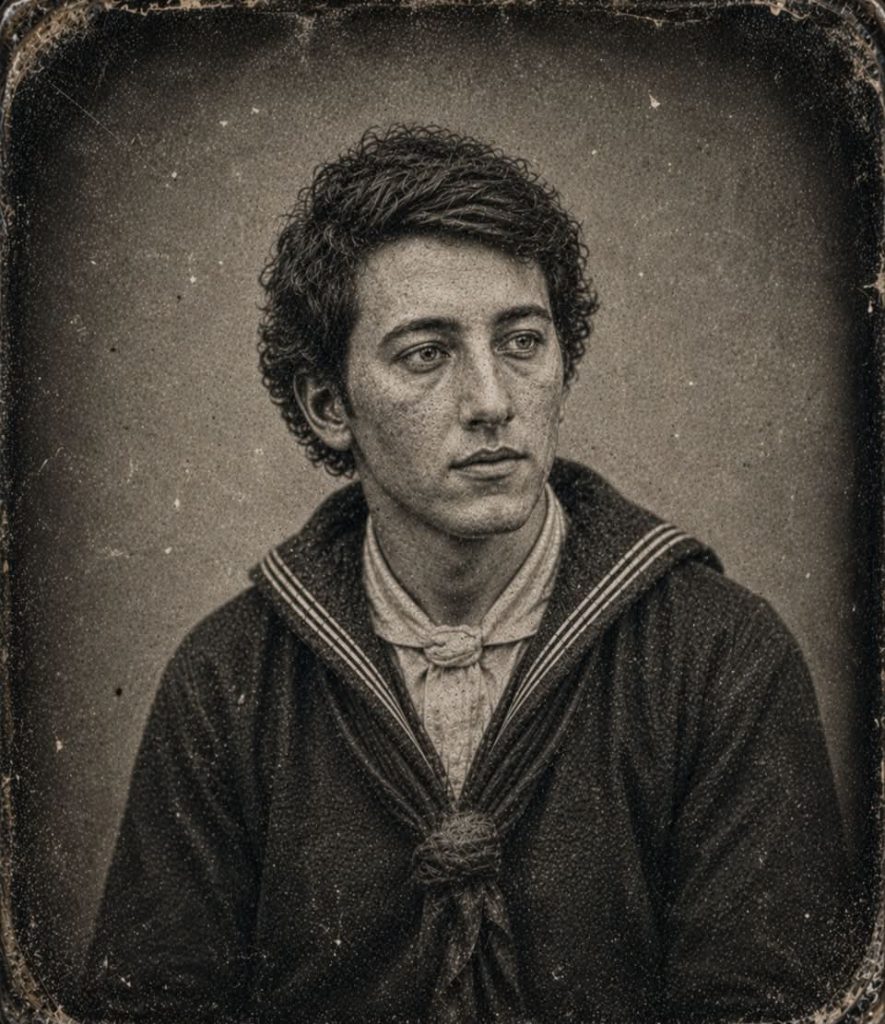
This time, led by seasoned polar explorer Sir John Franklin, Erebus’s 69-strong crew was convinced their expedition to the Arctic would uncover that vital sea trading route between the Atlantic and the Pacific Oceans — the Northwest Passage. But what they did not know was that this would turn into one of the most gruesome voyages known to mankind.
So extreme was the crew’s final desperation, the men were forced to resort to cannibalism in temperatures which dropped as low as minus 48C. HMS Erebus, together with her crew, would never return to UK waters.
But now, following the discovery of 14 sets of human remains near King William Island, DNA tests have traced David Young to his great-great-grandnephew, former professional diver Adrian Young, who lives in Templeton, near Narberth.
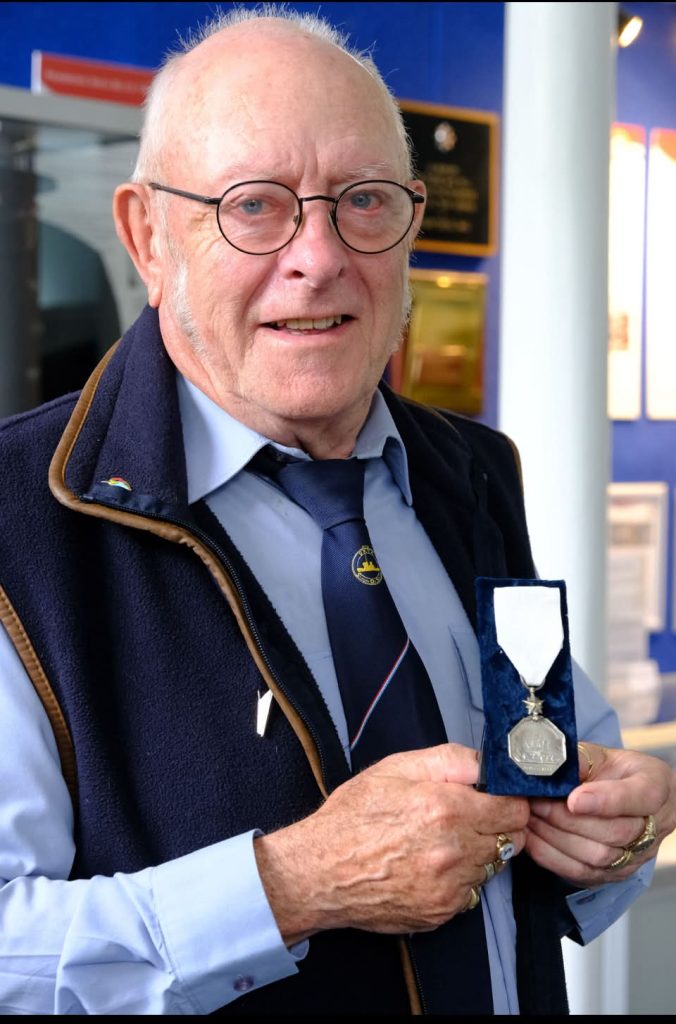
“David was one of 14 human remains that were found at the site, and finally being able to find out just that little bit more about him means so much to me,” Adrian told The Pembrokeshire Herald.
“In my early 20s, when I was doing some archaeological dives on treasure ships in the Scilly Isles, my aunt told me as much as she knew about David Young. And ever since then, I’ve wanted to find out whether there was a family connection.
“David was obviously a very adventurous young man, and I guess this runs in the family. I worked as a professional diver, I was the chief engineer of tugs, and I also once drove a Land Rover all the way to Turkey!”
David, who served as an Erebus cabin boy, was identified by DNA carried out on his skull and, so far, only five crew members have been identified. These include Captain James Fitzjames, whose jawline showed signs of cannibalism.
Built in Pembroke Dock over 200 years ago, Erebus was a Hecla-class bomb ketch measuring 104 feet long, which was less than half the length of a standard man o’ war ship. She took 20 months to build at a cost of £14,603, which equates to £1.25m in today’s money.
Launched from Pembroke Dock in 1826, she embarked on her successful Antarctic expedition and then, on May 19, 1845, sailed from Greenhithe in Kent on Franklin’s quest for the Northwest Passage.
HMS Erebus was both a powerful and luxurious ship, boasting a steam engine and a propeller capable of thrusting the boat at four knots and 25hp. The crew benefited from a heating system and vast supplies of provisions to see them through their expected three-year voyage. These included cattle, sheep, pigs and hens, which were transported on two accompanying supply ships. Erebus also had three pets on board — a monkey given by Lady Franklin, a Newfoundland dog called Neptune, and a cat.

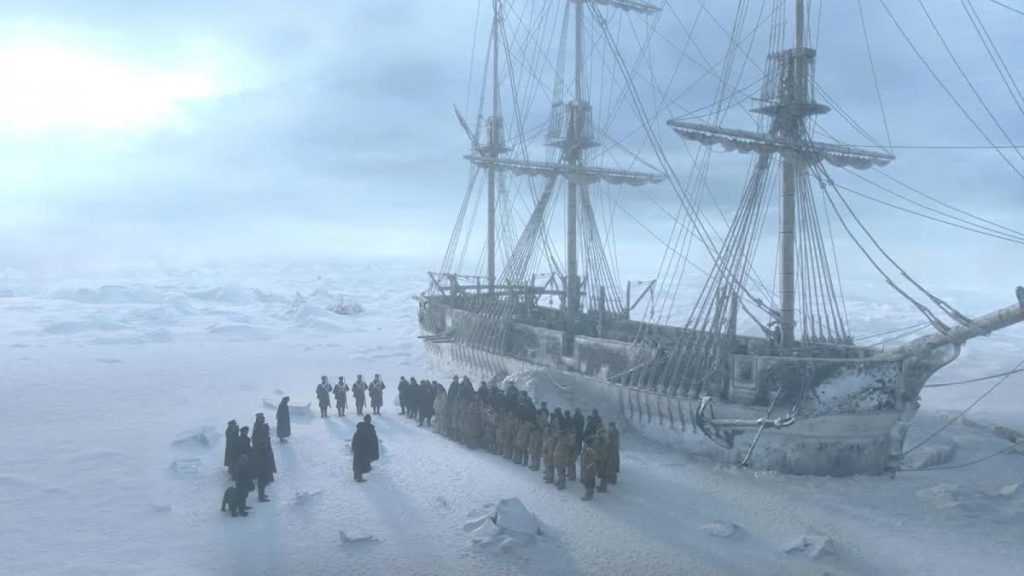
Despite their luxuries, the sailors’ lives, under the zealous eye of Sir John Franklin, were undoubtedly tough. Franklin was an exceptionally focused individual whose aim was to succeed at everything he did. As a result, he pushed his men so hard he earned himself the moniker “the man who ate his boots”. At the age of 59, he was by far the oldest crew member on board HMS Erebus.
The intention was for the ship to overwinter in the ice before continuing to voyage in the spring. But the extreme weather conditions meant there was no thaw, and Erebus was forced to remain in the ice for 19 months. The sailors now found themselves at the mercy of the immense pressure of the sea ice and unpredictable icebergs before HMS Erebus became trapped in the desolate area around Beechey Island. The Inuit rarely visited this region, with the result that the crew could no longer rely on locals for meat, clothing and oil. Temperatures dropped to minus 48C at night and minus 35C by day; even taking off a balaclava could rip the skin and beard from the sailors’ chins.
In a desperate attempt to find water to enable them to move forward, in April 1848, David Young and 13 other crewmen left Erebus, pulling a whaling boat over the frozen sea for approximately 19 miles. This would have been an exceptionally arduous effort for the men, as they had little food and water to retain their energy levels. And despite the freezing temperatures, the men would still have sweated heavily given the weight of the whaling boat; whenever they stopped, the sweat would turn to ice, so it was possible that gangrene may have set in.
Nobody will ever know what finally took David’s life, however, it is likely to have been a combination of starvation, exhaustion and possibly scurvy.
When Erebus went missing, Franklin’s wife put up a hefty £10,000 reward for information, while the Royal Navy offered a £3,000 reward. A total of 36 searches were carried out between 1847 and 1859, with the total number of searches eventually amounting to 52. Erebus was finally located in 2014 by Parks Canada.
“This was massive news, as searches had been going on for so long,” said Adrian.
“And when they dived down, they found the ship was in exceptionally good condition, with most of the artefacts undamaged. This means Erebus is the only surviving ship launched from Pembroke Dock 200 years ago that still survives. So for me, living just a few miles away, it means so very much, particularly knowing that David Young was my great-great uncle.”
Now, to mark the 200th anniversary of the launch of HMS Erebus from Pembroke Dock, the town’s Heritage Centre is hosting a major exhibition celebrating the ship’s extraordinary history. It brings this remarkable international story back to its birthplace, featuring rare artefacts recovered from the wreck, many of which are being shown to the public for the first time, as well as immersive displays, digital interactives, an Arctic diorama and underwater footage from the wreck site.
The exhibition will run from Monday, June 8, until the end of October.


A YOUNG Pembrokeshire man has shared his Duke of Edinburgh’s Award story with HRH The Duke of Edinburgh at Buckingham Palace.
Alex Underwood, 20, from Narberth, was recognised at a Gold Award celebration in the Buckingham Palace Garden on Wednesday, May 20.
Alex, who completed his DofE at Portfield School in Haverfordwest, met the Duke during the event and spoke to him about his journey through the scheme.
When asked by the Duke what stood out most about completing his Gold Award, Alex replied: “The expedition was my favourite. We went in dry and came out wet.”
Alex, who has additional needs, completed his Physical section with Puffins Disability Swimming Squad at his local leisure centre. For his Volunteering section, he supported a charity shop by helping to sort and price items and welcome customers. His Skills section saw him gain hands-on experience in agriculture on a local dairy farm.
He told the Duke how the experience helped build his confidence and encouraged him to continue developing new skills.
Alex said: “I believe that completing DofE gave me confidence in my abilities and I told HRH I am now in college at Ruskin Mill, building more skills through new experiences.
“It all began with saying ‘yes’ to the Duke of Edinburgh’s Award. The Duke gave me a hearty congratulations and it was very nice to meet him.”
Alex has completed Bronze, Silver and Gold DofE Awards and is now a DofE Cymru Youth Ambassador. Last year, he won the Pembrokeshire Association of Voluntary Services Young Volunteer of the Year 2025 Award for his work in the role.
He added: “Before starting I felt a bit apprehensive about whether my learning disability would hold me back, but with support from my DofE Leader and encouragement from my teachers, I soon gained the courage to try new experiences and haven’t looked back.
“I would like to encourage more pupils with additional needs to join DofE as it is for everyone and can help them build new skills.”
The Buckingham Palace celebration was one of four events held over two days, recognising more than 9,000 young people from across the UK who have completed their Gold DofE Award.

The event, hosted by The Duke as Patron of the DofE charity, formed part of the charity’s 70th anniversary celebrations. The palace garden was transformed into a festival-style event, with activities, speakers and special anniversary features.
Guests heard from TV chef and author Jon Watts, presenter and podcaster Sam Thompson, actress Corinna Brown, F1 Academy driver Chloe Chong, musician and presenter Gareth Malone OBE, and sports presenter Hayley McQueen.
Ruth Marvel OBE, CEO of The Duke of Edinburgh’s Award, said: “It’s an absolute privilege to be celebrating our amazing Gold Award holders in the Buckingham Palace Garden today, who through their DofE have shown extraordinary perseverance and resilience, and developed core skills for life.
“As young people navigate an uncertain time, we will continue to champion opportunities that build confidence, resilience and human skills for all young people.”
The DofE is open to young people aged 14 to 24 and involves volunteering, physical activity, skills development, expeditions and, at Gold level, a residential section.
Caption:
HRH The Duke of Edinburgh meets DofE Cymru Youth Ambassadors Nanw Jones (dressed in black) and Alex Underwood (in a suit)

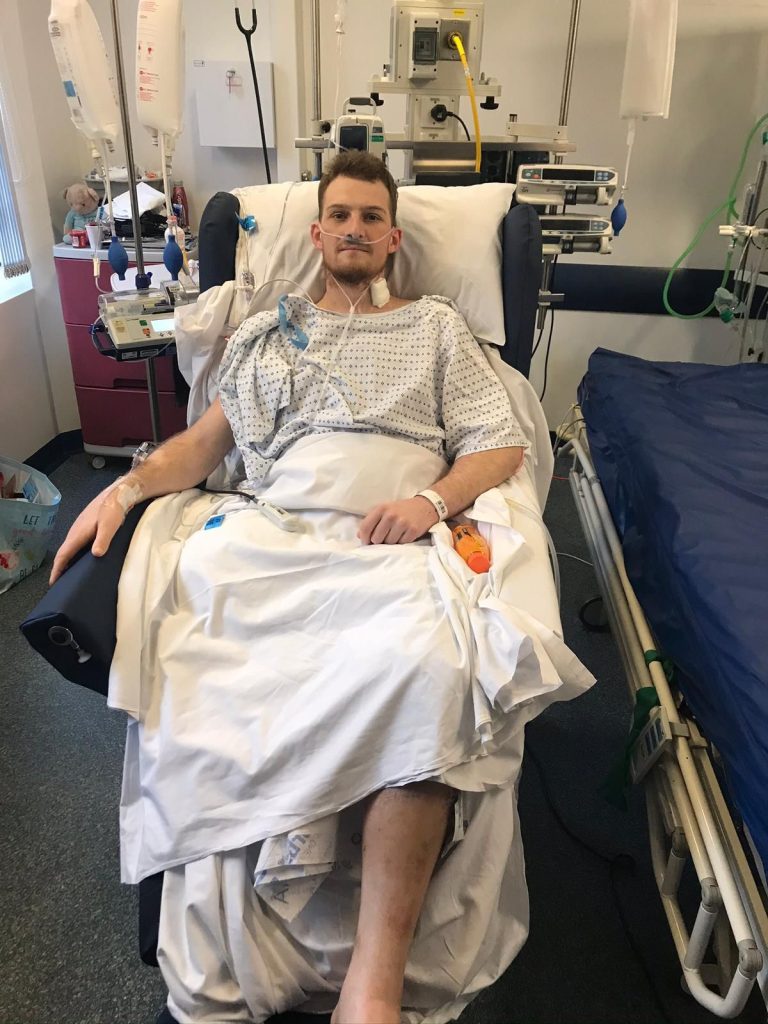
A WELSH crash survivor who needed 100 units of blood after a near-fatal road accident is urging people across Wales to donate during National Blood Donor Week.
Richard Jones, from Neath, lost a significant amount of blood after his truck hit a barrier and overturned in Carmarthenshire in 2020.
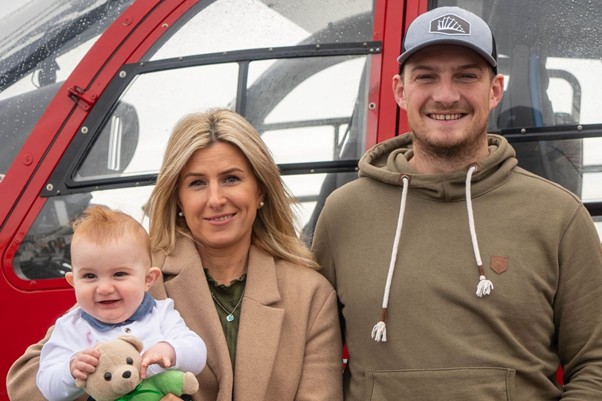
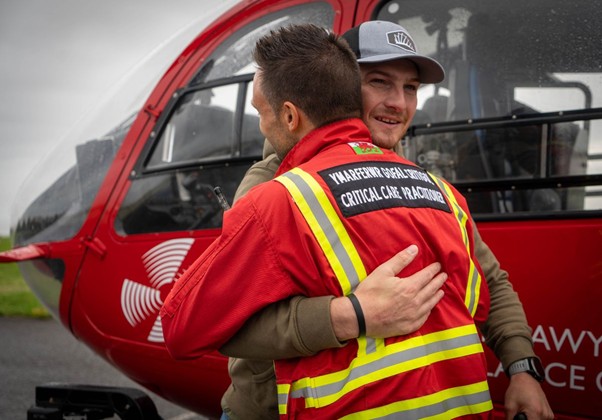
A passer-by, who was a former Army medic, used makeshift tourniquets to stem the bleeding, while other members of the public helped keep Richard conscious until the Wales Air Ambulance arrived.
Medics gave him six units of blood at the roadside before he was taken to Morriston Hospital in Swansea.
Richard spent ten days in a coma and suffered devastating injuries, including a shattered hip, multiple fractures, a torn posterior cruciate ligament and severe trauma to both legs.
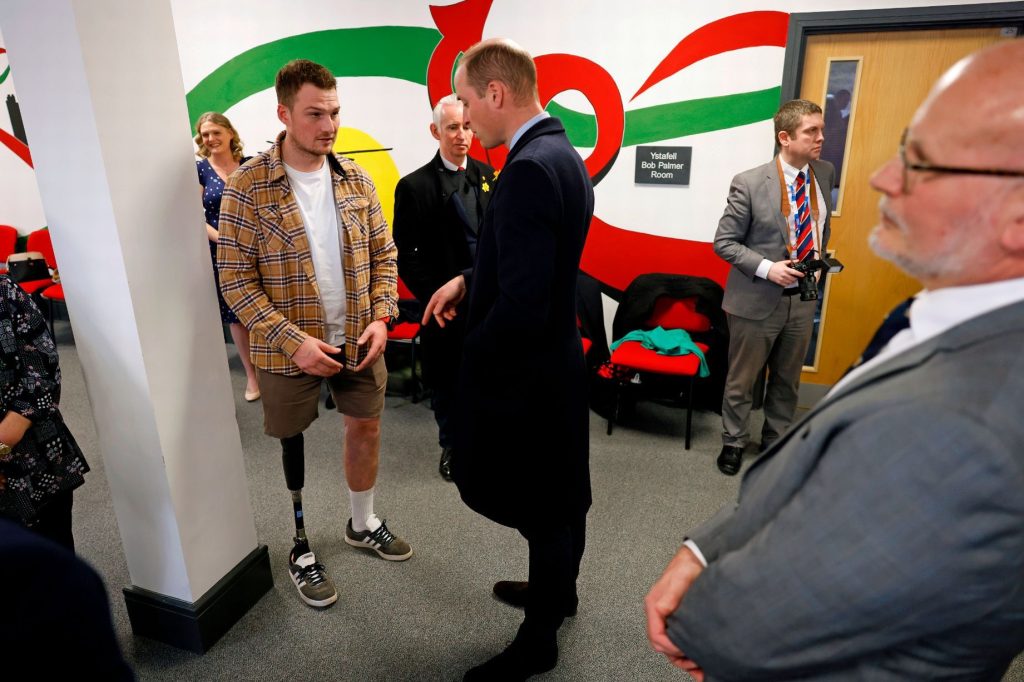
His right leg was later amputated above the knee because of a severed artery. Over the following weeks, he underwent nine major operations and needed a further 94 units of blood.
Now, during National Blood Donor Week, which runs from Monday, June 8, to Sunday, June 14, Richard is thanking the strangers whose donations helped save his life.
Richard said: “At the time, I had no idea how many people it would take to save my life.
“Looking back now, it’s overwhelming to think how many strangers stepped forward to help me.
“I would just like to say a huge thank you to anyone who donates blood. Without you, I wouldn’t be here.
“You never know whose life you’re going to save or change.”
During his recovery, Richard met his partner, Michaela. The couple are now proud parents to their young son, Dougie.

Since the crash, Richard has adapted to life with a prosthetic limb and continues to share his story in the hope of encouraging others to give blood.
Alan Prosser, Director of the Welsh Blood Service, said: “We always say one donation can save three lives, but in Richard’s case, it took a community of lifesavers.

“One hundred units is a staggering amount of blood for one person to receive. It is only possible because people generously give up an hour of their time to help people in need.
“National Blood Donor Week is the highlight of our annual calendar. However, the summer months can be especially challenging, with hot weather and more donors travelling abroad affecting donation levels.
“If you can do it, try giving blood this summer and help people in their time of need, just like our donors helped Richard.”
As part of this year’s campaign, the Welsh Blood Service is bringing back its Missing Type campaign.
First launched in Wales in 2016, the campaign saw brands, businesses, organisations and members of the public remove the letters A, B and O from names and logos to highlight the importance of blood groups.
Mr Prosser added: “The original campaign inspired people across Wales to remove the letters O, A and B from social media names and business logos, encouraging people to imagine a world without these critical blood types.
“The difference it made then, and the conversations it started, are exactly why it is returning now.”
The Missing Type campaign will run throughout June, with National Blood Donor Week at its centre.
To find out more or book a blood donation, visit www.wbs.wales/NBDW26


Community2 hours ago
HMS Erebus tragedy links Pembroke Dock ship to Templeton family
DNA breakthrough identifies cabin boy David Young as exhibition marks 200 years since ship’s launch ON MAY 19, 1845, a...


Community5 hours ago
Narberth cash machine closures spark urgent access review
CALLS have been made for an urgent review of access to cash in Narberth after two town centre ATMs were...


Health19 hours ago
First Minister quizzed on Welsh NHS pressures in his first-ever FMQs
SENEDD Members pressed the First Minister over the state of the health service in Wales, as the Plaid Cymru leader...

Community1 day ago
Historic paddle steamer Waverley to return to Fishguard this month
THE WORLD’S last seagoing paddle steamer will return to Fishguard this month as part of her annual visit to South...


Local Government1 day ago
National Express use of new Haverfordwest interchange still subject to risk checks
A RUMOUR that National Express coaches may struggle to use Haverfordwest’s new transport interchange has been denied by Pembrokeshire County...


Crime1 day ago
Milford Haven man jailed for illegal Premier League streaming service
A MILFORD HAVEN man who supplied illegal Premier League streams and loaded Firesticks to almost 2,000 customers has been jailed...


Community2 days ago
RNLI lifeguards rescue beachgoers during busy heatwave weekend
FOUR PEOPLE RESCUED AS RIP CURRENTS AND OFFSHORE WINDS HIT PEMBROKESHIRE BEACHES RNLI lifeguards in Pembrokeshire rescued four people and...

Local Government2 days ago
Council and school staff pay row could hit Pembrokeshire services
COUNCIL workers, carers and school support staff in Pembrokeshire could be drawn into a growing UK-wide pay dispute after GMB...

Health3 days ago
Hywel Dda to hold second consultation on future of stroke services
A SECOND phase of public consultation is to be held on the future of stroke services across Hywel Dda University...

Community3 days ago
Warning as algal blooms mistaken for sewage on Welsh coast
Beachgoers urged to avoid contact with suspicious foam and report pollution concerns NATURAL RESOURCES WALES has issued summer advice to...
-

 Health6 days ago
Paul Davies warns health board over Withybush and Bronglais services
-

 Crime6 days ago
Carmarthenshire man sent to Crown accused of 33 historic sexual offences
-
Crime1 day ago
Milford Haven man jailed for illegal Premier League streaming service
-
Crime1 day ago
Haverfordwest man admits cocaine offence as Crown disputes basis of plea
-

 Crime6 days ago
Suspended prison sentence for man who left dogs without vet care
-
 News6 days ago
Vehicle destroyed in early morning fire in Pembroke
-

 News6 days ago
Davies calls for NHS foreign language interpreters to be scrapped
-

 Crime6 days ago
Man accused of police station bomb hoax remanded in custody