


Community
Local artist of the week – Will Mills x Hijac


 AFTER growing up in Tenby, 21-year-old rapper Will Mills moved to the big city of London to study advertising, where he met his DJ, Hijac. The Herald spoke with the two musicians while they were visiting Pembrokeshire this week.
They’ve just been booked to play Secret Solstice in Iceland this Summer, where they will be joining names such as Action Bronson, Die Antwood, Radiohead and Lady Leshur.
Will has always loved telling stories, creating and performing and music has always been the easiest outlet for that.
However, he feels that rapping as a profession is so far away from who he is: “Sequential, seaside, town bound, country – I guess I like to break those kind of boundaries. I like to shock.”
Initially, when Will started creating music, he did not rap. He told us: “I made noises with my mouth that Niall, my twin brother, could spit to.

“The first ever line I heard of his was ‘Born, born 1995, it was a hard time kiddin’, beach side house by Tenby we were livin’. We didn’t produce anything for another few years. It was all videos at the start; mobile phone, three megapixel type stuff.”
Jac (Hijac) realised that he wanted to pursue music when he started to hate the idea of committing himself to a job he didn’t like.
“The dream was to pursue a career in a hobby,” he told us, “I became so obsessed with it – it became ridiculous. I’d be on the toilet, listening to new music on Soundcloud just to get my fix.”
Not long after, Jac created his first song ‘Feather-riots’.

“I’d paid a guy off Gumtree £20 an hour to teach me over Skype. I’d like to thank him for this, but I can’t remember his name. We never stayed in touch.”
When Will first started rapping he found that he sounds was very London based, after he’d been to see Wiley in Cardiff.
“Bringing a genre like that to Pembrokeshire is really difficult,” Will said, before stating that he hadn’t achieved the sound he’d been looking for until now.

“Only now can I listen to a track of ours and think, ‘I’d listen to this myself’. Since moving to London I’ve really had the chance to escape those beach-esque, laidback tones and create something I’m proud of – something that pops.”
Jac’s tastes are constantly changing, and his music follows that pattern as a result. Originally, the DJ only made Moombahton, a kind of slowed down version of Reggaeton, but he has since experimented with House, Trap, and testing BPMs.
“I enjoy merging different aspects of genres together,” he commented.
We asked the boys how they would describe their music, to which they replied: “You can definitely dance to it; it’s high energy stuff. I don’t think South Wales has been witness to it before. It’s very different and it’s been harder than it should have been to find a club that accepts it.”
During their live show, Will and Jac always try to project a mix of emotions.
“The goal is to make the audience laugh, dance and cry all in one night. There’s a beginning, middle and end to every show.”
“How does playing in west Wales differ from playing in London?” we asked.
“People tend stare a lot more in Wales, maybe they’re more awake. You can be in London and the audience will lose themselves. Sometimes playing in Wales can feel like you’re holding an assembly, but I like it. It’s attentive. I know they’re listening.”
Will then went on to discuss west Wales’ music scene, stating: “It’s definitely unique right now, but I wish it was easier to infiltrate.”
“It’s so much harder than it should be to get a voice. Maybe if some of the more popular clubs took locals in to play I’d like it. Don’t get me wrong, If you have a guitar, and you can attract a crowd by doing a few covers then you’ll be fine.
“The venues are all so afraid. That’s why I like West Coast Arts in Penally. They’re a celebration of music. Their success as a club takes a back seat. We need this.”
Both of the musicians would like to advise those thinking of creating their own music not to refine themselves.
“I’m as capable as the next guy. I just have to mould myself that way. Try everything. Just have a go,” they said.
We went on to ask: “What has been the most memorable response to your music?”
Will replied: “Probably Annie’s, my girlfriend. We played a local pub over Christmas. She knew every single word. Those gaps where I’d forget, she’d fill. That was amazing.”
“The face of disgust when I showed my friend the first song I created,” Jac said, “I didn’t tell him it was mine. That’s true judgement.”
Will told us that we should definitely be listening to local musician Rye Milligan.
“He’s been there since the start. He uses a loop to fuse so much together. His guts and his presence on stage is undeniable. I caught up with him in London a few months back. We’re the same age, so I guess we’ve had the same experience. We’ve seen improvements in each other and always been honest.”


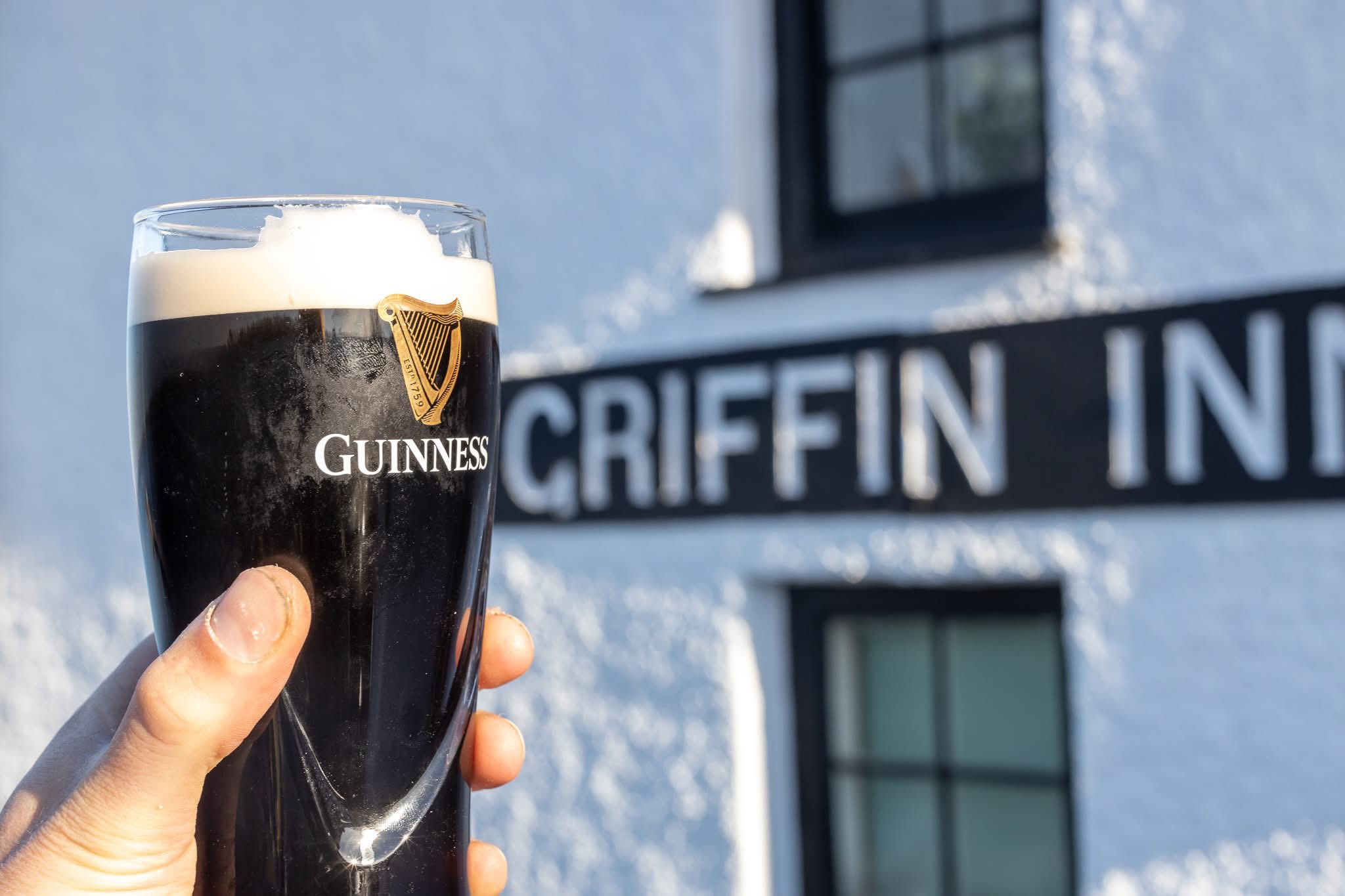
A POPULAR Pembrokeshire pub is reopening its doors this week with a new loyalty scheme aimed at rewarding regular customers.
The Griffin Dale Pembrokeshire will reopen for the season on Thursday (Feb 26), with owners Sian and Simon promising roaring fires, fresh seafood and a warm welcome for returning customers.
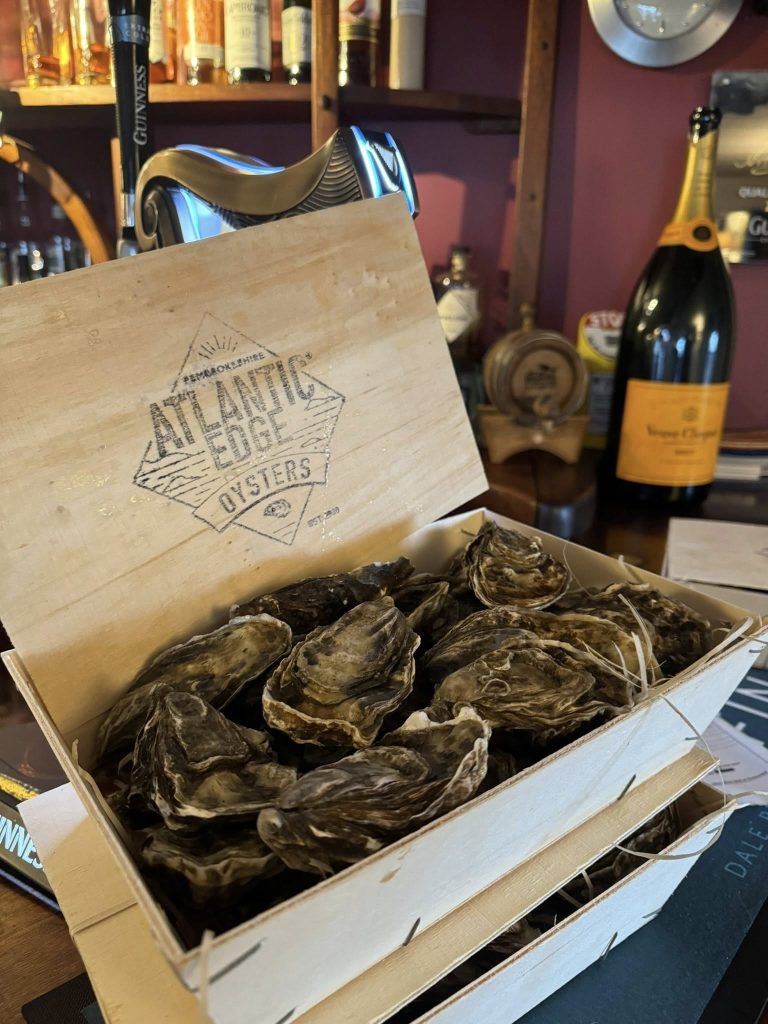
To mark the reopening, the team has launched a new Griffin VIP Club, designed to give regular visitors small perks throughout the year.
The scheme includes a loyalty drinks stamp card, occasional meal offers, discounts on drinks, birthday treats and early access to events and promotions.
As part of the launch celebrations, customers visiting on reopening day will receive a complimentary drink along with 20% off food and drinks during a special “Thirsty Thursday” promotion.
The owners said the club was intended as a simple way of giving something back to loyal customers rather than a formal membership programme.
“We’re so excited to be reopening for the season and welcoming everyone back,” they said. “It’s just our way of saying thank you to those who support us and pop in regularly.”
Customers interested in joining the VIP Club can sign up at the bar when visiting the pub.
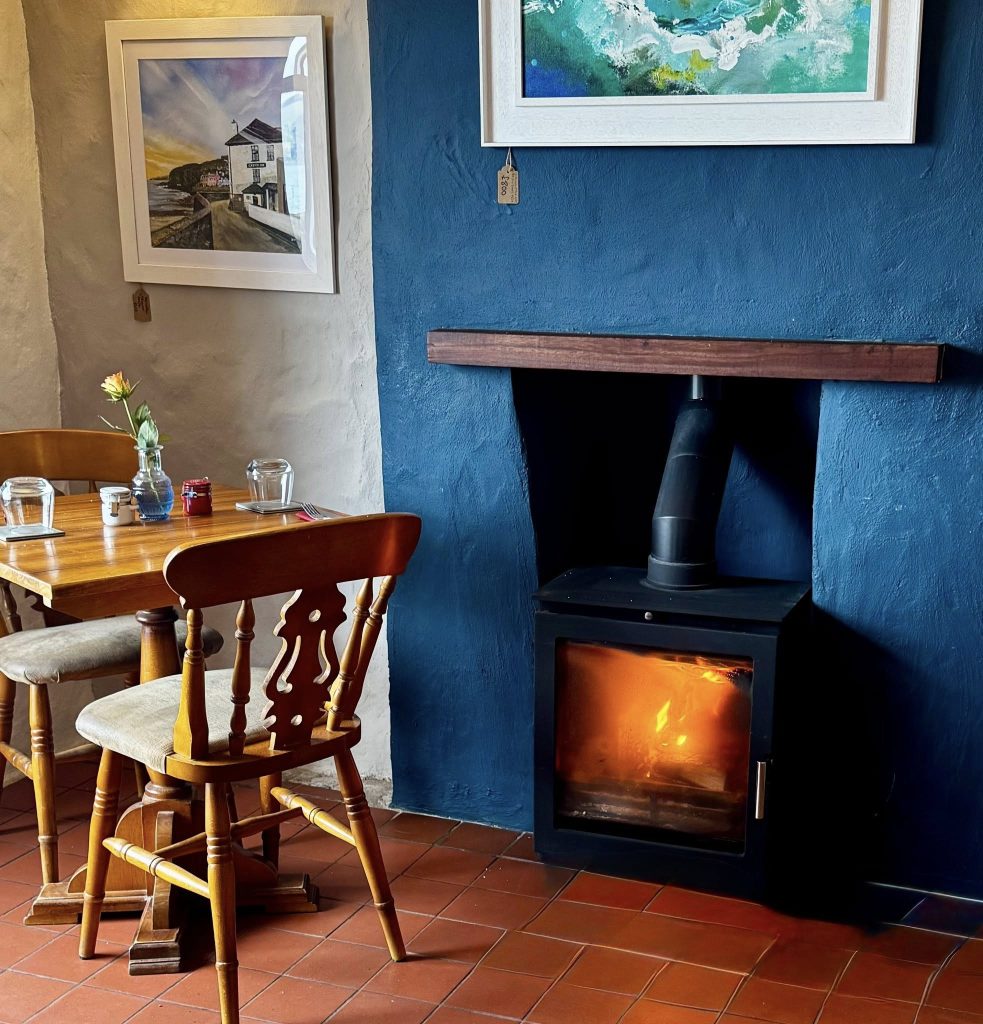
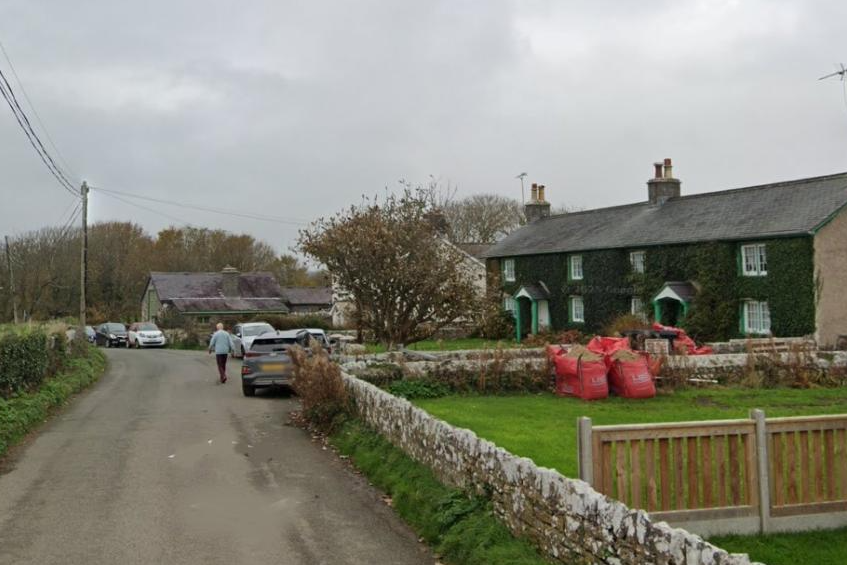
A CALL to allow the selling of alcohol as late as 10pm at a rural beauty spot former village tearoom which objectors fear will “create an absolute nightmare” exacerbating an already growing issue with antisocial behaviour from holidaymakers, has been given the go-ahead.
At Pembrokeshire County Council’s February licensing sub-committee, members considered an application by Sarah Jane Partridge and Robert John Secrett for a new premises licence at Bosherton Bistro, Old World Cottage, Bosherton.
A report for members said it was proposed the premises, formerly a tearoom called ‘Ye Olde Worlde Café’ would open 8am-10pm, selling alcohol from 9am on and off site, seven days a week in the village.
Since the proposal for the site, close to the village pub The St Govan’s Inn, was publicised, 13 objections were received, including Stackpole and Castlemartin Community Council.
In its submissions, the community council said it “will cause a significant public nuisance in the residential area”.
It said the ordinarily tranquil Bosherston, with its neighbouring beauty spot attractions of the lily ponds and St Govans currently has four well-established camp sites “which already frequently cause late night disruption, littering and anti-social behaviour caused predominantly by intoxicated individuals”.
It went on to say: “Instances of aggressive behaviour and trespass are already prevalent within the village by visitors under the influence of alcohol.”
Concerns raised by members of the public included fears of “an increased problem with drunkenness, drink driving and antisocial behaviour,” and it would “make life for the residents in the immediate area an absolute nightmare”.
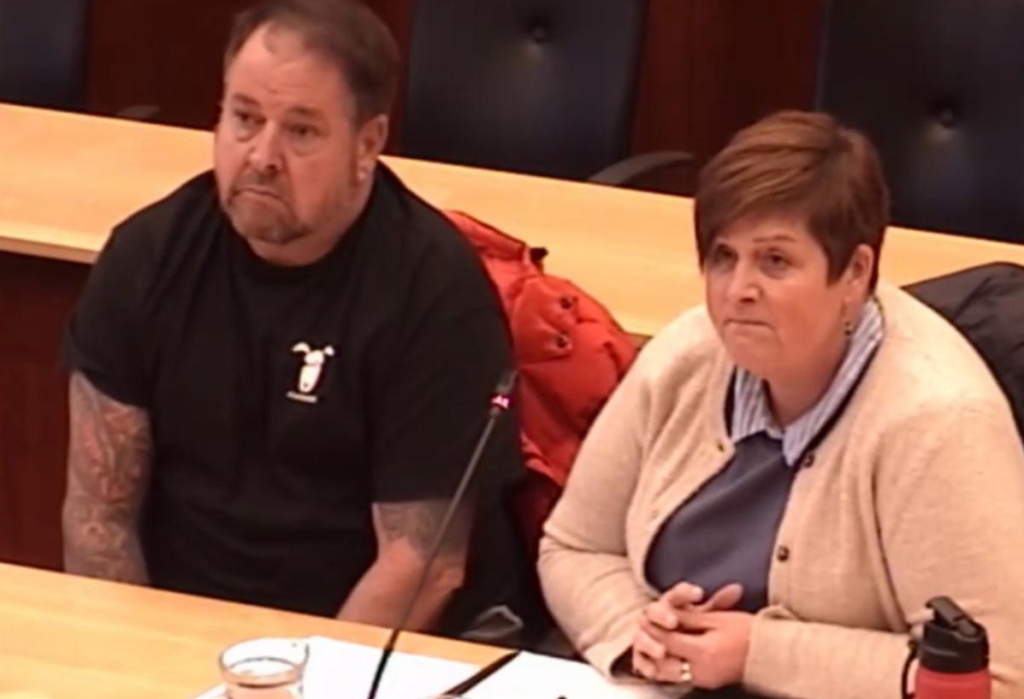
Speaking at the meeting, applicant Sarah Jane Partridge said they shared “the same fundamental aims as the residents,” with the scheme “not about creating a drinking venue but a food-based family bistro”.

She stressed that campers were already able to buy alcohol from the pub, or bring their own to the campsites, adding the 84-cover bistro would introduce safeguarding measures around the sale of any alcohol; off-site sales consisting of ‘gift-set’-style alcohol craft packages rather than “cans of lager”.
Objector Rik Guly said there had been many public order incidents over the years in the 36-home village relating to visitors from the campsites, as well as empty beer bottles, tampons and tins littering the area, one farmer also having his ‘honesty box’ stolen on several occasions; the application “effectively throwing a catalyst for more alcohol consumption and more public disorder”.
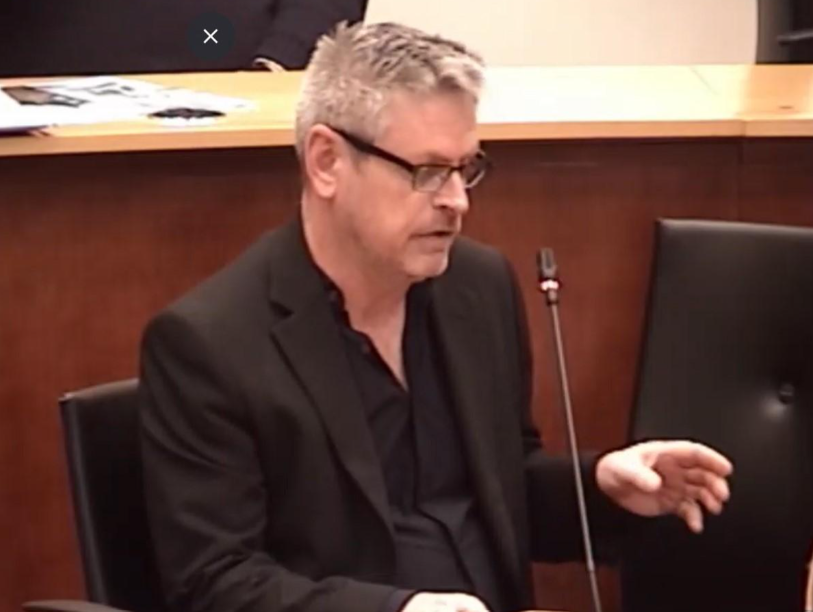
He also raised concerns it could restrict access along the narrow road to the nearby coastguard building for emergency services.
Another objector Clare Strudwick said “almost half the village” was objecting to the scheme which would cause “unacceptable public nuisance”.
Representing the community council, local county councillor Steve Alderman, who once farmed in Bosherston himself, said post-Covid visitor interest in the area had been raised “immeasurably,” with huge numbers attracted to the area.
He said that, while “antisocial behaviour, both physical and verbal” and “a complete lack of respect for what is a marvellous-looking village” was “society’s fault,” the resident’s had a right to enjoy their quality of life.
After the committee deliberated, chair Cllr Tony Wilcox said they had considered the range of objections but considered they were “not of sufficient seriousness to consider rejecting the application”.
The licensing application was approved, objectors hearing that decision could be appealed within 28 days.

RESIDENTS in Howarth Close, Milford Haven, may have noticed an increased police presence in the area on Tuesday (Feb 24), as officers carried out door-to-door visits to promote a new community messaging service.
Members of the Neighbourhood Policing and Prevention Team spoke directly with residents to encourage sign-ups to Dyfed-Powys Connects — a free email alert system designed to keep communities informed about local policing matters.
The service provides updates on crime, antisocial behaviour, policing activity, community events and crime prevention advice tailored to specific neighbourhoods.
Officers say the initiative aims to strengthen communication between police and the public, helping residents stay informed about issues affecting their area.
Residents can sign up to the free service online at: https://orlo.uk/3POxP




News19 hours ago
Hoax 999 call sparks massive lifeboat and helicopter rescue — man arrested
Emergency services diverted from real incidents after false report off south Wales coast A MAJOR sea rescue operation involving three...


Crime22 hours ago
St Dogmaels man jailed over hundreds of indecent images
Previous convictions for similar offences revealed to court A 57-YEAR-OLD man from St Dogmaels has been jailed for two-and-a-half years...


Health22 hours ago
Petition against hospital service changes surges past 6,000 signatures
Public response now far exceeds health board consultation figures A PETITION calling for urgent Welsh Government intervention over services at...


Crime2 days ago
Milford Haven pensioner admits sexually assaulting two shop workers
76-year-old touched victims and kissed one on the neck, court hears A MILFORD HAVEN man has admitted sexually assaulting two...


News3 days ago
Senedd backs assisted dying legislation in historic vote
POLITICIANS in the Senedd have voted in favour of legislation that could allow assisted dying services to be provided through...
Crime3 days ago
Manchester men deny aggravated burglary after armed raid on dog breeder
Prosecution says machete-armed gang carried out “carefully planned” attack TWO men have gone on trial accused of involvement in an...


News3 days ago
Labour and Plaid criticised over £1.2m anti-racism ‘metaverse’ project
Figures revealed in Senedd questions as political row intensifies ahead of election THE WELSH GOVERNMENT has come under political pressure...


Business3 days ago
Local Senedd member hears retailer concerns ahead of election
INDEPENDENT shop owners in Pembrokeshire have warned that rising costs and increasing pressures could threaten the future of small high-street...


Charity4 days ago
Charity launches bid to save Foley House with new community cooperative
A PEMBROKESHIRE charity has launched an ambitious bid to restore Foley House, one of Haverfordwest’s most significant historic buildings, through...
Crime4 days ago
Man who threatened to kill Herald editor given suspended prison sentence
A PEMBROKESHIRE man who sent a message threatening to kill Pembrokeshire Herald editor Tom Sinclair has been given a suspended...
-

 Health6 days ago
Concerns grow over Bronglais stroke plans as politicians demand clarity
-
 Local Government5 days ago
Candidate who withdrew from Hakin race will still appear on ballot paper
-

 Crime5 days ago
BBC documentary reveals local man murdered mother then lived with her body
-

 Local Government6 days ago
First Minister left red-faced as Labour candidate pulls out during Hakin campaign visit
-

 Entertainment6 days ago
New theatre show explores realities of motherhood in Pembrokeshire
-

 Business6 days ago
Pembrokeshire businesses ‘squeezed to breaking point’ amid economic pressures
-

 Crime7 days ago
Hakin man spared jail after sexually assaulting teenage girl
-

 News6 days ago
Thousands of potentially contaminated land sites recorded across Pembrokeshire