


News
Prevention is better than a cure


 The Pembrokeshire Herald spends a day with the Haverfordwest Neighbourhood Policing Team
IT IS VERY EASY to think of the police as an entity in place to fix crime when it happens. Sometimes it slips our minds that a major role of our police force is to prevent crime before it strikes. Designated police officers gather from every station, specifically targeting the prevention of crime and these officers work in the Neighbourhood Police Team.
Sgt Catrin Thomas is the head of a team of four other police constables, along with six police community support officers that make up Haverfordwest’s Neighbourhood force. This team of officers have the responsibility of actively approaching the public in Haverfordwest’s very large geographical area. The town is just the beginning.
Every police officer has a responsibility to protect the public in an emergency situation. If a 999 call comes in then the attention of the officer is immediately prioritised to the alert at hand. The Neighbourhood Policing Team is given a daily brief as to any concerns that the public might have. These concerns may be raised in a well-populated area, or they may be raised in a rural and isolated part of the Haverfordwest sector. All concerns are taken seriously and no report from the public is taken as a ‘waste of time’.
In order to begin to understand the effort of the team, I joined two officers in a visit to a well-established stable in Camrose, to engage with the proprietor.The officers were welcomed as friends due to their continued support of the establishment. PCSO Jude Parr is a keen equestrian herself and the genuine concern, also displayed by PC Simon Davies, is blatantly obvious from the moment they arrived at the premises. These officers were both approachable and genuine and demonstrated that a crime does not have to be committed to build a relationship with the people that often need them the most, when a police station may not be ‘just around the corner’.

There are rural organisations that the team help to maintain. These entities are often not even heard of by the general public. Most people have heard of Neighbourhood Watch but few could claim to know of organisations such as ‘Farm Watch’ and ‘Horse Watch’ that are in place to monitor theft and vandalism of rural enterprises and homes. This idea would not be so successful if it was not for the community officers that help to spread the information needed by the community.
The very presence of officers in rural areas has given individuals the confidence to raise concerns that otherwise would have remained unspoken.
Back in the centre of town, officers are patrolling the streets attempting to create the same approachability that the rural officers achieve. Every day police officers, such as Rachel Wall and Liam Woodford, step out into the public to affirm the goals of the team. To create an approachable and friendly presence that will always take the public seriously. Rachel and Liam (Liam in particular) may seem a little camera shy but they do what they are employed to do. They do it very well.
Whilst joining the two officers around the town of Haverfordwest, it is obvious that they have a wonderful rapport with the people. Rachel and Liam take the time to speak to the general public and the proprietors of local businesses to take action against any concerns that may be present. It is refreshing to see the genuine look on a member of the public’s face when they know that there is someone there to take them seriously.

Back at the station, Ben Thomas, a local volunteer, explained to me the confidence he has built over his short time with the police. Ben is new to the team but he is training to take on the paperwork that sometimes makes a practical job very difficult. He demonstrates very well the fact that all sorts of ingredients make a good product.
Sgt Catrin Thomas obviously cares a lot for her colleagues and for the public that the team stands for. Dyfed Powys area has the least crime of any area in Wales as Catrin explains. In maintaining a community based police force the public can continue to feel in the county that they live in. I must admit, after a day with this team, I certainly believe that to be true.
Do not be afraid to contact your local police force if you have a concern. All of the public will be taken seriously and you have a local team to back you up and help. Please call 101 from your telephone or stop an officer. After all, they are there to help and not to intimidate.



PATIENTS across Wales are being warned to expect higher charges and longer waits for appointments as sweeping changes to NHS dentistry come into force today (Tuesday, Apr 1).
The reforms — described by the British Dental Association (BDA) as “untested” — are expected to reshape how dental care is delivered, but critics fear they could deepen the already serious access crisis.
Dentists say the changes will mean many patients are seen less often, while some treatments will become more expensive at a time when households are already under pressure from rising living costs.
Under the new system, routine check-ups for new patients will rise from £20 to £27.21 — an increase of more than a third — while urgent appointments will increase from £30 to £37.50.
At the same time, recall periods for patients considered to be in good oral health could stretch to 18 or even 24 months, raising concerns that problems may go undetected for longer.
The BDA has warned that the reforms could accelerate the loss of NHS dental services, with some practices already handing back their contracts. In certain areas, more than ten per cent of NHS dental capacity has reportedly been returned by practices unwilling or unable to continue under current conditions.
That loss of capacity is likely to put further strain on remaining services, making it even harder for patients to secure appointments.
Russell Gidney, Chair of the BDA’s Welsh General Dental Practice Committee, said: “From today, many patients across Wales will have to get used to more costly, less frequent dental care.
“But the risk all now face is that utterly untested reforms will push more practices out of the NHS, taking the access crisis from bad to worse.”

The changes come at a politically sensitive time, with the Senedd election scheduled for Thursday (May 7), and mounting pressure on ministers to address long-standing problems in NHS dentistry.
Access to NHS dental care has been a growing concern in recent years, with many patients across west Wales struggling to find a dentist taking on new NHS patients.
The BDA says the reforms have been introduced without sufficient consultation and has called for a pause on full implementation until 2027, alongside a wider rescue package to stabilise the service.

It is also urging the next Welsh Government to commit to increased funding, better protection for vulnerable patients, and a reset in relations with the profession.
The Herald understands that concerns are also being raised locally about whether practices in Pembrokeshire and Carmarthenshire will be able to maintain NHS provision under the new system.
With demand already outstripping supply, there are fears that more patients could be forced to turn to private care — or go without treatment altogether.


Six-hour London to Dublin service proposed in £32bn project ahead of Senedd election
PLANS for a rail tunnel linking west Wales directly to Ireland have emerged, with a company owned by tech billionaire Elon Musk said to be involved in early-stage discussions.
The proposed fixed link would connect Fishguard with Wexford, creating the first direct rail connection between the UK and Ireland.
Sources indicate that The Boring Company has been exploring the feasibility of constructing the tunnel, which could form part of a wider transport corridor linking London and Dublin.
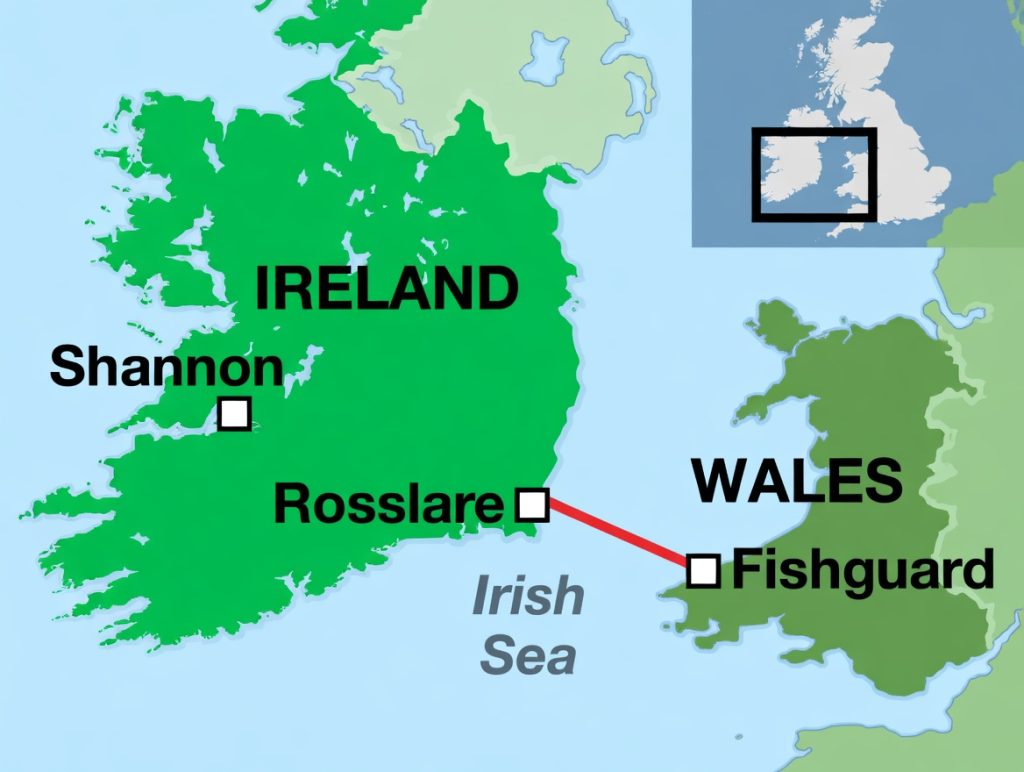
Six-hour London to Dublin service
Under the plans, an express rail service could run directly from London to Dublin in around six hours, significantly reducing current journey times and removing the need for ferry crossings.
Passengers would travel via south Wales before entering the tunnel beneath the Irish Sea, with vehicles transported on specialised rail carriers similar to those used on the Channel Tunnel.

One source familiar with the discussions said: “This would be a game-changer for connectivity between Britain and Ireland. It’s being looked at very seriously.”
£32bn project backed by private investment
The project is expected to cost in the region of £32 billion, with the bulk of funding understood to come from private sector investors.
Sources suggest that both the Welsh Government and Irish authorities would support the scheme through planning, facilitation and long-term guarantees, but that no direct funding has been committed by Westminster.
Insiders say the decision reflects ongoing pressure on UK public finances following the spiralling cost of High Speed 2.


HS2 ‘owes Wales’ debate reignited
The proposal is also expected to reignite debate over whether Wales should have received additional funding as a result of HS2.
Critics have long argued that the classification of the project as an “England and Wales” scheme has denied Wales billions of pounds in consequential funding through the Barnett formula.
One political source told The Herald: “There is a growing view that HS2 effectively owes Wales a major infrastructure investment of its own.”
Election timing questioned
It is understood that the Welsh Government has brought forward the proposal just weeks ahead of the Senedd elections, in what some insiders believe is an attempt to boost support.
With First Minister Eluned Morgan facing a challenging political landscape, sources suggest the announcement of a bold, high-profile infrastructure project could help shift momentum ahead of polling day.
One insider said: “This is exactly the kind of big, attention-grabbing policy that can change the narrative during an election campaign.”
However, the concept of a fixed link between south Wales and Ireland is not new. A 2004 report by the Institution of Engineers of Ireland outlined a “Tuskar route” linking Fishguard and Rosslare via a tunnel beneath the Irish Sea. The proposal, which formed part of a wider long-term transport vision for Ireland, suggested a crossing of around 45 miles (72km) — broadly comparable in scale to the current plans under discussion.
Ferry firms raise concerns
Operators running services from Fishguard Harbour have reacted with concern, warning the plans could have a major impact on existing ferry routes.
An industry source said: “If this goes ahead, it would fundamentally change travel patterns. Ferry services could struggle to compete.”
Questions over Cardiff Airport links
The proposal is also likely to raise questions about the future of existing air routes between Wales and Ireland, particularly those operating from Cardiff Airport to Dublin.
With the Welsh Government owning and subsidising the airport, critics say a high-speed rail alternative could put pressure on passenger numbers.
One observer said: “If you suddenly have a direct six-hour rail service city-to-city, it inevitably puts pressure on short-haul flights.”
Economic boost for west Wales
Supporters of the scheme argue that, if delivered, the project could provide a major long-term economic boost to west Wales, improving connectivity, increasing tourism, and strengthening trade links.
The Herald understands that early projections suggest the scheme could bring significant investment and job creation to Pembrokeshire during both construction and operation.
However, key details — including environmental impact, construction timelines and final funding arrangements — have yet to be confirmed.
A fixed link between south Wales and Ireland has been discussed in various forms for decades, but has never progressed beyond early-stage proposals.
Some within government are said to view the scheme as a way of finally delivering Wales’ share of major infrastructure investment following HS2.

Former offender now helping homeless in Newport outreach programme
A SALVATION Army support worker who spent years caught up in crime and prison has shared a powerful message of hope this Easter — urging others never to give up.
Ray Faulkner, now working on a daily breakfast outreach in Newport, says his life has been transformed after decades of hardship, racism and time behind bars.
Born in London in 1962, Ray was sent to Jamaica as a child due to severe asthma and raised by his grandparents. He returned to the UK aged sixteen, settling in Bristol — where he says he experienced racism for the first time.
Speaking about his early years, Ray said: “I arrived in the city a week after the 1980 riots. It was a volatile place. Getting a job was not easy for a young black lad fresh into the UK from the West Indies.
“It was a culture shock as I’d never experienced racism back in Jamaica. I rebelled and pushed back against life. My anger and aggression got worse. I felt harassed by the police. I was drawn into gangs and street crime and started getting into trouble.”
Despite developing a passion for food while working at a sandwich bar in Bristol market, Ray’s life spiralled into repeated offending, leading to a lengthy prison sentence — which he describes as feeling like a “life sentence”.
He was eventually released in 2018.
After leaving prison, Ray began volunteering, cooking meals for people experiencing homelessness during the Covid lockdown. He later secured a role with The Salvation Army, working on its Breakfast Run — part of The Open Door Project in Newport.
His role involves early morning outreach, providing food and support to people sleeping rough across the city.
“When I came out of prison, I was volunteering and cooking food for people experiencing homelessness,” he said.
“This job was like the heavens opened. My message is don’t give up — there is always hope.
“I go out early in the morning to meet people wherever they are — in tents, alleyways or under bridges. I offer breakfast and a hot drink, but more importantly I try to build trust. My goal is to help people into accommodation and proper support.”
Newport’s Outreach Programme Manager Zoë Mathias said Ray’s journey had made him a vital part of the team.
“Ray’s story is one of new beginnings,” she said.
“After facing racism, hardship and more than 20 years in prison, he chose hope instead of anger. He now uses his own experiences to support people who feel forgotten. He has flourished here and become a valued colleague.”
The outreach programme operates seven days a week and supports around seventy people at any one time. Over the past year, 263 individuals have received help, with around three-quarters moving on to more stable situations.
Latest Welsh Government figures show Newport has one of the highest homelessness rates in Wales. In 2024–25, around 187.9 households per 10,000 were assessed as homeless — roughly one in every 53 households.


Business14 hours ago
Fishguard to Wexford rail tunnel plan backed by Elon Musk firm
Six-hour London to Dublin service proposed in £32bn project ahead of Senedd election PLANS for a rail tunnel linking west...


Charity1 day ago
Milford Haven charity honoured with King’s Award for voluntary service
A PEMBROKESHIRE charity supporting vulnerable young people has received one of the highest honours in the UK for voluntary work....


News2 days ago
Plaid Cymru launches bid to lead next Welsh Government
Party positions itself as ‘government-in-waiting’ ahead of May election PLAID CYMRU has formally launched its campaign for the 2026 Senedd...


Crime2 days ago
Police appeal after attempted child abduction in Haverfordwest
DYFED-POWYS POLICE has launched an appeal for witnesses following a reported attempted abduction of a 12-year-old girl in Haverfordwest. The...


Crime3 days ago
Gunshot fired by police during incident in Milford Haven
A POLICE officer discharged a firearm during an incident in Milford Haven on Saturday evening (March 28), prompting an investigation...


Community4 days ago
Three Amigos Easter Run roars through Pembrokeshire
MOTORCYCLE enthusiasts turned out in force today (Saturday, March 28) as the popular Three Amigos Easter Run returned to the...


Education5 days ago
Ysgol Henry Tudor reassures parents over Sikh ceremonial kirpan
School says religious item worn by pupil is secured, symbolic and non-functional YSGOL HENRY TUDOR has moved to reassure parents...


Crime6 days ago
Teen jailed after starting fire while others slept
Fire set in shared home left sleeping residents at risk and caused £130,000 damage A TEENAGER who started a fire...

Health6 days ago
GP crisis driving NHS pressure in Wales, Senedd report warns
Falling GP numbers and funding gaps blamed for worsening hospital delays THE NHS crisis highlighted earlier this week is being...


News7 days ago
Reform reveals west Wales candidates for Senedd battle
Monkton councillor tops Pembrokeshire list as party confirms Carmarthenshire names and includes Haverfordwest councillor in unwinnable Swansea spot REFORM UK...
-

 News7 days ago
Welsh Government outlines progress on flood resilience plans
-

 Community6 days ago
Hero female officer keeps job after sexual touching finding
-
Education5 days ago
Ysgol Henry Tudor reassures parents over Sikh ceremonial kirpan
-

 Business6 days ago
Popular Italian restaurant hit with £278,000 tax bill plus £186,000 fine
-

 Entertainment7 days ago
Duffy to tell her story in new Disney+ documentary
-

 Sport7 days ago
Record-breaking disability swim gala celebrates success in Fishguard
-

 Health7 days ago
Doctors say Wales is failing to value NHS staff over new pay award
-
 Climate6 days ago
Port Talbot confirmed as ‘cornerstone’ for wind — questions remain for Milford Haven