


News
Red Bull Cliff Diving Series Returns to Abereiddy

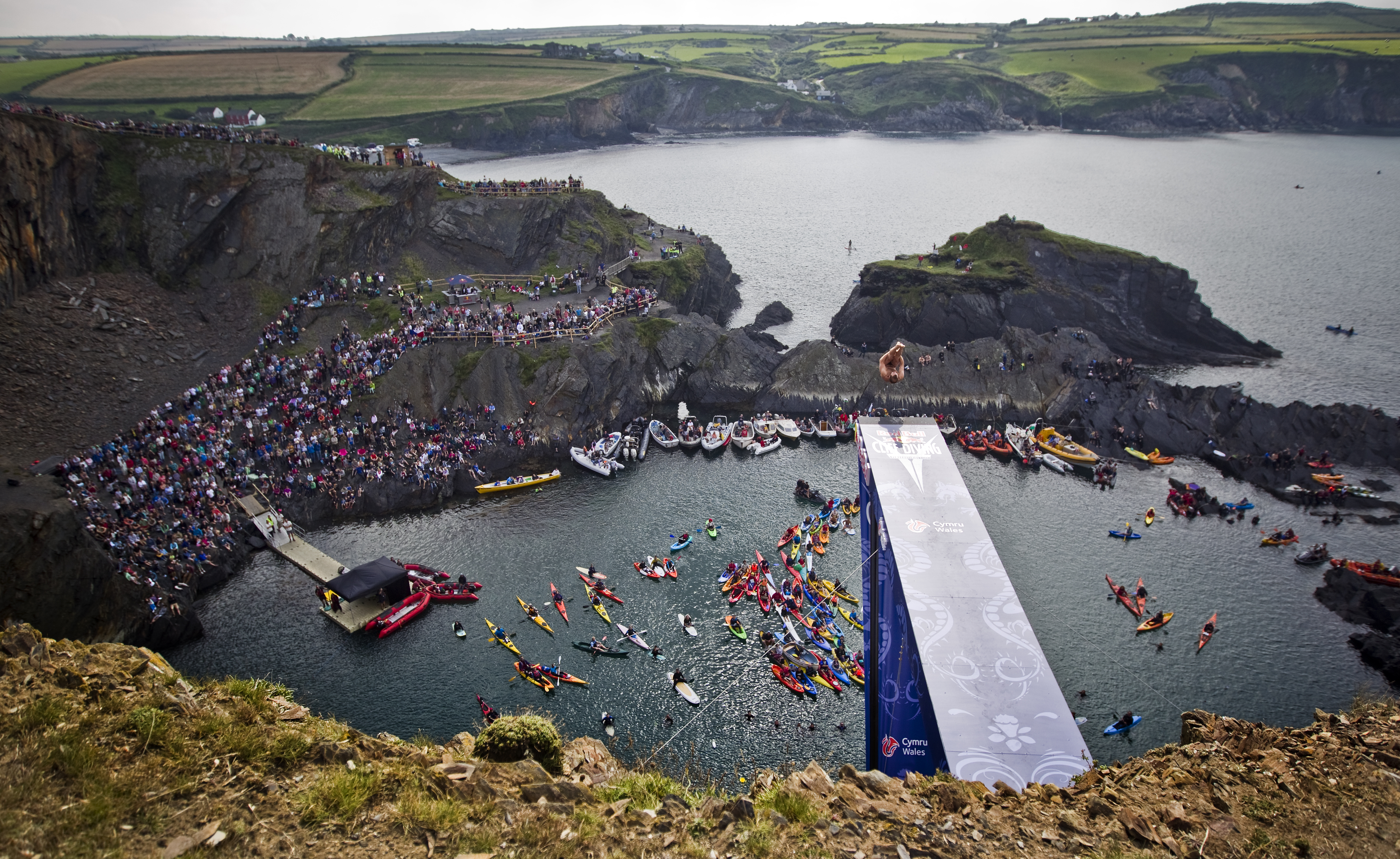
 Untouched rocks, monoliths, iconic landmarks and buildings. This purest extreme sports competition hits new waters in its fifth year and determines a new champion during eight challenging competitions across Europe, Asia and North and South America.
And on 13th and 14th of September, ten of the world’s top divers and four wildcard entrants will compete at Abereiddy’s famous Blue Lagoon as part of the Red Bull Cliff Diving Championship.
What is real cliff diving
In theory cliff diving is jumping from high cliffs into water.
Platforms are used in competition to allow the athletes to do the most difficult dives.
Diving directly from the rocks limits the diver to easier dives. In competitions artistic moves are performed during the dive and judged by a jury identifying the winner.
The discipline has a very long tradition and was “invented” in Maui, Hawaii, back in the 1770s. Within years cliff diving emerged from an initiation tactics for warriors as a competitive sport. However, in the past cliff divers were usually characterized as world-weary kamikazes and the sport was erroneously considered a mere tourist attraction from Acapulco. Cliff diving is far more than Acapulco or a pleasing background for lovely TV commercials; it is a sport, which places the highest demands on mind and body. Many high divers see their discipline as a further development of the Olympic diving competition, which most of them exercised before changing to cliff diving. Through continuous competitions around the globe wide acceptance for this extremely demanding discipline is being established and the athletes are receiving the respect they deserve.
In competitive cliff diving safety plays an important role. Thus, certain regulations have been defined, such as the height limit (28m) and the water depth (at least 5m), as well as emergency scuba divers and paramedic units on site.
Why did Red Bull create a Cliff Diving World Series?
In the past Red Bull used to organise cliff diving competitions always in direct collaboration with the divers. The divers’ feedback and the spectators’ enthusiasm lead to a natural development of single events to a world series with strong locations and the world’s best athletes, providing them with a platform to spread this pure extreme sport all over the world.
When did the World Series start?
The Red Bull Cliff Diving World Series started in 2009 and after four seasons, the championship can look back at 28 successful competitions, more than 460.000 spectators and 1.650 international media on-site, including live broadcasts.
Since the introduction of the World Series the sport of cliff diving has pushed its limits to new heights and the athletes have increased the level of high diving to an extent, which was not even thought of a few years ago.
Why is Red Bull Cliff Diving a high-class sports competition?
The best cliff divers in the world participate in these competitions and the whole set up (at least 26.5 metres or higher and at least 6 stops per year) challenge the divers not only physically but also mentally. The impact of hitting the water after 27 metres of free fall is nine times harder than jumping from a 10m tower. If you are not perfectly trained and experienced you risk your life.
What is the Format of the Competition?
The Red Bull Cliff Diving World Series follows the traditional high diving format and is a mix of the rules from FINA and HDA. Each competition has four rounds in 2 days. Divers hand in their four planned dives the day before the 1st day of competition – dives shall consist of two required dives of a maximum degree of difficulty (DD) of 3.8 and two optional dives assigned a degree of difficulty computed from the HDA (High Diving Alliance) table. These dives are judged by five high diving judges. The highest and lowest score are discarded; the remaining three scores are added and multiplied by the degree of difficulty to provide the total score for each dive.
Ahead of each competition a draw will determine the diving order for the first round. The first round of dives will feature one required dive of a fixed DD of 3.8, the results of which will determine the ranking for the head-to-head. 1st goes against 14th, 2nd against 13th, etc.
In the head-to-head rounds, all divers do one required dive (DD 3.8.) and one optional dive. 7 winners will advance from the head-to-head. There will also be one lucky loser (the diver with the highest score of all losers). The 8 remaining divers will do one final optional dive. The order will be determined by the points accumulated from the first 3 rounds of dives and will be in reverse order. The winner of any individual tour stop will be the diver with the highest points total from all 4 dives.
Winner of the Red Bull Cliff Diving World Series will be the athlete with the hig

Donation bags aim to ease pressure as foodbank demand remains high
WELSH families struggling to afford food during the school holidays are being offered extra support this Easter through a nationwide initiative launched by Tesco.
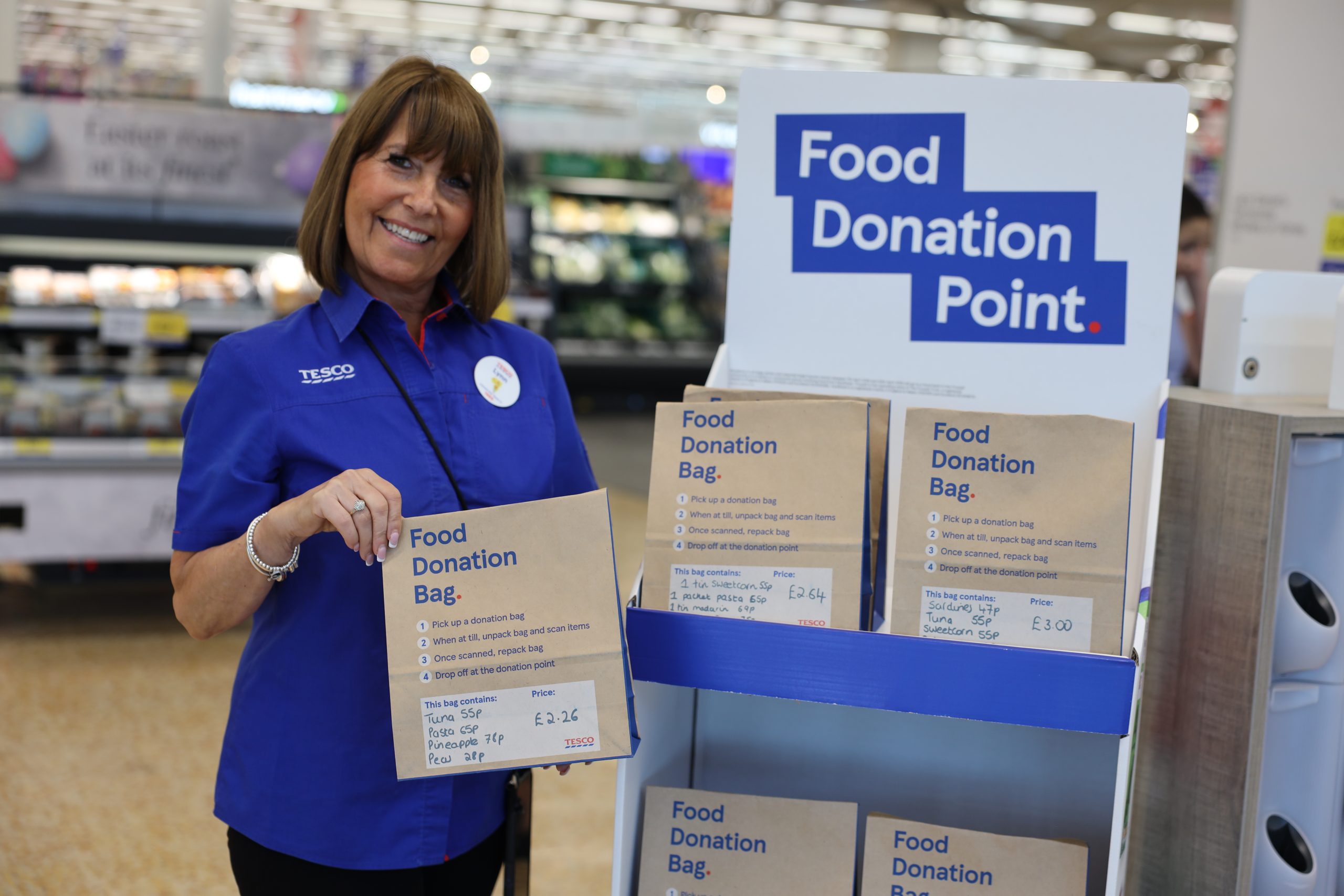
Customers visiting Tesco stores across Wales can buy pre-packed donation bags, priced between £2 and £5, to help families facing financial hardship during the Easter break. The scheme will run from Sunday (Mar 30) until April 12.
The bags contain essential long-life food items and will be distributed to charities including FareShare, The Felix Project and Trussell, helping provide vital supplies to those most in need.
Holiday periods can place added pressure on families who rely on free school meals during term time. Without that support, many parents struggle to ensure their children have access to regular, nutritious food.
Claire De Silva, Head of Communities at Tesco said: “Holiday periods can be really tough for families who miss out on free school meals, making it harder to ensure children get healthy food.

“These donation bags are a simple way for customers to make a real difference, helping provide vital support to families over the school holidays.”
Figures from Trussell show foodbank demand remains significantly higher than before the pandemic, with usage 45% above 2019 levels. In 2025 alone, the network distributed the equivalent of one food parcel every 12 seconds, with families accounting for nearly two-thirds of support.
FareShare and The Felix Project, which have recently merged to form the UK’s largest food redistribution charity, now support more than 8,000 community groups—83% of which work with families and children.
Tesco says it will continue its year-round efforts to tackle food poverty through schemes such as its Community Food Connection programme, which redistributes unsold food from stores, and its Fruit and Veg for Schools initiative, which supports healthier eating in schools with high levels of free school meals.

Matthew van Duyvenbode, Co-CEO at Trussell said: “No one should face hunger. These donations make a real difference, especially during the school holidays when families face increased costs.”
Charlotte Hill, CEO at FareShare & The Felix Project, added: “The school holidays can be especially difficult for parents already struggling. Initiatives like this help ensure more families can access the food they need.”
Tesco customers can also donate additional long-life items in store, including tinned meat and fish, pasta, rice, cereals, soups, and long-life milk.

Critics argue the scheme places the burden on customers at a time when supermarkets are reporting strong profits, while supporters say it provides vital, immediate help to struggling families.

Falling GP numbers and funding gaps blamed for worsening hospital delays
THE NHS crisis highlighted earlier this week is being driven in part by a deepening shortage of GP services, a new Senedd report has revealed.
As previously reported by The Herald, politicians have raised serious concerns about mounting pressure on hospitals, long waits in A&E, and the growing strain on frontline services. Now, a report published on Friday (Mar 27) by the Senedd’s Health and Social Care Committee points to the root of the problem — a weakening primary care system.
The Committee warns that without urgent investment in GP services and preventative care, demand across the NHS will continue to rise beyond capacity.
Sharp decline in GP practices
The report highlights a long-term fall in the number of GP practices across Wales.
In 2002, there were 516 practices operating nationwide. By the start of the pandemic in 2020, that number had dropped to 404. Today, just 374 remain.

The decline has been felt most acutely in rural areas, including west Wales, where fewer practices are now expected to serve growing populations with increasingly complex health needs.
The result, the report suggests, is more patients turning to already overstretched hospital services.
Funding model under pressure
Despite Welsh Government commitments to prioritise community healthcare, the Committee heard evidence that funding has not kept pace with demand.
Concerns were also raised about the current funding formula used for GP practices, which critics say fails to properly reflect deprivation, illness levels and the challenges of delivering care in rural areas.

Without reform, the Committee warns that general practice risks becoming unsustainable, with inequalities in access likely to widen.
Access frustration growing
Patients across Wales continue to face difficulties accessing GP appointments, with the so-called “8:00am scramble” remaining a major source of frustration.
Older patients, those in work, and people with caring responsibilities are among those most affected.

The report also points to concerns about reduced continuity of care and shorter appointment times, contributing to declining public confidence in GP services.
Hospitals feeling the strain
The findings reinforce concerns raised earlier this week about pressure on emergency departments and delays in care.
By failing to invest sufficiently in primary and preventative services, the report suggests more patients are reaching crisis point — increasing demand for hospital treatment that could otherwise have been avoided.
Call for urgent action
The Committee is calling on the Welsh Government to shift more healthcare services into the community, backed by sustained investment and reform of the funding system.
Committee chair Peter Fox said: “General practice and primary care are the cornerstone of our NHS.
“If we are to ease the growing pressures across the whole health system, we must ensure people can access services closer to home and receive treatment earlier.”
Healthcare leaders, including the British Medical Association and the Royal College of General Practitioners, have also warned that without decisive action, GP services will continue to deteriorate.
The report concludes that unless primary care is strengthened, pressure on hospitals will continue to grow — leaving patients facing longer waits and reduced access to treatment.
Monkton councillor tops Pembrokeshire list as party confirms Carmarthenshire names and includes Haverfordwest councillor in unwinnable Swansea spot
REFORM UK has unveiled its full list of candidates for the 2026 Senedd election, setting out its challenge across west Wales including Pembrokeshire and Carmarthenshire.
The party has named Susan Claire Archibald, a sitting councillor for Monkton on Pembroke Town Council, as its lead candidate for the Ceredigion Preseli, Mid and South Pembrokeshire regional list.
Speaking to The Herald, Archibald said: “I am honoured to represent Reform UK and Wales.” She added that a fuller statement outlining her priorities would be released in due course.
The remaining candidates on the Pembrokeshire regional list are Paul Marr, a former prison officer, Michael Allen, Elisa Randall, Peter John and Bernard Holton.
Carmarthenshire candidates named
Reform has also confirmed its list for the Caerfyrddin and Llanelli region, with Gareth Beer placed first, followed by Carmelo Colasanto, Sarah Edwards, Christopher Brooke, Alan Cole and Michelle Beer.
The announcement forms part of a nationwide rollout of candidates as the party seeks to establish itself as a credible electoral force ahead of the 2026 vote.
Thorley listed in Swansea region
Among the names included elsewhere is Scott Thorley, a Haverfordwest-based councillor and the first Reform representative elected to Pembrokeshire County Council.
Thorley appears on the party’s list for the Gower and Swansea West region, where he is placed sixth.
Under the Senedd’s proportional representation system, candidates placed lower on regional lists are significantly less likely to be elected, meaning his position is widely viewed as a paper candidacy to complete the slate.

Election framing
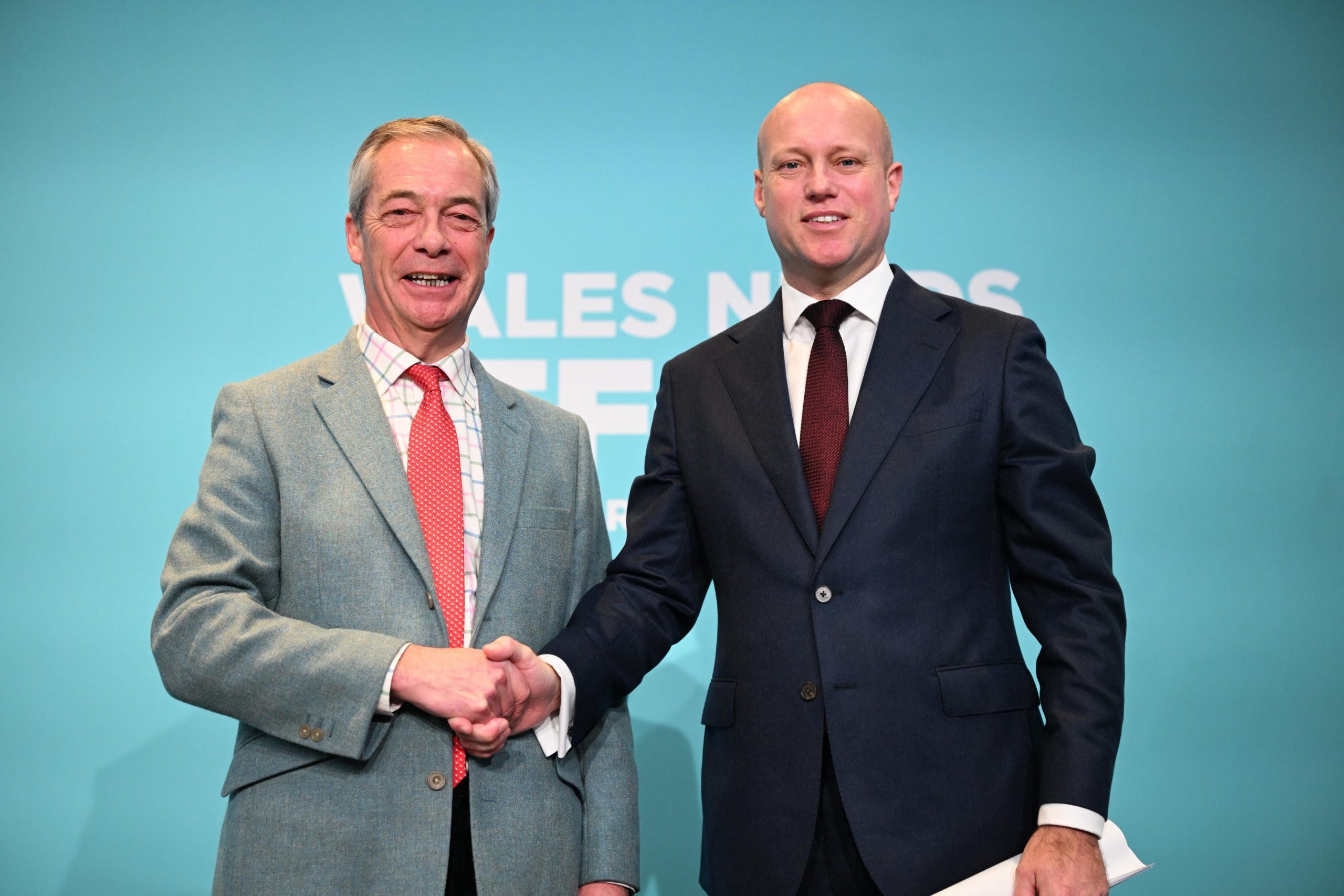
Reform Wales leader Dan Thomas said the party was offering voters a stark political choice.
He said: “After a hundred years of failure, Labour are finished in Wales. The choice at this election is what comes next — common sense and a fresh start with Reform, or independence by stealth with Plaid Cymru.”
The Herald understands that further announcements, including candidate profiles and policy details, are expected in the coming weeks as the campaign begins to take shape.



Health11 minutes ago
GP crisis driving NHS pressure in Wales, Senedd report warns
Falling GP numbers and funding gaps blamed for worsening hospital delays THE NHS crisis highlighted earlier this week is being...


News18 hours ago
Reform reveals west Wales candidates for Senedd battle
Monkton councillor tops Pembrokeshire list as party confirms Carmarthenshire names and includes Haverfordwest councillor in unwinnable Swansea spot REFORM UK...


Health1 day ago
Clash over Withybush Hospital services as Paul Davies challenges First Minister
A HEATED exchange in the Senedd has laid bare growing tensions over the future of hospital services in west Wales....


Crime2 days ago
Police stop car in Pennar as three arrested in drugs investigation
Suspected drug driver report leads to major police response and multiple arrests DRAMATIC scenes were reported in Pennar on Monday...

Business2 days ago
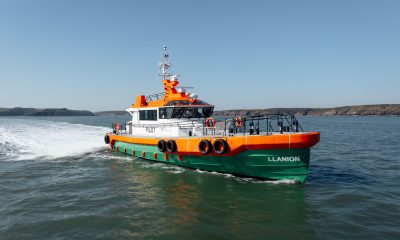
New pilot vessel Llanion arrives at Milford Haven
State-of-the-art 22-metre craft marks reset after £3.6m pilot boat controversy THE PORT OF MILFORD HAVEN has taken delivery of a...


Community2 days ago
Sycamore Gap legacy tree to take root in Pembrokeshire landscapes
A SAPLING grown from the famous Sycamore Gap tree is set to become part of Wales’ protected landscapes — with...


Business3 days ago
Could Primark be coming to Haverfordwest? Major retailer in talks for former Wilko site
Council confirms advanced discussions as speculation grows over high street boost HAVERFORDWEST could soon see a major high street revival,...


Business3 days ago
Rail investment ‘could unlock 40,000 jobs and £11bn for Wales’ says new report
RAILWAY stations across Wales could help unlock around 40,000 jobs and more than £11 billion for the economy by 2036,...


Local Government3 days ago
Milford Haven set for £200m investment with schools, leisure centre and rail upgrade
Council outlines major plans for town with backing from Welsh Government MILFORD HAVEN is set for a major transformation with...

Community4 days ago
Broad Haven volunteers secure ‘national asset’ status for nature reserve
A SMALL stretch of woodland and former opencast coal mine has been transformed into a nationally recognised biodiversity site, in...
-

 Health7 days ago
NHS waiting list falls — but cancer delays and diagnostic backlog worsen
-

 Crime6 days ago
Pembroke man remanded in custody over knife threat, assault and damage allegations
-
 Crime7 days ago
Illegal workers found at Cardigan takeaway after immigration raid
-

 Crime6 days ago
Broad Haven man remanded in custody over sexual harm prevention order breach
-

 News7 days ago
Council unveils plans for new state-of-the-art secondary school in Milford Haven
-

 Education7 days ago
Milford Haven school plans unveiled but funding not yet secured
-

 Farming7 days ago
£3 million secured to continue Welsh sheep genetics programme
-

 Community7 days ago
Former Neyland police officer Louis Knight dies aged 83