


News
Pentre Solar: Groundbreaking solar village

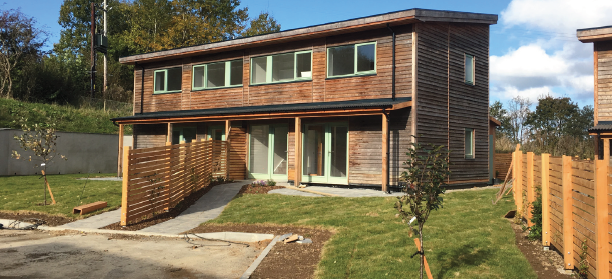

The finished product: A ‘Ty Solar’ at the Pentre Solar hamlet
PEMBROKESHIRE is set to be the home of the first solar village in Wales.
The village, named Pentre Solar, is situated at the Rhosygilwen estate and comprises six affordable houses which will use just 12% of the energy of a traditional home.
Funded by private sector company Western Solar, each three bedroom home has a modern design featuring a fitted kitchen, superfast broadband (as well as satellite and Freeview TV connections), a landscaped garden and, most interestingly, access to a shared electric car.
A highly innovative project, 80% of the heating needs for all of the properties will be provided by solar energy, meaning extremely low energy costs for future tenants. Adding to the sustainable nature of the build, the all timber homes also feature 11 inch insulation.
In an effort to address the affordable housing crisis in Pembrokeshire, the properties will be available for rent to those on the council housing register – and at 20% below the rental market rate. Those hoping to apply will need to have connections with the surrounding parishes; however, beyond that criteria, the houses will be allocated on a first come, first serve basis.

The idea behind the ‘revolutionary concept’, according to Western Solar, is to ‘build a truly sustainable business that can benefit the local community’.
The Herald was able to speak to the man behind the ambitious development, Western Solar CEO and 2015 Eco Entrepreneur of the Year, Dr Glen Peters. As well as finding out a bit more about his links with Pembrokeshire, we discussed issues around affordable housing, the need for sustainable development, existing practices of the building industry, and future plans for Western Solar.
Having worked in London for some 35 years – and lived in Pembrokeshire ‘on and off’ for the last 20 years – Glen described how he ‘gradually fell in love with Pembrokeshire’, and has now based himself here full-time.
Discussing the need for a development such as Pentre Solar, Glen said: “There is unlimited demand for this – there are so many people in dire need of good quality housing.”

Admitting he wasn’t entirely sure of its accuracy, Glen referred to a statistic by Pembrokeshire County Council which estimated that the county is currently in need of some 6,000 homes.
One of the major obstacles in providing affordable housing, according to Glen, is ‘finding affordable land’.
He added: “Most of the available land to build on has been snapped up by developers.

“For a house to be affordable, you can’t have a plot that costs fifty to a hundred grand.”
Seemingly undeterred by this financial obstacle, Glen stated: “For every problem, we have to find a solution.”
The solution in this instance, Glen added: “Local authorities need to release the land banks that they have.”
Elaborating on this comment, Glen went on: “This is not ripping up green fields; this is disused properties. The whole concept of Pentre Solar is small little hamlets.”
Another issue which Glen found during the Pentre Solar development is a certain objection by financial institutions towards the building materials used for the project.
“This is not a traditional build; this is not bricks and mortar, so building societies don’t want to lend. “There is a physical barrier that we need to overcome about all timber houses.”
Developing on this idea, the question was posed as to how this new strategy for housing provision could change building industry practices in the UK.
Reiterating a previous point, Glen said: “The existing supply chains are all based around bricks and mortar; all the skills and all the trades are geared towards that as well.”
Contrary to modern practice, Glen emphasised: “Carpentry is the core skill for the house.”
With reference to ‘critical mass’, the eco entrepreneur went on to suggest the need for greater training and apprenticeship schemes for carpentry practices.
At the heart of the entire development is the theme of sustainability, with Glen stating: “The concept of recycling is very much at the core of our proposition. We’re recovering paper and using that as insulation – it’s all about trying to recycle, either the land, the insulation, the timber; we need that supply chain to be able to provide that.”
While the design for Pentre Solar was developed around sustainability, Glen admitted that not every aspect of the design was able to be implemented into the build. One such design was ‘rainwater harvesting’, a method of collecting rain and reusing it during the summer months.
With an eye on the future, Western Solar appear to have big plans in the pipeline. With reference to a comment about building 1,000 sustainable, affordable homes in the UK, Glen said how this falls under the company’s 10 year plan.
The company is also operating a three year plan which, if successful, will see the development of 100 homes ‘largely between counties in West Wales – Pembrokeshire, Carmarthenshire and Ceredigion’.
Glen added: “The most important things are access to land and the finance. The idea would be to create another hub in Wales and replicate the same idea somewhere else.”
Building on this point, Glen said: “When we’ve got used to the idea of replication with the same system repeatedly, then we think we could get to our target of 1,000.”
Reflecting on the finished product of Pentre Solar, Glen said: “I’m very pleased – it’s one of those things with any project, you go through enthusiasm, excitement, and then you reach a point were you feel destroyed, and then suddenly you see light at the end of the tunnel.”
“The reality is absolutely amazing.”
Glen is currently looking for sites for his next development, stressing: “We need to work on our relationships within the local authority.”
Pentre Solar is not the first green initiative that Glen has received praise for; he was also behind the first ever ‘solar park’ in Wales. Completed in 2011, the near 10,000 strong solar park – which used cutting edge technology imported from the United States – is designed to utilise the often cloudy weather of the area.



Vote.wales to host all essential election information for the Senedd election
A BRAND new voter information website, vote.wales, has been launched today (2 March) by the Electoral Management Board for Wales, part of the Democracy and Boundary Commission Cymru.
Vote.wales is the first website of its kind in Wales and tells people everything they need to know about the election, including advice about voting, information about the Senedd, and a postcode search function to provide tailored local information.
The website holds information about who can register to vote, how voting works in polling stations, as well as postal and proxy voting, and what accessibility support people can expect when they go to vote.
A postcode search function on vote.wales allows voters to see which of Wales’ 16 new constituencies they will be voting in, as well as telling them where their local polling station is located.
Once nominations have closed, the website will also inform voters which political parties and independent candidates are standing in their area.

The website explains how the Senedd works and what it does, highlighting which policy areas are devolved to the Senedd and which remain the responsibility of the UK Parliament. It also sets out the difference between the Senedd and the Welsh Government.
Further developments are expected in the coming weeks. In a first for Welsh elections, voters will soon be able to access detailed accessibility information about their local polling station. Political parties and independent candidates will also be able to publish their election leaflets on the platform, so voters can see not only who is standing but what they stand for.
Following the election, vote.wales will publish the full election results.
Commenting on the launch, Shereen Williams MBE OStJ, Chief Executive of the Democracy and Boundary Commission Cymru, said:
“An important election is coming on 7 May, and vote.wales is the place to go to find out all about it.
“We know that people across Wales are looking forward to making their voices heard at this election, but many people don’t feel they have all the information they need before they go and vote.
“If you have questions about this election, then head to vote.wales. Voting confidence starts here.”


THE POLICE investigation into the serious incident which happened on Felindre Road, Pencoed, in the early hours of Saturday, February 28, is now being treated as murder.
We can confirm the 58-year-old man who was critical in hospital passed away earlier today – his family are being supported by specially trained officers at this time, and our thoughts are with them.
The Major Crime Investigation Team at South Wales Police is now leading the investigation, and the 26-year-old man arrested remains in police custody.
Detectives investigating the incident are appealing to anyone who may have been in the vicinity of Felindre Road, Pencoed, between midnight and 5am on Saturday to get in touch.
Motorists are urged to their check dashcams for any footage which may be relevant.
Detectives would like to speak to two potential witnesses – two elderly people who are believed to have walked along Felindre Road between 12.30am and 4am on Saturday.
Detective Inspector Graham Williams, from the Major Crime Investigation Team, said: “Sadly, a 58-year-old man has died in hospital following the incident on Saturday morning. Our thoughts are with his family at this time and they are being supported. I would like to reassure the local community that we have somebody in custody and are not looking for anybody else at this time. I thank everyone in the community who has helped our investigation so far, and I urge anyone with information which may be relevant to our investigation – particularly the two potential witnesses – to get in touch.”
If anybody does have information, they should contact 101 quoting reference 2600063517. Alternatively, they can submit information via the Major Incident Public – https://mipp.police.uk/operation/62SWP26C30-PO1
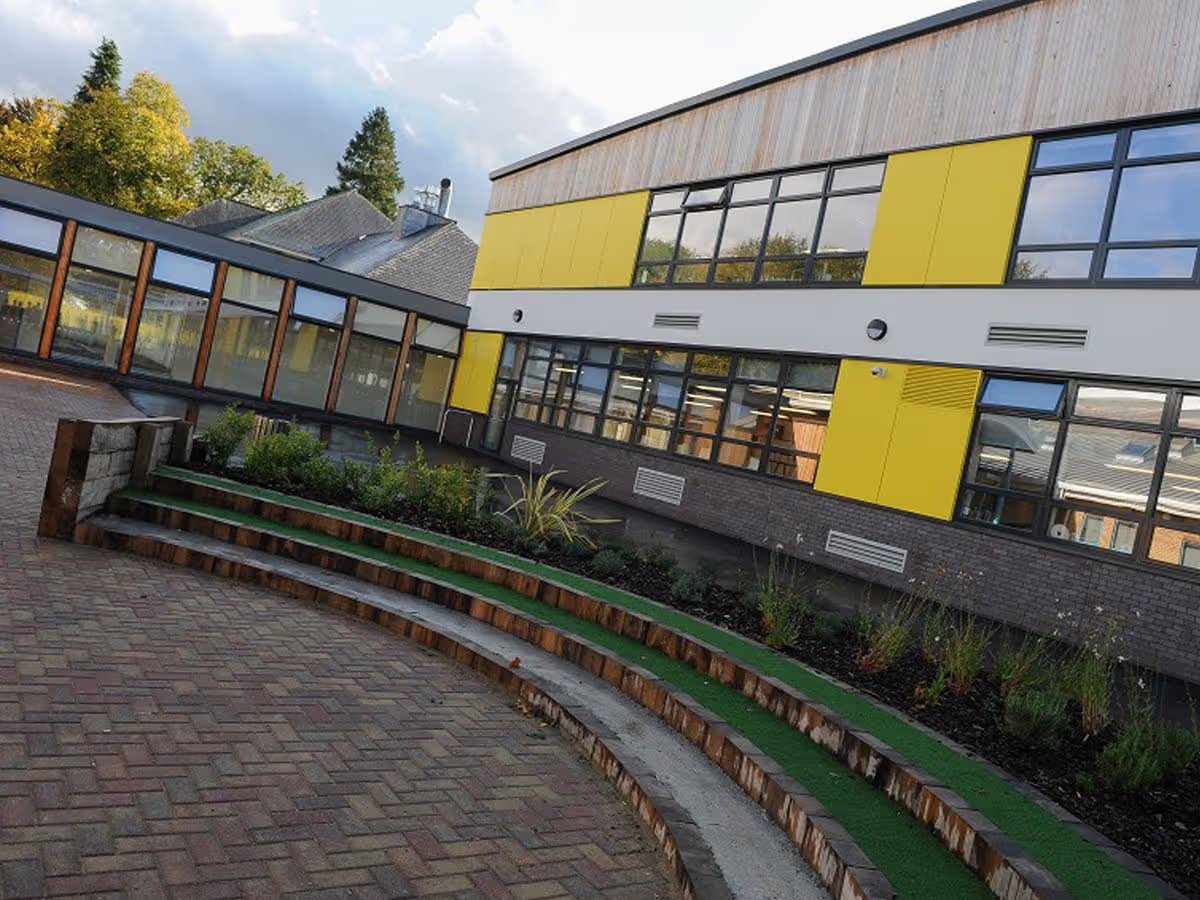
PUPILS and staff at Maesydderwen Comprehensive School in Ystradgynlais were released safely on Monday afternoon (Mar 2) after a lockdown was implemented following a reported telephone threat.
Dyfed-Powys Police confirmed officers were called to the school earlier in the day and worked with staff to ensure the safety of everyone on site. As a precaution, the school activated its lockdown procedure while enquiries were carried out.
Police said there were no reports of injuries and that all pupils and staff were safe and secure throughout the incident.
Officers remain at the scene while “diligent enquiries” into the threat continue. At this stage, no arrests have been made, and police have confirmed there is no evidence of any ongoing risk to pupils or staff.
Reassurance patrols will take place in the coming days to support pupils, staff, parents and the wider community.
Parents and guardians will continue to receive updates directly through the school messaging app, including confirmation on whether the school will open as normal on Tuesday.
Maesydderwen Comprehensive School is located in Ystradgynlais, Powys, and is served by Dyfed-Powys Police.



News13 hours ago
War stops Qatar gas: Milford Haven LNG supplies disrupted
UK energy security concerns grow after shutdown at major export facilities ENERGY bills in the UK could rise sharply after...


Community17 hours ago
Martyn Butler dies aged 71 months after Haverfordwest visit
Co-founder of Terrence Higgins Trust attended local plaque unveiling honouring friend Terry Higgins A LEADING figure in the UK’s response...

Crime20 hours ago
Nine deny Class A drugs conspiracy as case set for Crown Court trial
Eight remanded in custody as four-week trial fixed for May 18 NINE people have denied conspiring to supply Class A...


Community20 hours ago
No asylum seekers housed in west Wales hotels, latest Home Office figures show
WEST Wales currently has no asylum seekers being housed in hotels, according to the latest figures published by the Home...


Community4 days ago
St David’s Day parade brings colour and celebration to Haverfordwest
HAVERFORDWEST town centre was a hive of activity today (Friday, Feb 27) as hundreds of children from schools across Pembrokeshire...


News5 days ago
Hoax 999 call sparks massive lifeboat and helicopter rescue — man arrested
Emergency services diverted from real incidents after false report off south Wales coast A MAJOR sea rescue operation involving three...


Crime5 days ago
St Dogmaels man jailed over hundreds of indecent images
Previous convictions for similar offences revealed to court A 57-YEAR-OLD man from St Dogmaels has been jailed for two-and-a-half years...


Health5 days ago
Petition against hospital service changes surges past 6,000 signatures
Public response now far exceeds health board consultation figures A PETITION calling for urgent Welsh Government intervention over services at...

Crime6 days ago
Milford Haven pensioner admits sexually assaulting two shop workers
76-year-old touched victims and kissed one on the neck, court hears A MILFORD HAVEN man has admitted sexually assaulting two...


News6 days ago
Senedd backs assisted dying legislation in historic vote
POLITICIANS in the Senedd have voted in favour of legislation that could allow assisted dying services to be provided through...
-

 News7 days ago
Labour and Plaid criticised over £1.2m anti-racism ‘metaverse’ project
-
 Health6 days ago
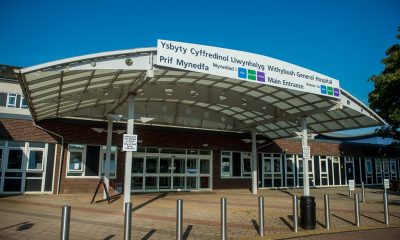
Health services row escalates as MSs demand action over Withybush and Bronglais
-

 Politics7 days ago
Farage vows to strip Cardiff’s ‘City of Sanctuary’ status ahead of manifesto launch
-

 Business6 days ago
Council reviewing complaints over Computer Solutions Wales as concerns continue
-

 Health5 days ago
Petition calling for Withybush intervention nears 5,000 signatures
-
 News7 days ago
Plaid Cymru drug decriminalisation policy under spotlight ahead of Senedd election
-
Crime6 days ago
Milford Haven pensioner admits sexually assaulting two shop workers
-

 News5 days ago
Welsh Government criticised after Russian-linked drone image used in defence announcement