


Sport
‘Dancing in the rain’ which the Gale brings


By Jonathan Twigg
SINCE the turn of the new Millennium, Narberth RFC has been one of the premier club sides in South West Wales.
They currently sit in second place behind Pontypool in the WRU Championship table, a division in which they have remained since the WRU national leagues inception in the mid 1990’s.
The coaching guru in charge of the current Otters side is Sean Gale, a former Scarlet’s player whose commitment is recognised by all associated to the Pembrokeshire club. Commitment is part of Sean’s DNA, where any former work colleagues at the West Wales Fire Brigade testify.
The Fire Brigade have a long association to rugby in the West Wales area, with many players with Scarlet’s and its predecessor Llanelli RFC finding themselves on a career pathway with the ‘Brigade’. Gale served for 32 years in the noble profession after Ronnie King opened the door of opportunity and is unsurprising that the ‘vow of allegiance’ he showed to his career, has been visible at the Lewis Lloyd Ground for a decade.

A man of few words whose compassionate tone rings clearly and when heard instantly captures the attention of those present. Never a raised intonation and the positives not the negatives proffered; a blueprint which fellow coaches Liam Gadd and Lloyd Phillips follow.
Sean was a graduate from Graig comprehensive school in the heart of Llanelli and had an instantly recognisable name to live up to. His dad Norman, revered in the Town as a front row hard man, captain of both his home town club and Country where he won 25 caps in a period when Wales were a team to mix it with the best.
Sean has recently crept quietly beyond the half century in terms of age, still living in Llanelli and committing to travelling three times a week to Narberth for training and games from his home in Swiss Valley. Married to Elizabeth for over 25 years he recognized her unstinting support of his rugby journey, alongside his mother Ann. Norman passed away in 2005 and it’s now his son Nick who shares his dad’s rugby memories alongside daughter Hannah.
Returning to the squad after a six month injury Nick plays under his dad’s stewardship, being a strike runner from the back three as opposed to his dad’s likeness for packing down in the front three.

“Living and breathing rugby is something I’m used to” Nick warmly stated with a beaming smile. “Dad, never had a hair out of place and no stone unturned. He wants the best for me as a son and as a player with Narberth. I’ve come to understand when I need to listen and occasionally speak on a rugby matters! Dad cares; about his family, friends and colleagues, including the players in the squad and this is repaid tenfold from those of us lucky enough to be in the inner sanctum.”
The front row is not a place for the faint hearted where camaraderie exists well beyond the 80 minutes of battle. “I enjoyed my tussles with Mike Griffiths immensely” chuckled Sean.
Mike, the Cardiff prop, formally with Bridgend won 35 Welsh caps but Sean added: “I had the utmost respect for him. He was a tough person to scrummage against, but he did it fairly and without prejudice. I also played alongside the icons of Welsh rugby, current National assistant coach Rob Howley and British Lion winger Ieuan Evans before I hung up my boots for the final time in Llanelli colours in1999. That final game was against Romania, twelve years after my debut against Pontardulais.”

Memories are important and Sean recounted with pride when he played against the All Blacks in 1997, a game lost by over 80 points; he narrated his efforts of scoring two tries against Namibia highlighting such achievements come only from hard work. Sean was always seen as a good trainer, where his rugged stature came to the fore in games as a strong ball carrying prop; a try scorer!
“I managed 10 tries in one season for Bridgend which is a record for a prop” and one which he still shares with Whitland born prop Meredydd James.
Sean won seven secondary schools caps as a second row, with a stand out victory in 1985 when an unbeaten All Blacks schools side toured the Principality under Graham Henry.
He also played for the Wales Under 20’s and Under 21’s and made the ‘A’ team squad but never had the opportunity to run out on the pitch.
He clocked up 209 appearances for Llanelli with the final three years as a professional player whilst maintaining his service record with the Brigade, before chalking up 90 games in Bridgend colours and enjoying a ‘final season’ at Heywood Lane, playing for Tenby United in 2002-03.
Sean has qualities which any respected person, let alone a coach would hope to have associated to him.
He is honest and hardworking whilst continuing to maintain a drive to achieve more. His family heritage is a cornerstone of his life and this shines through in his commitment to rugby.
 Now a level 3 coach he worked with the Scarlet’s Academy for three seasons after starting out with Tumble where he was a player/coach before becoming forwards coach with Llanelli, Swalec champions in 2005.
He joined Narberth in 2006 following an invitation from then Director of Rugby Jonathan Dodds after they worked together at the Scarlets Academy and with the Wales amateur side.
Coaching was always something he strove to do following a lifetimes involvement nurtured in the early days from the family pub, a stone’s throw from Stradey Park. Frequenting the hostelry on a regular basis were Llanelli greats like Stuart Gallacher and Ray Gravell.
“Dad coached the Scarlets, so it was a natural progression for me to stay in the game as a coach once I finished playing because it means so much to me; it’s in my heart and soul” said Nick.
Sean’s mantra as a coach is to build his teams around a strong forward platform, never taking a backward step to an opponent, before then trying to play an expansive style.
He remains ambitious for Narberth as he fondly recounts: “I was impressed by the warmth of the welcome I received; it’s a very friendly club but importantly for me one which remains driven to be successful.”
He is focused in his approach and philosophy, determined to keep Narberth in the top two of the National Championship.
Doing so will be no mean feat as it is increasingly difficult with Premiership clubs able to cherry pick the best players, which is part of the player pathway in the Scarlet’s region.
Sean said he would be interested in developing his coaching career and with a raised eyebrow and a killer grin Sean recalled the time he was ‘hoodwinked’ into believing the then Llanelli maestro Gareth Jenkins was offering him a role back with the Scarlets. “I enjoyed setting the training programme after that faux pas by Adrian Killa”, he said.
Sean remains committed to Narberth as he explained his eagerness for the national leagues to remain as the current structure is under review by the WRU.
“One thing that frustrates me as a coach is the imposed Autumn break which happens for the international period in November.
“I find this hard because we go a month without competitive fixtures to keep my players at their top of the game. I have had memories which are significant in my life story and I hope those under my wing today build their own storyboard, which they can do if we all work together to get the right environment.”
Narberth as a club are equally as ambitious and are watching the debate on the restructuring of the national leagues with the same interest as Sean.
“We want to finish as high as possible every season; the result in every game is important, but not as important as the enjoyment the game brings” pointed out Rob ‘Basher’ Lewis, the clubs hardworking administrator. “Narberth have the right man in Sean at present and we can see the professionalism and passion he brings being embedded in the Club.”
Narberth hope the winds of change doesn’t occur, yet Sean’s strengths include his man-management of players and the rapport he has with the committee and supporters.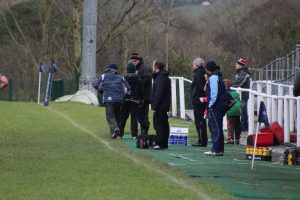
“He is currently irreplaceable as that skill set is difficult to replicate. As a club we need a figurehead to ensure our development plan is delivered” said Rob. Narberth have the foresight to hopefully enhance the playing facilities with a 4G surface and build on the senior team’s success so it emanates through the youth and junior sections.
They have a trademark association with brand names in the County and are in discussions with new partners to help them build their dreams.
Clearly Narberth can manage the ‘here and now’ as they have a structure off the field to accommodate a match day experience to rival a professional club.
There are no Otters burying their heads underground as they strive to improve each year, sharpening their teeth ready for the next challenge whilst, fully embracing the ‘gale’ in which they find themselves.
“We are not waiting for the gale to pass us by” said Basher “but we are dancing in the rain he brings.”













A CALL to extend a long-established Pembrokeshire golf club, bringing it up to a full 18 holes, has been submitted to county planners.
In the application, Mr and Mrs Young, through agent Preseli Planning Ltd, seek a change of use of land adjoining the Dawn Till Dusk Golf Club, Furze Hill Farm, Bastleford Road, Rosemarket, to form an extension to the existing golf course, along with landscaping and associated works.
A supporting statement through the agent says: “The application seeks full planning permission for the enlargement of the existing golf course to provide an additional six holes, to provide a total of 18 holes.
“The proposal would involve minor landscaping works to the fields and boundaries and the creation of a small number of ponds and bunkers. The extension would be located on land to the west of Furze Hill Farm and on the opposite side of the road to the existing golf course and clubhouse.
“An altered access to the land parcel is proposed as part of this application, which would provide an improved route for users crossing the public highway to avoid conflict with movements at the main entrance.
“The application site exceeds 1ha and therefore the proposal is considered major development necessitating a Pre-Application Consultation prior to formally submitting the planning application to the Local Planning Authority.”
It adds: “The existing golf course has operated in excess of 30 years and is popular with both visitors and locals. Club membership currently stands at approximately 350 and there is demand for enhancing the provisions of the course.
“The applicants’ sons have recently increased their involvement in the enterprise and in recent years wet winter months have necessitated the closure of the course, or parts of it, due to the ground becoming waterlogged, primarily due to the flat nature of the existing course.
“The extension would provide variation to the terrain, providing, dryer conditions, as well as the ability to alternate between the existing and proposed to maintain use, enhancing the viability of the enterprise.”
The application will be considered by Pembrokeshire County Council planners at a later date.

Lou Boorman celebrates home port win in round-the-world yacht race
A HAVERFORDWEST-born sailor has led her team to a landmark victory on the global stage, winning a major leg of the Clipper Round the World Yacht Race as it arrived in South Korea.
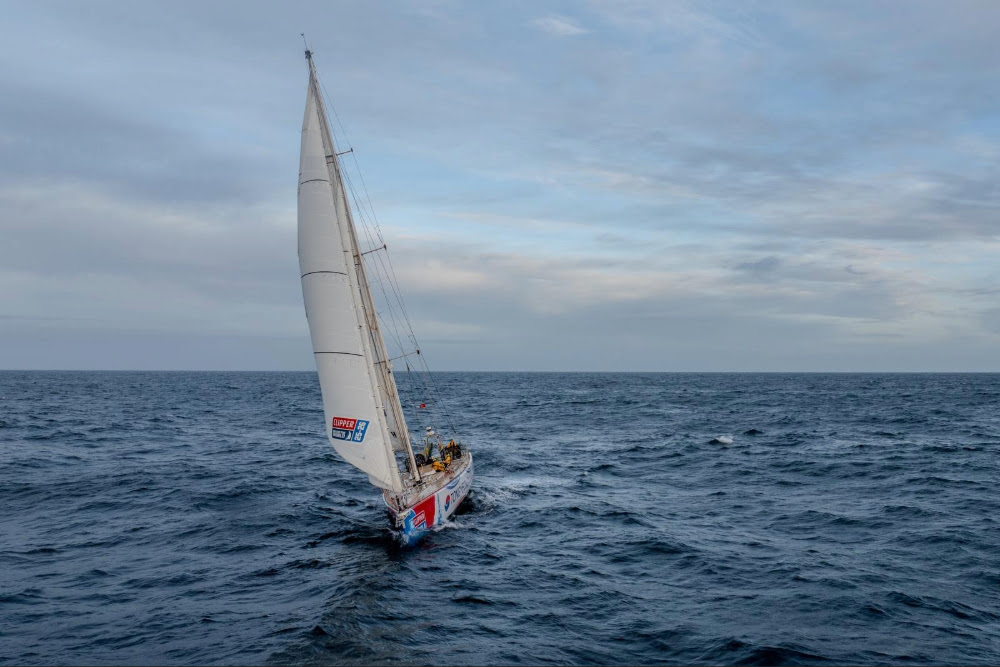
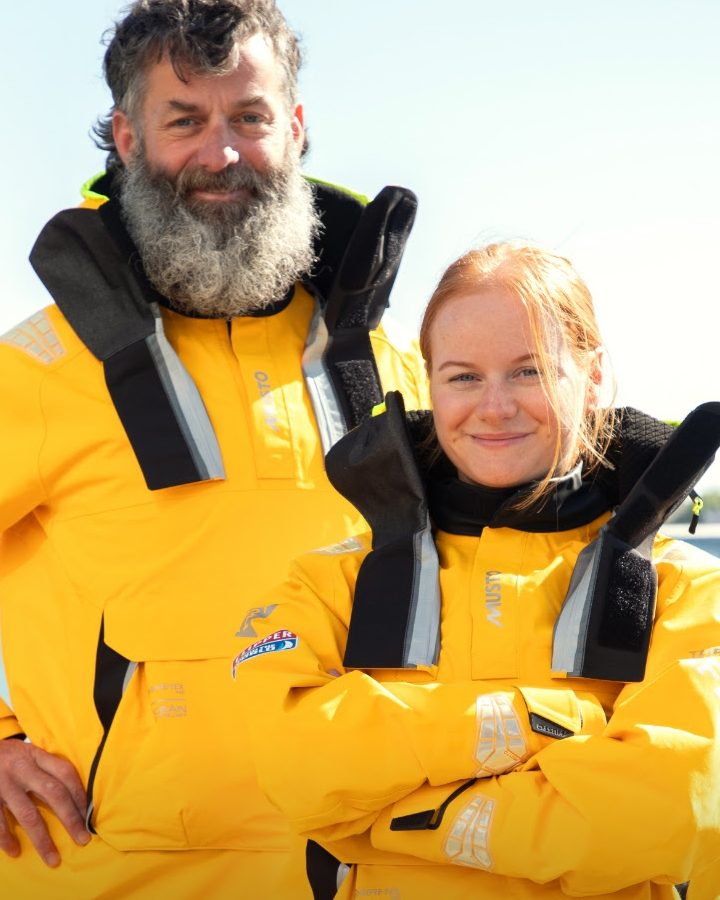
Lou Boorman, aged 23, skippered Team Tongyeong to first place as the fleet sailed into the Korean port city this week (Mar 16), marking a historic moment for the race.
The win is particularly significant as it is the first time the round-the-world event has ever stopped in Korea – and the home team claimed the top spot.
Speaking from the yacht after crossing the finish line, Lou said: “We did it, we performed under the pressure! To get a win into our home port, I can die happy!”

From Pembrokeshire to the world stage
Lou, who grew up in Haverfordwest, has quickly risen through the ranks of competitive sailing. Before taking on the challenge of leading a Clipper Race team, she had already secured titles as British, Irish and Welsh Female Champion.
Now skippering one of the race’s international teams, she is responsible not only for navigation and strategy, but also for leading a diverse crew – many of whom had never sailed before joining the race.
The Clipper Race is one of the toughest endurance challenges in sport, covering 40,000 nautical miles over eleven months, with crews facing extreme weather conditions ranging from freezing Pacific crossings to equatorial heat.

High-stakes gamble pays off
Team Tongyeong took a major risk during this stage, playing its ‘Joker’ card – a race tactic that doubles points if successful.
The gamble paid off, earning the team maximum points and securing their place at the top of the leaderboard.

Lou said: “We’ve worked really hard and put a lot of pressure on ourselves. Going into our home port there is a lot of pressure to perform, and we added to that pressure by playing our Joker – and we got twenty points, so I’m very proud of the team.”
This marks the team’s second win in recent stages, building momentum as they pass the halfway point of the global race.
Life at sea and leadership challenges
Reflecting on her journey so far, Lou highlighted the challenges of leadership as much as the physical demands of sailing.
She said: “Sometimes the sailing comes second to the people because they are the important ones. To lead them through that is one of the toughest things I’ve ever done, but it’s also one of the most rewarding.”
She added: “My favourite thing about sailing is the magic of the sea, the stars, the storms and the remoteness. I feel free and at my happiest at sea.”
Global race continues
The Clipper Race fleet will remain in Tongyeong for a week of cultural events before setting off across the North Pacific towards Seattle.
The race will later visit Panama, Washington DC, and Oban before returning to Portsmouth this summer, completing a full circumnavigation of the globe.
For Pembrokeshire, Lou’s achievement puts a local name firmly on the world sailing map – and highlights the global reach of talent from West Wales.
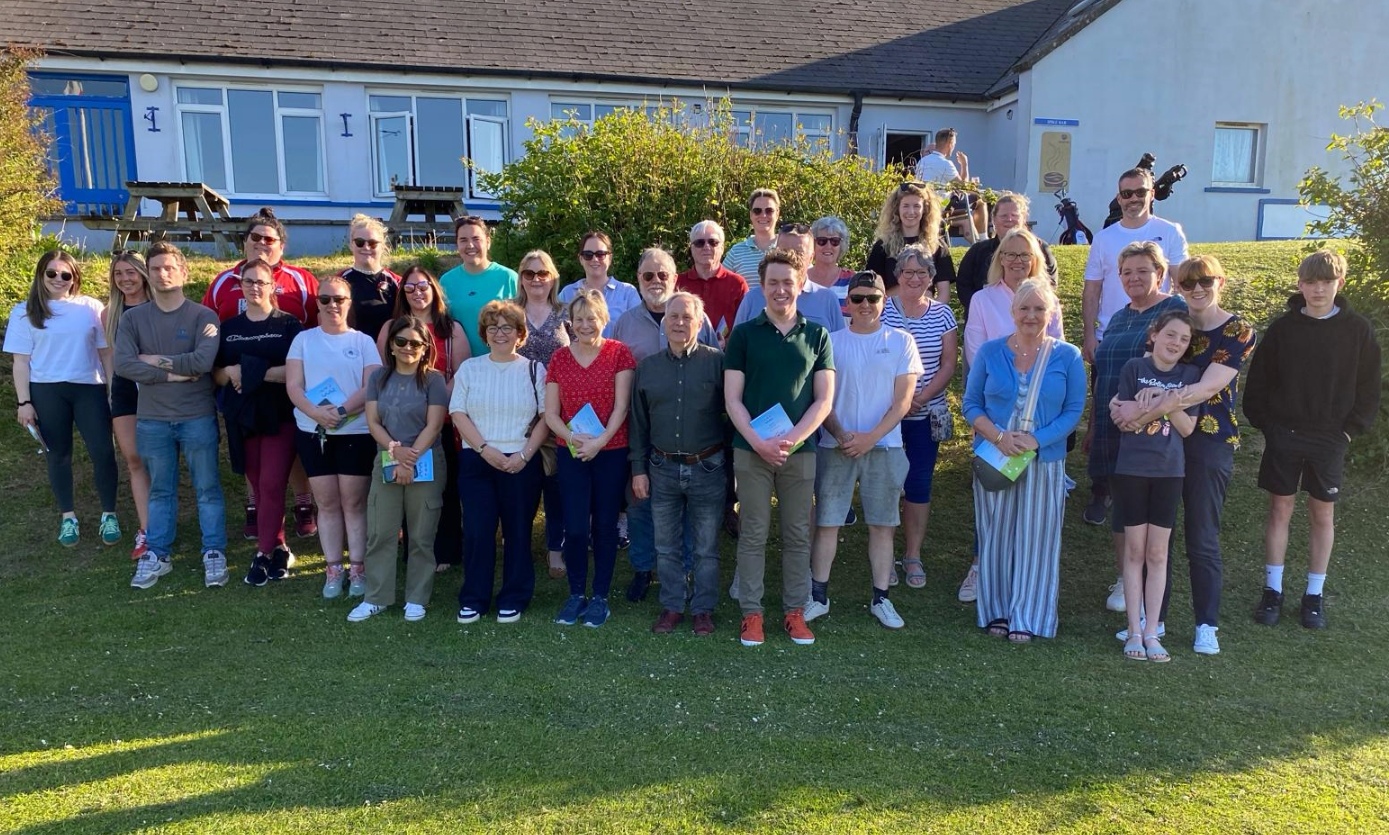
Six-week beginner programme offers affordable route into the sport
SOUTH PEMBROKESHIRE GOLF CLUB is preparing to launch its popular New2Golf scheme for 2026, with the latest intake starting on Monday (Apr 13).
Now in its eighth year at the Pembroke Dock course, the initiative offers a low-cost and welcoming introduction to golf. All equipment and professional tuition are included for a small fee, making it accessible to people of all ages and abilities – including complete beginners who have never picked up a club before.
The scheme is also ideal for those who have previously played golf and are looking to return to the game after a break.

Participants will receive coaching from qualified golf professionals at the club’s practice ground during early evening sessions over a six-week period. There will also be an option to continue with further sessions after the initial programme.
Golf provides a great opportunity to stay active, enjoy the outdoors and meet new people. As a low-impact sport, it allows players to gradually build fitness while learning new skills. Whether approached competitively or socially, it offers a relaxed and enjoyable way to spend time outdoors.
Last year’s New2Golf intake ranged in age from eight to 70, highlighting the sport’s broad appeal and accessibility.
Located in Pennar, Pembroke Dock, South Pembrokeshire Golf Club enjoys scenic views over the Haven waterway. The club has a thriving membership across junior, ladies’, men’s and seniors’ sections, and prides itself on being friendly and supportive to new players.
Members regularly help newcomers develop their skills on the course, offering guidance on rules, techniques and course play.
The clubhouse also serves as a social hub, offering home-cooked food, a bar and meeting facilities, with a busy calendar of events throughout the year.
Anyone who has ever considered taking up golf – or returning to the sport – is encouraged to get involved.
For more information or to enrol in the 2026 New2Golf scheme, contact [email protected] or visit the Wales Golf website.
New2Golf is organised and supported by Wales Golf.




Crime18 hours ago
Publican jailed for six years for supplying cocaine and cannabis
Milford Haven man sentenced at Swansea Crown Court following drug dealing operation A MILFORD HAVEN publican has been jailed for...


Local Government20 hours ago
Poverty summit highlights support efforts across Pembrokeshire
A SUMMIT bringing together key organisations from across Pembrokeshire has highlighted both the scale of local poverty and the work...


Education2 days ago
Milford Haven school plans unveiled but funding not yet secured
PLANS for a new £100 million school in Milford Haven have been unveiled, but the project has not yet secured...


News2 days ago
Council unveils plans for new state-of-the-art secondary school in Milford Haven
PEMBROKESHIRE COUNTY COUNCIL has revealed plans for a new state-of-the-art school in Milford Haven, promising modern, inspiring learning spaces for...


Health2 days ago
NHS waiting list falls — but cancer delays and diagnostic backlog worsen
Record progress claimed by Welsh Government as critics warn key targets are still being missed THE NHS in Wales has...


Crime3 days ago
Rapist jailed after ‘abhorrent’ attacks on woman and children
Haverfordwest man told police “women won’t have sex without force” A HAVERFORDWEST man who raped a woman and a young...


News3 days ago
Reform secures first Pembrokeshire councillor in Hakin by-election win
Late Reform candidate takes seat as independent surge and Labour withdrawal shape contest REFORM UK candidate Scott Thorley has won...


News3 days ago
Scott Thorley elected as Pembrokeshire’s first Reform councillor
REFORM UK candidate Scott Thorley has won the Hakin by-election after securing 179 votes. The full result is as follows:...


News4 days ago
Police confirm man has died after being recovered from River Cleddau
Major emergency response in town centre after concerns raised for man in water A MAN has died after being recovered...


Community4 days ago
Davies and Kurtz urge groups to seek employability funding
Community organisations in Pembrokeshire encouraged to apply for new grants supporting skills and job access LOCAL Senedd Members Samuel Kurtz...
-

 News7 days ago
Rayner and Lammy visit Wales to discuss justice and community safety
-
 News6 days ago
Fishguard linked to allegations in Many Tears Animal Rescue investigation
-

 News4 days ago
Emergency services flood Haverfordwest after reports of person in river
-
 Local Government7 days ago
Investigation confirmed after inspectors visit Many Tears Animal Rescue
-

 Crime3 days ago
Mother given community order after admitting child cruelty offence
-

 Community7 days ago
Town hall takeover plan questioned as cost figures conflict
-

 News4 days ago
Senedd vote to ban greyhound racing hailed as ‘landmark moment’ by charities
-

 Business7 days ago
Oil firm praised for putting customers first during price surge