


News
Tank drill procedures changed following Castlemarin deaths

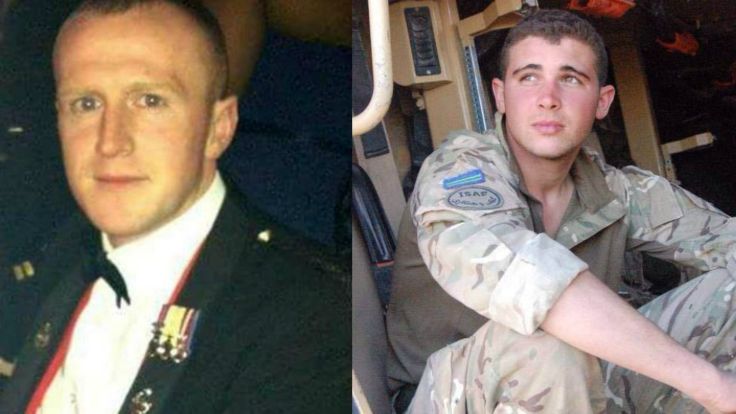
AN INQUEST has heard how a fatal explosion in a British Army tank was the result of the absence of a seal used to stop highly unstable gases escaping into a tank crew’s turret.
The incident at Castlemartin Range, Pembrokeshire on June 14 2017 resulted in the deaths of Royal Tank Regiment corporals Matthew Hatfield, 27, and Darren Neilson, 31. Two others were injured in the blast involving a Challenger 2 tank.
The inquest heard the two corporals were only in the tank because they were taking another soldier for a ‘guest shoot’.
Monday (Jul 2) saw the inquest resume, with Louise Hunt, the Senior Coroner for Birmingham and Solihull, saying a crew of four, including the two deceased, took the tank to the British Army range’s firing point without written permission.
Another team had used the tank earlier that morning, but the bolt vent axial (BVA), which is normally fitted to the rear of the tank barrel, had been removed for cleaning. The BVA would have stopped 3,000C high-explosive gases from shell charges escaping into the tank crew’s turret.

Police investigators said the removal of the BVA was standard practice, as it required post-firing inspection, and it was placed in a box within the tank turret called the ‘brew bin’.
Evidence was also heard the tank shell’s ammunition, known as ‘bag charges’, may have been ‘incorrectly stowed’ outside boxes within the turret.
Detective Sergeant Matthew Briggs, of Dyfed Powys Police, told the hearing in Solihull: “As there was no BVA, there would be no gas-tight seal and the force of the bag charge would have come back into the turret.”
Ms Hunt went on to read a statement setting out what then happened: “At around 15:30, a hissing sound was heard and noises and smoke.

“Corporal Neilson was seen to be climbing out of the commander’s turret and there was an explosion. He was projected out the turret, landing some distance away.”
The Coroner heard that the tank had only been taken out because the deputy safety training officer, Warrant Officer Stuart Lawson, had asked permission to go out and fire a tank.
Major John Poole, who was in command of Castlemartin Range, told the inquest that according to Ministry of Defence rules in pamphlet 21, it needed ‘two-star written authorisation’, effectively from a brigadier rank officer, to allow a non-trained soldier into a tank.

Major Poole told Ms Hunt permission had come from the Royal Tank Regiment’s Commanding Officer, Lieutenant Colonel Simon Ridgway.
Warrant Officer Lawson and another soldier, Trooper Michael Warren, were injured in the tank, but survived the blast.
Major Poole said: “Whether they were trying to show off to Mr Lawson, or trying to get through it [firing] as quickly as possible, I don’t know.”
When asked if he was aware of the practice by other crews, Poole responded: “Well, we’re here because somebody else hasn’t stored charges correctly.”
Family and colleagues of the deceased were also heard at the inquest. Cpl Hatfield, from Amesbury, Wiltshire, had served in Iraq and Afghanistan, being described as ‘truly dedicated to the British Army’, whose greatest achievement in life was said to have been becoming a father.
His fiancée Jill McBride said: “To say that his loss has had a massive impact on us is an understatement.”
Cpl Neilson, of Preston, Lancashire was described as ‘Army through and through’.
His wife Jemma said: “He adored the Army…he served in Iraq and Afghanistan. He was my world, my soul mate and hero. He was an amazing husband and daddy.”
Both men served with the Royal Tank Regiment in Tidworth, Wiltshire.
The inquest were told on Tuesday (Jul 3) that such an explosion had never happened before in the history of the tank model’s 20 year service, even during combat operations in Iraq.
Army training officer and tank specialist Sergeant Alexander Ahtom told the hearing that he was ‘not aware of any former incident like this before’ yet agreed with Ms Hunt that a ‘misunderstanding’ was possible when a new crew took over a tank.
Sgt Ahtom conceded that there was no regulation in place to recheck the tank barrels after use, but also said that ‘absolutely no-one’ had raised any concerns.
Despite this, the inquest heard training procedures had changed in the six weeks prior, including checks for the barrel and BVA as part of more frequent gun-proving drills.
Sgt Ahtom went on to tell Ms Hunt that he was ‘concerned’ that drills were not being conducted as expected.
Simon Antrobus QC, representing tank-maker BAE, described: “A whole series of rigorous development trials to look at reliability, firing and manoeuvres. During which thousands of rounds were fired and it saw direct action in Iraq against Iraqi tanks.”
Sgt Ahtom also said that he ‘completely’ disagreed with the Ministry of Defence (MoD) joint service inquiry panel’s conclusion into the explosion. The panel proposed that it could be possible if checking another key part that the presence of the BVA could be missed.
With the tank’s earlier crew, Lance Corporal Thomas Gough had acted as loader, and explained that he had cleaned the BVA, and then stored it in the ‘brew bin’. Yet he had earlier conceded that it was ‘common practice’ to take the BVA for engineering inspection at the tower.
When asked by Ms Hunt why he had not taken it to the tower, Gough said he ‘thought they’d be busy’.
Ms Hunt then went on to ask: “How would anyone know it was in the brew bin?”
Gough, who had been with the regiment six years, then replied: “Well, they wouldn’t, unless I told them.”
Normally, he would tell the crew commander Sergeant Paul Mitton that the tank was completely ‘stripped down’ but he had been busy that day with many tasks and ‘forgot’.
Barrister Mike Rawlinson QC, for Mr Lawson, asked Sgt Mitton: “There’s no system here of knowing where any BVA is, at any particular time, is there?”
Mitton, with the Royal Tank Regiment for 18 years, replied: “That’s correct.”
Mr Rawlinson then asked: “There’s no system for making sure the incoming crew know what’s happened to the BVA, is there?”
Sgt Mitton said: “No there’s no system.”
Mr Rawlinson then went on to ask: “This is chaos, isn’t it?”
Mitton replied: “On ranges, there can be quite a lot of pressure and I think sometimes the pace of life on the range is quite fast.”
Army tank drills have now been changed to check the BVA is present, the inquest was told.
The inquest, which is set to last three weeks, continues.





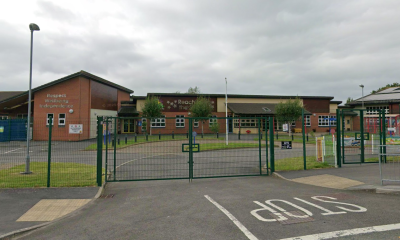




PUPILS at St Oswald’s VA Primary School welcomed a visit from local Senedd member Samuel Kurtz on Monday (Feb 2), as children put questions to him about how Wales is governed.
Years five and six pupils took part in an interactive session where the Senedd Cymru member explained the role of the Welsh Parliament, how laws are made, and how elected representatives support local residents.
He outlined what a Member of the Senedd does day-to-day, how decisions affecting communities are taken, and why taking part in democracy is important.
The pupils were then given the chance to quiz him directly, raising questions about politics, local issues and how young people can make their voices heard. Staff said the children showed strong interest and came well prepared.
Speaking afterwards, Mr Kurtz said: “It was a real pleasure to visit St Oswald’s and see such enthusiasm and curiosity from the pupils.
“Understanding how democracy works and how decisions are made is important, and it is encouraging to see young people taking an interest in how their community and country are run.
“I was particularly impressed by the quality of the questions, which showed they had clearly done their research.”
Teachers described the visit as a valuable opportunity to bring lessons about citizenship and Welsh democracy to life.
The school visit forms part of Mr Kurtz’s ongoing programme of meeting with schools, community groups and residents across Carmarthen West and South Pembrokeshire.

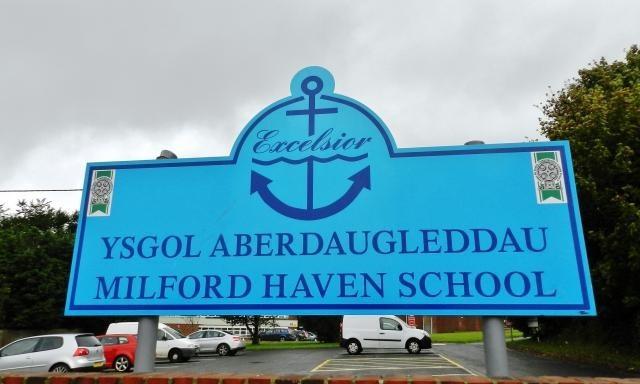
15-year-old charged with Section 18 GBH with intent and possession of a bladed article on education premises
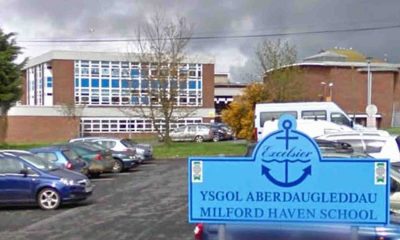
POLICE have confirmed that the teacher injured during Thursday’s lockdown at Milford Haven Comprehensive School suffered stab wounds, as a 15-year-old boy appears in court today (Saturday, Feb 7).
Dyfed-Powys Police said the teenager has been charged with Section 18 grievous bodily harm with intent and possession of a bladed article on education premises. He has been remanded in custody and is due before Swansea Magistrates’ Court this morning.
Emergency services were called to the school at around 3:20pm on Thursday (Feb 5) following reports that a member of staff had been assaulted by a pupil. The school was placed into immediate lockdown and police said all learners later returned home unharmed.
The injured teacher has since been discharged from hospital and is recovering with support.
Detective Chief Inspector Matthew Briggs said: “We are continuing to support the victim whilst they recover from this traumatic event. Following detailed enquiries by specialist officers, injuries initially assessed and described as non-stab injuries have now been confirmed as stab wounds.

“A statement at an early stage of the investigation was based on preliminary information available at the time.
“There will continue to be a higher than usual police presence in the area over the coming days to provide further reassurance. Officers will be working closely with local secondary schools to offer support over the coming week.”
In a joint update issued by the local authority and the school, deputy headteacher Daryl John thanked staff and the small number of pupils who remained on site, saying they acted “with professionalism” and were “calm throughout”. He added that the school community was grateful for the “rapid and effective response” of the emergency services and sent best wishes to the injured colleague for a “full and speedy recovery”.
Pembrokeshire County Council leader Cllr Jon Harvey confirmed the school will reopen on Monday, with additional support available for pupils and staff affected by the incident. He said lockdown procedures are routinely rehearsed so that, in rare cases where they are needed, everyone knows what to do.
The school was closed to pupils on Friday, with the town noticeably quieter than usual as children stayed home.
Police enquiries are continuing and further updates are expected following the court hearing.


A FORMER Haverfordwest Blues junior has earned international honours after being selected to represent Wales Under-20 rugby union team in their fixture against England.
Osian Williams, who began his rugby journey at Haverfordwest Rugby Football Club, will pull on the red jersey this evening in what marks a proud milestone for both the player and the Pembrokeshire club that helped develop his talent.
Club members said the call-up reflects years of hard work, commitment and steady progress through the ranks, with Williams recognised locally for his determination and performances on the pitch from a young age.
A spokesperson for Haverfordwest RFC said the whole club is “incredibly proud” to see one of their own step onto the international stage.
They added that it is always special to watch former junior players progress to represent their country, describing Williams’ selection as “fully deserved” and an inspiration to the next generation coming through the Blues’ youth setup.
The match against England provides a stern test for the young Welsh side, but for Williams and his family it is also a moment to savour after years of dedication to the sport.
Friends, coaches and former teammates are expected to be cheering him on from Pembrokeshire as he makes his mark in Welsh colours.
Photo caption:
Osian Williams has been selected to play for Wales Under-20s against England (Pic: Supplied).



Crime5 hours ago
Police confirm teacher was stabbed at school as teenager appears in court
15-year-old charged with Section 18 GBH with intent and possession of a bladed article on education premises POLICE have confirmed...


Crime20 hours ago
Man arrested for murder following death of pensioner in Pembroke Dock
Officers called to Hawkstone Road property as investigation continues and residents urged to come forward DYFED-POWYS POLICE officers have launched...

Crime23 hours ago
Teacher discharged as Milford School to reopen Monday after serious assault
Deputy head praises ‘calm and professional’ staff and pupils during lockdown A TEACHER injured in a serious incident at Milford...

Crime2 days ago
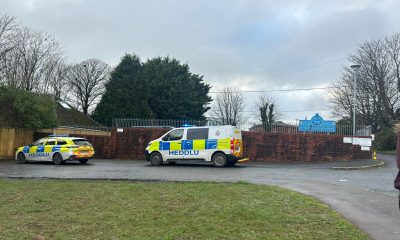
Teacher discharged as police step back from Milford Haven school after assault
Teenager remains in custody as school closes and patrols increased to reassure community POLICE have confirmed they are no longer...

Crime2 days ago
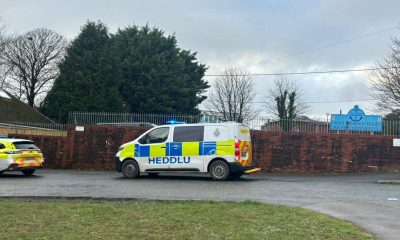
Teacher injured and teenager arrested for attempted murder at Milford Haven School
Lockdown triggered as pupil allegedly attacks staff member with weapon – boy, 15, held on suspicion of attempted murder A...


international news2 days ago
Pembrokeshire women conquer Atlantic in epic 3,000-mile row
PEMBROKESHIRE’S all-female rowing crew Merched y Mor have completed one of the hardest endurance challenges on the planet after crossing...


Crime3 days ago
Sex offender jailed after living off grid in Pembrokeshire and refusing to register
Man walked into police station after months avoiding authorities A CONVICTED sex offender who told police he intended to live...


Crime3 days ago
More rape and sexual assault survivors to get right to challenge dropped cases
New review scheme to be rolled out across CPS Cymru-Wales following successful pilot SURVIVORS of rape and serious sexual assault...

Crime4 days ago
Man spared jail after admitting child abuse image offences
Police seized devices after intelligence linked Pembrokeshire address to illegal cloud storage accounts A 23-YEAR-OLD Pembrokeshire man has avoided immediate...


Community4 days ago
Cleddau at heart of major water reforms as ministers promise ‘fundamental reset’
New regulation plan aims to tackle pollution, sewage spills and ageing infrastructure COMMUNITIES along the River Cleddau could see tighter...
-
Crime3 days ago
Sex offender jailed after living off grid in Pembrokeshire and refusing to register
-

 Health2 days ago
Health board targets rise in steroid and gym drug use across west Wales
-

 News4 days ago
Princess of Wales visits historic Pembrokeshire woollen mill
-

 Health6 days ago
Doctor struck off after sexual misconduct findings at Withybush Hospital
-
Crime2 days ago
Teacher injured and teenager arrested for attempted murder at Milford Haven School
-

 Education7 days ago
Industry insight helps marine cadets chart career course
-
 Crime4 days ago
Hakin man’s appeal delayed again as Crown Court seeks guidance on insurance law
-

 News6 days ago
Herald journalists to feature in true-crime documentary on local lockdown murder