


Farming
NFU responds to EU departure


NFU CYMRU has responded to the UK’s departure from the EU.
NFU Cymru President John Davies said: “The 31st January marks our departure from the EU in legal terms and we will now enter a transition period. During the transition, we will remain in the EU’s single market and customs union, and so for that time, we will continue to be able to trade with the EU27 in just the same way as we did before we ceased to be a member state. I am not, therefore, expecting Wales’ farmers to experience any significant changes overnight, particularly given that we will also remain bound by the vast bulk of EU law during the transition.
“The Prime Minister has set himself the ambitious deadline of concluding a Free Trade Agreement with the EU27 by the end of 2020. It is essential that whatever agreement the UK Government reaches with the EU27, that it delivers the most favourable access possible for Welsh farmers to European markets, with tariff and non-tariff barriers eliminated wherever possible.
“We know that the transition period ends by default on 31st December 2020, although this transition can be extended by up to two years through a joint decision of the UK and the EU27 taken before 1st July 2020. However long the transition, we must avoid a situation whereby it elapses without having reached an agreement on a future trading relationship with the EU, as we know that that will mean we end up trading with our largest, most valuable export market on WTO terms, which means huge tariffs on our produce.
“For the first time in almost half a century, the UK will be able to take steps to pursue an independent trade policy, something which we could not do as an EU Member State. Whilst this new-found ability does present us with opportunities, I want to urge politicians to exercise a degree of caution here and to heed what we have been saying clearly and consistently around standards. We cannot allow a situation to arise whereby our high standards are undermined by imports produced to environmental or animal welfare standards which would be illegal in this country. Wales’ farmers must be allowed to compete on a level playing field after Brexit.
“Although Brexit will potentially open up new markets for us, we must not lose sight of the importance and value of the EU27, to which almost three-quarters of Welsh food and drink exports go. Therefore, before we turn to consider trade with third countries, we need to ensure that we have secured the most favourable possible access to the market on our doorstep.”
Commenting on developments closer to home, Mr Davies added: “Brexit does, of course, present us with the opportunity to pursue our own arrangements for agricultural support and, earlier this month, Welsh Government confirmed that it will be opting to introduce its own legislation in the National Assembly in due course to allow it to operate new policies for farmers in Wales post-Brexit. Just as I have urged the UK Government to take the time needed to get things right when it comes to trade, I make the same appeal of the Welsh Government when it comes to developing future agricultural policy.
“Crucial to any future agricultural support policy, of course, is funding, and I was pleased to have confirmation from the UK Government at the end of last year that current levels of support will be maintained for 2020. The UK Conservative Government made a manifesto commitment ahead of the General Election to guarantee the annual budget for farmers for the next five years, and we are pleased that Welsh Government has made commitments to ring-fence the funding it receives from Westminster for Welsh farming.
“Funding is crucial to help ensure that Welsh farming can continue to deliver and grow on its unparalleled contribution to the economy, environment, culture and social well-being of Wales. We need a long term funding arrangement to meet our ambition to further grow the food and farming sector whilst maintaining and enhancing our environment and delivering on our target of making the sector a net-zero emitter of greenhouse gases by 2040
“As a Union, NFU Cymru looks forward to working with politicians in Cardiff to devise a ‘Made in Wales’ policy which delivers against our three cornerstones of productivity, stability and environment to realise our ambition of a productive, progressive and profitable Welsh agricultural sector.
“In the nearer term, I am pleased that our Environment, Energy and Rural Affairs Minister Lesley Griffiths AM has signified her intention to maintain the BPS for 2020 and 2021, thus providing the sector with some much-needed stability at this uncertain time.”

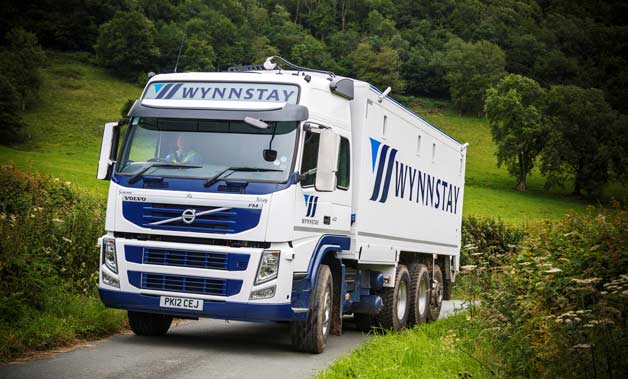
Major supplier says confidence lower despite signs of stability returning
FARMERS across Wales are facing another difficult year as input costs remain significantly higher than before the pandemic, according to new industry insight from agricultural supplier Wynnstay Group.
The company, which has deep roots in rural Wales and generates around sixty per cent of its retail revenue in the country, says confidence among farmers is lower than this time last year, with rising costs, policy uncertainty and tightening margins influencing spending decisions.
However, there are also signs of resilience, with many producers focusing on efficiency and forward planning to cope with ongoing pressures.
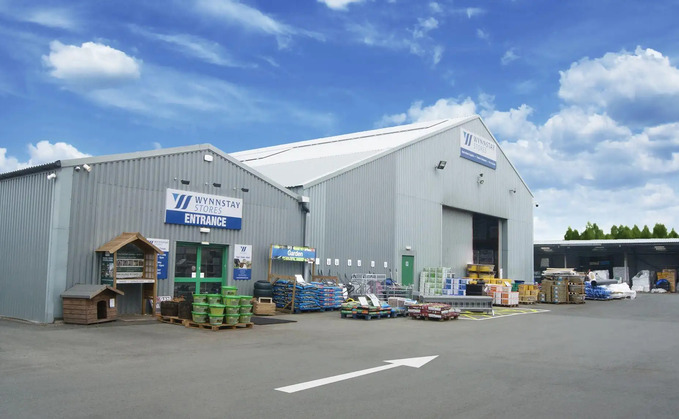
Wales at heart of business
Wynnstay, originally founded by tenant farmers in Mid Wales in 1918, has grown into a major UK agricultural supplier serving more than 20,000 farming customers through manufacturing sites, stores and on-farm services. The group employs hundreds of staff across the UK and operates a nationwide distribution network supporting livestock and arable producers.
The company says Welsh farming businesses continue to play a central role in its commercial performance and long-term growth strategy.

Cautious investment decisions
According to Wynnstay, farmers are delaying some investment decisions but are increasingly seeking value-driven solutions that improve productivity.
Feed volumes have increased across the company’s Welsh store network over the past year, reflecting demand for blended feeds that offer greater flexibility and cost control. Rather than reducing purchases outright, many farmers are matching spending more closely to performance and output.
Fertiliser demand has also been strong, with sales ahead of last year, although some farmers have delayed buying in the hope prices may fall. Global supply pressures and rising gas costs mean prices are expected to remain firm into the busy spring season.
Costs still far above pre-Covid levels
Industry data shows overall farm input costs remain significantly higher than before 2020, with feed, fertiliser, fuel, electricity and machinery all continuing to put pressure on farm margins.

While some costs have eased from their peaks, they have not returned to previous levels, influencing buying behaviour across the sector.
Margins for livestock and dairy farms were strong last year, but Wynnstay says they are now tightening, particularly in the dairy sector where milk prices have fallen and volatility remains high.
Pressure on family farms
Smaller family-run farms are under greater strain than larger commercial operations, with less financial resilience to absorb rapid market changes. Reports of rising closures among family farms, particularly in dairy, reinforce concerns about the sector’s long-term sustainability.

Government policy changes are also contributing to uncertainty. The transition away from the Basic Payment Scheme and wider tax reforms have led many farmers to postpone larger investments until there is clearer long-term stability.
Local reaction
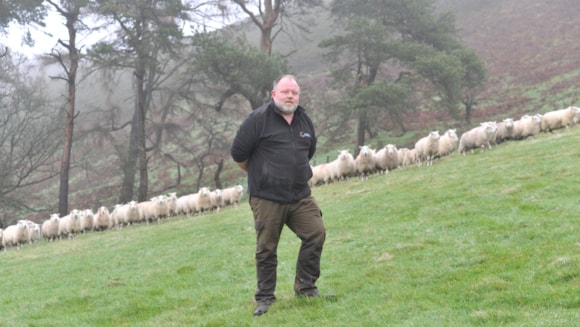
Pembrokeshire farmer Chris James said the situation reflected what many farmers were experiencing locally.
“We’ve definitely noticed the squeeze over the past year or two,” he said. “Costs for feed, fertiliser and fuel are still much higher than they used to be, and that makes you think twice about every decision. Most farmers I know aren’t cutting back on production — they’re just trying to be more efficient and careful with spending.”
He added: “People want to invest and move forward, but it’s hard when you don’t know exactly what the long-term policy picture will look like.”
NFU Cymru has also warned that rising costs and policy uncertainty continue to weigh heavily on farm businesses across Wales, with confidence affected by concerns over future support schemes and wider economic challenges. The union has called for greater long-term certainty to allow farmers to invest with confidence and maintain domestic food production.

Weather shocks impact behaviour
Extreme weather during 2025 — including a very dry spring followed by periods of intense heat and a challenging wet autumn — also affected purchasing patterns, with farmers spacing orders and prioritising essential inputs as conditions changed.
Ordering behaviour is now returning to more normal patterns as conditions stabilise.
Outlook for 2026
Despite ongoing pressures, Wynnstay says it is cautiously optimistic about the year ahead.
Many farmers are making careful decisions around efficiency, nutrition and planning, and the company believes there are opportunities for businesses to strengthen their position through 2026 with good cost control and smart investment.
Summing up the sector, the company said Welsh agriculture remains resilient, with farmers showing determination and adaptability despite continuing challenges.

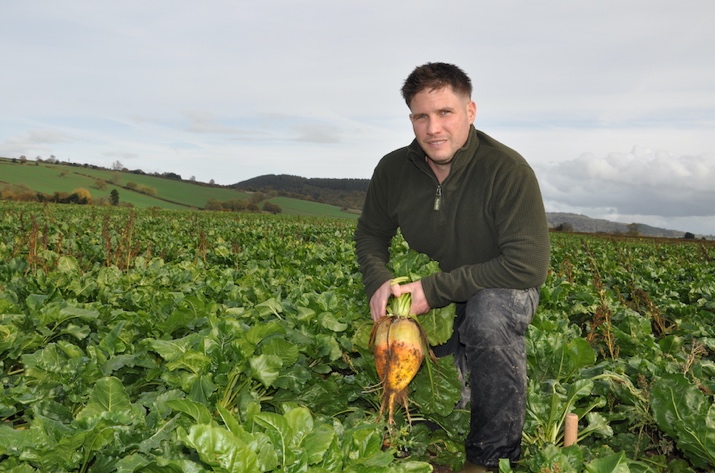
AFTER the lack of forage in many areas in 2025 due to the drought, this season could see increased interest in growing fodder beet on livestock farms, believes ProCam agronomist, Nick Duggan.
Once fodder beet gets its roots down, it can be quite drought tolerant, says Nick, so it could appeal to farmers looking to diversify forage crops to mitigate risk.
“Although inputs can be quite high, fodder beet does offer a big crop of energy,” explains Nick, who operates in Herefordshire, South Shropshire, Powys and the Cotswolds.
“Compared with stubble turnips yielding about 4-6t of dry matter/ha (DM/ha), fodder beet might yield 20t DM/ha. And, at around 12.5ME, the energy content of its roots is similar to grass.
“There’s also the flexibility to feed fodder beet to sheep, beef or dairy, and to lift or graze it, although it’s important to ‘wean’ livestock onto it gradually, especially cattle, because its high energy content can cause acidosis,” he adds.

To help ensure that farmers grow the right varieties for their situation based on robust data, Nick says ProCam has been evaluating the performance of fodder beet varieties over multiple seasons, with on-farm trials conducted in the North and West of the country as well as other locations country wide.
“We test a range of varieties,” he continues. “These range from low DM beets for grazing, to high energy types for lifting and chopping for livestock, or for use in anaerobic digestion (AD) plants.
“Typically, 20 or so varieties might be tested annually in these replicated trial plots, with 4-5 new varieties included each year. But a lot of the established varieties have been in the trial for maybe six years – so we have long term data and can robustly benchmark new varieties.”
Assessments begin with variety emergence and vigour, and conclude at harvest by measuring yields, says Nick, with beets lifted and tops and roots weighed separately. Yields per hectare are then calculated, corrected for %DM.
“Also at harvest, each variety is assessed for disease resilience, and for the amount of root protruding above the soil. More root protruding is helpful if grazing. If lifting beet, you want more root in the ground for protection from frost.
“Agronomically, we encourage all farmers to keep the tops as healthy as possible with a summer nutrition programme. As well as helping to protect roots from frost, a healthy canopy helps sustain the crop into winter. This helps if growing for energy for AD plants, but also tops have good feed value, at about 17% crude protein, and can provide 2-2.5t DM/ha.”
In addition to evaluating varieties, ProCam also evaluates the performance of primed seed, says Nick, which is available with certain fodder beet varieties. Primed seed is pre-germinated for faster emergence, and tends to produce more uniform plants at the cotyledon stage, he notes.

“Faster establishment, in turn, helps with weed suppression, and once fodder beet reaches 12 leaves, it becomes more tolerant to virus yellows.
“Plus, primed seed can deliver higher yields. Results can vary, but in five years of trials on the variety Geronimo we saw a yield uplift of approximately 1.5t DM/ha from Active Boost primed seed compared with conventional seed.
“With the unpredictable spring weather we get nowadays, I think primed seed is extremely useful technology for fodder beet growers.”
Photo caption: Fodder beet offers a big crop of energy, and once it gets its roots down it can be quite drought tolerant, says ProCam agronomist, Nick Duggan
Funding formula and visa rules among key issues discussed ahead of Senedd election period
THE WELSH Government has voiced concerns over fishing funding allocations, farm policy, and potential labour shortages during a recent UK-wide ministerial meeting on rural affairs.
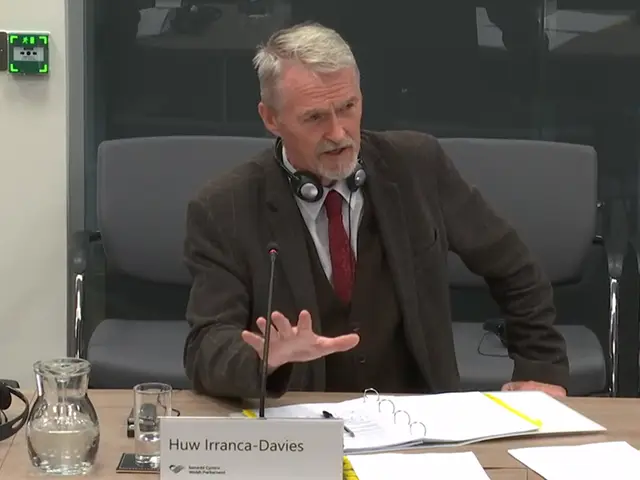
Deputy First Minister and Cabinet Secretary for Climate Change and Rural Affairs, Huw Irranca-Davies, attended the latest Inter-Ministerial Group for Environment, Food and Rural Affairs meeting on Wednesday (Feb 5), alongside ministers from the UK, Scottish and Northern Ireland governments.
One of the main topics was the UK Fishing and Coastal Growth Fund. Ministers from devolved administrations expressed disappointment that the Barnett formula had been used to determine allocations, arguing it failed to reflect the size and importance of the fishing sector in each nation or previous funding levels.
Talks also covered progress on negotiations for a UK-EU sanitary and phytosanitary (SPS) agreement, which could affect cross-border trade in food, plants and animals. Devolved governments welcomed engagement from the UK Government so far but stressed the need for continued cooperation, particularly around biosecurity and the legislative process required to implement any agreement across the UK.
Ministers also discussed the UK Government’s Farm Profitability Review — known as the Batters Review — and the emerging UK Food Strategy. Although these policies apply mainly to England, ministers noted they could still have implications for Wales and other devolved nations, highlighting the need for collaborative working.
A joint approach to banning peat use in horticulture was also agreed in principle, with the Department for Environment, Food and Rural Affairs (Defra) expected to set out possible timelines.
Concerns were also raised about proposed changes to UK work visa rules, which ministers warned could worsen shortages of seasonal agricultural workers, particularly sheep shearers. UK Government ministers acknowledged the risks and said discussions were ongoing.
The next meeting of the Inter-Ministerial Group is scheduled for March 2026, ahead of the upcoming elections in both Wales and Scotland.



Crime8 minutes ago
Milford Haven pensioner admits sexually assaulting two shop workers
76-year-old touched victims and kissed one on the neck, court hears A MILFORD HAVEN man has admitted sexually assaulting two...


News18 hours ago
Senedd backs assisted dying legislation in historic vote
POLITICIANS in the Senedd have voted in favour of legislation that could allow assisted dying services to be provided through...


Crime23 hours ago
Manchester men deny aggravated burglary after armed raid on dog breeder
Prosecution says machete-armed gang carried out “carefully planned” attack TWO men have gone on trial accused of involvement in an...


News1 day ago
Labour and Plaid criticised over £1.2m anti-racism ‘metaverse’ project
Figures revealed in Senedd questions as political row intensifies ahead of election THE WELSH GOVERNMENT has come under political pressure...


Business1 day ago
Local Senedd member hears retailer concerns ahead of election
INDEPENDENT shop owners in Pembrokeshire have warned that rising costs and increasing pressures could threaten the future of small high-street...


Charity2 days ago
Charity launches bid to save Foley House with new community cooperative
A PEMBROKESHIRE charity has launched an ambitious bid to restore Foley House, one of Haverfordwest’s most significant historic buildings, through...
Crime2 days ago
Man who threatened to kill Herald editor given suspended prison sentence
A PEMBROKESHIRE man who sent a message threatening to kill Pembrokeshire Herald editor Tom Sinclair has been given a suspended...


Health2 days ago
Senedd debate called on NHS crisis as Welsh Conservatives demand emergency action
Row intensifies over waiting times, A&E pressures and hospital service changes THE WELSH CONSERVATIVES have brought forward a Senedd debate...


News2 days ago
Abuse and intimidation in politics threatening democracy, new report warns
Three quarters of Welsh politicians say they have felt unsafe in their role ABUSE and intimidation directed at politicians is...


Crime3 days ago
BBC documentary reveals local man murdered mother then lived with her body
A NEW BBC documentary examining one of Pembrokeshire’s most disturbing crimes will be broadcast this week — and includes contributions...
-

 Health6 days ago
Withybush loses emergency surgery in shock health board decision
-

 Health6 days ago
Health board confirms major hospital changes across west Wales
-

 Health5 days ago
Concerns grow over Bronglais stroke plans as politicians demand clarity
-

 Health6 days ago
Health board: Changes will bring “resilience and sustainability” to West Wales services
-
 Local Government3 days ago
Candidate who withdrew from Hakin race will still appear on ballot paper
-

 Business6 days ago
Mounting complaints: More Computer Solutions Wales customers claim losses
-

 Local Government4 days ago
First Minister left red-faced as Labour candidate pulls out during Hakin campaign visit
-

 News6 days ago
Press regulator backs Herald reporting following Ajay Owen complaint