


Farming
New DEFRA Secretary appointed

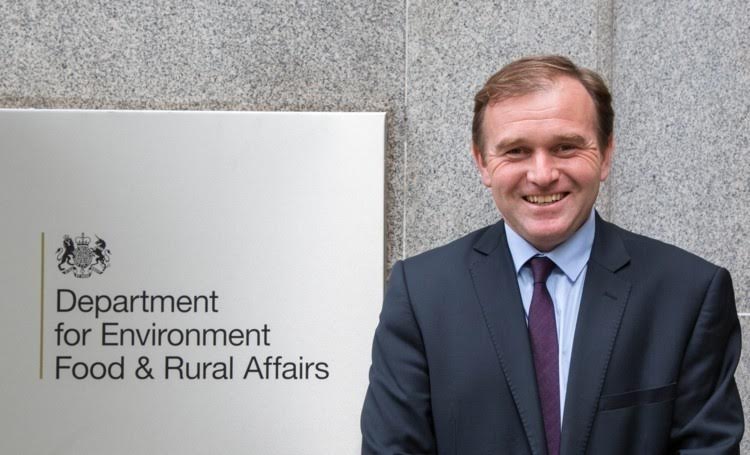
BORIS JOHNSON’s controversial Cabinet reshuffle, which appeared to reward loyalty over competence in several instances, resulted in the appointment of a new Secretary of State at DEFRA.
George Eustice, previously a Minister of State at the department before resigning in February 2019, joined the Cabinet.
He replaced Theresa Villiers in the role.
Mr Eustice comes from a farming background. His family runs a fruit farm, restaurant and shop in Cornwall, where they have a herd of South Devon cattle and British Lop pigs.
Mr Eustice made the headlines in 2016 through being of two Conservative DEFRA ministers who were accused by environmental campaigners of having a conflict of interest over receiving subsidies on their family businesses while being involved in developing the plans for the replacement system to the EU farming support.
The replacement of CAP and tackling the pressures tariffs planned by the Government will affect the UK’s farming industry will be high on Mr Eustice’s ministerial in-tray.
If the UK Government makes good on its promise to significantly diverge from the existing tariff-free arrangements with EU, something which both Westminster and Brussels accept is increasingly likely, farmers are in for a bumpy ride.
Although the UK Government says it wants trade to be ‘as frictionless as possible’, it now accepts that there will be winners and losers. While large English arable farms are likely to be (comparatively) little worse off, Welsh livestock farmers stand as those most likely to be hit hard by tariff changes and any lowering of animal welfare, hygiene, and health standards when the UK strikes trade deals with large markets overseas. America, Canada, Australia, New Zealand, Brazil, and Argentina will want market access on their terms as part of any cross-sector trade agreement. The interim tariffs the Government plans to introduce will, all Wales’ farming unions agree, slash Welsh red meat exports to their biggest market.
After his resignation from Theresa May’s government, Mr Eustice, a vociferous Brexiteer, wrote an article for the Guardian in which he set out his concerns about the UK’s trading relationship with other countries after Brexit.
Mr Eustice wrote: ” I believe in open markets and want us to have an independent trade policy. There is a negotiation to be had about allowing tariff-free quotas on some products as part of a future UK-US trade deal. However, if Americans want to be granted privileged access to the UK market, they will have to learn to abide by British law and British standards or kiss goodbye to any trade deal and join the back of the queue.”
Mr Eustice is now, at least superficially. in a much stronger position to put his words into action.
As the responsibility for sorting out a new support mechanism was handed over by the Welsh Government to the Westminster, the short to medium term future of Welsh farming rests in George Eustice’s hands. Meanwhile, the Cardiff Bay government’s plans, which contained more pie in the sky than an explosion at Peter’s Pies’ factory, are stalled while it waits to see how much it can carve out of farm subsidies to fund its dream of reducing the amount of Wales’ sustainable farmland.
Responding to George Eustice’s appointment, CLA President Mark Bridgeman drew attention to the new Secretary of State’s record at DEFRA.
“We warmly welcome Mr George Eustice to his role at this pivotal time for British agriculture,” Mr Bridgeman said.
“As a long-standing Farming Minister, he will know the scale of the challenge ahead. We will work closely with him to help achieve the full potential of the rural economy.”
NSA Chief Executive Phil Stocker also drew attention to Mr Eustice’s ministerial experience, saying “We hope to continue our strong working relationship with him as agricultural policy evolves in the future as we enter into new farming support schemes and trade arrangements.”
TFA Chief Executive, George Dunn was enthusiastic about the appointment
Mr Dunn said: “It’s great to have a Secretary of State at DEFRA who really wanted the role. George Eustice has the depth of experience, enthusiasm, passion and ideas to really make a difference in this role at such a crucial time for the farming industry as we move into a brand-new policy era.
“George has been particularly mindful of the needs of the tenanted sector of agriculture and we look forward to working with him in his promoted role.”
While NFU-Cymru President John Davies congratulated Mr Eustice about his promotion, he also sounded a note of caution.
Mr Davies said: “The new Secretary of State will have a vital role to play in ensuring the industry can capitalise on the new opportunities afforded to us now the UK has left the European Union. As we embark on this new era, we urge the new Secretary of State to work with his colleagues in the new UK Government Cabinet to ensure that the standards which form the solid foundation of the UK food and farming industry are not compromised in forthcoming negotiations over future trade deals. Mr Eustice’s predecessors have vowed to protect and uphold these standards and we would welcome his commitment to reinforce this pledge at the earliest opportunity.”
John Davies continued: “NFU Cymru is keen to meet with Mr Eustice in the coming weeks to outline our vision for a productive, progressive and profitable food and farming industry in Wales and the role that the UK Government can play in helping us to realise our vision.
“The union’s officeholder team and staff have met with Mr Eustice on several occasions in his previous capacity as Minister for Agriculture, Fisheries and Food. We look forward to continuing that good working relationship.”

Polling shows strong public opposition to killing badgers in Wales
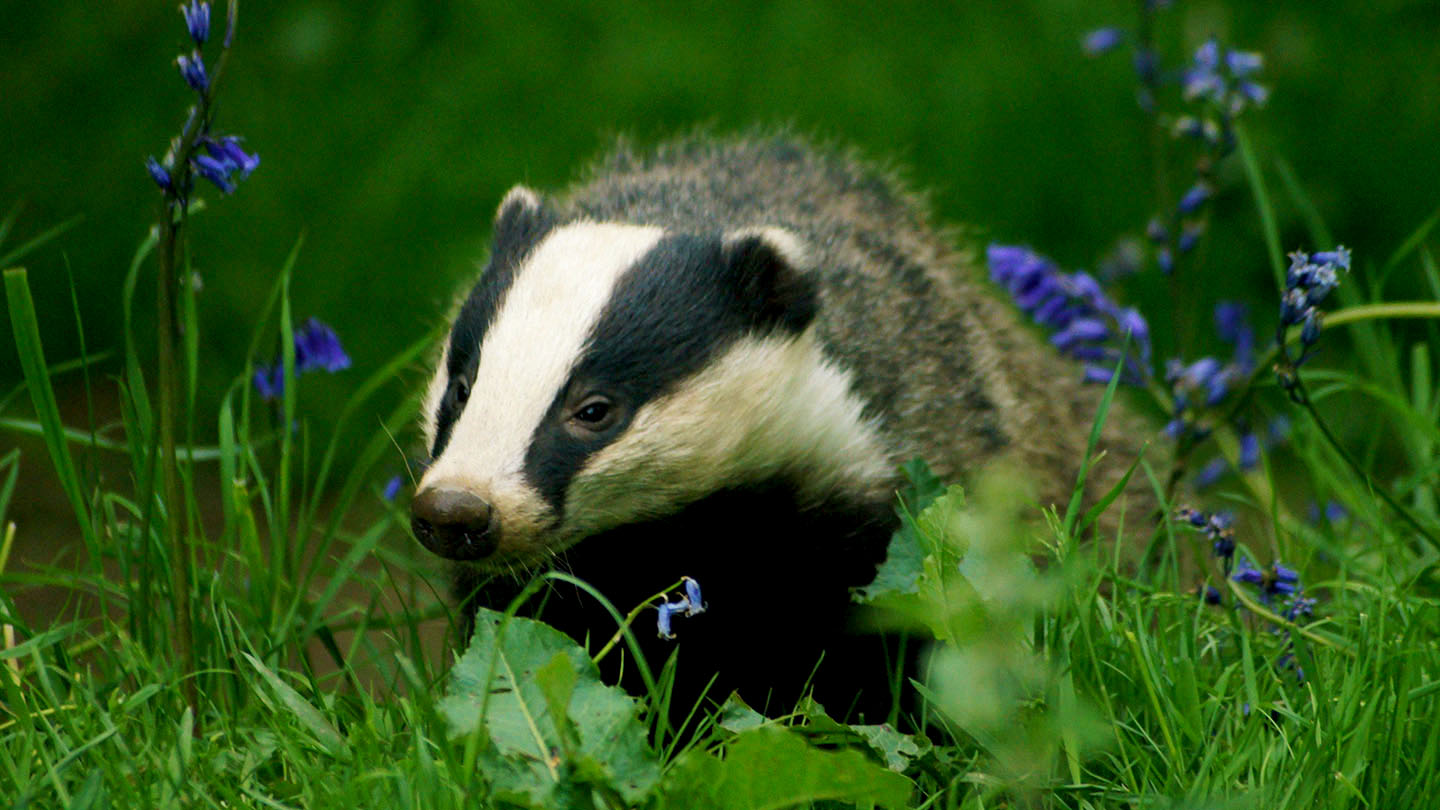
BADGER Trust is calling on Wales’ incoming government to rule out badger culling, after new polling suggested widespread public opposition to killing badgers as part of efforts to tackle bovine TB.
The call comes as a newly expanded Senedd begins its work and a new Welsh Government prepares to set out its priorities.
Badger Trust said ministers and political parties should reject calls for culling and instead focus on “evidence-led cattle measures” to control the disease.
Polling carried out by RSPCA Cymru found that only 27% of people in Wales support badger culling, while 46% are opposed. The survey also found that 63% of respondents were uncomfortable with killing badgers, and 68% opposed the use of public money to fund culling.
The organisation said the figures showed bovine TB was likely to remain one of the most significant animal welfare issues facing Wales in the coming years.

As Plaid Cymru prepares to form a minority government, with Rhun ap Iorwerth MS expected to become Wales’ new First Minister, Badger Trust is urging all parties to take note of public feeling on the issue.
More than half of those surveyed, 51.8%, said they would be less likely to support a political party that backs badger culling, compared with just 7.2% who said they would be more likely to do so.
The poll also found strong support for wildlife protection, with 98% of respondents describing it as important and 69% saying it was “very important”. Around 73% said they were concerned about badger welfare, while 53.8% described badgers as iconic British mammals and 43.5% said they were heavily misunderstood.
Nigel Palmer, chief executive of Badger Trust, said: “The people of Wales have spoken loud and clear: badger culling is a vote loser for the new government.

“It’s clear how much the people of Wales value their badgers as an integral part of their landscape. This underlines the fact that badgers belong here.”
Mr Palmer said Wales should learn from what he described as “politically driven mistakes” in England, where more than 250,000 badgers have been culled over the past 13 years.
He said: “Farmers need support to tackle bovine TB where the infections arise — within the national cattle population, particularly in the larger herds.

“The answer lies in evidence-based cattle measures, delivered in partnership with vets and farmers, not in the unnecessary killing of wildlife.”
Badger Trust said Wales had already shown that bovine TB could be reduced in cattle without killing badgers, through science-led cattle measures aimed at tackling the disease more effectively and humanely.
The charity said the message from the Welsh public was clear, and that Wales should not follow England “down the path of badger culling”.
Badger Trust said: “It’s time to end the badger blame game. The science is solid, and the public has voiced its opinion; now it is time for the new government to listen and act accordingly.”
Badger Trust is the leading voice for badgers across England and Wales and works with local badger groups through its Badgers Belong Here campaign.
Rising fuel and fertiliser bills add to pressure as milk prices remain below production costs
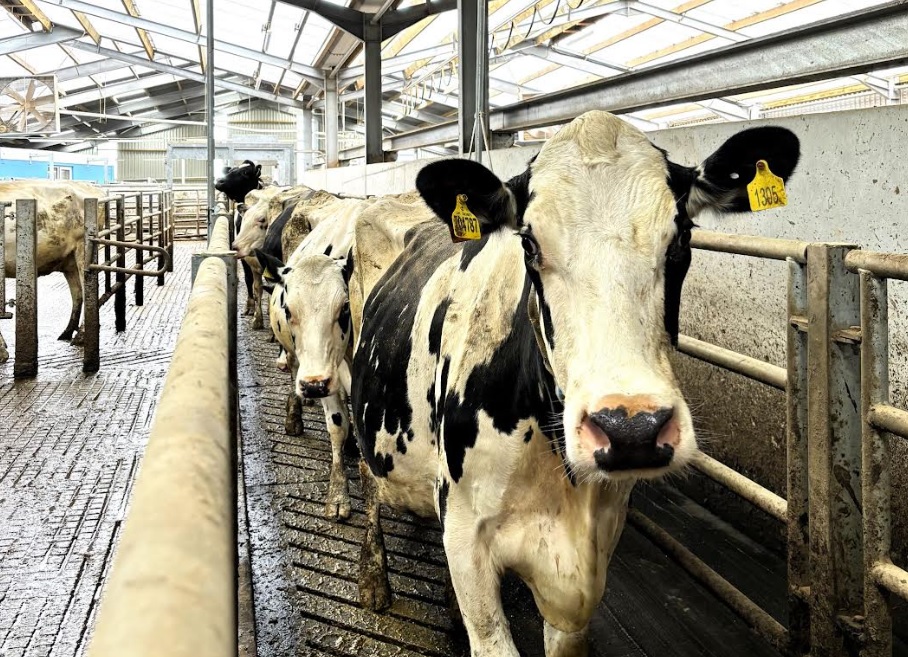
WELSH dairy farmers are being warned that rising fuel and fertiliser costs are threatening the viability of family farms already under pressure from weak milk prices.
The Farmers’ Union of Wales says the sector is being squeezed by a combination of global instability, higher input prices and returns that are failing to keep pace with the cost of production.
The union said recent tensions in the Gulf, together with fears over disruption to energy supplies through the Strait of Hormuz, had contributed to sharp rises in costs facing farmers.
Fertiliser prices are reported to have increased by up to 53% compared with levels before the latest conflict, while red diesel costs have effectively doubled in recent months.
The pressure comes at a difficult time for dairy producers, many of whom the FUW says are still receiving milk prices below the cost of production.
The situation could worsen as the spring flush brings higher milk volumes, which can place further downward pressure on farmgate prices and add to cashflow difficulties.
The Central Association of Agricultural Valuers has also warned that tightening oil markets could reach a tipping point in early June, with higher energy costs already feeding through into agriculture.
In response, the FUW has met major lenders, including HSBC and NatWest, to discuss support for farming businesses. The talks focused on flexibility over lending, overdrafts and cashflow arrangements.
The union is urging farmers who are worried about their finances to speak to banks, accountants and advisers at the earliest opportunity.
FUW President Ian Rickman said Welsh farmers were facing a “perfect storm” of international instability and soaring input costs.
He said: “The sharp increases we are seeing in fertiliser and fuel costs are placing enormous pressure on farm businesses at a time when many dairy farmers are already producing milk below the cost of production.
“These challenges are completely outside farmers’ control, yet they are having a direct and immediate impact on the viability of family farms and rural communities across Wales.

“It is therefore vital that farmers speak openly and early with their banks and professional advisers if they are facing difficulties.
“Our recent discussions with major lenders have been constructive. It is encouraging that banks recognise the exceptional circumstances currently affecting the agricultural sector. Flexibility and understanding will be crucial in helping viable farm businesses navigate this period of uncertainty.”
Welsh Conservatives accuse Plaid Cymru of failing farmers as ministers call for patience over changes to agricultural support
CONCERNS over the pace of farming reforms in Wales have intensified after the Welsh Conservatives accused the Welsh Government of failing to act quickly enough on promised changes to agricultural subsidy schemes.
The criticism comes after Welsh Government Rural Resilience and Sustainability Minister, Llyr Gruffydd, urged farmers to be patient as major changes to support payments continue to be developed.
Speaking to ITV Wales, Mr Gruffydd acknowledged that “change is difficult” as the government seeks to reshape agricultural support across rural Wales. The comments come at a time of growing unease among parts of the farming community over the future of post-Brexit subsidy arrangements and concerns about financial pressures facing farms.
The reforms centre on replacing previous support systems with a new approach intended to balance food production, environmental sustainability and rural resilience. However, some farmers and unions have warned that uncertainty over payments and policy changes risks damaging confidence in the sector.
Reacting to the minister’s remarks, Welsh Conservative Shadow Farming Minister, Andrew RT Davies, said Plaid Cymru was not moving quickly enough to deliver on commitments made to Welsh farmers.
Mr Davies said: “Change is not difficult – contrary to Plaid Cymru separatists’ claims.
“If the will is there, there’s no reason reforms can’t be implemented immediately.
“Plaid Cymru separatists must fulfil their promises to Welsh farmers now.”
The comments reflect wider political tensions over the direction of farming policy in Wales, with opposition parties arguing that delays and uncertainty are creating anxiety for agricultural businesses already facing rising costs and economic pressures.
Farming remains a major part of the Welsh economy, particularly in rural counties such as Pembrokeshire, Carmarthenshire and Ceredigion, where many communities rely heavily on agriculture and associated industries.
The Welsh Government has previously said changes to support schemes are aimed at creating a more sustainable long-term future for farming, though ministers have acknowledged the transition period will take time and may prove challenging for some in the industry.
The debate over subsidy reform is likely to remain a key political battleground as the government finalises details of its future support model and seeks to reassure farmers concerned about their livelihoods.




News16 hours ago
Lifeboats and helicopter join search for missing person off Broad Haven
SEARCH teams carried out a major operation at Broad Haven after reports of a missing person. Little and Broad Haven...


News1 day ago
Multi-agency rescue after child falls on rocks while coasteering
Child airlift requested after four-metre fall near Lydstep A CHILD was rescued from rocks near Lydstep after falling around four...


News2 days ago
Police investigate ‘arson’ after vehicle fire spreads to property in Pembroke
A VEHICLE is believed to have been deliberately set alight during an alleged arson in Pembroke in the early hours...


News2 days ago
Four rescued after dinghy deflates off Pendine
FOUR people were rescued off Pendine on Wednesday evening after Tenby’s all-weather lifeboat was launched to reports of an inflatable...


News2 days ago
Hundreds attend major Diocese of St Davids gathering
Churches across West Wales urged to take message of faith back into their communities HUNDREDS of people gathered at Carmarthenshire...


News2 days ago
Vehicle destroyed in early morning fire in Pembroke
POLICE are investigating after a vehicle was destroyed in an early morning fire in Pembroke. The incident happened in the...


Climate3 days ago
Pembrokeshire named among Wales’ green economy hotspots
New analysis says the county’s net zero sector supports 1,600 jobs and accounts for 5.3% of local economic output PEMBROKESHIRE...


Local Government3 days ago
Dennison code breach raises serious questions over common sense at County Hall
Standards Committee finds Milford Haven councillor breached code despite claims he only helped another councillor complete paperwork A PEMBROKESHIRE councillor...

Business6 days ago
Plaid energy policy challenged by Labour after Adam Price interview
LABOUR SAYS MINISTERS MUST EXPLAIN COST AND TIMETABLE FOR PYLON PLANS PLAID CYMRU’S approach to energy infrastructure has come under...

Community6 days ago
Pembroke Fair praised as well-organised community event
HORSES, STALLS AND FAMILY CROWDS RETURN TO MONKTON FAMILIES, horse owners and visitors turned out in force for Pembroke Fair...
-

 Health2 days ago
Paul Davies warns health board over Withybush and Bronglais services
-
 Crime3 days ago
Police tip-off leads to drink-drive ban for Pembrokeshire pensioner
-

 Crime2 days ago
Carmarthenshire man sent to Crown accused of 33 historic sexual offences
-

 Crime3 days ago
Steynton motorist banned after drink-drive collision
-
 Crime3 days ago
Warrant issued for man accused of taking wild goldfinches
-
 Crime3 days ago
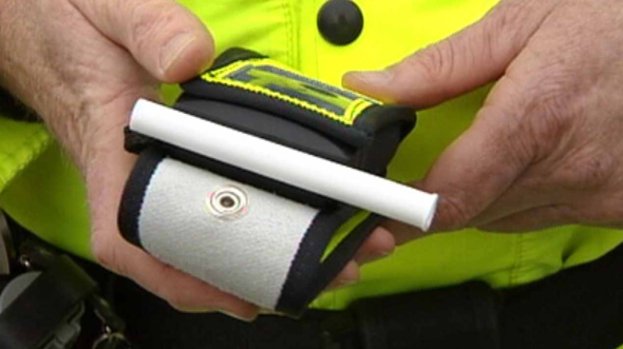
Dock man given suspended prison sentence for third drink-drive offence
-

 Crime3 days ago
Dock motorist fined £1,600 after four speeding offences
-
Business6 days ago
Plaid energy policy challenged by Labour after Adam Price interview