


Politics
Union wants council investigation into Councillor Paul Dowson’s conduct

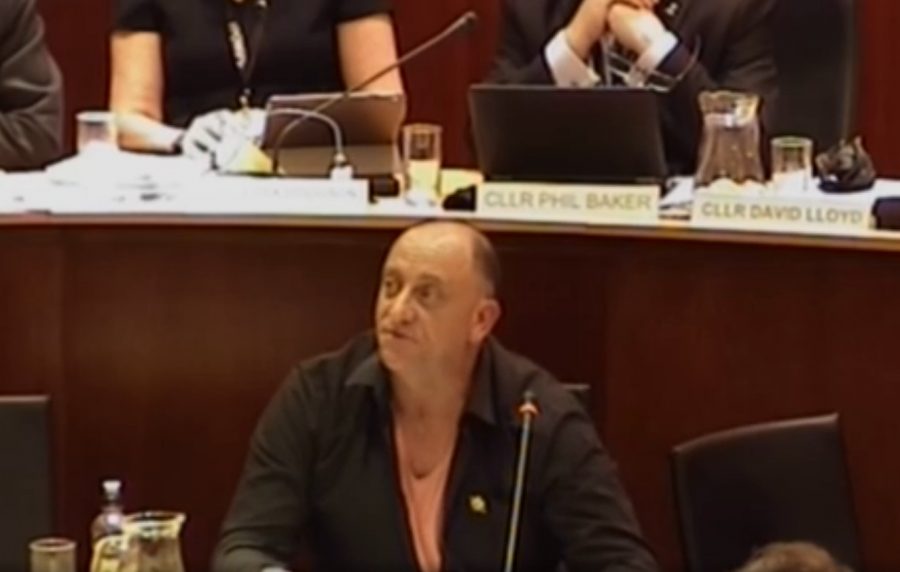
PEMBROKESHIRE County Councillor Paul Dowson’s public statements criticising the Black Lives Matter movement should be formally investigated by the council, according to UNISON.
The trade union said Mr Dowson’s use of a phrase adopted by the racist Klu Klux Klan was deeply offensive when people around the world were united in protest at police brutality and the murder of George Floyd.
UNISON questioned whether the councillor is fit to hold public office.
Mr Dowson used his Facebook page to attack Labour councillor Josh Beynon’s suggestion Pembrokeshire County Hall could be lit up in support of Black Lives Matter’s commemoration of Mr Floyd’s death.
Cllr Dowson posted that “White lives matter” a White supremacist phrase which originated in 2015 as a racist response to protests against police brutality against Black-Americans in the USA. Councillor Beynon received an online torrent of racist and homophobic abuse.

Manuela Hughes, UNISON Pembrokeshire branch chair said: “The Black Lives Matter movement has shown everyone that racism is rife in society. Black people are more likely to have been subjected to police brutality, more likely to live in poverty and more likely to be unemployed as a result of systemic racism. Their contribution is often written out of the history of this country.
Black workers have been disproportionately affected by Covid-19 and in the NHS, care and transport sectors, Black people have paid with their lives for caring for the whole community.
“This is the climate in which Councillor Dowson made his comments. He has brought Pembrokeshire County Council into disrepute. It is important that everyone stands together against racism and the council must formally investigate his behaviour.”
Mr Dowson was criticised for his Facebook comments in April last year that former Labour leader, Jeremy Corbyn, should commit suicide.



Party hopeful cites national security report on ecosystem collapse and food supply threats
A GREEN PARTY candidate standing in the upcoming Senedd elections has warned that biodiversity loss and environmental decline could pose serious risks to food supplies and national security.
Amy Nicholass, the Green Party’s Ceredigion Penfro lead candidate for the May election, has highlighted the findings of a report titled Global biodiversity loss, ecosystem collapse and national security, which examines how environmental breakdown could affect the stability of societies.
Nicholass, who holds a Master’s degree in Environmental Science, said the report shows the need for communities to become more resilient in the face of environmental shocks.
“We need to create resilient communities,” she said. “Such communities are being formed all over the UK at the moment.”
The report outlines how biodiversity decline and ecosystem damage could disrupt food production and increase pressures on national infrastructure.
Environmental campaigners have also launched a new initiative called SAFER – Strategic Adaptation for Emergency Resilience – which aims to help communities prepare for major shocks linked to climate change and ecological decline.
The campaign has been promoted by former Green MP Dr Caroline Lucas and environmental thinker Dr Rupert Read.
Nicholass said the involvement of national security experts highlights the seriousness of the issue.
“There are still people, and political leaders who deny that climate change is real,” she said. “Now is the time to come together to acknowledge the truth and find solutions that are good for nature and good for people, and which do not leave poorer members of our society behind.”

The report also highlights the challenges already facing farmers, with changing weather patterns and biodiversity loss affecting crop production.
Nicholass said farmers are on the front line of the crisis but must also be supported as part of the solution.
A spokesperson for the Department for Environment, Food and Rural Affairs said: “Nature underpins our security, prosperity and resilience.”

Nicholass added that communities had shown during the Covid pandemic that rapid change is possible when people understand the scale of a challenge.
“In the Green Party we always look for hope,” she said. “The pandemic showed that people and communities can be resilient and rethink priorities in times of crisis.”

CANDIDATE CRITICISES DARC PROPOSAL
THE GREEN PARTY has voiced strong opposition to plans for a major US military radar installation on Pembrokeshire’s St Davids Peninsula, warning the development risks escalating global tensions and damaging the area’s environment and tourism industry.
The proposed project, known as the Deep Space Advanced Radar Capability (DARC), would involve the construction of 27 large radar dishes designed to track objects in space. The system would form part of a US-led network intended to monitor satellites and other activity in orbit.
Amy Nicholass, the Green Party’s number one candidate for the Ceredigion Penfro constituency in the upcoming Senedd elections, said the proposals represented a return to Cold War-style thinking.
She said: “The DARC proposals are a disgrace. They benefit no one except the US government. When the US tells Westminster to jump, the Westminster government simply asks how high.
“We should be putting all our efforts into creating lasting peace, not allowing anyone to recreate Cold War tactics where none of us feel safe. Peace is at the heart of Welsh culture.”

Campaigners have also raised concerns about the wider implications of militarising space. The radar system would be used to monitor satellites and other objects in orbit, including those belonging to potential adversaries.
Critics argue that the destruction of satellites could create large amounts of debris in space, which could threaten other satellites used for weather forecasting, telecommunications and navigation.
Local residents have also expressed concern about the potential impact on the landscape and tourism industry.
A community group known as PARC Against DARC has been campaigning against the proposals, warning the development could harm the reputation of the St Davids Peninsula, an area widely regarded as one of Wales’ most important natural and tourism assets.
The campaign group describes the peninsula as a “jewel-in-the-crown natural wonder” and a key attraction for visitors to Pembrokeshire.
Nicholass said developments of this scale must involve local communities in the decision-making process.
“It is vitally important that local people have a say on developments like this,” she said. “We need more local power when it comes to large planning decisions that could fundamentally change our landscape.”
She added that the current international climate made diplomacy more important than ever.
“We understand how precarious the world can feel for many people,” she said. “We are fortunate to live in a peaceful part of the world, but proposals like this risk bringing global conflict closer to home.
“We all share this one planet and need to be part of the conversation about how to stand up for each other in peaceful ways.”

Many voters still unclear which powers belong to Welsh Government and which remain with Westminster
A NEW poll has revealed widespread public confusion about Welsh devolution ahead of the Senedd election in May, with many voters unsure which level of government is responsible for key decisions affecting their daily lives.
Researchers at Cardiff University found that large numbers of people in Wales struggle to identify whether policy responsibilities sit with the Welsh Government, Westminster, or local councils.
The survey, conducted with YouGov and based on responses from 1,544 adults in Wales between February 12 and February 25, suggests that gaps in public understanding remain more than twenty-five years after devolution began.
Academics involved in the study say the findings raise concerns about democratic accountability as voters prepare to choose the next Welsh Government.
Professor Stephen Cushion, from Cardiff University’s School of Journalism, Media and Culture, said confusion about policing stood out as one of the most significant knowledge gaps.
“Almost seven in ten respondents could not correctly identify who is responsible for policing,” he said.
“Nearly half assumed it was devolved to the Welsh Government when it is actually controlled by Westminster.”
The research also found that a significant minority of voters remain unsure about the status of major devolved services.
Around thirty percent of respondents did not know that health and education are run by the Welsh Government – two of the most visible policy areas in Wales.

Professor Cushion said such misunderstandings could affect how voters judge political performance.
“During an election period these gaps matter for democratic accountability because people need to make well-informed decisions about who is responsible for running Wales over the next few years,” he added.
Knowledge of devolved powers
The survey found varying levels of awareness about who controls different policy areas.

Knowledge was weakest around social care delivery, where 81% of respondents either answered incorrectly or said they did not know that local councils hold responsibility.
Policing also showed high levels of confusion, with 69% of people either incorrect or unsure about the role of the UK Government.
Broadcasting was another area where many people were unclear, with 58% unable to correctly identify Westminster as responsible.
By comparison, understanding was stronger in some of the most visible areas of devolved policy.
Seven in ten respondents correctly identified the Welsh Government as responsible for education, while 69% recognised its role in health and social care. Transport was also widely associated with the Welsh Government, with 65% answering correctly.
Immigration was the area where the UK Government was most clearly recognised as responsible, with 71% identifying Westminster.
Recognition of party leaders
The poll also examined how well voters recognise Welsh political leaders.
First Minister Eluned Morgan was recognised by 62% of respondents, while Plaid Cymru leader Rhun ap Iorwerth was known by 47%.
Recognition of other leaders was significantly lower. Welsh Conservative leader Darren Millar was recognised by 21% of respondents, while Welsh Liberal Democrat leader Jane Dodds was known by 18%.
Wales Green Party leader Anthony Slaughter was recognised by just 4%.
In contrast, Reform UK leader Nigel Farage was recognised by 94% of respondents. Dan Thomas, the party’s leader in Wales, was known by 10%.
Understanding the new Senedd voting system
The survey also found limited understanding of the new voting system that will be used at the next Senedd election.
Only 7% of respondents correctly identified the closed-list proportional system that will replace the current arrangement.
Eighteen percent believed the system would be First Past the Post, while 13% thought the Additional Member System would still be used.
Four percent chose the Single Transferable Vote system, while a majority of respondents – 58% – said they did not know.
Media consumption
Researchers also examined how people in Wales consume political news.
The study found that UK-wide media outlets remain the main source of information for many people. Forty-six percent said they rely mostly on UK-wide news, compared with just 10% who mainly use Wales-produced news.
Thirty-four percent said they use both equally.
Online news consumption followed a similar pattern, with 53% mainly using UK-wide websites and 14% relying mostly on Welsh-produced outlets.
When asked to evaluate coverage of Welsh politics, 46% of respondents said UK-wide media do a bad job reporting on the subject, while 28% said they do a good job and 26% were unsure.
Professor Cushion said the findings highlighted the importance of clear reporting about devolved powers.
“The survey underlines the importance of robust reporting that clearly distinguishes between the responsibilities of Wales and Westminster,” he said.
“Clearer signposting of devolved and reserved powers would help voters understand which level of government is responsible for the policies affecting them.”
About the survey
The survey was conducted online by YouGov Plc. A total of 1,544 adults aged 16 and over in Wales took part between February 12 and February 25, 2026.
The results were weighted to be representative of the Welsh population.
The research was funded by the Welsh Government through Creative Wales, with analysis supported by the Arts and Humanities Research Council’s project Enhancing the Impartiality of Political News.



News1 hour ago
Greens oppose US space radar plan for St Davids Peninsula
CANDIDATE CRITICISES DARC PROPOSAL THE GREEN PARTY has voiced strong opposition to plans for a major US military radar installation...

Crime6 hours ago
Chinese intelligence probe reaches Dyfed-Powys Police area
Counter-terror officers arrest man in Powys as part of national security investigation THREE men have been arrested in Wales and...


Crime7 hours ago
Man sentenced after punching convicted paedophile in Haverfordwest pub
A HAVERFORDWEST man has been sentenced after punching a convicted paedophile inside a town centre pub. Haverfordwest Magistrates’ Court heard...

Health22 hours ago
Davies and Kurtz attack ‘fantasy hospital’ pledge for west Wales
Senedd Members demand immediate investment in Withybush and Bronglais as election campaign intensifies SENEDD Members Paul Davies and Samuel Kurtz have launched a fresh...


Health1 day ago
Hywel Dda warns of ‘significant pressure’ as A&E departments remain packed
Patients urged to use NHS 111 as Withybush, Glangwili and Bronglais face continued strain HYWEL DDA University Health Board has...


News2 days ago
War stops Qatar gas: Milford Haven LNG supplies disrupted
UK energy security concerns grow after shutdown at major export facilities ENERGY bills in the UK could rise sharply after...


Community2 days ago
Martyn Butler dies aged 71 months after Haverfordwest visit
Co-founder of Terrence Higgins Trust attended local plaque unveiling honouring friend Terry Higgins A LEADING figure in the UK’s response...

Crime2 days ago
Nine deny Class A drugs conspiracy as case set for Crown Court trial
Eight remanded in custody as four-week trial fixed for May 18 NINE people have denied conspiring to supply Class A...


Community2 days ago
No asylum seekers housed in west Wales hotels, latest Home Office figures show
WEST Wales currently has no asylum seekers being housed in hotels, according to the latest figures published by the Home...


Community5 days ago
St David’s Day parade brings colour and celebration to Haverfordwest
HAVERFORDWEST town centre was a hive of activity today (Friday, Feb 27) as hundreds of children from schools across Pembrokeshire...
-

 Health7 days ago
Petition calling for Withybush intervention nears 5,000 signatures
-

 News7 days ago
Welsh Government criticised after Russian-linked drone image used in defence announcement
-

 News6 days ago
Hoax 999 call sparks massive lifeboat and helicopter rescue — man arrested
-

 Community7 days ago
Pub reopens with VIP club launch and free drink offer
-

 Charity6 days ago
Big Bash brings community together to support grieving children
-

 Health6 days ago
Petition against hospital service changes surges past 6,000 signatures
-

 Crime6 days ago
St Dogmaels man jailed over hundreds of indecent images
-
Crime6 days ago
West Wales man jailed for murder of five-month-old baby