


News
Flood victims round on Port Authority

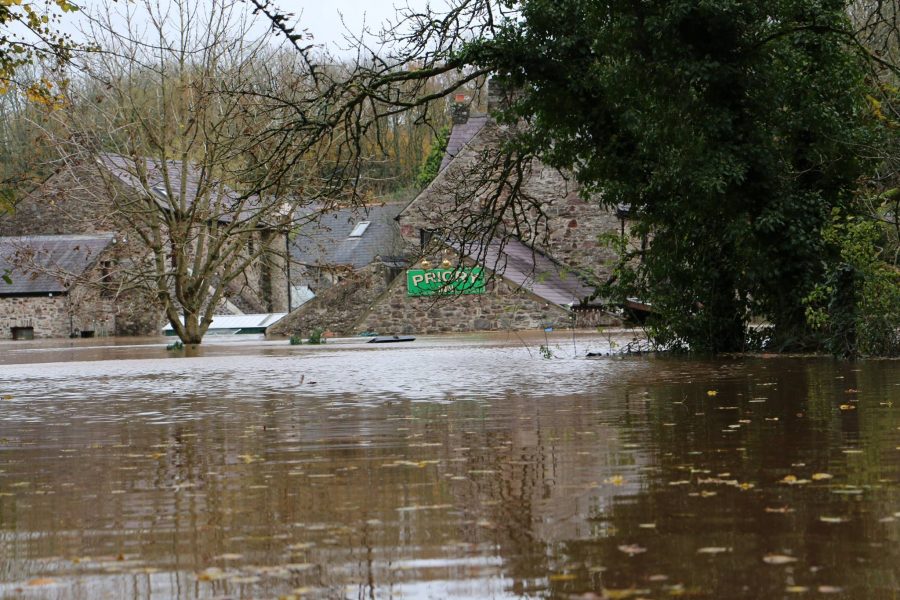
UNHAPPY homeowners from Havens Head and Lower Priory vented their anger and frustration at Pembrokeshire County Council and Milford Haven Port Authority at a special meeting of a Council scrutiny committee this week.
Chair Rob Summons convened the extraordinary meeting of the Council’s Services Overview and Scrutiny Committee for Tuesday (July 21), after a report into devastating floods which struck the hamlets near Milford Haven in November 2018.
Cllr Summons’ wanted to allow residents, who did not get the report in time for the Committee’s June meeting, to contribute to the Committee’s discussions.
Neither the Port nor the Council is prepared to accept any responsibility for the flood. The report’s content focussed, therefore, on possible preventative measures to avoid a repeat of them.
CAUSES IDENTIFIED
The report concluded a combination of a rapidly rising watercourse, silting in the pills, high water levels in them after heavy and sustained rainfall, the low capacity of the culverts, and high tide levels all contributed to the floods.

The report notes the drainage system’s complexity and the poor condition of much of its infrastructure.
The local authority reviewed a report prepared for the Port Authority by civil engineering firm Atkins last June. Atkins’ report recommended the Port Authority should significantly increase the width of the culverts to cope with increased volumes of water run-off.
At the time, several councillors asked if, as the Port Authority claims, the existing culverts are adequate and fit for purpose, why Atkins recommended their size should be increased to handle three times the volume of water for which they’re currently designed.
LOCAL FURY
Ian Bannister, who lives in Lower Priory addressed Tuesday’s meeting.
He said critical assumptions made in the report about the extent of the previous flooding were flawed. Mr Bannister said in the week before the events of November 7-9, 2018, the pills were already full to overflowing. Water in the Lower Priory Pill was at such a level, Ian Bannister said, the footpath leading to Havens Head was inundated.
He also told committee members that repeated requests to open the sluice gates to reduce the flooding’s severity were ignored and one of the sluice gates supposed to release water from the pills had been broken for ten years and was only now being repaired.
Neither the Port Authority nor Council Officer Darren Thomas was having any of it.
Rocking back and forth in his chair, hands behind his head, and staring at the ceiling while answering questions was not a good look for Mr Thomas, in particular. He gave the unfortunate impression of not being much interested in anything Mr Bannister had to say.
Metaphorically patting the Council on the back for its response to the flooding appeared confused by Darren Thomas with a proactive role in preventing it.

Appearing on behalf of the Port Authority, Chair Chris Martin and Chief Executive Andy Jones, determinedly stuck to the line that it wasn’t them, guv.
Acutely aware of the litigation risk it faces if it concedes even an inch, the Port Authority’s approach is to brickbat any suggestion of contributory fault on its part. Conditions of the culverts were less than ideal but had no effect on the flooding. A valve in the system which didn’t work properly had nothing to do with the backflow of water. A failure to drain the pills over the preceding days, of little or no effect. Defective sluices and failure of water measurement equipment, nothing to see there.

Emotional moment: Ian Bannister from Lower Priory clearly upset by the damage caused (Pic: Herald)
REPORT DID NOT PLAY BLAME GAME
While Ian Bannister might have felt like he was banging his head against a brick wall trying to get to the heart of the matter, getting to the heart of the matter was something the Capita report didn’t address and an issue which its authors were not asked to address.
Capita was not asked to assess who, if anyone, was to blame; presumably, in case they could and were able to apportion it.
Sticking to the narrow technical criteria of their brief, Capita conducted flood modelling, produced options based on that modelling, costed those options, and provided conclusions accordingly.
And it was the conclusions which took some swallowing; especially the one recommended to the Council.
Although the report recognises engineering options could be used to help alleviate the flood risk it notes the options for doing so are expensive and would require further justification to the Welsh Government to secure funding.
Capita’s economic assessment says a flood alleviation scheme would be difficult to justify over and above what it describes as ‘Business as Usual’.
That option involves sustaining the current Welsh Government Flood and Coastal Erosion Risk Management arrangements including routine maintenance or inspections of flood and coastal defence systems, or doing the (bare) legal minimum where there is a statutory requirement to continue them.
It accepts flood risks affecting several residential and commercial properties but does not take into account rising sea levels, the increased frequency of extreme weather events, or the continuing development at Milford Haven Docks.
As Ian Bannister pointed out, the area of land on which the Port Authority wants to build a car park for its proposed hotel development was flooded by raw sewage washed down from the pills in November 2018. That does not appear to have been factored into the Port’s hotel plan, dealt with in the drainage assessment for the development and relayed to the Council’s Planning Committee.
The report concludes, however, the potential exists for a flood alleviation scheme in Milford Haven as there are economic benefits of undertaking one. It recommends further work is to cost a scheme and refine one’s economic viability.
COUNCILLORS TAKE AIMAT PORT AUTHORITY
When the time came for councillors to respond to the report and what they had heard in response to residents’ concerns, questions became even more pointed.
Cllr Viv Stoddart said she wanted to look at potential solutions.
Referring to a recommendation in the report, which suggested replacement of the existing Havens Head culvert section with a slightly larger circular concrete culvert of and building a new section to discharge into the Port, she asked for confirmation of the works estimated costs.
Responding Council Engineer Emyr Williams confirmed the cost estimate was £3.4m but added he regarded that as an optimistic cost because of the poor state of the made-up ground. She asked whether some form of joint-venture would be possible.
Based on her local knowledge of the areas affected, Viv Stoddart drew councillors’ attention to the content of a sentence in the report’s conclusions: ‘It can be said in summary that the culvert is the primary cause of flooding in Havens Head and Lower Priory’. Mrs Stoddart said it was her view and other residents’ views going back many years that the culverts were inadequate and could not cope with periods of very heavy rain.
Cllr Stoddart drew attention to the extent of backfilling at Goose Pill, going back as far as the 1970s and assumptions made in an appendix presented to the meeting which said were unsubstantiated assertions. Viv Stoddart said, in her view, liability rested with the Port Authority and its predecessors in title over the land it now owned. She added to rely on insurers declining to pursue the Port Authority as evidence the Port Authority was not liable ignored the litigation risk and cost of pursuing proceedings against it.
Cllr Mike Stoddart suggested the backfilling of the pills was a substantial issue. Backfilling the pill, he said, inevitably increased the pressure on the culverts and reduced their effectiveness and moving water. He added the original culverts were much shorter and their increased length was necessitated by the effects of backfilling which reduced the pills’ ability to handle excess water. Mike Stoddart compared the effect of backfilling reducing the capacity of the lake to sinking six concrete blocks in a bath and watching it overflow in short order.
Cllr Stoddart drew members’ attention to an alteration made to both the direction of the Havens Head culvert and a reduction its width. Emyr Williams said he agreed the hydraulics of the system were ‘less than satisfactory’. Mike Stoddart suggested that work be commissioned to see if the diversion of the Haven Head culvert to discharge directly into the Docks would – at least – partly address the flood risk.
He pointed out the Port Authority had done very well out of its ownership of the land, as had the previous Milford Docks Company. The Port Authority, he said, should not be allowed to ignore problems which arose as a result of its actions or inaction.
COMMITTEE WANTS MORE INVESTIGATIONS
Cllr Rhys Sinnett raised an ‘easy win’ the report identified, which suggests artificially and permanently lowering the pills’ basins, to create an increased storage volume.
Capita’s representative, John Greenier, said that option was part of a suite of solutions which could have a considerable cost.
Cllr Stephen Joseph said had it not been for the Fire Service pumps removing 14,000 litres of water a minute from Havens Head, the buildings there would have been inundated at an extraordinary cost. He pointed out the Fire Service were not there as an insurance policy for a landowner which failed to act to protect its own property. He observed that modern practice built-in flood attenuation as standard and infill, as took place in the past, would not happen now.
Cllr Joseph added the report needed to go back to Cabinet to find out what money was available for further investigations and the ‘business as usual’ recommendation should be rejected.
Supporting the suggestion, Cllr Di Clements said the Cabinet needed to put its money where its mouth is and commission a fresh look at the problems.
Cllr John Preston said a number of agencies were involved and each was passing the buck. He said ‘business as usual’ was what created the problem in the first place.
Cllr Rob Summons moved a recommendation that the Committee send the report to Cabinet for further action and examination of options.
The Chair’s recommendation carried unanimously.











Samuel Kurtz says public frustration has grown after two years of Labour controversies and policy decisions
FORMER West Wales MS Samuel Kurtz has said Sir Keir Starmer’s resignation felt “increasingly inevitable” after months of controversy and public frustration.
The Welsh Conservative said he watched the Prime Minister’s Downing Street statement with “genuine frustration”, adding that he wanted the UK to be respected regardless of which party was in government.
Starmer announced on Monday (Jun 22) that he would resign as Prime Minister and Labour leader, just 12 days before the second anniversary of Labour’s 2024 general election victory.
Mr Kurtz said: “As a British citizen, I sighed genuine frustration while watching this morning. Whatever the political colour of the Government, I want our country to be respected at home and on the international stage.

“But, in truth, this moment has felt increasingly inevitable as the weeks turned into months.”
He pointed to a series of controversies and policy decisions, including the Lord Alli gifts row, winter fuel allowance cuts, the Family Farm Tax, rising National Insurance, defence spending and domestic energy production.
Mr Kurtz said people “simply feel worse off”, adding that confidence in the economy remained low.
He said: “A Government should ultimately be judged on whether life is getting better for the people it serves.
“After two years marked by the controversies and a series of damaging policy decisions mentioned above, it’s difficult to argue this Government has passed that test.”
Mr Kurtz also questioned what would happen next, asking whether Labour would see an “Andy Burnham coronation”, whether Wes Streeting could build enough support, or whether an outsider could emerge.
He added that he would be watching the leadership contest “from the sidelines with interest”.
Labour is expected to open nominations for a new leader on July 9, with Starmer remaining in office until his successor is chosen.

A HAVERFORDWEST venue has been praised for raising more than £2,600 for local charities through a series of community events.
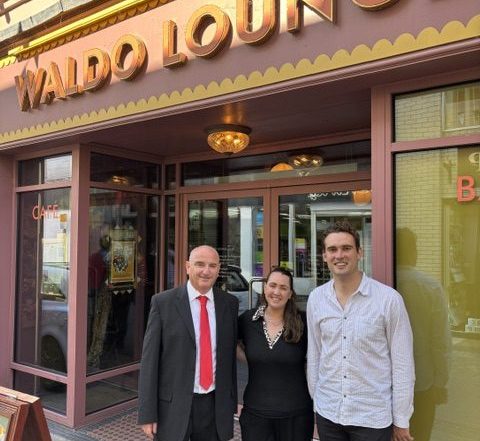
Castle Ward county councillor Thomas Tudor visited The Waldo Lounge in Haverfordwest with Henry Tufnell MP, where they met manager Stephanie Davies.
Cllr Tudor said Stephanie had “truly embraced” her role in the community, organising events including a duck race, sports quiz, Mad Hatter’s tea party for Little Loungers, a bake sale and a drag night show.
Together, the events have raised £2,637 for local good causes.
Charities to benefit include The VC Gallery, Tŷ Hafan and Adam’s Bucketful of Hope Cancer Support Centre.
Cllr Tudor said: “It was lovely to introduce Henry Tufnell MP to Stephanie Davies, manager of The Waldo Lounge in Haverfordwest.
“Stephanie has truly embraced her role in the community of Haverfordwest, running many exciting initiatives and raising a staggering £2,637 for local charities.”
The fundraising continues this week, with Rock ’n’ Roll Bingo and a Wild West country and western night featuring a rodeo bull.
Caption: Community support: Thomas Tudor, Stephanie Davies and Henry Tufnell MP outside The Waldo Lounge in Haverfordwest.

A MOTORCYCLIST has died following a four-vehicle collision on the A40 between St Clears and Whitland.
Dyfed-Powys Police said the crash happened at around 12:00pm on Sunday (Jun 21) and involved a grey Audi, a blue Seat, a grey Vauxhall and an orange KTM motorbike.
Sadly, the rider of the KTM died from their injuries and was pronounced dead at the scene. Their next of kin have been informed and are being supported by specialist officers.
A 38-year-old man has been arrested on suspicion of causing death by careless driving. He has since been released on conditional bail while further enquiries continue.
The road was closed while collision investigators examined the scene and reopened at around 8:30pm.
The latest tragedy follows two other serious motorcycle crashes in west Wales.
On Sunday afternoon, another motorcyclist was injured in a separate collision and is recovering in hospital.
Last week, a 22-year-old rider sadly died in a crash near Narberth, while his female pillion passenger was taken to hospital.
Anyone with information, or dashcam footage which could assist the investigation, is asked to contact Dyfed-Powys Police online, by emailing [email protected], by direct message on social media, or by calling 101.
Alternatively, contact Crimestoppers anonymously on 0800 555111 or visit crimestoppers-uk.org.
Quote reference: DP-20260621-177.



News1 hour ago
Motorcyclist dies after four-vehicle crash on A40 in Carmarthenshire
A MOTORCYCLIST has died following a four-vehicle collision on the A40 between St Clears and Whitland. Dyfed-Powys Police said the...


News2 hours ago
Rhun ap Iorwerth urges new deal for Wales after Starmer quits
First Minister says next Prime Minister must focus on greater powers, fair funding and respect for Wales’ democratic mandate FIRST...


News2 hours ago
How Labour’s landslide victory unravelled in just two years
Prime Minister announces resignation after losing support within his own party as Andy Burnham emerges as overwhelming favourite to take...


News15 hours ago
Long Course Weekend set to bring thousands to Pembrokeshire
Three days of swimming, cycling and running will once again transform Tenby into one of the UK’s biggest endurance sporting...


Community22 hours ago
The gentle giant behind the tattoos
Pembrokeshire security worker Josh Davies praised for professionalism, kindness and proving first impressions can be wrong JOSH Davies is hard...


Charity2 days ago
Toy Story fans fill charity toy box at Haverfordwest cinema
Donations pour in for SNAP Specialist Play as families embrace Toy Story 5 launch A TOY STORY-themed charity appeal at...


Community2 days ago
Lord Rhys emerges from the mist in St Davids
Giant puppet begins historic journey marking 850 years since the first Eisteddfod MIST swirled around St Davids Cathedral on Friday...


News3 days ago
Tragic tribute paid to Haverfordwest man after A4075 collision
FAMILY REMEMBERS “KIND AND LOVING” CALLUM HANSON THE FAMILY of a 22-year-old man from Haverfordwest who died following a road...


News4 days ago
Motorcyclist, 22, dies in A4075 crash in Pembrokeshire
A 22-year-old woman remains in hospital after two-vehicle collision A MOTORCYCLIST has died following a serious two-vehicle crash on the...


Community4 days ago
Why police will be visiting every home in Pembrokeshire
New operation aims to knock on more than 257,000 doors across Dyfed-Powys over the next three years DYFED-POWYS POLICE has...
-

 Crime4 days ago
Milford Haven man jailed for breaching domestic violence protection order
-

 Local Government6 days ago
Security privately arranged by Mayor at Beating of the Bounds
-

 News4 days ago
Crash on Freeman’s Way causes school-run chaos across Haverfordwest
-

 Crime6 days ago
Man wanted by court after failing to attend hearing over alleged shop thefts
-

 Crime6 days ago
Man jailed after admitting strangulation and assaults
-
 Crime6 days ago
Man banned from roads after drink-driving offence
-

 Crime6 days ago
Drug trafficker must repay £33,000 after court rules he made nearly £500,000
-

 Crime6 days ago
Man sentenced over stalking campaign and lock knife offence