


News
Torch Theatre faces ‘longer term challenges’


THE TORCH THEATRE will remain closed until at least the end of October.
The news came in a statement released by the Theatre’s management on Friday, July 24, just as the Welsh Government announced restrictions would be lifted on the opening of cinemas, theatres, and museums, subject to social distancing regulations.
The statement described the period of enforced closure during the COVID-19 pandemic as ‘incredibly demanding’ and said the Torch was ‘fighting to survive’.
Even though the venue hopes to reopen on November 1, uncertainty about the extent of social distancing rules has persuaded its management to cancel all of its remaining live shows for this year.
TORCH THEATRE FACES ‘LONGER-TERM CHALLENGES’
Besides the revenue cost to the Theatre from its closure, the ripples from its closure are being felt across West Wales. The Torch Theatre is more than a venue. It is a centre for community life in Milford Haven and a hub for Pembrokeshire’s thriving creative arts sector.
To keep afloat, the Theatre made successful applications to the BFI, Film Hub Wales and the National Lottery Resilience Fund, the Arts Council Wales Stabilisation Fund, as well as being eligible for two Welsh Government Business Rates Grants.
The statement reads: ‘This crucial support has given us the security to plan essential maintenance, maintain audience and community engagement, and develop new modes of working’.
While the support has allowed the Theatre to take the first steps toward recovery, the venue’s management says it ‘does not provide the solutions to the longer-term challenge of surviving the COVID-19 crisis’.
The Theatre will use the closure period to carry out repairs on the building’s fly tower, which was damaged during February’s storms.
Funding for the repair work will come from Pembrokeshire County Council Enhancing Pembrokeshire Fund and Arts Council Wales, who will each cover a proportion of the costs after the settlement of the Theatre’s insurance claim for the storm damage.
CONTINUING CLOSURE LIMITED REOPENING
This decision to remain closed takes account of the following decisive factors:
• Consultation with audiences suggests that there is no appetite to return while there is so much uncertainty over the reproduction rate of Covid-19. To open any part of the operation without an audience is not economically viable and would quickly lead to redundancies.
• Film distributors are unable to confirm release dates and producers of live shows are cancelling and rescheduling tours to ensure that their businesses remain viable. As such, the Company cannot deliver a theatre programme.
• Taking account of its civic responsibilities, the Theatre’s management believes that it would not serve audiences, staff, volunteers or artists well to rush into reopening before reassurance the Torch is a safe place to return to.
• The need to undertake essential maintenance and remedial works on the fly tower renders an immediate opening impractical.
Bearing in mind those factors, the Theatre’s management team made what it calls ‘difficult decisions’ about reopening after November 1.
The management team’s statement says:
• With social distancing in place, it is not viable for us to produce or present live productions. As such, all live theatre performances will be cancelled for the remainder of 2020 including our Autumn production and festive pantomime, Jack and the Beanstalk.
We are currently in the process of rescheduling our own productions and visiting shows into our 2021 programme and will be contacting affected customers over the next few weeks.
• Pending release schedules from film distributors, we will hope to open with a cinema only offer for the rest of 2020, at a limited capacity to maintain social distancing requirements. Operational staff would be required to work in bubbles under strict health and safety guidelines.
The ambition to return with cinema only for November and December is dependent on the threat posed at that time by Covid-19, Government directives, securing further financial support and commitment from the film distributors.
• From January 2021, should conditions allow, we should like to return to live productions. This would prove our best-case scenario, allowing wider operations to return to something like normal levels in the New Year; however, this scenario comes with the most financial risk attached and is subject to change.
Should social distancing rules remain in place from January, we would be forced to continue with a cinema-only offer into 2021.
• There remain a host of unknowns and whilst we are planning for our best-case scenario, we are also preparing for the worst: should even a socially distanced cinema offer prove untenable from November, then we may yet be forced to close for the remainder of the financial year.

JOBS UNDER THREAT WITHOUT MORE HELP
Whatever happens, when the UK Government’s Job Retention (‘furlough’) Scheme ends in October, and until ticket income returns to its normal level, the Torch will rely on financial intervention and support from the Welsh Government and other bodies to maintain its staff team and operations until things return to whatever ‘normal’ proves to be.
On July 5, the Westminster Government announced a £1.6bn package of support for the UK’s creative arts sector. Wales’ share of that funding is £59m for the whole of Wales’ cultural and creative industries.
Yesterday, Thursday, July 30, the Welsh Government announced it would allocate £53m of the £59m to the sector. The money’s distribution will be subject to an application process.
Speaking to The Herald this week, David Melding, the Conservatives’ Shadow Culture Minister, said: “While I acknowledge the support the Welsh Government has already given to the creative sector now was the time to demonstrate decisive leadership which they have failed to do.
“Wales rightly regards the creative sector as a strategic growth area and key to Wales’ economic success. It is also central to the nation’s ever evolving story and something we want to project worldwide. Rather than short changing the sector by £6 million the Welsh Government should have added to the funds now made available to Wales by the UK Treasury.”
Nick Capaldi, Chief Executive of the Arts Council of Wales said: “These funds ease the immediate threat of a collapse in the creative sector.”
Siân Gwenllian MS, Plaid Cymru Shadow Minister for Culture, said: “While I welcome today’s news that £53 million has been promised to the Arts industry in Wales, I would question what has happened to the £6 million – within the space of a month, £59 million has been reduced to £53 million and not a penny has reached the sector.”
LOOKING TO THE FUTURE
Ben Lloyd, Executive Director of the Torch said: “Our team are working tirelessly to secure extra funding to help us to avoid job losses from November. Every alternative option will be explored.
“Throughout these times of hardship, we remain committed to our mission to engage, inspire, entertain and challenge our audience, and supported by the Arts Council Wales Stabilisation Fund we will seek alternative methods of delivering opportunities to our community.”
Peter Doran, the Torch Theatre’s Artistic Director said: “Here at the Torch we try and cover all aspects of theatre and the performing arts but at the end of the day, we pride ourselves on being theatre-makers, producing our own work; consequently, if we’re not able to produce, it feels like the creative heart has gone out of the building and so we are determined to get up and running again as soon as it’s safe to do so.
“To that end, we aim to come back in the New Year with all guns blazing and producing great pieces of theatre. We are all looking forward to that. In the meantime, we are planning some interesting community projects for people to get involved in and we also plan something for the schools as a Christmas treat. So look out for us.”
Ben Lloyd continued: Away from the art, we are also planning new membership, guardian, legacy and sponsorship schemes allowing our patrons and business partners to become more connected with us and support different areas of community and artistic activity. Further details and the launch of these new schemes are planned for September.
“A great number of our patrons have kindly donated the value of their unused tickets to the Torch over the past months and there has been a high level of interest in other ways our patrons can be more involved. The kind support of our patrons is always hugely appreciated and will be more necessary than ever in the coming months as we seek to bounce back brighter from this crisis.”
Ben concluded: “As a business and like many others, we are going into the unknown. We have never been in a situation like this before and have been operating on a knife-edge over the past few months.
“We have managed to put in place the first building blocks toward our survival. We have reason to be cautiously optimistic and remain determined to sustain for our community, our staff, our artists and the audiences of the future; but our situation remains critical, with many factors beyond our control and we will be seeking support from all quarters to help us get through the challenging months ahead.”











Ministry of Defence
Could Milford Haven be a target? Are we exposed as UK relies on US for missile defence?


Cold War fears resurface as Iran’s reach grows and Britain admits it has no independent shield
PEMBROKESHIRE has long been considered a strategic target — and during the Cold War, the county’s energy infrastructure and Atlantic access placed it firmly on the radar of military planners.
Today, those same strengths are raising uncomfortable questions once again.
As tensions rise following Iran’s attempted strike on a UK–US base at Diego Garcia on Saturday (March 21), the debate has shifted sharply: not whether Britain is under immediate threat — but whether it would be protected if that ever changed.

Strategic target
Milford Haven is home to some of the UK’s most critical energy assets, including major LNG terminals and oil infrastructure that supply a significant share of the nation’s gas.
In strategic terms, such facilities would rank among the most valuable economic targets in any high-level conflict.
For many in Pembrokeshire, that reality is nothing new. During the Cold War, the area was widely regarded as a potential target due to its importance to Britain’s energy security.
Lessons from Diego Garcia
The attempted strike on Diego Garcia has become a defining moment in the current crisis.
The joint UK–US base is a heavily defended military installation, supported by advanced radar systems and US naval assets. Reports indicate that one of the incoming missiles was intercepted before it could reach its target, while another failed.
But that success raises a more troubling question.

If a missile can be intercepted over a fortified base in the Indian Ocean, what happens when the target is a civilian energy hub in west Wales?

No shield over Britain
The UK has no dedicated system to intercept long-range ballistic missiles over its own territory.
While RAF Fylingdales provides early warning and tracking, it cannot stop an incoming threat.

Britain’s air defence network is designed to deal with aircraft, drones and cruise missiles — not high-speed ballistic weapons travelling through space.
In practical terms, if a missile were ever heading toward a location such as Milford Haven, there is no British-operated system that could reliably stop it at the last moment.
Reliance on the United States
Instead, any interception attempt would fall to the United States and wider NATO systems.
These include:
- Aegis Ashore missile defence bases in Eastern Europe
- US Navy warships equipped with SM-3 interceptors
- Integrated NATO tracking and command networks
These systems are capable of striking a missile in space during its midcourse phase — but only if the missile passes within range.
If it does not, there may be no interception at all.
Even when an attempt is made, success is not guaranteed. Analysts estimate that such systems have a probability of success of between 50 and 80 per cent under test conditions, meaning multiple interceptors are often fired at a single target to improve the odds.
Europe now “within range”
The debate has intensified following warnings from Israel that Iran’s latest missiles could reach far beyond the Middle East.
Israeli officials have claimed that the system used in the Diego Garcia attempt was a two-stage ballistic missile with a range of around 4,000 km — potentially placing parts of Europe within reach.
Cities such as London, Paris and Berlin have been cited as falling within the outer limits of that range, although experts stress that range on paper does not necessarily translate into reliable, repeatable strike capability.
Experts divided
Defence analysts remain split.
Some say the attempted long-range strike marks a clear step forward in Iran’s capabilities, moving the threat from theoretical to credible.
Others caution that Iran’s operational missile arsenal has historically been limited to around 2,000 km, suggesting that any longer-range capability may still be experimental rather than deployable.
UK Government response
Ministers have sought to calm fears, insisting there is no current evidence that Iran has either the intent or the capability to strike the UK mainland.
At the same time, the government has condemned Iran’s actions as “reckless” and emphasised that Britain will work with allies to protect its interests.
That response reflects a broader reality.
Deterrence, not defence
Britain’s primary protection is not interception — it is deterrence.
Any successful strike on UK soil would almost certainly trigger a major NATO response, making such an attack extraordinarily risky for any adversary.
But deterrence does not eliminate vulnerability.
The bottom line
Pembrokeshire’s strategic importance has not changed — but the conversation around long-range threats has.
The UK can detect a missile. It can track it. It can coordinate with allies and attempt an interception at distance.
But when it comes to stopping it over Britain itself, there is no independent shield — only reliance on US and NATO systems being in the right place at the right time.
For communities built around critical infrastructure like Milford Haven, that raises a stark and uncomfortable question:
If the unthinkable ever became reality, who — if anyone — would be able to stop it?

A local beauty therapist earns recognition in prestigious UK competition
A MILFORD HAVEN beauty therapist has been shortlisted for a major national award celebrating excellence in the hair and beauty industry.
Charlotte Mitchell-Johns, of The Attic Hair & Beauty, has been named a finalist in the Hair Extensions Specialist category at the UK Hair and Beauty Awards 2026.
Ms Mitchell-Johns, who is a Level four beauty therapist, also works as a hair extensions specialist and beauty educator with HB Training.
Speaking about the recognition, she said she was “truly honoured” to be named among the finalists.
She added that she believes the industry thrives on collaboration rather than competition, and that supporting others is key to long-term success.
Ms Mitchell-Johns has been recognised for her technical skill, commitment to clients, and efforts to maintain high standards within the beauty sector.
The UK Hair and Beauty Awards highlight leading professionals from across the country, celebrating talent, creativity and dedication within the industry.


Registered sex offender Wayne Evans, who moved to Carmarthenshire for a fresh start, was caught after the National Crime Agency flagged activity linked to a Kik account
A CONVICTED child rapist who moved to rural west Wales in an apparent attempt to start over was found with indecent images of children on his phone after his online activity was flagged by the National Crime Agency.
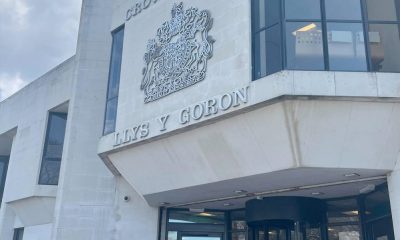
Wayne Evans, 59, of Pentrecourt Road, Llandysul, appeared before Swansea Crown Court after officers discovered the images during an investigation triggered by the NCA.
The court heard that in January last year, the NCA alerted Dyfed-Powys Police to a Kik messaging account involved in downloading indecent images of children. The email address linked to the account was already known to police and belonged to Evans, a registered sex offender.
Officers went to his home on January 28 and arrested him. Evans told police he had not downloaded the images himself and claimed they had appeared in a Kik group he was part of, adding that the group had since been shut down.
Police seized six devices from the property and Evans handed over the pin numbers for his phones and tablets. He later answered “no comment” to questions in interview and was released under investigation while the devices were examined.
A forensic analysis of his Samsung Galaxy phone uncovered 13 Category A images, eight Category B images and two Category C images. The material involved children aged between four and 12.
Category A images are considered the most serious and involve the gravest forms of sexual abuse.
The court was told Evans has six previous convictions covering 23 offences. In 1990, he was convicted of gross indecency with a child and indecent assault of a child. In 2002, he was jailed for 15 years for raping a child under 16, attempted rape, gross indecency and five further counts of indecent assault. He was placed on the sex offenders register for life and released from prison in 2011.
Evans had admitted three counts of making indecent images of children, covering Categories A, B and C.
Emily Bennett, representing Evans, said her client knew the court would view the offences in the “dimmest of lights”. She said he had moved to a rural part of Wales where he kept himself to himself and had taken steps to reduce his contact with females.
She also told the court Evans accepted that he still had an inappropriate sexual attraction to children, and said he was in a long-term stable relationship with a partner who knew about his past offending.
Sentencing Evans, Recorder Mark Powell KC said he accepted that the defendant had taken some steps to change his life, but said it was clear he continued to have a sexual interest in children.

The judge said his priority was to pass a sentence which reduced the risk Evans posed. He said an immediate prison term available under the guidelines would be relatively short, could be destabilising, and might even increase the danger to the public.
With credit for his guilty pleas, Evans was sentenced to 16 months in prison, suspended for 18 months. He was also ordered to complete a rehabilitation activity requirement, a Building Choices programme, and 100 hours of unpaid work.
A Sexual Harm Prevention Order was imposed for 10 years, and Evans will remain on the sex offenders register for life.
Photo caption:
Wayne Evans was sentenced at Swansea Crown Court after indecent images of children were found on his phone



Entertainment23 hours ago
Tenby steams up in spectacular style as crowds flock to festival
Colourful parade, towering creations and Victorian flair bring town centre to life TENBY was transformed into a vibrant Victorian fantasy...


Crime2 days ago
Publican jailed for six years for supplying cocaine and cannabis
Milford Haven man sentenced at Swansea Crown Court following drug dealing operation A MILFORD HAVEN publican has been jailed for...


Local Government2 days ago
Poverty summit highlights support efforts across Pembrokeshire
A SUMMIT bringing together key organisations from across Pembrokeshire has highlighted both the scale of local poverty and the work...


Education3 days ago
Milford Haven school plans unveiled but funding not yet secured
PLANS for a new £100 million school in Milford Haven have been unveiled, but the project has not yet secured...


News3 days ago
Council unveils plans for new state-of-the-art secondary school in Milford Haven
PEMBROKESHIRE COUNTY COUNCIL has revealed plans for a new state-of-the-art school in Milford Haven, promising modern, inspiring learning spaces for...


Health3 days ago
NHS waiting list falls — but cancer delays and diagnostic backlog worsen
Record progress claimed by Welsh Government as critics warn key targets are still being missed THE NHS in Wales has...


Crime4 days ago
Rapist jailed after ‘abhorrent’ attacks on woman and children
Haverfordwest man told police “women won’t have sex without force” A HAVERFORDWEST man who raped a woman and a young...


News4 days ago
Reform secures first Pembrokeshire councillor in Hakin by-election win
Late Reform candidate takes seat as independent surge and Labour withdrawal shape contest REFORM UK candidate Scott Thorley has won...


News5 days ago
Scott Thorley elected as Pembrokeshire’s first Reform councillor
REFORM UK candidate Scott Thorley has won the Hakin by-election after securing 179 votes. The full result is as follows:...


News5 days ago
Police confirm man has died after being recovered from River Cleddau
Major emergency response in town centre after concerns raised for man in water A MAN has died after being recovered...
-

 News5 days ago
Emergency services flood Haverfordwest after reports of person in river
-

 Crime4 days ago
Mother given community order after admitting child cruelty offence
-

 Crime7 days ago
Man cleared of sexual assault allegation after magistrates rule no case to answer
-
Health3 days ago
NHS waiting list falls — but cancer delays and diagnostic backlog worsen
-

 News5 days ago
Senedd vote to ban greyhound racing hailed as ‘landmark moment’ by charities
-
 News5 days ago
Senedd votes to ban Greyhound racing in Wales to protect animal welfare
-
News4 days ago
Reform secures first Pembrokeshire councillor in Hakin by-election win
-

 Crime4 days ago
Woman stole from pharmacy despite ban, court hears