


News
Wales’ critical care beds full


• Increase in beds planned
• Hospitals ‘safe for most patients’
• Call for COVID-free sites
THE HEAD of the Welsh NHS, Dr Andrew Goodall, delivered a sobering assessment of the nation’s capacity to handle any sharp increase in the number of patients requiring critical care.
He also said any benefits from the Welsh Government’s ‘firebreak’ lockdown would not filter through the system for several weeks.
Speaking at a press conference at Tuesday lunchtime (Nov 2), Dr Goodall said although Welsh hospitals were well-prepared for the usual winter pressures, cases of coronavirus meant they faced challenges to maintain services over the coming months.
Andrew Goodall said all of Wales’ critical care beds were now occupied.
Coronavirus patients occupy a third of critical care beds. The balance of critical care beds is occupied by the normal number of patients needing critical care.

Dr Goodall said an increase in critical care beds was possible to absorb a rise in coronavirus cases.
He will know, however, that any increase in critical care beds will run into the problem of finding suitably-qualified and experienced staff to attend patients occupying them.
Diverting existing staff to critical care units from other specialisms within the Welsh NHS will have a knock-on effect on other NHS services.
Macmillan Cancer Support has already expressed its concerns about cancer patients falling through the cracks in NHS staffing caused by the coronavirus.

In a report on COVID-19’S effects on cancer treatment, the charity says: ‘The NHS must ringfence the capacity needed to keep COVID-protected cancer services running, with no redeployment of staffing or repurposing of resources’.
Andrew Goodall also revealed that around one in forty of all cases reported nationally were attributable to patients contracting coronavirus while in hospital. The NHS identified 192 likely cases of transmission in hospitals during the previous week.
He added the prevalence of COVID in the wider population meant excluding from closed clinical settings was all-but impossible.
Dr Goodall stressed the spread of the virus in hospitals was nothing to do with poor infection control but reflected COVID’s infectiousness. It can be passed in its pre-symptomatic, asymptomatic, and symptomatic stages.

Dr Goodall emphasised that hospital care is safe.
Everyone admitted to hospital is tested. Six percent of those admitted to hospital test positive for COVID, regardless of whether they attend for treatment for the virus or not. Even the worst-affected area of Wales (Rhondda Cynon Taf) only three percent of hospital admissions are directly related to coronavirus infection. Over eighty-five percent of available NHS beds in Wales do not have coronavirus patients.
Plaid Cymru’s Rhun ap Iorwerth said: “People must have confidence that the Government is doing all it can to urgently provide ‘Green’ COVID-free, or ‘COVID-light’ sites for diagnosis and treatment.
“Given how quickly the virus can spread when it gets into health and care settings, they must have confidence also in steps taken to keep the virus out in the first place. I don’t want people who may need treatment deciding to stay away, shoring up more serious problems for themselves and the health service.”















RESIDENTS across Pembrokeshire can now back the campaign to protect services at Withybush Hospital by signing a paper petition available in council offices across the county.
The initiative has been introduced to ensure those who are digitally excluded – including older residents and people without reliable internet access – are still able to have their say.
The petition, originally launched online by local resident Ajay Owens, has already attracted more than 11,000 signatures. Campaigners say the introduction of paper copies will help ensure the final total reflects the views of the whole community.

SUPPORT GATHERS PACE
Local Senedd Members Paul Davies and Samuel Kurtz, who are supporting the campaign, said it was vital that every voice is heard.
The Preseli Pembrokeshire MS, PAUL DAVIES said: “We have taken significant steps to highlight the importance of protecting services at Withybush Hospital, including gathering evidence from staff, patients and residents, and raising concerns with health leaders. It is vital that people continue to share their experiences of why local services matter.”
SAMUEL KURTZ MS added: “The community has come together before to oppose cuts to Withybush, and once again the community are showing they will not accept the closure of services at Withybush lying down. We will stand beside them every step of the way until this decision is overturned.”
Both Members have formally requested that the petition be debated in the Senedd before its dissolution, in a bid to ensure Pembrokeshire residents’ concerns are considered at the highest level.
RURAL CARE CONCERNS
Campaigners argue that maintaining services at Withybush Hospital is critical for patient safety, timely emergency care, and supporting rural communities, where travel times to alternative hospitals can be significantly longer.
Residents wishing to sign the petition can do so at their local town or community council office during normal opening hours.

Ajay Owens said: “I am incredibly heartened by the support from our local town halls and businesses. This petition is about giving every resident in Pembrokeshire a voice, and having these physical locations available ensures that everyone, regardless of their access to the internet, can stand up for what matters to our community and share their concerns.”
WHERE TO SIGN
Paper copies of the petition are currently available at locations including Fishguard and Goodwick Town Hall, Haverfordwest Town Council at the Old Wool Market, Milford Haven Cemetery Lodge, Narberth Community Library, Newport Town Council, Pembroke Town Hall, Pembroke Dock Town Council, and across Saundersfoot via local distribution.
Opening times vary depending on location.

A HOST of family-friendly adventures will bring Carew Castle to life this Easter, with a packed programme of events running from Saturday (Mar 28) to Sunday (Apr 19).
Set against the dramatic tidal reach and managed by the Pembrokeshire Coast National Park Authority, the historic castle will once again become a hub of activity, offering everything from treasure hunts and medieval weapon displays to science workshops and live storytelling.
Egg hunts and medieval action
A brand-new Great Golden Egg Hunt will challenge children to explore the castle’s winding passageways and hidden corners in search of clues. Running daily from 10:00am to 4:00pm throughout the school holidays, the activity costs £2.50 per child in addition to normal admission.
Young visitors can also step back in time with Hands-On: Weapons and Armour sessions, held daily between 10:30am and 11:30am from Monday (Mar 30) to Sunday (Apr 12). Children will have the chance to handle replica weapons, try on armour, and experience medieval combat demonstrations at no extra cost.
The popular Find the Key! treasure hunt also returns, beginning at 3:00pm from the gatehouse. Running on selected days between Monday (Mar 30) and Sunday (Apr 12), the challenge invites children to track down the correct key to unlock a treasure chest.

Magic, stories and science
Creative youngsters can enjoy Magical Makes with Whimsical Wildlings on Tuesday (Apr 14), Wednesday (Apr 15) and Thursday (Apr 16), with drop-in craft sessions held in the castle’s undercroft from 10:30am to 2:00pm.
Meanwhile, Storymaster’s Quests: Tower of Doooooom! will take place on selected dates in early April, offering an interactive multimedia adventure created by author and games designer Oliver McNeil. The audience will shape the fate of their own hero in a tale filled with dragons, traps and treasure.
Hands-on learning continues with Wild Science sessions, featuring activities such as marine exploration, fossil hunting, owl pellet investigations and beginner bird walks.
Trebuchet returns
One of the highlights of the programme will be the launch of the castle’s giant trebuchet on Tuesday (Mar 31) and Tuesday (Apr 7) at 2:30pm, as the medieval siege engine is brought roaring back into action.
Daisy Hughes, Manager at Carew Castle, said: “Carew is an extraordinary place at any time of year, but Easter gives us the opportunity to really showcase everything it has to offer. The Weapons and Armour sessions in particular are always a favourite – there’s nothing quite like seeing a child’s face when they first lift a medieval sword.”
For full event details, visit the castle’s website.

ARMED police were deployed to a residential street in Fishguard this evening following reports of a teenage boy with a knife.
The incident happened in the Dan y Bryn area on Sunday evening (Mar 23).
Armed police negotiated with the suspect, persuading him to hand over the weapon. He was subsequently detained, handcuffed, and taken away in an ambulance.
The situation was brought under control without any reported injuries.
There is currently no official statement from police, and the Herald has contacted Dyfed-Powys Police for further information.


Community18 hours ago
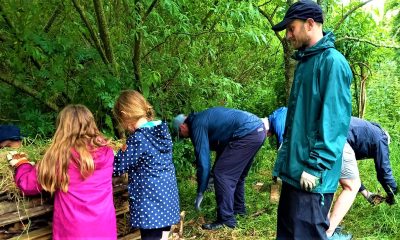
Broad Haven volunteers secure ‘national asset’ status for nature reserve
A SMALL stretch of woodland and former opencast coal mine has been transformed into a nationally recognised biodiversity site, in...


Entertainment2 days ago
Tenby steams up in spectacular style as crowds flock to festival
Colourful parade, towering creations and Victorian flair bring town centre to life TENBY was transformed into a vibrant Victorian fantasy...


Crime3 days ago
Publican jailed for six years for supplying cocaine and cannabis
Milford Haven man sentenced at Swansea Crown Court following drug dealing operation A MILFORD HAVEN publican has been jailed for...

Local Government3 days ago
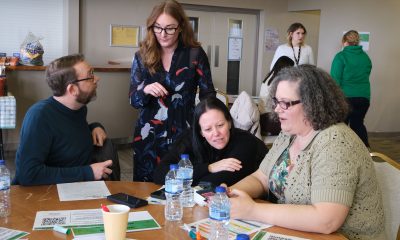
Poverty summit highlights support efforts across Pembrokeshire
A SUMMIT bringing together key organisations from across Pembrokeshire has highlighted both the scale of local poverty and the work...


Education4 days ago
Milford Haven school plans unveiled but funding not yet secured
PLANS for a new £100 million school in Milford Haven have been unveiled, but the project has not yet secured...


News4 days ago
Council unveils plans for new state-of-the-art secondary school in Milford Haven
PEMBROKESHIRE COUNTY COUNCIL has revealed plans for a new state-of-the-art school in Milford Haven, promising modern, inspiring learning spaces for...


Health4 days ago
NHS waiting list falls — but cancer delays and diagnostic backlog worsen
Record progress claimed by Welsh Government as critics warn key targets are still being missed THE NHS in Wales has...


Crime5 days ago
Rapist jailed after ‘abhorrent’ attacks on woman and children
Haverfordwest man told police “women won’t have sex without force” A HAVERFORDWEST man who raped a woman and a young...


News5 days ago
Reform secures first Pembrokeshire councillor in Hakin by-election win
Late Reform candidate takes seat as independent surge and Labour withdrawal shape contest REFORM UK candidate Scott Thorley has won...


News6 days ago
Scott Thorley elected as Pembrokeshire’s first Reform councillor
REFORM UK candidate Scott Thorley has won the Hakin by-election after securing 179 votes. The full result is as follows:...
-

 News6 days ago
Emergency services flood Haverfordwest after reports of person in river
-

 Crime5 days ago
Mother given community order after admitting child cruelty offence
-

 News6 days ago
Senedd vote to ban greyhound racing hailed as ‘landmark moment’ by charities
-
Health4 days ago
NHS waiting list falls — but cancer delays and diagnostic backlog worsen
-

 News6 days ago
Senedd votes to ban Greyhound racing in Wales to protect animal welfare
-
News5 days ago
Reform secures first Pembrokeshire councillor in Hakin by-election win
-

 Crime5 days ago
Woman stole from pharmacy despite ban, court hears
-

 Crime7 days ago
School threat fears grow across Wales as closures and lockdowns increase