


Politics
Online abuse motion goes before Council

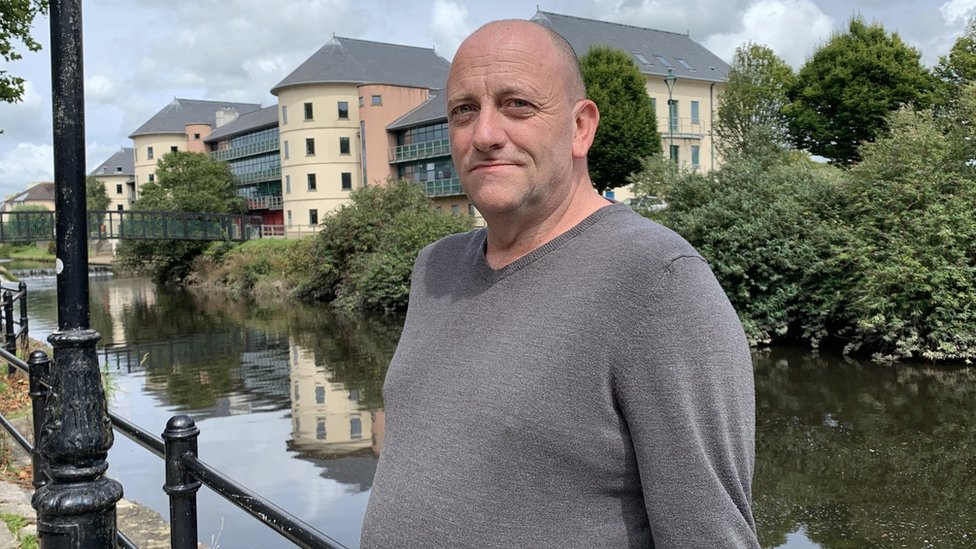
“I’M UNDOUBTEDLY the most abused councillor in Britain.”
That’s the claim made by Pembroke Dock Central County Councillor Paul Dowson in an interview with The Herald about a notice of motion due for debate by the Full Council next Thursday (Oct 14).
In a revealing interview, Cllr Dowson said he regretted becoming embroiled in a series of social media spats and acknowledged mistakes in how he dealt with them.
Paul Dowson was not, however, wholly contrite.
He told us that, while he thought social media’ pile-ons’ had gone too far, he felt justified in standing up for what he thought was right.

Since his unexpected election in 2017, Cllr Dowson has courted publicity. He was vocal about issues affecting his ward and his hometown of Pembroke Dock. He rubbed up plenty of people the wrong way, especially council officers and his fellow members, with his use of social media to communicate about the issues he felt – and still feels – affect Pembroke Dock.
He is notably disparaging about councillors he thinks do little apart from striking poses about issues remote from everyday life as it’s lived in Pembroke Dock.
I pointed out that a friend of mine had described him as ’a typical Dock boy’ of his age and background.
He enthusiastically agreed.
SOCIAL AND ANTISOCIAL MEDIA
He told The Herald that the turning point in his relationship with social media and controversy came following his outspoken condemnation of a Council statement that supported the Black Lives Matter protests in 2020.
“I’m not a racist,” he told The Herald.

“People who know me know I’m not a racist. I stand against racism, and I have no problem with saying ‘Black Lives Matter.’ Of course, they do.
“I said what I said about lighting up County Hall because I opposed the violent protests [following the murder of George Floyd in the USA]. The political agenda behind how those protests developed is something I couldn’t agree with – it was jumped on by people with a violent agenda I just couldn’t support. The cause is fine, but violent protests are not.
“So, I said what I said. ‘All lives matter.’ I didn’t know it was a term used offensively in America. Why would I? I’m not from America.
“And so the pile on started, with people being invited to complain about me being a racist to the Ombudsman by another County Councillor [Joshua Beynon].”
And what about his involvement at Penally, we asked.
Things got confrontational there.
“When the protests got violent, I knew the protestors against the unjust use of the camp without public consultation had lost. The night it kicked off, I made a point of speaking to the Police afterwards and thanking them for doing their job.”
He told us: “I sent Josh a message around Christmas last year saying everything had gone too far and we should both back off. I didn’t get an answer.”
THE OMBUDSMAN
We asked about the complaints made to the Ombudsman about his words regarding Black Lives Matter.
“Yes, people did complain. Some of those complaints lied about what I’d said, so they were dismissed. Some came from fake accounts, so they were dismissed. There’s one last one to go to the Council’s Standards Committee. I will insist that is heard in public, so people can hear everything and make their own judgements.”
We asked him whether he’d ever used an account under a phoney name to argue with others on social media, as he mentioned fake accounts.
“Yes, I have. I’d rather not have done it, but I think it’s justified when people are abusing you, bullying you, and stopping you from responding and carrying on targeting you, your business, and your family. And I’m always pretty obvious about it.
“In the heat of the moment, I’ve said things online that I’ve regretted. I don’t pretend to be a saint, but I don’t like being told what to think and do. When people push me, I push back.”
We asked Paul Dowson about comments made by those who apparently support some of his social media posts and respond aggressively to those who disagree with them.
His response was immediate: “Some people who’ve commented on social media have gone way too far in what they’ve said on some of my posts. When it’s been drawn to my attention by those who’ve been targeted, I delete the comments. I can’t do that 24/7 and I can’t stop people saying what they feel.”
A SIMPLE PROPOSAL
Although some will attack it because of its source, Cllr Dowson’s Notice of Motion should be uncontroversial.
Strip away the exposition from the text, and it’s a straightforward proposition.
Potentially good councillors are not coming forward for election thanks to social media trolling.
The Council needs to be more proactive with how it supports members.
The Council should be more modern in its approach to tackling the abuse of elected members.
The Council – and councils – should do more to halt the tide of abuse directed at elected members and candidates.
To illustrate his point, Paul Dowson told us former Monitoring Officer Claire Jones had advised him not to use social media.
He scoffed at the advice.
“That’s so out of date, it’s unreal. How does she think people communicate with each other, these days? You don’t go knocking door-to-door or wait for them to come to you, you make yourself available to people who get in touch on social media!”
On the wider issue of whether social media companies do enough to prevent abuse, harassment, and trolling, Cllr Dowson was clear.
“No. It’s ridiculous that you can open an account without any identification or verification of who you are or that you are who you claim to be.
“I’ve had fake accounts pretend to be me, and I’ve had fake accounts make bogus complaints against me. If there was a system of verifying identity that all social media companies use, that’d be a start.
“Look, they can trace an IP address and locate you, but it takes too much time. If you have verification, that’s avoided, and things can be dealt with quickly and finally by social media companies.”
If it appears bitterly ironic to his detractors that Cllr Dowson has brought forward a motion to tackle online abuse, suppose it passes when councillors vote on it.
In that case, it will go before a committee chaired by Cllr Joshua Beynon.
When we pointed that out, Paul Dowson grinned.
Before we left, we asked Councillor Dowson whether he would seek re-election.
“Damn right, I am. In Pembroke Dock: Bush.”








Local Government
Minister questioned on local government funding, rent protections, and asylum seekers

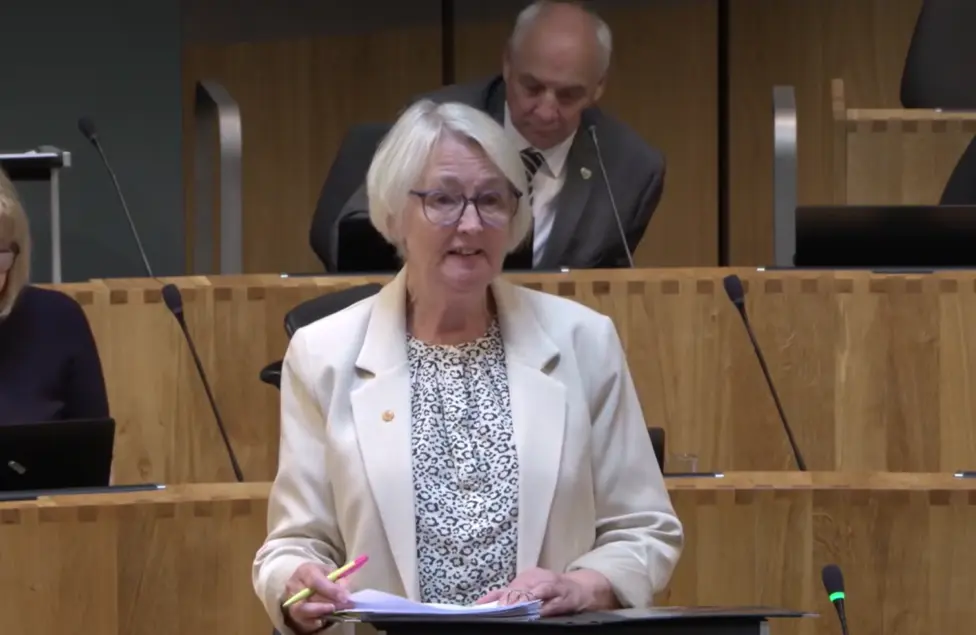
LOCAL government funding, protection for renters, and asylum seekers were all discussed as Wales’ housing minister took questions from Senedd colleagues on Wednesday June 17.
Siân Gwenllian, whose ministerial role includes local government, housing and planning, took her first question from Reform’s Paul Marr.
Pressing the minister on houses in multiple occupation (HMOs) and asylum seekers, Mr Marr asked Ms Gwenllian if she knew the total number of HMOs in Wales, and what proportion are occupied by current and former asylum seekers.
The Ceredigion Penfro MS spoke of meeting a 70-year-old veteran in his constituency who had spent several years living in an abandoned camper van because he was unable to secure accommodation.
Mr Marr called on Ms Gwenllian to provide “assurances” that Welsh people facing homelessness will not be “treated less favourably” in the allocation of housing or housing support than those that have been granted asylum status.

Warning the Reform MS to avoid creating divisions by “trying to point the finger at one specific group in our society”, Ms Gwenllian confirmed that 14,954 homes in Wales were HMOs as of March 31, 2025.
She added that data is not collected on residents, and as such there is no data on what percentage are occupied by asylum seekers.
“Our ambition is that everyone in Wales should have a quality home, for an affordable price and in the area that is right for them, including veterans, and including refugees too”, she said.
Ms Gwenllian referred to the First Minister’s statement on immigration and housing on Tuesday June 16, adding that “it’s not immigration that is causing the housing crisis, [and] it’s not asylum seekers that are causing the housing crisis.”
Fellow Reform MS Steven Rodaway also quizzed the minister on the housing shortage and asylum seekers.
Mr Rodaway asked Ms Gwenllian about the “housing demand arising from the Nation of Sanctuary programme”.

Responding, she clarified accommodation for asylum seekers is not a devolved matter, noting that it is the UK Government making those decisions.

Ms Gwenllian also stressed that social housing is not available to asylum seekers who are awaiting decisions.
She also shared the figure for the number of asylum seekers in Wales, as collected by the Home Office, noting that it is around 3,400 people.
Responding to Mr Rodaway, Ms Gwenllian said: “These are people who are fleeing atrocities and war, things that we in this chamber can only imagine in terms of the kinds of lives and the kinds of trauma that these people have experienced and are fleeing.
“So, please don’t try and create divisions by discussing housing problems in the same breath as asylum seekers.
“The housing crisis has nothing to do with asylum seekers. I hope that that message is being heard by those who need to hear that message.
“The housing crisis in Wales has nothing to do with asylum seekers, it has nothing to do with refugees.”

Labour’s spokesperson for local government, Mike Hedges, told the Siambr the Welsh Local Government Association (WLGA) estimated £1.6 billion of additional funding would be needed to meet budget pressures for local authorities over the next three years.
Mr Hedges added that the auditor general for Wales had said some councils in Wales were at the very edge of financial stability.
He said: “Education and social services account for the majority of local government spending. The WLGA estimates schools and social services alone make up around 60% of financial pressures this year.
“Local authorities have a statutory duty to provide these services and, with ever-increasing demand in these areas, there’s little flexibility in other budgets.”
Mr Hedges questioned if Ms Gwenllian would argue for the supplementary budget to have additional money included for local government.
Describing the current financial situation as an “extremely challenging period”, Ms Gwenllian said her government understands the pressures of schools and local authorities, including the pressures on families and supporting ALN learners.
She said: “The education system and the budgetary arrangements aren’t the same in Wales as they are in England, of course, and it’s clear that there are significant financial pressures in local education authorities in this country as well as in England – and I know that they’ve had to make very difficult decisions to manage this situation.
“We must now progress in working with our partners to develop a long-term, clear transformation plan for ALN – one that is specific, clear and timely – to ensure that the sector can support the needs of learners as well as being operationally sustainable.”
Peter Fox, Conservative spokesperson for finance, local government, and communities, called on Ms Gwenllian to clarify if the government will be looking to restructure local authorities, noting a manifesto pledge to keep the structures of government in Wales, including town and community councils, under “continuous review”.
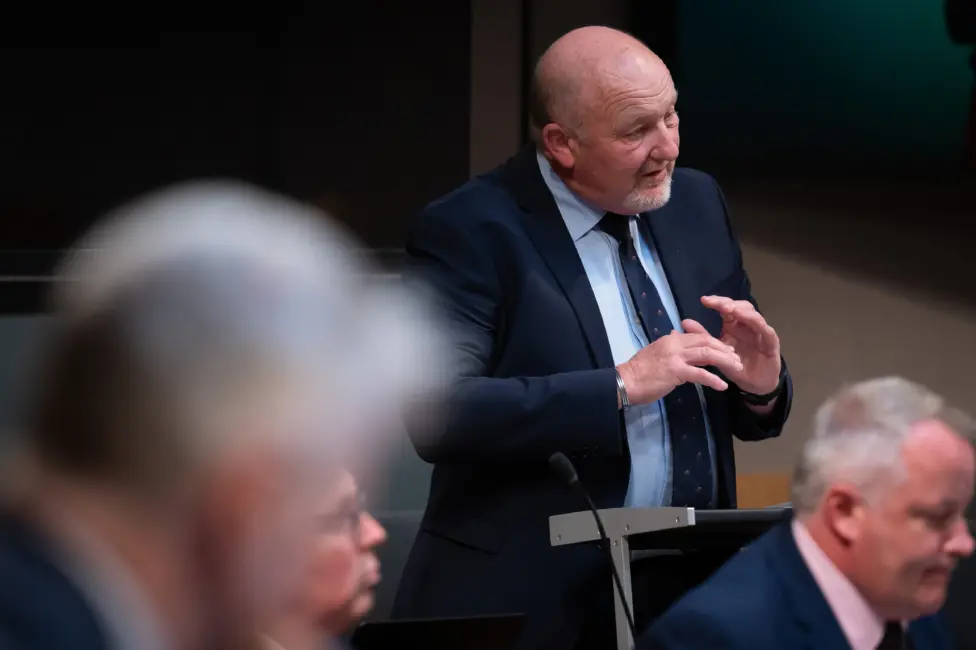
Mr Fox said this has caused “quite a lot of confusion and concern” amongst local authorities.
In response, Ms Gwenllian confirmed restructuring local government is “not a priority for this government”.
However, she added: “There are a number of things that we could be working on collaboratively with local government to reduce bureaucracy and processes and focus on delivery.
“That’s where the partnership agreement that the Welsh Government has with local government is extremely valuable, so that we can discuss jointly our priorities and look to the future.”

Plaid Cymru’s Leticia Gonzalez asked the minister for an update on work to make renting fairer for tenants.
Ms Gonzalez, who represents the Caerdydd Penarth constituency, said: “Rents in Wales are rising well ahead of wages, with private rents increasing by 8.7% across the country, and even higher in Cardiff, leaving many households vulnerable to debt and poverty.
“At the same time, UK Government policies, such as the Warm Homes programme, include the mandatory move towards energy performance certificate C requirements for all private rented homes by 2030.
“This will inevitably add further cost pressures on landlords, costs that tenants are already worried will simply be passed on through higher rents.
“This is compounded by the reduction in the cost cap available to landlords to carry out necessary upgrades, raising serious questions about how deliverable these standards are in practice within the Welsh private rented sector.”
Ms Gonzalez asked how the Welsh Government would work with the UK Government to seek clarity on how landlords can be expected to fund these improvements without driving up rents.
Ms Gwenllian noted the importance of improving energy efficiency of privately rented accommodation but said she recognises the concern about costs for landlords and for tenants.
Ms Gwenllian, who met with UK Government ministers to discuss the issue, said she made it clear that a number of landlords in Wales are not professional landlords, and the importance of supporting them to understand their obligations under the new standard.
Discussing fair rents, the minister described the situation as “deteriorating”.
She said: “There is a need for us to tackle this issue, and I will be bringing more information forward about how exactly we intend to look at managing rents, and we’ll be looking at work in different countries around the world that have succeeded in doing this successfully.”
CALLS for a new lobbyists register have been backed in the Senedd.
A motion, put forward by Reform UK’s Llŷr Powell, was supported across the party groups in the Senedd on Wednesday June 17.
Opening the debate, Reform’s Francesca O’Brien described it as a “straightforward principle” and said: “The people of Wales have a right to know who is trying to influence the laws and decisions made in their name, and that right is currently not being met.
“Every healthy democracy needs transparency, and for too long this institution has operated under a veil of secrecy on one of the most consequential relationships in politics: the relationship between decision makers and those who seek to influence them.”
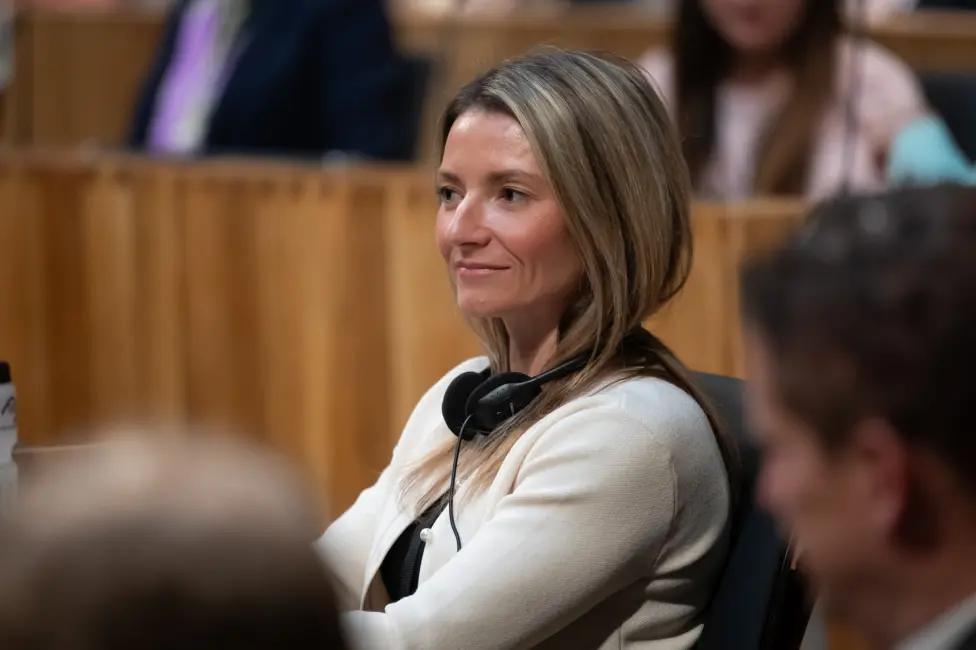
Ms O’Brien clarified that lobbying itself is not the problem, noting that charities often lobby for vulnerable people and small businesses lobby for fairer regulations.
She said: “None of that in itself is sinister, and nothing in this motion seeks to discourage it, restrict it or obstruct ordinary people who simply want to make their voices heard to those that represent them.
“What this motion is about is the difference between lobbying that happens in the open and the influence that happens in the shadows, and ensuring that the public can always tell the difference.”
Ms O’Brien acknowledged that Wales is arguably the odd one out in the UK with Scotland and Northern Ireland both having statutory registers, and Westminster having one covering consultant lobbyists.
She said when Transparency International assessed ministerial transparency across the four UK nations, Wales came in third – a record she said is not “to be defended”.
The Gŵyr Abertawe MS said the Senedd now has the opportunity to end the “idea of a closed revolving door for the Cardiff Bay bubble” and get rid of the perception that “politicians have their snouts in the trough”.

Labour’s democracy spokesperson, Huw Thomas, moved his party’s proposed amendment to the motion, which he said “strengthens the aim of the original motion”.
He continued: “I’d like to put on record our thanks to the Standards of Conduct Committee of the sixth Senedd for their work in developing a clearer standards framework, which is more robust and transparent, including reviewing and adding to the code of conduct that we all follow in this place.

“I also praise the work of the standards committee on dignity and respect, with the recall process being particularly important to the health of our Welsh democracy.
“We must always strive for the highest standards of conduct as Members of this Senedd.”
The amendment to the motion also calls on all interested parties to engage positively with the work and recognises the “importance of transparency” in public life in Wales.
Mr Thomas said: “This additional transparency should be welcomed by Members of this Senedd and by everyone, as the point was just made.
“It’s right that this information should be publicly available for people to scrutinise and understand.
“In an expanded parliament, we have a duty to the people of Wales to be as open and as transparent as we can be.”
Labour’s chief whip, Vikki Howells, also weighed in on the debate, drawing on her experience as standards committee chair during the last Senedd term.

Ms Howells noted in the previous committee, concerns had been raised about small charities – who frequently reach out to MSs – being deterred from doing so due to bureaucracy and the costs that go with it.
She said: “Safeguards will definitely need to be taken forward on any register of lobbyists to ensure that there are no unintended consequences whereby, for example, a small charity might feel it has to pay for a lobbyist to take up advocacy on their behalf. I’m sure that’s something we could all agree we wouldn’t want to see.”
The Pontypridd Cynon Merthyr MS also shared her surprise at Reform having brought forward this debate, noting that the “leader of Reform UK Ltd, its former majority shareholder [Nigel Farage], is well known for racking up a staggering sum in donations.”
She continued: “I do welcome Reform UK Ltd’s new scrutiny of the influence of money on politics and, in that purpose, I hope that all parties can work together to make sure we get this right.”

The deputy leader of the Welsh Conservatives, Paul Davies, expressed his party’s support for the motion, saying they would “support any moves to provide greater transparency in our democracy”.
Mr Davies was a member of the Senedd’s standards committee when it considered how a lobbying register should be introduced in the fifth Senedd.
He said: “I very much hope that this Senedd will further look at lobbying in Wales, build an evidence base to develop a register, and provide an update on the lessons that have been learned from other parts of the United Kingdom, because if we are serious about transparency we must be serious about getting this right.
“There is little value in a system that creates bureaucracy without delivering genuine insight, accountability and absolute democratic transparency.”
Mr Davies reiterated that while he supports calls for a lobbying register, it’s essential it’s “developed properly” – a feat he notes will require “cross-party collaboration, detailed work, evidence building, and careful attention.”

Minister for government effectiveness, Dafydd Trystan Davies, noted the presence of “some consensus” across the Siambr.
Revealing Plaid Cymru would be supporting Reform’s motion, he said: “Being open and transparent is one of those values that our First Minister has set out for us as a government.
“Therefore, it follows that if we want to be open and transparent as a government, we would support the fact that this parliament should be open and transparent too.”
Taking an intervention, Dr Trystan Davies was questioned by Andrew RT Davies, from the Welsh Conservatives, who asked if ministers would fall under the proposed lobbying register.
Dr Trystan Davies responded: “In line with our commitment to openness and transparency, we will align our practices as a government with those of the Senedd, as we should do.”
Reform’s Llŷr Powell, who tabled the debate, spoke of the “unusual position” of consensus across the Siambr.
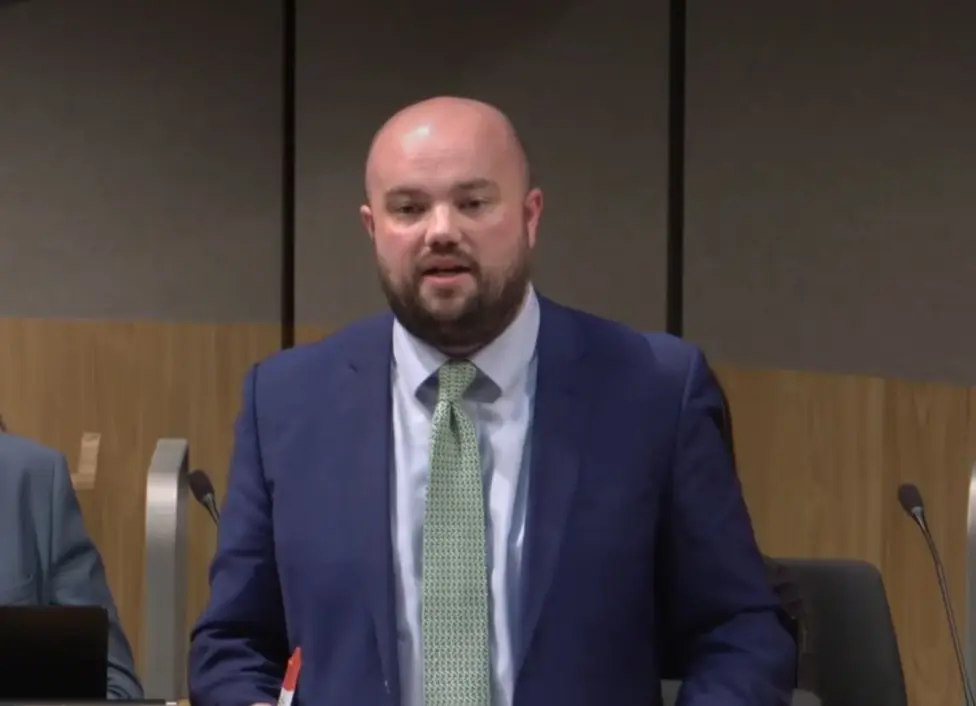
He said: “I want to echo what members have said here today. Bringing in a lobbyist register isn’t about demonising those who work in trying to influence us as members or us in the Senedd. This isn’t about demonising lobbyists or presuming guilt. We accept that lobbying is a crucial part of a healthy democracy, but it must be regulated now.”
The motion was agreed without amendment with 77 in favour, no abstentions, and eight against.
COMMENTS made by a Reform MS led to a walkout in the Senedd during a debate on the Welsh Government’s international spending.
A Reform motion, calling for an end to all Welsh Government international spending, was rejected by Senedd Members on Wednesday June 17.
Wednesday’s plenary opened with Llywydd Huw Irranca-Davies reminding members to mind their language and tone when contributing, following clashes between Reform UK’s Joe Martin and the First Minister in Tuesday’s proceedings.
Mr Irranca-Davies said: “Robust disagreement is part of democratic debate, but it must always be grounded in respect and we must avoid using language that has the potential to inflame debate or to increase tensions.”
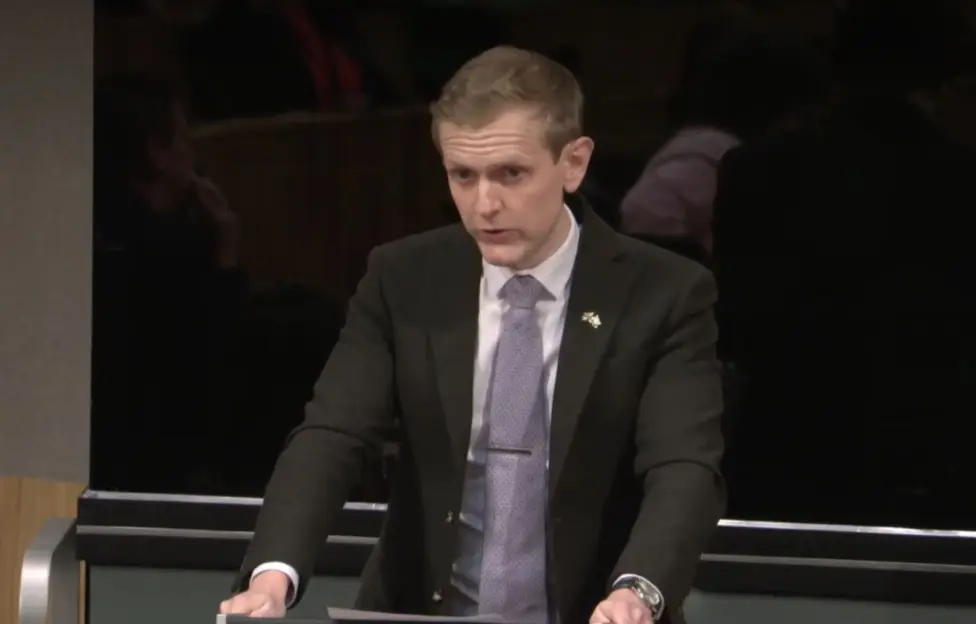
The debate was opened by Reform’s shadow minister for finance and government efficiency, Cai Parry-Jones, but it was the contribution made by Caerdydd Penarth MS Joe Martin which sparked the most controversy.

Announcing to his colleagues that he had “good news”, Mr Martin began his statement by sharing that he had “found the £9 million” needed for Plaid’s “childcare idea”.
However, Mr Martin then added that the “bad news” was to get the money the government would have to stop funding “some of the most pointless schemes known to man”.
One example Mr Martin gave of these so-called “pointless schemes” was a beekeeping scheme in Uganda designed to advance gender equality.
The scheme, run by Bees for Development and their partner organisation, The Uganda National Apiculture Development Organisation, aimed to enhance women’s economic empowerment through beekeeping.
It challenged gender norms in the industry, increasing the visibility of women in technical and policy leaderships roles.
Mr Martin then suggested Wales had won the “Who can find the stupidest use of taxpayer money?” competition because of a scheme supporting tree planting in Uganda.
He said: “We actually asked some Ugandan people what they thought about Wales’s scheme to send them money for trees and they said, ‘Why are you sending us money for trees?’

“We then asked the same question to some Welsh students who had been through our underfunded education system, but we didn’t get a reply because we had e-mailed them and they couldn’t read.”
Mr Martin went on to criticise the money spent on mini embassies abroad.
He said: “In India, one of the functions of those mini embassies is to recruit nurses to come and work in our NHS, which is great because it means that the Welsh people who would have otherwise become nurses can instead go on universal credit.”
The Reform MS then added: “I have enquired as to why we can’t just have an enormous pit where we burn all the money, but apparently that’s not compliant with net zero.”
At this point in Mr Martin’s statement Plaid Cymru’s Zaynub Akbar, of Caerdydd Ffynnon Taf, announced she was going to leave the Siambr.
She said: “I don’t accept any of this and I don’t want to be a part of it, so I’ll be leaving the chamber.”

She was followed by numerous other Senedd Members, including Trefnydd and chief whip Heledd Fychan.
Mr Martin was then reminded by the Llywydd of Senedd rules, which mandate respect in the chamber, before he could continue his contribution.
He concluded his speech to the Senedd by saying: “In Westminster, the Tory party doubled foreign aid whilst imposing austerity. There are now only seven of them in this chamber. The same fate awaits any party that insults taxpayers by frittering money overseas on feel-good vanity projects.
“So, I want to encourage the Party of Wales to be nationalist, to put Wales first. Spend your constituents’ money on your constituents. That way, when someone is lying in a hospital corridor and they ask you, ‘are you really the Party of Wales?’, you’ll be able to say ‘yes’.”
At the end of the debate, the Llywydd directly addressed Mr Martin calling for him to “reflect” on his remarks and contributions, noting that it was “not in line with [his] expectations”.
Mr Irranca-Davies described it as “particularly disappointing” given the comments he made at the beginning of plenary.
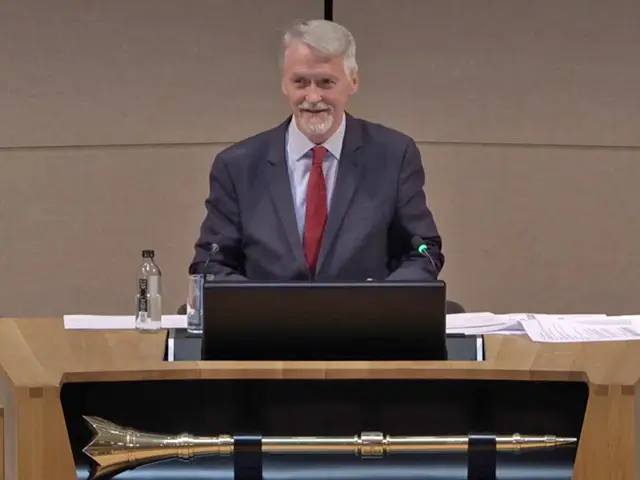
He said: “Going forward, I think we all need to reflect on this and make sure that we comply with our conduct within this chamber and the way we comport ourselves in light of my remarks.”
Welsh Conservative leader Darren Millar expressed his support for the Reform-backed motion, saying it is a debate about where responsibilities lie.
He said: “It’s very clear that foreign relations, international development are matters for the UK Government, not the Welsh Government, and as a result of that, I believe that we respect devolution and can expect respect for devolution back when we respect the boundaries of our legislative competence and the competence of the Welsh Government’s position as well.”

Mr Millar highlighted that his party has continuously argued against the development of “mini embassies” and “overseas offices”.
The Conservative leader did clarify however that he is not “anti-international aid”, and noted the “generous” nature of the people of Wales.
But he added: “I do not believe that when people are dying waiting for ambulances, when we’re at the bottom of the educational tree as far as the league table of the United Kingdom is concerned, and when our road infrastructure isn’t working, our transport infrastructure is creaking, that it’s right to spend those millions of pounds on those things, when the Welsh Government should be focused on the things for which it is responsible.”
Taking an intervention from Labour’s Huw Thomas, Mr Millar was questioned on whether he recognises that the majority of international spending is on economic development for Wales.
Mr Millar once again referred to the role of the UK Government, noting that it is their responsibility to bring inward investment to the UK as a whole.
He said: “We will always want to be an internationalist country, looking out and seeking to influence the world, but we do that as part of the United Kingdom, an integral part of the United Kingdom.
“And I’m proud to be a member not only of the Welsh Conservative Party, but of the Conservative and Unionist Party, and I believe in the union of the United Kingdom, and that these foreign relationships and international development are done better as a United Kingdom as a whole.”
Plaid Cymru’s Gwyn Williams shared a notably different perspective to that of his Conservative and Reform colleagues.
Prior to being elected to the Senedd, Dr Williams was a consultant ophthalmologist specialising in retina care at Swansea Bay University Health Board.

Speaking as someone who has worked within the Welsh NHS Dr Williams said: “Wales has long been a country that looks beyond our own horizons, looking to make a difference in the world and help where we can, but also we rely on help coming in to us as well.
“Many, many healthcare workers, of course, come from abroad, especially here in Wales, and every hospital in the country would crumble if all the international workers went home.”
He continued: “In Singleton Hospital in Swansea, in the eye department, I am the only Welsh-speaking, Welsh-origin consultant there, and much as I like to convince myself that I can do the work of ten people, I cannot, especially now because I am here.
“Chronic shortages in these sectors increase hospital discharge delays, reduce bed availability and create bottlenecks across the healthcare system.
“At a time when the NHS is struggling, we need the support from abroad as well, though we also, of course, need to grow our own ability.”
Concluding his statement Dr Williams said: “This whole debate tries to position international investment and domestic investment as a zero-sum game. It isn’t.
“Looking outwards does not come at the expense of looking inwards. I suggest that such a simplistic outlook condescends to the people of Wales and stymies science.”
The cabinet minister for government effectiveness, Dafydd Trystan Davies, called for reflection on the tone of the debate, suggesting that the “standard of this debate [had] descended to the level of a public house, not of a national Senedd”.
He said: “My friend the leader of the Welsh Conservatives made a speech, and I disagree with more or less all of it, and yet it was conducted properly and in line with the standing orders and the procedures of this Senedd.
“I think we should all take our duties properly as parliamentarians, whatever views we agree or disagree on.”
Dr Trystan Davies highlighted that international spending makes up just 0.03% of the Welsh Government’s overall budget, which he described as a “small contribution” to “building our prosperity, protecting our public services, strengthening our culture, and promoting our values”.
He said: “Our international work turns that belief into action, creating jobs and investment, exports and partnerships, life-changing experiences for students, new colleagues for our NHS and enabling communities in Wales and beyond to learn from one another.
“When Wales works internationally, Welsh people benefit. Our businesses reach new markets, universities build global partnerships, young people return home with skills and confidence, and Wales’s reputation grows.
“We should be proud of that, not in a narrow way, not with our backs turned to others, but proud to be generous and outward-looking, proud to share, proud to learn – internationalist, not isolationist.”
The motion to end all Welsh Government international spending, tabled in the name of Blaenau Gwent Caerffili Rhymni’s Reform MS Llŷr Powell, was rejected by the Senedd with 37 members for and 48 against.
The Siambr then agreed Plaid Cymru minister Heledd Fychan’s amendment, which proposed the Senedd “regrets Reform UK’s isolationist approach to Wales’s place in the world” and “celebrates Wales’ reputation as an internationalist, tolerant and outward-looking nation open for business, which is enhanced by its international engagement, including spending.”
The amended motion was agreed with 48 in favour and 37 against.



Charity12 hours ago
Toy Story fans fill charity toy box at Haverfordwest cinema
Donations pour in for SNAP Specialist Play as families embrace Toy Story 5 launch A TOY STORY-themed charity appeal at...


Community17 hours ago
Lord Rhys emerges from the mist in St Davids
Giant puppet begins historic journey marking 850 years since the first Eisteddfod MIST swirled around St Davids Cathedral on Friday...


News2 days ago
Tragic tribute paid to Haverfordwest man after A4075 collision
FAMILY REMEMBERS “KIND AND LOVING” CALLUM HANSON THE FAMILY of a 22-year-old man from Haverfordwest who died following a road...


News3 days ago
Motorcyclist, 22, dies in A4075 crash in Pembrokeshire
A 22-year-old woman remains in hospital after two-vehicle collision A MOTORCYCLIST has died following a serious two-vehicle crash on the...


Community3 days ago
Why police will be visiting every home in Pembrokeshire
New operation aims to knock on more than 257,000 doors across Dyfed-Powys over the next three years DYFED-POWYS POLICE has...


Crime3 days ago
Prisons at breaking point: MPs warn Wales is paying the price of a failing system
Frozen healthcare budgets, overcrowded jails, homelessness on release and mounting pressure on staff are undermining rehabilitation across Wales, according to...


News3 days ago
Brexit at 10: How Britain was sold a dream that cost us dearly
A decade after the referendum, the promised benefits remain hard to find while the economic costs are increasingly difficult to...


Crime3 days ago
Worcestershire man jailed after violent attack on woman in Tenby
Defendant was already serving a suspended sentence when serious assault took place A WORCESTERSHIRE man has been jailed for more...


Climate3 days ago
Offshore wind ‘could bring new generation of jobs to Milford Haven’
Pembrokeshire ports and Celtic Sea projects placed at centre of Wales’ green energy ambitions MILFORD HAVEN and Pembroke Dock could...

Community4 days ago
Police officer hailed hero after midnight sea rescue in Milford Haven
PC swam 100 metres offshore to save distressed woman heard calling for help in darkness A DYFED-POWYS POLICE officer has...
-
 Community6 days ago
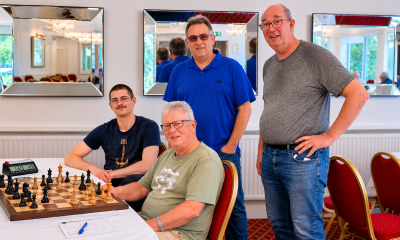
Pembrokeshire Chess Club crowned Welsh champions
-

 Crime3 days ago
Milford Haven man jailed for breaching domestic violence protection order
-

 Local Government5 days ago
Security privately arranged by Mayor at Beating of the Bounds
-

 News3 days ago
Crash on Freeman’s Way causes school-run chaos across Haverfordwest
-

 Crime4 days ago
Man wanted by court after failing to attend hearing over alleged shop thefts
-
 Crime4 days ago
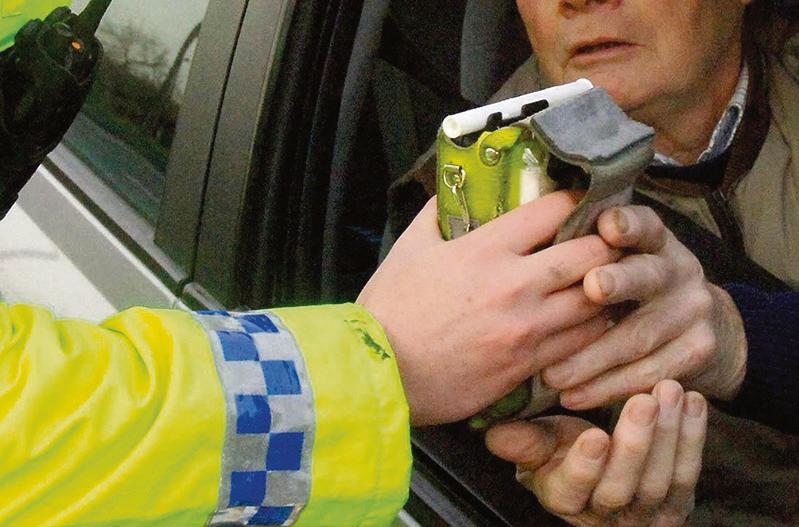
Man banned from roads after drink-driving offence
-

 Crime4 days ago
Man jailed after admitting strangulation and assaults
-

 Crime4 days ago
Man sentenced over stalking campaign and lock knife offence