


News
‘We are called to be peace-makers’, says Archbishop

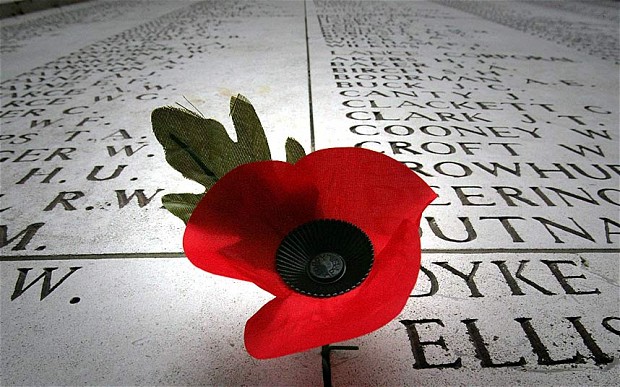
 WAR may sometimes be necessary but it is a sign of human failure, the Archbishop of Wales said at a candlelit vigil service to commemorate the outbreak of the First World War.
Dr Barry Morgan told the congregation at Llandaff Cathedral that we were called to be peace-makers and no conflict could be a good act.
The Archbishop was speaking at a commemorative service held jointly by the Welsh Government and Cardiff Council in the presence of the Duke and Duchess of Gloucester. He said the service was about remembering sacrifice, not celebrating victory, and he urged people to strive for peace in their own relationships, the nation and the world.
Dr Morgan said, “War may sometimes be necessary but the Christian Church has never claimed that war and violence are good acts. To be involved in war is always to lapse from the God-given ideal of peace and reconciliation.
“If there is no other way except through war to establish justice, then it may be the right or necessary thing to do, as the lesser of two evils but such a choice necessarily involves one in sin. It is never a good act. It is only by a convoluted and tortuous process of reasoning that I can ever claim to be demonstrating God’s love towards my unjust neighbour by taking a gun and shooting him.

“That is why this service has a penitential section where we acknowledge our failures and shortcomings before God, since involvement in any war, for whatever reason, is a sign of human failure and in any conflict there can be no completely innocent party, even though one side may be more guilty than the other.”
While giving thanks for those who sacrificed their lives standing against oppression and injustice, we need to resolve to ensure war doesn’t happen again, the Archbishop said.
“Wars do not solve the deepest problems of human life. Not even the First World War resolved the issues that led to it for some of these conflicts still smoulder on in the Balkans and elsewhere. At best, they give us breathing spaces in which to build and work for a world in which war will seem an obscene irrelevance. That is why abstaining from conflict is never enough because more is needed. We are called to be peacemakers, for as Jesus said “peacemakers shall be called the sons and daughters of God.”
He added, “Our prayer tonight then might be that conscious of our past, and all that it entailed, we seek to live compassionately and caringly for the whole of humanity by striving for the things that make for peace in our own relationships, our own nation and indeed our world.”

During the service, a message of peace was read by two members of Urdd Gobaith Cymru’s Youth Forum. Wreaths were laid by the Duke of Goucester, the First Minister of Wales, the Lord Mayor of Cardiff and Wyn Calvin, a president of the Cardiff Central branch of the Royal British Legion. Saleem Kidwai, secretary general of the Muslim Council of Wales, laid an olive branch on behalf of the Interfaith Council for Wales.
At the end of the service, lights in the Cathedral were dimmed and a candle was lit by the Revd Albrecht Kostlin-Buurma of the German Lutheran Churches and people kept a period of silence.
Following a blessing by the Archbishop, the Last Post was sounded and the Cathedral bells tolled to mark the centenary of the outbreak of war.

Sermon – Commemoration of
World War I
 “The trouble with services about the two World Wars” wrote one veteran of World War II recently, “is that the ceremonies have been hijacked by politicians, the Royal Family, and the church – and they are not about any of them”.
Well, that seems to exclude a fair number of us here tonight but without becoming too defensive, what precisely are we doing when we hold a service such as this?
Well, it is certainly not about giving significance to any of the categories just mentioned nor is it about glorifying war. As the Lambeth Conference of 1930 said “War as a method of settling international disputes, is incompatible with the teaching and example of Jesus”.
War may sometimes be necessary but the Christian Church has never claimed that war and violence are good acts. To be involved in war is always to lapse from the God-given ideal of peace and reconciliation. And it is interesting that people who have served in our armed forces usually both refuse to talk about the horrors of war and regard it as the option of a last resort.
If there is no other way except through war to establish justice, then it may be the right or necessary thing to do, as the lesser of two evils but such a choice necessarily involves one in sin. It is never a good act. It is only by a convoluted and tortuous process of reasoning that I can ever claim to be demonstrating God’s love towards my unjust neighbour by taking a gun and shooting him.
That is why this service has a penitential section where we acknowledge our failures and shortcomings before God (just look at the last hymn we have sung), since involvement in any war, for whatever reason, is a sign of human failure and in any conflict there can be no completely innocent party, even though one side may be more guilty than the other.
Memorials of the fallen in the First World War indicate the way in which our predecessors made sense of it all. They saw the deaths of those who fought as a laying down of lives for the sake of others, as the First Minister points out in his foreword to this service. Human sacrifice, not triumphalism about being victorious is the note they struck. The Annual Service of Remembrance is held at a cenotaph not an Arc de Triomphe.
That way of seeing things, helps people deal with the pain of loss. Death seen as sacrifice has remained the language through which those whose loved ones in today’s conflicts also find solace. And so we give thanks for men and women who gave up their lives to safeguard values such as justice, freedom and liberty and for men and women from every race and nation who have stood against oppression and injustice.
But, alongside penitence, there is repentance. The word “repentance” means to have a change of heart. It involves a resolve to ensure that such a thing never happens again. Japan is an example of this. Since the last war, as if to make amends for its atrocities, Japan has become one of the most peace loving of all nations. It has committed itself to peace and non-military economic growth.
Wars however do not solve the deepest problems of human life. Not even the First World War resolved the issues that led to it for some of these conflicts still smoulder on in the Balkans and elsewhere. At best, they give us breathing spaces in which to build and work for a world in which war will seem an obscene irrelevance. That is why abstaining from conflict is never enough because more is needed. We are called to be peacemakers, for as Jesus said “peacemakers shall be called the sons and daughters of God”.
R. H. Tawney was a major figure in the development of British political thought, a Christian socialist who had also fought in World War One and found himself alone in No Man’s Land for nearly two days, after being wounded by the fragments of a shell.
He wrote “why is it that marshalled against an enemy, is given to a nation a common outlook, a spiritual unity, a power of co-operation and a comradeship in service which eludes it in peace time. How can people lay down their life for one another in war but not in peace?”
The idea of a fellowship limited to the business of killing and absent from the business of living haunted him.
“Why are we”, says Tawney “so willing to pay for our armed services but reluctant to pay for social, educational and health services? Wasted lives in war ought to lead to a prevention of wasted lives in peace”.
Our hope is that by reflecting on all these things in an act of worship, God may be able to work on us and change us for the better. As one theologian puts it “We come into the presence of God with our human emotions, with pride and courage and grief at loss and waste. As we pour out our prayer, our mourning, our pride, our shame, our convictions, God is able to work upon us. He is able to deepen and enlarge our compassion and to purify our thanksgiving. People who come mourning their own losses, then find not just consolation but a spirit which enlarges their own compassion for others”.
Our prayer tonight then might be that conscious of our past, and all that it entailed, we seek to live compassionately and caringly for the whole of humanity by striving for the things that make for peace in our own relationships, our own nation and indeed our world.



THE WELSH GOVERNMENT’s key Child Poverty Strategy lacks clarity, has no reliable way of measuring success or failure, and, crucially, does not account for the Welsh Government’s lack of control over the levers needed to deliver on it.
Those are the findings of a new report by the UK’s leading economic policy research body, the Institute for Fiscal Studies (IFS), which looks at Wales’s economic performance and poor employment record.
The IFS report, published on Wednesday (April 1), shows that Wales’s economic performance is the worst of the UK nations, with the lowest employment rate, the lowest incomes, the lowest productivity, and the worst poverty levels.

POVERTY STRATEGY LACKS FOCUS
The Welsh Government launched its Child Poverty Strategy in 2018, with five broad aims to reduce child and youth poverty. However, the IFS criticises how those aims have been set out, finding that the definitions are too broad to be measured accurately and lack focus. In particular, the IFS says the strategy’s aims are so nebulous that they ignore the impact of policy areas over which the Welsh Government exercises direct control, for example, health and education, on how outcomes might be measured.
The IFS report says: “Issues with the data mean a material risk that the Welsh Government might either appear to have met a future poverty target or missed it, by a large margin, when in fact the reverse is true.”
WG NOT IN CONTROL OF OWN POVERTY STRATEGY
In any event, several of the most direct policy levers available to influence employment and earnings, including minimum wages, employment law and benefits policy, are reserved to Westminster. However, even if these policy levers were available, it would be very challenging to achieve large, rapid reductions in child poverty with them. In addition, Labour has ruled out using the tax system to generate additional income to help it meet its aims.
Wales’s highest-earning regions are along the North East Wales border with England and in the Cardiff and Newport areas. In addition, proportionately more Welsh employees are public sector workers, who are also, far and away, the best paid in Wales. The average public sector wage is around £5,000 higher than the average private sector wage. And those jobs, too, are disproportionately centred in Cardiff, Newport and North East Wales. The best-performing areas by employment rate, Monmouthshire and Newport, are within easy reach of the English border.
POVERTY CONCEALED BY LOWER PROPERTY VALUES
Compared with the rest of the UK, the gap between men’s and women’s pay is lower in Wales, as are the differences in income and in the highest and lowest property prices. However, property prices are far lower in Wales than in England, as are incomes overall; in addition, there are so few higher-rate tax earners in Wales that the Welsh Government increasing their income tax would have a negligible effect on its revenue. In addition, because Welsh housing prices are much lower than elsewhere in the UK, and because housing costs are a factor in how poverty is measured, housing costs improve one of the key poverty metrics.
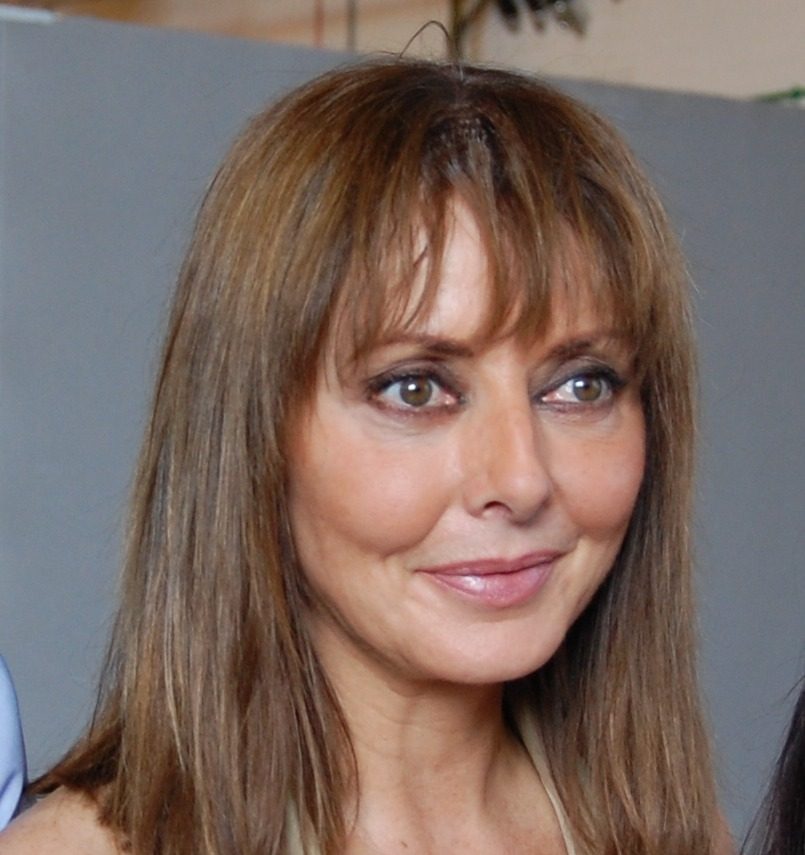
TV presenter and commentator to appear at Cardiff event aimed at mobilising anti-Reform voters before May 7
CAROL VODERMAN has urged voters in Wales to reject Reform UK at next month’s Senedd election, as she prepares to appear at a live political event in Cardiff focused on keeping the party out of power.
Speaking ahead of an emergency Guilty Feminist Welsh Election Special at the New Theatre, Cardiff, on Sunday, April 12, Vorderman said Wales faced a crucial choice at the ballot box.
She said: “Wales has a chance for a new beginning in May. But Reform, the chaotic London-based, privately educated, failed Tory party, needs to be sent packing.
“Already numerous of their 96 Welsh candidates have resigned or been sacked for revolting actions. Their last Welsh Reform leader Nathan Gill is serving time in jail for accepting Russian bribes while serving in the European Parliament. Their new Welsh leader was a Tory living in London until a few months ago.
“Farage is a thin-skinned and proven liar. Everyone must come out to vote to save our country. Cymru Am Byth.”

Vorderman is due to appear alongside Guilty Feminist host Deborah Frances-White, with Welsh comedians Kiri Pritchard-McLean and Priya Hall also on the bill. Organisers say the night will mix comedy, music and political discussion, with the aim of building strategy ahead of the election.
Frances-White said polling suggested the Senedd result could be close and argued that “it really matters who ends up making decisions about our lives”, adding that the event was intended as a “get-in-the-room” night to work out how to respond.
Reform UK’s current leader in Wales is Dan Thomas, who was unveiled by Nigel Farage in Newport in February. Thomas is a former Conservative leader of Barnet Council in London, although he grew up in Blackwood.
Vorderman’s reference to Nathan Gill points to a highly embarrassing chapter in the party’s recent history. Gill, a former Reform UK politician and ex-MEP, was jailed last year after admitting taking bribes from pro-Russian figures in exchange for speeches and statements in the European Parliament.

Asked for a response to Vorderman’s remarks, a Reform UK Wales source replied briefly: “Does she even live in Wales?”
It was a short answer, but perhaps not one likely to end the argument. With the campaign heating up, and with high-profile voices now piling in from outside formal party politics, the battle for attention ahead of May 7 is only getting louder.


ANYONE who hosts paying guests in Wales will soon be required by law to register their visitor accommodation with the Welsh Revenue Authority (WRA).
The new legal requirement will apply to all paid visitor accommodation across Wales, including spare rooms, holiday cottages, cabins, campsites and hotels. Registration will be required whether accommodation is let for a single night, occasionally, seasonally or all year round.
The register is being introduced to give a clearer picture of the visitor accommodation available in Wales and to support councils that decide to introduce the Visitor Levy. Registration will open in October 2026, and both informal hosts and professional accommodation providers will be required to comply or risk facing penalties.
Accommodation providers can prepare now by visiting gov.wales/registeryourplace to find out what information they will need and sign up for updates and reminders. Registration is free for providers and is expected to take less than 15 minutes to complete.
When registration opens, accommodation providers will be asked to provide information, including:
• contact details
• accommodation address
• type of accommodation
• how many people can stay
• when the accommodation is usually open for bookings
Who needs to register?
Any individual or business that takes bookings for overnight accommodation must register by law.
This includes:
• self-catering accommodation and homestays, including on Airbnb or similar
• hotels, guesthouses or bed and breakfasts
• campsites or camping pitches
• hostels or bunkhouses
• caravans, chalets, lodges, shepherd’s huts or glamping
• temporary accommodation for events, including festivals
Rebecca Godfrey, Welsh Revenue Authority Chief Executive, said: “If you take bookings for overnight stays in Wales, you’ll need to register with us. We want to make this process as straightforward as possible, and we’re here to support accommodation providers to register correctly and on time.
“We’ll be publishing further guidance before registration opens in October 2026. In the meantime, I’d encourage providers to visit gov.wales/registeryourplace to find out what to expect and sign up for updates.”





Crime1 day ago
Driver spared jail after crash killed young couple
A PEMBROKE DOCK driver who caused the deaths of a young couple in a road crash has been given a...


Entertainment2 days ago
BBC unveils major new Welsh dramas with Tenby set for prime-time spotlight
New crime series Old Town Murders and supernatural thriller The Witch Farm will both be filmed and set in Wales...


Health2 days ago
No jobs for new paramedics in Wales as graduates told to apply for technician roles
Students trained at public expense urged to take lower-grade jobs as anger grows over NHS workforce planning NEWLY qualified paramedics...


News3 days ago
Health minister refuses to act on Withybush despite 15,000-signature petition
Senedd pressure grows as Welsh Government declines to intervene over surgery fears THE WELSH GOVERNMENT has refused to step in...


Business3 days ago
Fishguard to Wexford rail tunnel plan backed by Elon Musk firm
Six-hour London to Dublin service proposed in £32bn project ahead of Senedd election PLANS for a rail tunnel linking west...

Charity4 days ago
Milford Haven charity honoured with King’s Award for voluntary service
A PEMBROKESHIRE charity supporting vulnerable young people has received one of the highest honours in the UK for voluntary work....


News5 days ago
Plaid Cymru launches bid to lead next Welsh Government
Party positions itself as ‘government-in-waiting’ ahead of May election PLAID CYMRU has formally launched its campaign for the 2026 Senedd...


Crime5 days ago
Police appeal after attempted child abduction in Haverfordwest
DYFED-POWYS POLICE has launched an appeal for witnesses following a reported attempted abduction of a 12-year-old girl in Haverfordwest. The...


Crime6 days ago
Gunshot fired by police during incident in Milford Haven
A POLICE officer discharged a firearm during an incident in Milford Haven on Saturday evening (March 28), prompting an investigation...


Community7 days ago
Three Amigos Easter Run roars through Pembrokeshire
MOTORCYCLE enthusiasts turned out in force today (Saturday, March 28) as the popular Three Amigos Easter Run returned to the...
-

 News16 hours ago
Accommodation providers in Wales will be required to register under new law
-
Business3 days ago
Fishguard to Wexford rail tunnel plan backed by Elon Musk firm
-

 Charity5 days ago
RSPCA calls for stronger animal welfare measures as Welsh Labour launches manifesto
-
Entertainment2 days ago
BBC unveils major new Welsh dramas with Tenby set for prime-time spotlight
-

 Entertainment1 day ago
From Milford Haven to the world: The story of The Evolution Experience
-

 Community6 days ago
Residents return home after major Carmarthenshire fire as probe continues
-

 News7 days ago
West Wales man remanded in custody over serious sexual assault charge
-
Crime6 days ago
Gunshot fired by police during incident in Milford Haven