


Charity
Dad celebrates his son’s first Christmas thanks to the Wales Air Ambulance

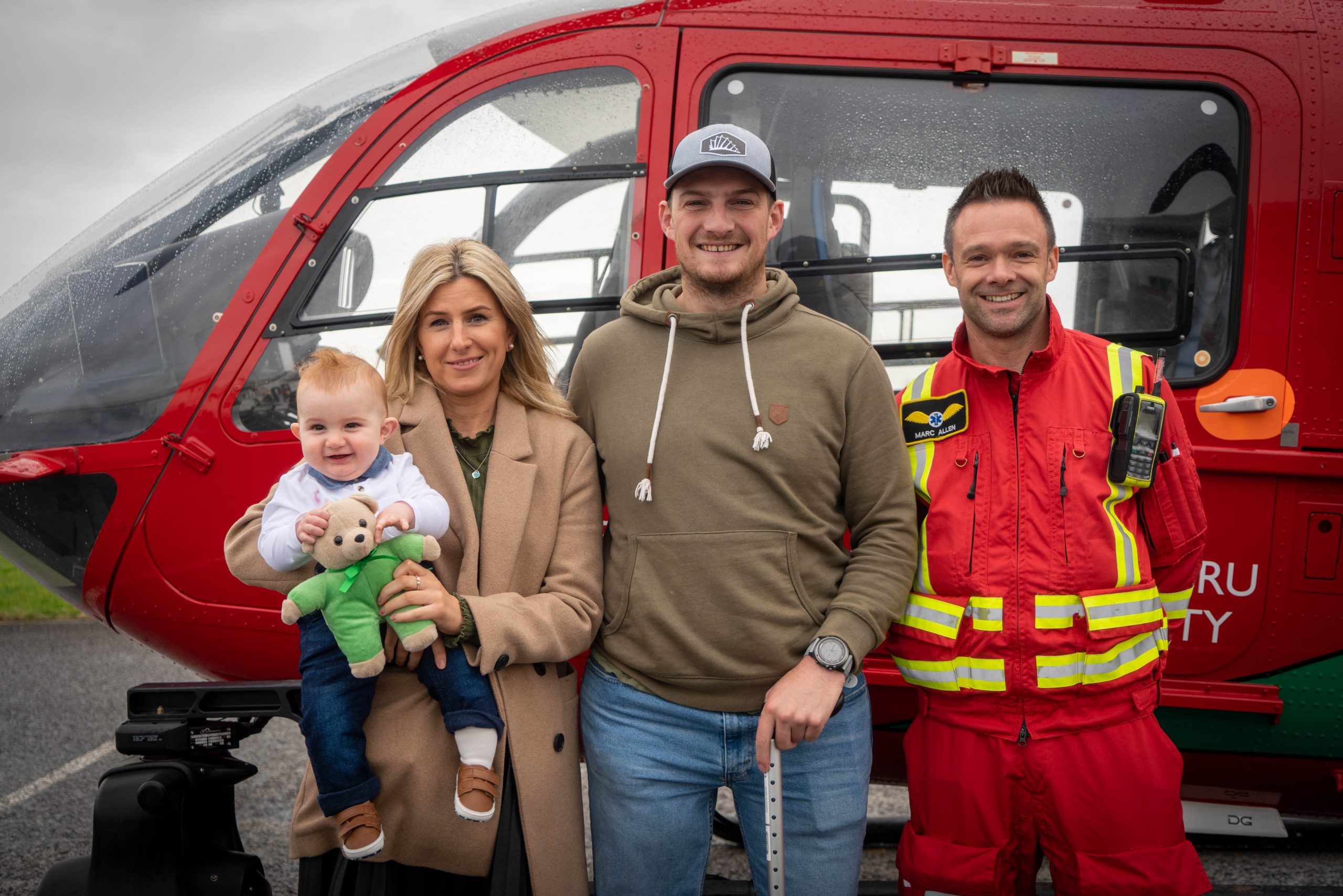
THERE will be an extra bit of festive sparkle in the Jones household this year as dad Richard and his partner Michaela celebrate their son Dougie’s first Christmas.
But this wouldn’t have been possible had it not been for the Wales Air Ambulance. Without them Richard, 34, wouldn’t be here today, he wouldn’t have met his partner and his son wouldn’t have been born.
Richard is one of the Wales Air Ambulance’s survivors and, thankfully, he is here this Christmas to celebrate “the most wonderful time of the year” with his loved ones.
It could have been a lot different. The father-of-one had been travelling to work in his truck and had a road accident resulting in catastrophic injuries. The early and critical care he received from the Wales Air Ambulance crew undoubtedly saved his life.
Upon arrival, Dr Bob Tipping and Critical Care Practitioner Marc Allen spotted signs of internal bleeding. At the roadside they gave six units of blood products to help Richard’s significant blood loss, and due to the severity of his injuries, particularly his leg, they gave general anaesthetic and put him on a ventilator to control his breathing.

Richard, of Tenby, was transferred to the nearest specialist centre for limb injuries and was so ill the decision was made to amputate part of his right leg. Whilst recovering in Swansea’s Morriston Hospital he got to know a nurse, who is now mum to their beautiful eight month old baby boy and they are looking forward to spending their first Christmas as a family of three.
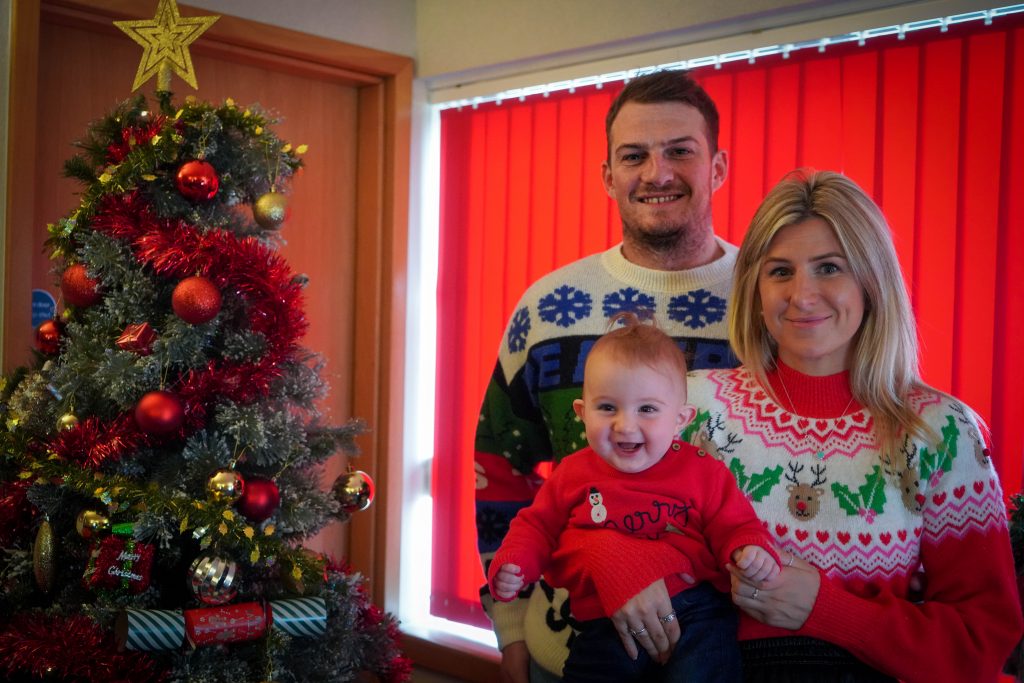
Richard said: “For me, my Christmas miracle is my life. My feelings towards Christmas have certainly changed since the accident. As much as you try not to, you do find yourself wondering ‘what if.’ I don’t take anything for granted like I used to. It will be an extra special occasion for me and my family this year and celebrating my son Dougie’s first Christmas.
“I look forward to spending time with my family and friends and enjoying lots of delicious food – especially pigs in blankets!”
Since his accident, Richard has had to learn a whole new way of living, including walking with a prosthetic limb. He admits he has good days and bad days and now puts more time aside for himself instead of rushing about as much as he did before the accident.
He said: “The whole team at Wales Air Ambulance have inspired and given me so much. I am giving back in my own way – I give peer support to others who have limb amputations, and I recently took part in a fishing competition raising funds for the Charity; fishing has been one of my lifelong hobbies.
“I’ve always heard stories about all the amazing things the Wales Air Ambulance do.
“However, I never really thought about the service before and never thought I’d end up needing their assistance. I was surprised to find out that, despite the amazing work they do, the Charity is solely funded by public donations. They operate 24 hours a day, 365 days a year, even on Christmas Day.

“Whilst I’m tucking into my Christmas Dinner and enjoying time with loved ones, I will be thinking of those who have given up their Christmas to save lives.”
If like Richard, you would like to support the Charity and help them save more lives this Christmas you can donate by visiting A Christmas Miracle | Welsh Air Ambulance Charitable Trust (walesairambulance.com)


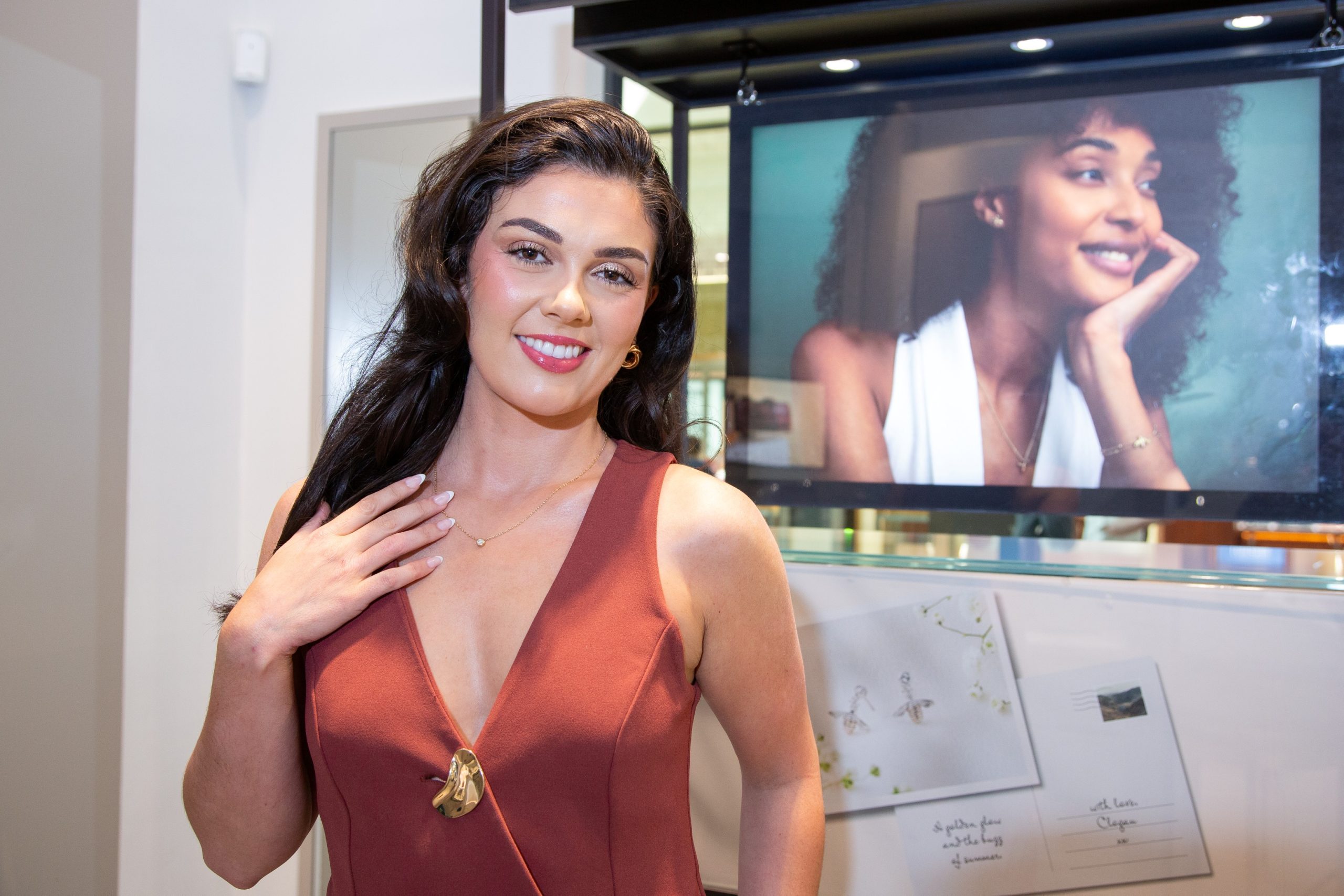
A DIAMOND-set Welsh gold necklace donated by Clogau will headline a special fundraising raffle marking 60 years of Cancer Research Wales.
The award-winning jewellery brand has gifted the necklace as the grand prize in the charity’s inaugural 60th Anniversary Diamond Raffle, which will raise funds for research, diagnosis and treatment projects across Wales.
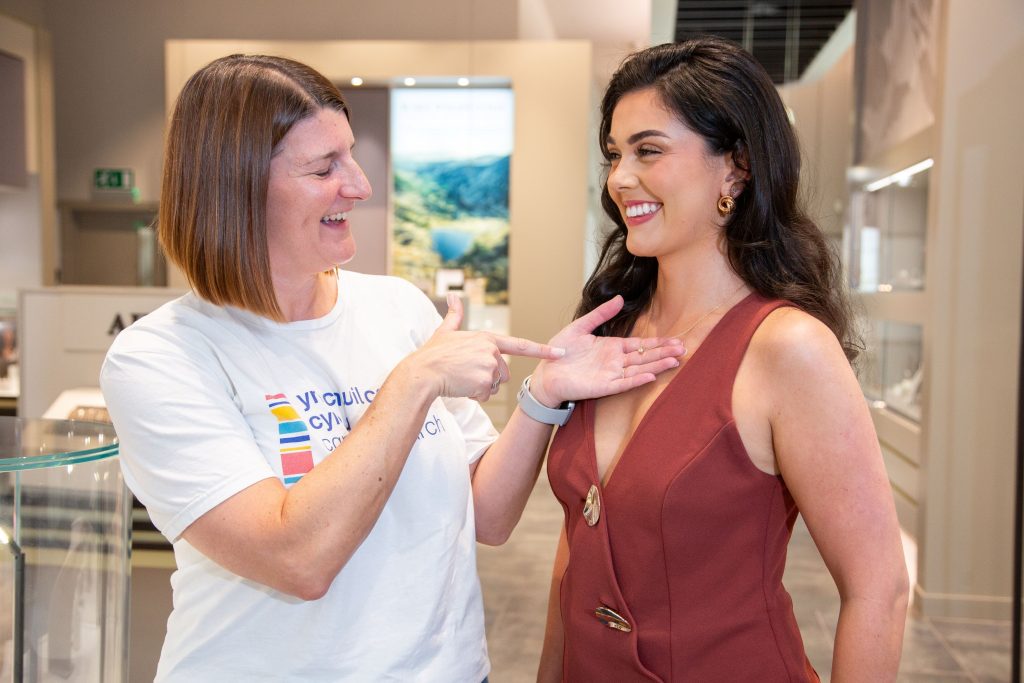
The prize was unveiled at Clogau’s Cardiff store by Cancer Research Wales ambassador and Miss United Kingdom Millie-Mae Adams, who received it on behalf of the charity.
Clogau, founded in North Wales, is internationally known for jewellery containing rare Welsh gold. Its heritage is closely linked to the Royal Family, with Welsh gold from the Clogau St David’s mine used in royal wedding rings for more than a century.
Ben Roberts, Managing Director of Clogau, said: “We are incredibly proud to support Cancer Research Wales as it celebrates this remarkable 60-year milestone.
“As a Welsh business with deep roots in our communities, we recognise the impact cancer has on families across the country and the importance of investing in research that can save and improve lives.
“We hope this beautiful Welsh gold necklace will help generate significant support for the raffle and encourage people to get behind the charity’s vital work.”
Millie-Mae, a proud Welsh speaker and doctor in training, is also the founder of Exeter Street Doctors, a charity which equips young people with lifesaving first aid skills.
She said: “As a proud ambassador of the charity, it is my privilege to play my part in Cancer Research Wales’s 60th anniversary and be here today to unveil the first prize in the 60 Anniversary Diamond Raffle – a stunning, diamond-set gold necklace, generously donated by Clogau.
“The gift of life and time with our loved ones is the most precious thing in the world, so please show your support for Cancer Research Wales’s life-saving and life-prolonging work today by entering the raffle.
“You could win this stunning Clogau gold necklace while helping to fund vital cancer research here in Wales.”
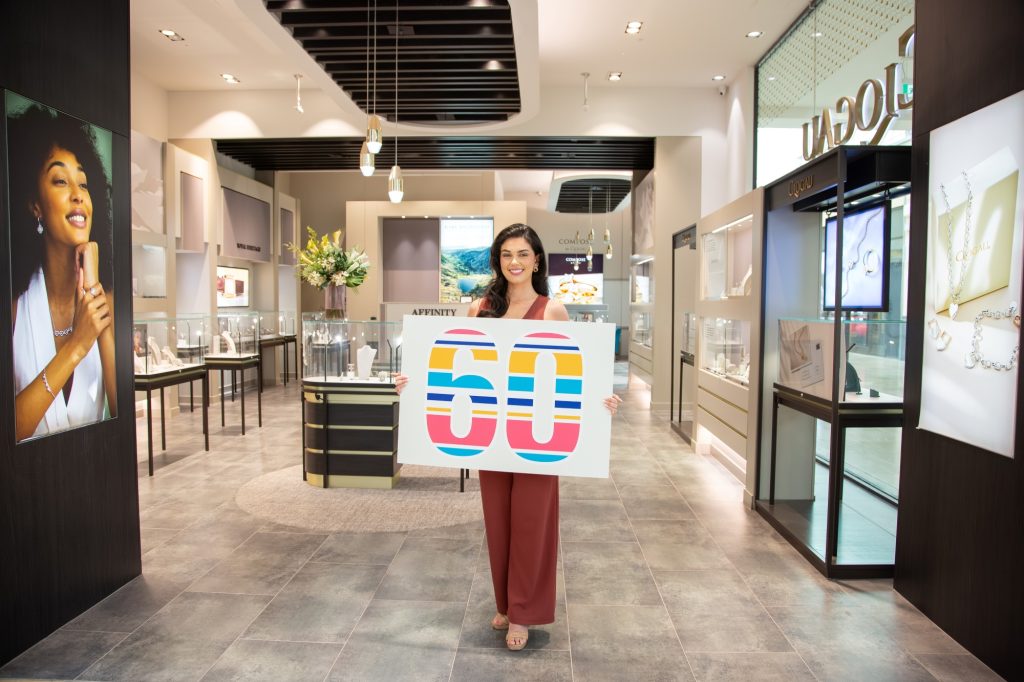
Millie-Mae also advocates for health education through her Medic Millie Mondays social media series and delivered the first Welsh-language Street Doctors session. Her work with Cancer Research Wales is shaped in part by her own family’s experience of cancer.

Lisa Buckley, Head of Income Generation at Cancer Research Wales, said: “I’m very grateful to Clogau and Millie-Mae Adams for supporting us to launch our 60 Anniversary Diamond Raffle – our first ever raffle, as we celebrate 60 years as the independent Welsh cancer research charity and 60 years of innovation in cancer diagnosis and treatment.
“Since 1966, we have invested £41.68 million to push the boundaries of cancer research discoveries here in Wales and we couldn’t have done that without the kindness of the Welsh public and our fantastic business community.
“Thank you for your support over the years and together we will unite Wales against cancer.”
Cancer Research Wales says the raffle will help support projects aimed at improving cancer outcomes for people across the country.
To enter the raffle, visit www.cancerresearch.wales.
Prize unveiled:
Miss United Kingdom Millie-Mae Adams received the necklace on behalf of Cancer Research Wales at Clogau’s Cardiff store (Pic: Paul Fears).
A MEMORABLE evening of music, warmth and community spirit filled Pembroke Castle as Voices at the Castle was hailed a huge success.
The event, held on Saturday (Jun 13), brought together local performers, an international star and a strong audience in one of Pembrokeshire’s most iconic settings, all in support of the Paul Sartori Foundation.
Set against the dramatic backdrop of the historic castle, the evening offered an uplifting celebration of live music and charity. Organisers said the relaxed atmosphere, sunny setting and quality of performances helped make it a night to remember.
The event opened with Pembrokeshire Pop Voices, who entertained the audience with an upbeat set including their charity single Love the Bones of You.
They were followed by Pembroke and District Male Voice Choir, who delivered a rousing selection of classic male voice choir favourites, with many in the audience joining in.
The Paul Sartori Community Choir also impressed in one of its first outdoor performances, with a confident and spirited set which included a standout rendition of an ELO classic.
Bella Voce added to the occasion with a varied programme of melodic songs, their harmonies carrying beautifully around the castle walls.
Headline act Russell Watson brought the evening to a powerful close, captivating the crowd with his humour, warmth and remarkable voice.
His set included a mixture of classical and contemporary songs, with the audience joining him for a singalong of Volare before dancing along as the evening built to its finale.
He ended the night with a moving dedication to Paul Sartori staff, performing Someone to Remember Me.
Organisers also praised compere Rod Haynes, whose warmth, humour and natural stage presence helped the event run smoothly and created a welcoming atmosphere for all.
The charity said it remained extremely disappointed that Rock the Ramparts, due to take place on the Friday evening, could not go ahead.

High winds meant it was not possible to safely install the stage roof and associated sound equipment, forcing the cancellation of the event on health and safety grounds.
The charity thanked the bands The Candy Skulls, The Cleddau Kings, Milly and The Bandits, and Saltwater for their understanding, generosity and the time they had put into rehearsing and preparing.
Thanks were also given to the staging and lighting teams, who worked throughout the day in an effort to make the event happen despite the challenging conditions.
Special thanks were extended to staff at Pembroke Castle for their continued support and for providing the setting, as well as Wayne and the team at EPS, Magnum Sound, Bluesky Marquees, Merts Medical, Elite Security, Joshua Bennet and David Halsted for their contributions to food and drink provision.
The charity also thanked Ian Richards for photographing the event on behalf of Paul Sartori.
A spokesperson said Voices at the Castle stood as a testament to what could be achieved through collaboration, dedication and a shared love of live music, adding that organisers hoped the night would live long in the memory of those who attended.
The Paul Sartori Foundation, which operates as Paul Sartori Hospice at Home, provides end-of-life care and support for people with life-limiting illnesses across Pembrokeshire.
The charity says it is keen to dispel the belief that it is only a cancer charity, with almost a third of those it supports having a non-cancer diagnosis.
It operates an open referral system, with referrals coming from patients, family members, friends, district nurses, palliative care specialists and hospital staff.
The foundation was established in memory of Father Paul Sartori, a much-loved local priest who recognised the need for hospice care before his death from cancer at the age of 39.
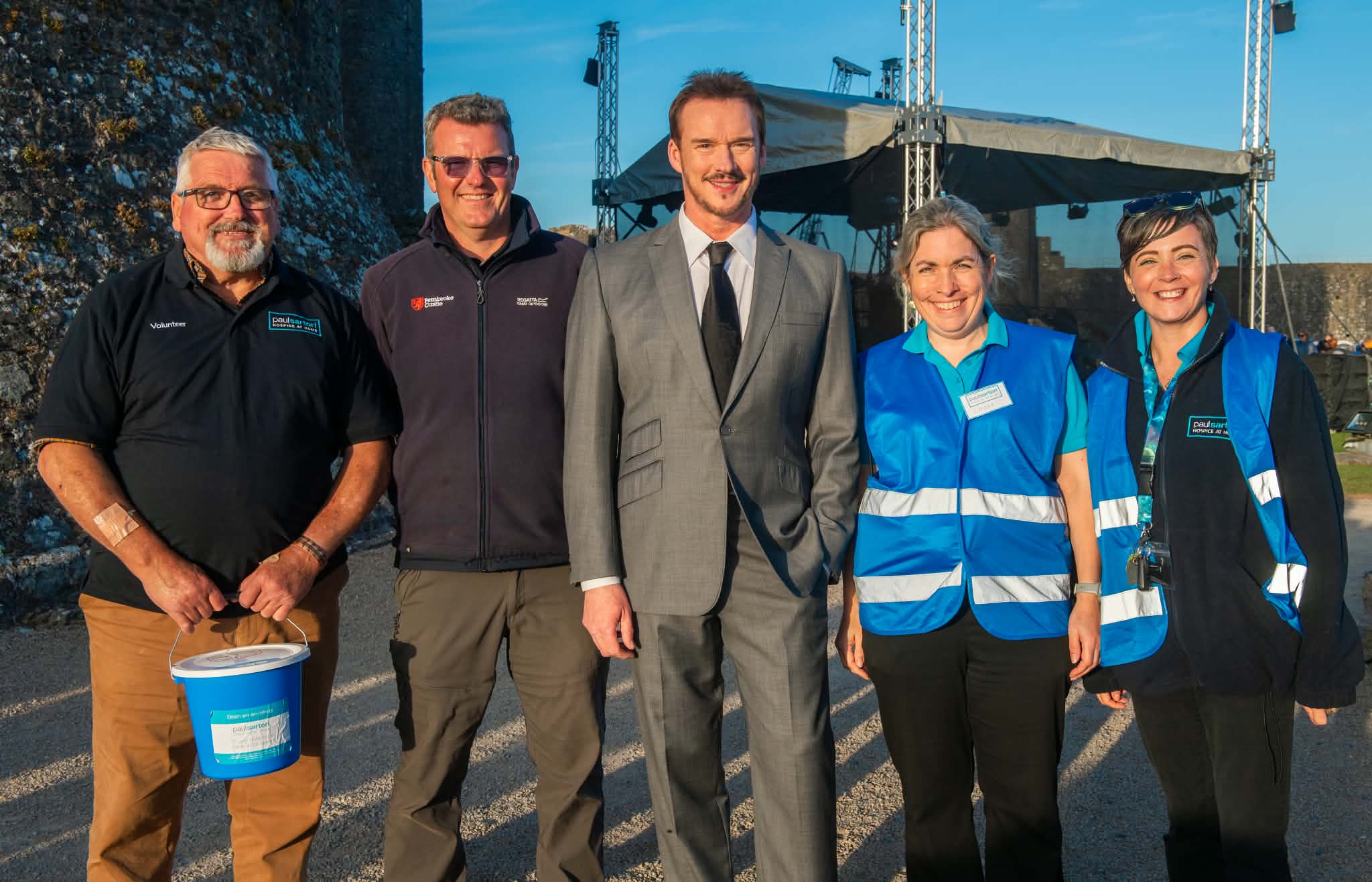
Photo caption: Jon Williams from Pembroke Castle with Laura Hugman, CEO of the Paul Sartori Foundation, team members and headline act Russell Watson.

Donations pour in for SNAP Specialist Play as families embrace Toy Story 5 launch
A TOY STORY-themed charity appeal at a Haverfordwest cinema has got off to a flying start, with families donating toys to support children with additional needs across Pembrokeshire.
The Palace Cinema has teamed up with local charity SNAP Specialist Play to collect new and pre-loved toys during screenings of the newly released Toy Story 5.
The appeal centres around an “Andy’s Toys” donation box, inspired by the beloved Pixar films, which has already been filled by generous filmgoers.
Cinema manager Hannah Cramp said the response from the community had exceeded expectations.
Families attending opening screenings have arrived carrying bags of toys, with many children keen to share their own treasured items to help others.
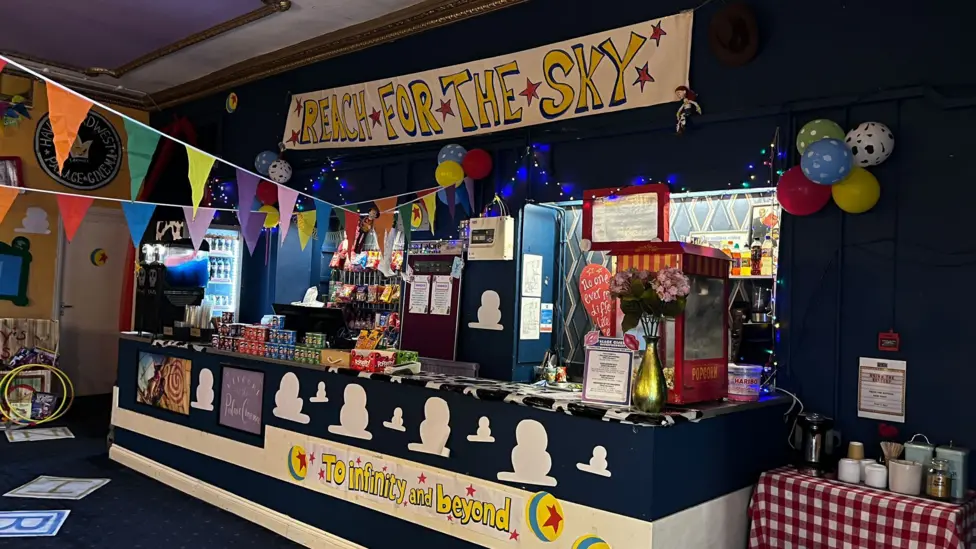
The cinema has transformed its foyer into a colourful Toy Story-themed experience, complete with hand-painted decorations, character silhouettes, bunting and famous film slogans including “Reach for the Sky” and “To Infinity and Beyond”.
Many visitors have also embraced the spirit of the occasion by attending in costume as their favourite Toy Story characters.
The toys are being donated to SNAP Specialist Play, a charity based within the Child Health Department at Withybush Hospital.
SNAP supports pre-school children with additional and complex needs through specialist play sessions designed to encourage communication, physical development and sensory learning.
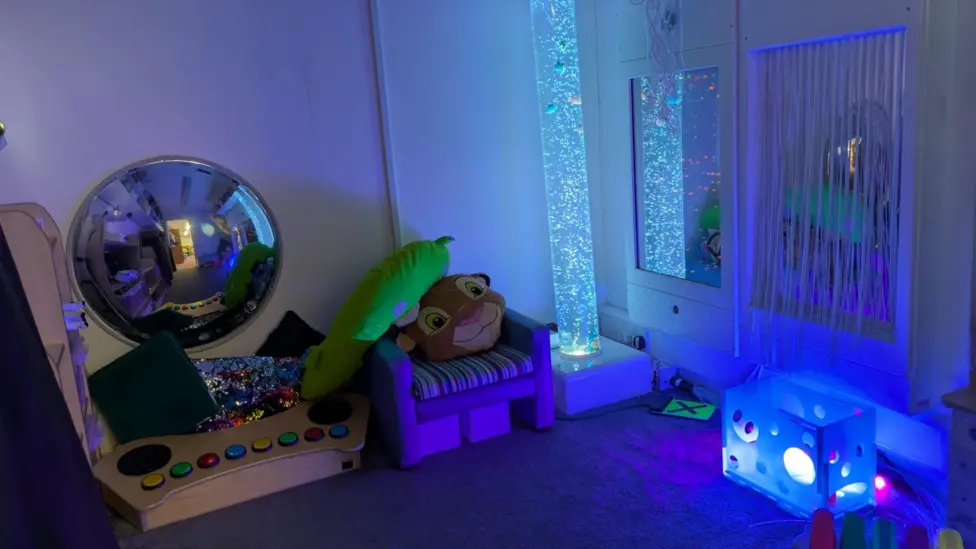
Its facilities include sensory rooms, therapeutic play spaces and bespoke equipment used by speech and language therapists, occupational therapists and physiotherapists.
Project manager Cindy Jenkins said the charity was delighted by the partnership and grateful for the generosity shown by local families.
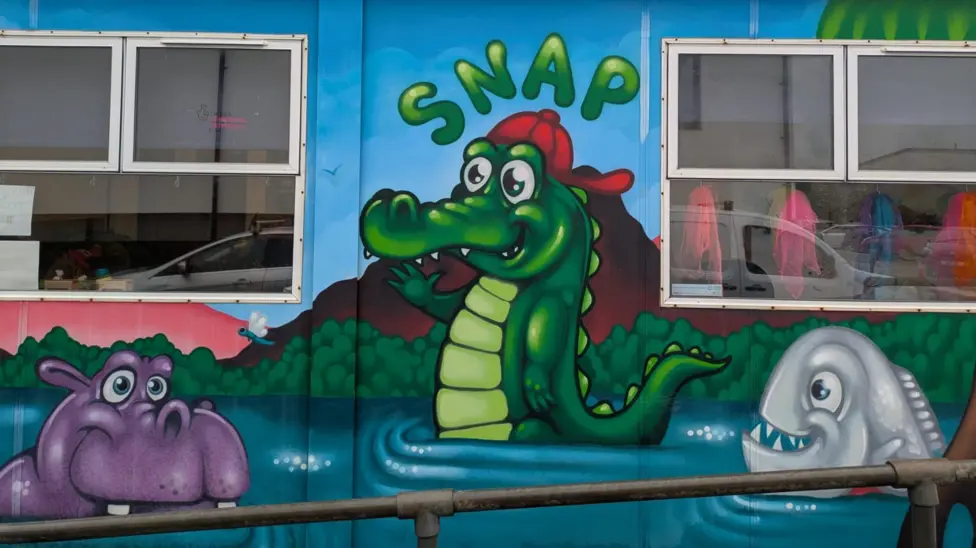
She said every toy donated would be put to good use, either during specialist play sessions, at family events, or through seasonal initiatives such as Christmas gift boxes for children and their siblings.

The appeal will continue until mid-July, with organisers hopeful that even more donations will be received over the coming weeks.
Anyone attending Toy Story 5 at the Palace Cinema is invited to bring along a new or good-quality pre-loved toy to support the appeal.
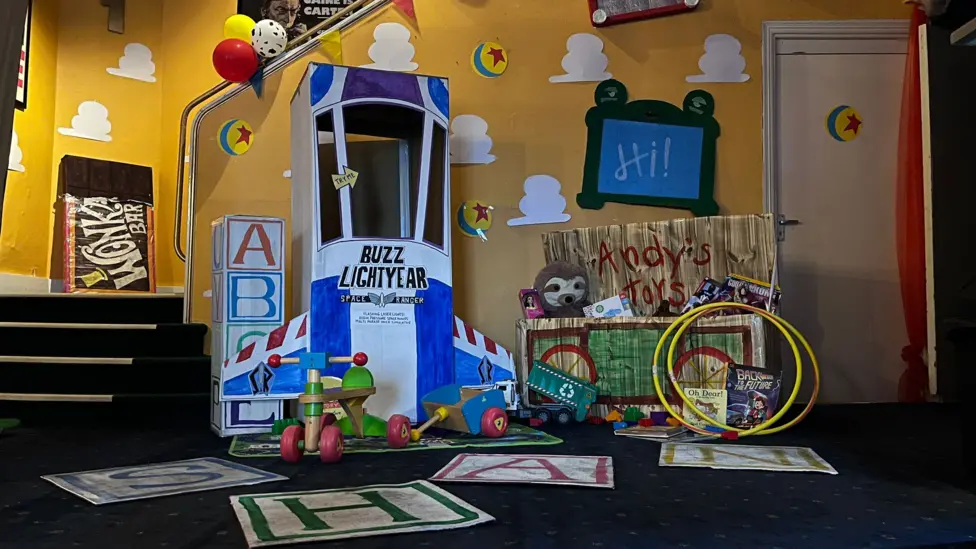
Cover photo:
Fancy dress fun: Palace Cinema manager Hannah Cramp helping launch the Toy Story charity appeal.



News6 hours ago
Long Course Weekend set to bring thousands to Pembrokeshire
Three days of swimming, cycling and running will once again transform Tenby into one of the UK’s biggest endurance sporting...


Community12 hours ago
The gentle giant behind the tattoos
Pembrokeshire security worker Josh Davies praised for professionalism, kindness and proving first impressions can be wrong JOSH Davies is hard...


Charity1 day ago
Toy Story fans fill charity toy box at Haverfordwest cinema
Donations pour in for SNAP Specialist Play as families embrace Toy Story 5 launch A TOY STORY-themed charity appeal at...

Community2 days ago
Lord Rhys emerges from the mist in St Davids
Giant puppet begins historic journey marking 850 years since the first Eisteddfod MIST swirled around St Davids Cathedral on Friday...

News3 days ago
Tragic tribute paid to Haverfordwest man after A4075 collision
FAMILY REMEMBERS “KIND AND LOVING” CALLUM HANSON THE FAMILY of a 22-year-old man from Haverfordwest who died following a road...


News4 days ago
Motorcyclist, 22, dies in A4075 crash in Pembrokeshire
A 22-year-old woman remains in hospital after two-vehicle collision A MOTORCYCLIST has died following a serious two-vehicle crash on the...


Community4 days ago
Why police will be visiting every home in Pembrokeshire
New operation aims to knock on more than 257,000 doors across Dyfed-Powys over the next three years DYFED-POWYS POLICE has...


Crime4 days ago
Prisons at breaking point: MPs warn Wales is paying the price of a failing system
Frozen healthcare budgets, overcrowded jails, homelessness on release and mounting pressure on staff are undermining rehabilitation across Wales, according to...


News4 days ago
Brexit at 10: How Britain was sold a dream that cost us dearly
A decade after the referendum, the promised benefits remain hard to find while the economic costs are increasingly difficult to...


Crime4 days ago
Worcestershire man jailed after violent attack on woman in Tenby
Defendant was already serving a suspended sentence when serious assault took place A WORCESTERSHIRE man has been jailed for more...
-

 Crime4 days ago
Milford Haven man jailed for breaching domestic violence protection order
-

 Local Government6 days ago
Security privately arranged by Mayor at Beating of the Bounds
-

 News4 days ago
Crash on Freeman’s Way causes school-run chaos across Haverfordwest
-

 Crime5 days ago
Man wanted by court after failing to attend hearing over alleged shop thefts
-
 Crime5 days ago
Man banned from roads after drink-driving offence
-

 Crime5 days ago
Man jailed after admitting strangulation and assaults
-

 Crime5 days ago
Drug trafficker must repay £33,000 after court rules he made nearly £500,000
-
 Crime5 days ago
Man sentenced over stalking campaign and lock knife offence