


News
Former Welsh police officer faces extra charges in child sex abuse case


FORMER police officer Lewis Anthony Edwards is now facing additional charges for 54 child sexual offences, as authorised by the Crown Prosecution Service (CPS). The fresh accusations compound an already substantial legal challenge for Edwards, who had previously admitted guilt to 106 related offences earlier this year.
The detailed charges encompass 25 counts of inciting a child to partake in both penetrative and non-penetrative sexual activities, 6 counts of causing a child to observe a sexual act, 14 counts of demanding indecent images of minors under menacing circumstances, and 9 counts of producing indecent images of children across categories A, B, and C.
Speaking on the matter, Lucy Dowdall, a Specialist Prosecutor for the CPS, emphasised, “The CPS’s function is to ensure fair, independent, and objective assessments about the presentation of charges for judicial consideration. It is not to decree whether someone is criminally guilty.”
Dowdall further stressed the importance of ensuring a fair trial process for Edwards, cautioning against any form of online or offline commentary that could prejudice the proceedings.
Lewis Anthony Edwards, born on 15th October 1999, is presently remanded in custody and is scheduled to appear before the Cardiff Crown Court. The date for his subsequent court appearance remains undecided.

In a previous hearing on 26th May 2023, Edwards confessed to 106 offences related to child sexual abuse.



Birds found in poor condition after being taken from natural habitat
A KILGETTY man deliberately trapped wild goldfinches using a decoy system with the intention of selling them, a court has heard.
When officers from the RSPCA discovered the birds at aviaries in The Glebe, Tenby, Colwyn Robert Probert allegedly told them to “shove the birds up your bum” after being informed the animals would be released back into the wild.
Haverfordwest Magistrates’ Court heard this week that Probert, 38, of Kingsmoor Common, Kilgetty, had trapped the birds in their natural habitat using decoy birds and wild seed.
Lindi Meyer, prosecuting on behalf of the RSPCA, said: “Thirteen goldfinches had been taken from the wild after the defendant set up traps with decoy birds and wild seed.”
The court heard that when RSPCA officers inspected the birds, many were struggling to adapt to captivity.
Ms Meyer said: “The birds were finding it difficult to adapt to a confined environment, having been captured in the wild. They were clinging to the bars of the cages, they were unsteady on the perches and they had dark coloured legs, which are characteristic of wild birds.”
The prosecutor added that two of the cages were too small, some of the birds had dirty tails and damaged wing feathers, while broken swings were also found inside the aviaries.
“Two of them were underweight and their water was dirty,” she said.
The court heard that after officers informed Probert the birds would be returned to their natural habitat, he responded: “You can shove them up your bum if you want to.”

A subsequent search of Probert’s property failed to uncover any documentation showing the birds had been obtained legally.
Probert pleaded guilty to intentionally taking goldfinches from the wild, possessing thirteen wild goldfinches contrary to the Wildlife and Countryside Act 1981, attempting to take birds from the wild, and failing to ensure the welfare needs of the birds were met.
“This was clearly a disregard for wildlife and had been pre-planned,” Ms Meyer told the court. “We also believe there was a commercial element involved.”

The court was told Probert had previously been convicted in 2010 for similar offences involving the trapping and keeping of wild birds.
Given the seriousness of the offences, District Judge Mark Layton ordered a full probation report before sentencing.
Probert was granted unconditional bail and will be sentenced at Llanelli Magistrates’ Court on Tuesday (Jun 30).
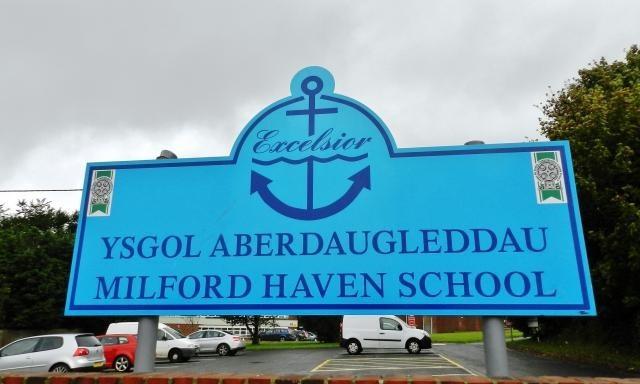
GMB says protective equipment should be considered where risk assessments show staff could face blades
SCHOOL staff should be given access to knife blankets where there is a clear risk of violent incidents involving blades, a union has said, amid growing concern over safety in schools and youth settings.
The call was made at the GMB Congress on Tuesday (Jun 9), where delegates warned that school support staff are increasingly being expected to deal with serious behavioural incidents, safeguarding crises and violent confrontations without proper protective equipment.
The debate will resonate strongly in west Wales, where recent incidents have brought the issue of youth violence into sharp focus.
In February, Milford Haven School was placed into lockdown after a teacher was assaulted during an incident involving a pupil reportedly armed with a bladed article. A 15-year-old boy was later charged with grievous bodily harm and possession of a bladed article on school premises.
The case followed the shocking attack at Ysgol Dyffryn Aman in Ammanford in April 2024, when two teachers and a pupil were stabbed. A teenage girl was later convicted of attempted murder and sentenced to 15 years in custody.
More recently, four youths aged between 13 and 17 suffered stab wounds during violence at Tenby railway station in April. British Transport Police later confirmed a number of arrests in connection with the incident.
GMB said the issue was not about creating fear in schools, but about recognising the reality faced by staff who are often first on the scene when serious incidents unfold.
Jonathan Coles, a GMB delegate, told Congress: “Support staff frequently manage challenging behaviour, respond to safeguarding crises, and undertake de-escalation work.
“Yet they are expected to do this without appropriate protective equipment.
“That’s why GMB is calling for the establishment of clear national standards requiring all academy trusts, local authorities, and specialist education providers to provide knife blankets wherever risk assessments identify potential exposure.
“Knife blankets, alongside consistent training on their use, offer a practical measure for the protection of education staff.”
Knife blankets are designed to help protect staff from slashes and stab wounds during emergency situations. The union says they should not be seen as a replacement for prevention, behaviour support, mental health services or proper staffing levels, but as one part of a wider safety plan.

Figures cited by GMB suggest more than 700 knife-related offences were recorded by police in schools in England and Wales last year.
The union is calling for clear national standards, proper training, and risk assessments which reflect the changing nature of violence faced by education staff.
The issue is likely to raise difficult questions for councils, schools and Welsh Government ministers about how far schools should go in preparing for rare but potentially catastrophic incidents.
Supporters of the proposal argue that staff should not be left defenceless when violence erupts.
Others may worry that protective equipment such as knife blankets risks normalising the idea that schools are dangerous places.
But after serious incidents in Milford Haven, Ammanford and Tenby, the debate over how best to protect staff and pupils is unlikely to go away.

PUPILS and teachers in Wales could see changes to the new GCSE English Language and Literature qualification after WJEC admitted “significant adjustments” may be needed only months after the course began being taught.
The qualification, introduced for Year 10 pupils in September 2025 as part of the new Curriculum for Wales, combines English language and literature into a single or double award.
WJEC said it had received concerns from schools about teacher workload and the manageability of delivering the new course.
The exam board is now consulting on possible changes, including the removal of some assessments from units. This could include changes to oracy assessments, which currently form a significant part of the qualification.
If approved, the changes would apply to Year 10 pupils starting the course in September 2026. They would not apply to pupils who began the qualification in September 2025, because some have already completed work and WJEC says grades must remain comparable within the same cohort.
Other changes already due from September 2026 include dropping the requirement for mandatory video evidence of oracy assessments, allowing either audio or video evidence instead.
WJEC also plans to clarify that a teacher may take part in group discussions where there are attendance issues or special requirements.
The Welsh Conservatives said the situation raised wider questions about the roll-out of the new curriculum.
Sam Rowlands MS, Welsh Conservative Shadow Minister for Education, said: “Only months after this qualification started being taught, WJEC is already saying significant adjustments are needed. That should set alarm bells ringing across the Welsh education system.
“Teachers and pupils warned that too many assessments across the school year were adding pressure and creating burnout. They deserved to be listened to before this was rolled out, not after pupils had already started the course.
“If significant changes are already being considered only months after this qualification began being taught, then serious questions need to be asked about the Welsh curriculum. Teachers and pupils deserve a curriculum that is manageable and focused on raising standards.”
However, WJEC says the review is a response to feedback from schools and is intended to make the qualification more workable.
The new GCSE was designed to support the Curriculum for Wales by combining language and literature skills, encouraging pupils to study texts, spoken language, writing, context, culture and communication in a more integrated way.
Supporters of the reforms argue that a more joined-up approach better reflects how pupils use language in real life, and gives greater weight to speaking and listening as well as written exams.
But critics say the volume of assessment has placed extra pressure on teachers and pupils, particularly because several units involve non-exam assessment marked by schools and moderated by WJEC.
The consultation closes on June 19, with WJEC expected to confirm any agreed changes before the end of the summer term.


Crime2 hours ago
Knife blankets call as school staff face rising violence fears
GMB says protective equipment should be considered where risk assessments show staff could face blades SCHOOL staff should be given...


News2 hours ago
Claire Archibald secures review of Milford Haven train times
RURAL TRANSPORT CONCERNS RAISED WITH TFW CLAIRE ARCHIBALD MS has secured a review of train times between Milford Haven and...


Crime2 hours ago
PCC review calls for stronger youth crime prevention work
REPORT MAKES 13 RECOMMENDATIONS A REVIEW into crime and anti-social behaviour services for young adults has called for stronger prevention...


Crime5 hours ago
Families condemn failed appeal by paddleboard boss jailed over Haverfordwest tragedy
RELATIVES SAY LATEST COURT BID HAS REOPENED PAIN AFTER FOUR DEATHS ON WESTERN CLEDDAU THE FAMILIES of victims of the...


Community21 hours ago
Forgotten wartime archive found in Pembroke Dock attic after 80 years
Remarkable family collection reveals story of father and son who served through two world wars A REMARKABLE untouched family archive...


Crime1 day ago
Milford Haven woman left with facial fractures after drunken attack
A WOMAN in her late fifties suffered facial fractures after being repeatedly punched through the window of her car during...


Crime1 day ago
Sex offender in senior role at Tenby family hotel
CREST HOTEL GROUP says it is investigating safeguarding concerns after staff at the Imperial Hotel in Tenby raised alarm over...

Sport2 days ago
Runners tackle new route in Ras Y Castell 10k
MORE than 90 runners took to the streets and paths around Cardigan on Friday evening (June 5) for the annual...


Business2 days ago
Turkish Kitchen reaches Welsh restaurant award semi-finals
Haverfordwest café praised as small independent business flies flag for Pembrokeshire A HAVERFORDWEST café has been named as a semi-finalist...


News2 days ago
Person taken to hospital after major emergency response on Tenby Esplanade
A PERSON has been taken to hospital following a major multi-agency emergency response on The Esplanade in Tenby. Dyfed-Powys Police...
-
Crime4 days ago
Paddleboard company owner loses bid to cut sentence over Haverfordwest tragedy
-

 Crime3 days ago
Milford Haven man admits harassment and assault
-

 Crime6 days ago
Milford Haven man bit neighbour’s neck near cashpoint
-

 News3 days ago
Community appeal for privacy after serious emergency in Pendine
-
 Crime6 days ago
Pembroke Dock driver avoided jail after drug-drive crash
-

 Crime6 days ago
Dinas Cross man jailed over shop thefts
-
Crime1 day ago
Sex offender in senior role at Tenby family hotel
-

 News6 days ago
Mass rescue as west Wales lifeguards save three lives during busy half-term