


News
Badenoch calls for equality duty on public services to be scrapped


KEMI BADENOCH has called for the abolition of the legal duty requiring public bodies to consider equality when making decisions.
The Conservative leader said the Public Sector Equality Duty had become a burden on schools, hospitals, police forces and councils, claiming it had allowed “dangerous and divisive agendas” to take hold across public services.
The duty, introduced under the Equality Act 2010, applies to public authorities in England, Scotland and Wales. It requires them to have due regard to the need to eliminate discrimination, advance equality of opportunity, and foster good relations between people with and without protected characteristics.
Those protected characteristics include age, disability, race, sex, pregnancy and maternity, religion or belief, and sexual orientation.
Badenoch said the duty had created a “minefield” around public decision-making, leaving major decisions vulnerable to legal challenge.

Speaking on BBC Radio 4’s Today programme on Tuesday morning, she said the public sector aspect of the Act had failed to allow for “common sense”.
She said people in public services had become scared to do their jobs properly “in case they were called racist”.
The Conservatives say the proposal is part of a wider programme to “restore common sense” in public life. The party argues that the equality duty has encouraged diversity, equality and inclusion bureaucracy, ideological box-ticking, and confusion within public services.
Shadow equalities minister Claire Coutinho said public bodies were increasingly “obsessing” over equality rather than focusing on their core duties.

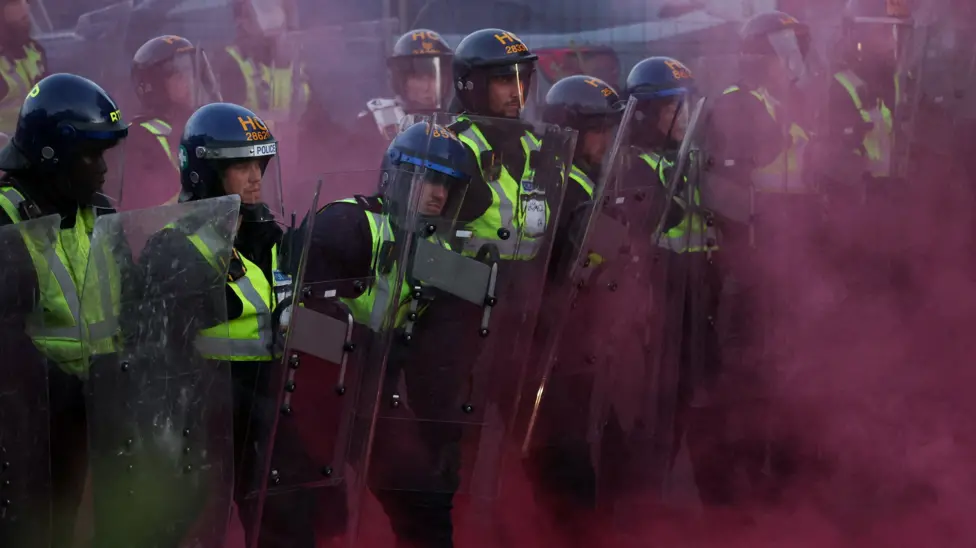
She said police officers, in particular, were being forced to make difficult decisions while navigating equality guidance that could cloud their judgement.
Haverfordwest
Badenoch also referred to a number of high-profile cases, including the Nottingham attacks carried out by Valdo Calocane, the fatal stabbing of an 18-year-old Henry Nowak in Southampton by Vickrum Digwa, and the Manchester Arena bombing carried out by Salman Abedi.
Calocane, who killed three people in Nottingham in June 2023, has strong links to Pembrokeshire. He was from Haverfordwest, attended Sir Thomas Picton School, now Haverfordwest High VC School, and his parents still believed to live in the town.


The case remains highly sensitive, with previous criticism focused on police and health service failings in the lead-up to the killings. Badenoch suggested such cases had fuelled concerns that frontline agencies had become too cautious in exercising judgement for fear of accusations of discrimination.
Badenoch was also in Pembrokeshire last month, visiting Pembroke Refinery, where she spoke to The Herald about the upcoming Senedd elections.
Political divide
The Equality and Human Rights Commission defended the duty, saying it helps public bodies make better decisions by considering the impact of their actions on all those affected.
The issue has become a dividing line between the main political parties. Reform UK has said the Conservatives are not going far enough, arguing that the Equality Act itself should be scrapped.
The Liberal Democrats accused Badenoch of trying to reignite culture war politics, while Labour is preparing to publish a new equality and diversity strategy focused heavily on class and socio-economic background.
The government says its plan will aim to improve access to the civil service for people from working-class and regional backgrounds, and address the over-representation of people from wealthier families in senior public roles.
The Public Sector Equality Duty has previously been used in legal challenges against councils and government departments, including cases involving library closures, care home fees, and the Home Office’s treatment of the Windrush generation.


CMA calls for new regulatory regime after households faced cancelled orders and sharp price increases
BEN LAKE MP has welcomed proposals for stronger protections for households that rely on heating oil, following a major investigation by the Competition and Markets Authority.
The Ceredigion Preseli MP said people living in rural and off-grid communities should receive protections comparable to those available to customers connected to the mains gas and electricity networks.
Around 1.5 million UK households depend on heating oil. Customers currently lack several protections available elsewhere in the energy market, including consistent support for vulnerable people and access to independent dispute resolution when complaints cannot be settled directly with suppliers.
The CMA launched its investigation after conflict in the Middle East disrupted supplies and caused heating oil prices to rise sharply earlier this year.
Its final report found that the market remained generally competitive and that suppliers had not profited materially from the crisis. Most of the increase was attributed to higher wholesale costs.
However, the regulator concluded that customers remained particularly exposed during periods of disruption, with uncertainty over prices, deliveries and the support available when problems arose.
In Wales, the average retail price rose from 64p per litre in February to 106p in March, an increase of 42p. Across the UK, prices peaked at 123p per litre in April, 92% above February’s average.
The CMA has recommended a proportionate regulatory regime requiring heating oil suppliers to register and meet minimum standards.
Proposed protections would cover the way prices are quoted, how cancellations are handled and access to independent dispute resolution. Suppliers could also be required to explain available payment plans and minimum purchase quantities more clearly.
A register of vulnerable customers has also been proposed, alongside a review of minimum-order rules to determine whether households should be allowed to buy smaller quantities.
Heating oil is generally purchased in bulk, leaving households facing bills of £500 or more at a time. The CMA said allowing smaller orders could make the fuel more accessible to customers experiencing financial difficulties.
Ben Lake old The Herald: “I welcome the Competition and Markets Authority’s call for a new regulatory regime for heating oil suppliers, together with action to compensate households affected by last-minute order cancellations earlier this year.

“Requiring suppliers to meet minimum standards, clearly explain payment plans and minimum purchases, and maintain a register of vulnerable households would help protect off-grid customers during sudden price increases or periods of crisis.
“These recommendations are welcome, but I will also be pressing for similar protections to be introduced for households that rely on LPG.”
The CMA estimates that around 1,700 customers may have had orders cancelled in circumstances that breached their contracts.
Although those customers received refunds, some were forced to place replacement orders at much higher prices, potentially leaving them between £150 and £350 worse off. Others were unable to obtain replacement fuel.
Several suppliers have agreed to compensate affected customers. Those who paid more for a replacement delivery are expected to receive the difference, while customers who did not purchase replacement oil should have their original orders honoured at the agreed price.
The CMA said some suppliers had not yet agreed to provide compensation and warned that it was preparing possible court enforcement action.
Mr Lake said the regulator’s findings reflected concerns raised by constituents across Ceredigion Preseli.
He said: “The conclusions of the CMA’s report will not surprise residents of Ceredigion Preseli.
“Many saw the price of their regular fuel deliveries changing at very short notice during the Middle East fuel crisis. I am also aware of cases where customers were not told the final price until the delivery lorry had arrived at their property.
“Ceredigion Preseli has one of the highest proportions of households in Great Britain that are not connected to the mains gas network. The crisis therefore had a disproportionate effect on the amount many residents were forced to pay to heat their homes.”
Mr Lake welcomed the commitment to compensate affected households but said further information was needed about how eligible customers would receive payments.
He added: “I welcome the announcement that compensation will be paid, but the eligibility and process remain unclear.
“I have asked for further details about how customers can make sure they receive the money they are owed. I am determined that constituents in Ceredigion Preseli should receive every penny of compensation to which they are entitled.”
The CMA will now work with the UK and devolved governments, regulators and the heating oil industry to consider how its recommendations should be implemented.


Phil Jones, founder of Defence Security Resilience Cymru, says Welsh businesses of every size could have a role to play in strengthening the UK’s defence and security capabilities
THE CONVERSATION around defence has changed.
For many years, defence was viewed largely through the lens of military capability. It was considered primarily a matter for government, the armed forces and a relatively small group of specialist suppliers.
That view no longer reflects the challenges facing the UK.
Cyber attacks, geopolitical instability, disrupted supply chains, energy security, disinformation and climate-related emergencies are increasingly interconnected. Each demonstrates how national resilience depends not only on military strength, but also on the strength, adaptability and security of the wider economy.
The organisations helping to build that resilience are no longer confined to what might traditionally be described as the defence sector.
Across Wales and the wider UK, manufacturers are developing advanced engineering solutions, cyber security businesses are protecting critical infrastructure and technology companies are applying artificial intelligence to complex operational challenges.
Universities are producing world-leading research, while small and medium-sized businesses are developing specialist products and services capable of responding rapidly to new threats and requirements.
These organisations are increasingly becoming part of the UK’s national resilience story.
The UK Government’s direction of travel places growing emphasis on innovation, sovereign capability and secure supply chains alongside conventional military assets. The focus is shifting from simply purchasing equipment towards strengthening the wider industrial network that supports national defence and security.
That presents a significant opportunity, not only for established defence contractors, but also for businesses that may never previously have considered themselves part of the sector.
One of the greatest misconceptions is that defence opportunities are relevant only to companies manufacturing military equipment.
Modern defence and national resilience rely on expertise across software, engineering, data, communications, logistics, energy, construction, professional services and advanced manufacturing.

For many SMEs, the question is no longer whether they can contribute, but how they can navigate what may appear to be a highly complex landscape.
That concern is understandable.
Procurement routes may be unfamiliar, supply chains can be complicated and businesses often struggle to identify where their expertise fits or which organisations they need to approach.
The answer is rarely found by organisations working in isolation.
Businesses that succeed are often those that collaborate, build relationships across industry, academia and government, understand future capability requirements and invest in skills and innovation before opportunities develop into contracts.
National resilience follows the same principle.
No single organisation can build it alone. It depends on partnerships, trusted relationships and a willingness to share knowledge across sectors that have not always worked closely together.
For Wales, this represents an opportunity as well as a challenge.
The country has recognised strengths in advanced manufacturing, cyber security, compound semiconductors, engineering, digital technology and innovation. The task now is to connect that capability with opportunities in the defence, security and resilience sectors.
Welsh businesses must be given opportunities to meet, collaborate and learn from one another if they are to play a greater role in strengthening the UK’s resilience.
The future will belong to organisations that are prepared to build partnerships as readily as they build products.
That conversation is already under way, and businesses of every size should have the opportunity to take part.
Writing for The Herald, Phil Jones is the founder of Defence Security Resilience Cymru and chief executive of Business in Focus. Defence Security Resilience Cymru will take place at ICC Wales, Newport, on September 3 and 4, bringing together representatives from business, government, academia and industry.

Aberafan Maesteg MP promises to champion Welsh interests and work closely with governments and institutions across Wales
STEPHEN KINNOCK has begun work as Secretary of State for Wales after being appointed to Prime Minister Andy Burnham’s new Cabinet.
The Aberafan Maesteg MP was appointed Welsh Secretary on Monday, July 20, having previously served as a Minister of State at the Department of Health and Social Care.
Mr Kinnock said he would provide a strong voice for Wales within the UK Government and promised an open and collaborative approach to the role.
He said he would work with the Welsh Government, local authorities and institutions across the country to support economic growth and deliver improved outcomes for Welsh communities.
Mr Kinnock said: “It is the privilege of my life to be appointed Welsh Secretary, and to serve the people of Wales as part of Prime Minister Andy Burnham’s new Cabinet.
“Wales succeeds when we all pull in the same direction, and I will work across all levels of government to deliver the best possible outcomes for our communities as a dynamic and confident country in a dynamic and strong United Kingdom.
“As Welsh Secretary, I will ensure that the Wales Office continues to champion Wales within the UK Government and that the needs of the Welsh people are prioritised.
“This is about building a strong Wales within a strong United Kingdom, where everyone has the opportunity to reach their full potential, with good growth in every Welsh postcode and communities that are in control and supported by government at every level.
“I am truly honoured to be taking on this role at such a pivotal time for Wales and for the UK, and I am clear that there is no limit to what we can achieve by working together.”
Mr Kinnock is now expected to begin a programme of meetings and visits as he develops the UK Government’s agenda for Wales and represents Welsh interests in Westminster and across Whitehall.



Health7 hours ago
More than 3,000 people have their say as Hywel Dda stroke consultation closes
Final decision on proposals, including a central 24-hour stroke unit at Glangwili and treat-and-transfer services at Withybush, is expected in...


Crime10 hours ago
James McKenna guilty of attempted murder after Carmarthen Park knife attack
Jury rejects defendant’s claim he only intended to cause serious injury after ambush attack on former partner SPECIAL REPORT FROM...


Community1 day ago
New creative team transforms the Maes ahead of Eisteddfod y Garreg Las
Festival site in Llantwd is taking shape ahead of the National Eisteddfod’s arrival in Pembrokeshire from August 1 to 8...


Community1 day ago
From Tenby to Llandudno: Wales’ seaside towns face the same signal crisis
Businesses in two of Wales’s busiest resorts say unreliable mobile coverage is disrupting payments, bookings and everyday life TWO of...


Crime1 day ago
Judge orders Dyfed-Powys Police review after £3,912 fraud error
Force responsible for policing Pembrokeshire criticised after an officer understated the amount stolen from a vulnerable care-home resident A JUDGE...


Community2 days ago
Narberth bursts into colour as carnival brings Civic Week to spectacular close
Crowds lined the streets for an afternoon of floats, fancy dress, music and family entertainment at one of Pembrokeshire’s longest-running...


Community2 days ago
More than 100 racers take to Castle Pond for Paddle West’s inaugural regatta
Successful community event raised money for Forever11 and launched three consecutive weekends of waterside activity in Pembroke MORE than 100...


News2 days ago
NASA chief meets west Wales scientist helping search for life on Mars
Aberystwyth-led technology will guide Europe’s first Mars rover as it drills beneath the planet’s surface, while the proposed DARC radar...

News3 days ago
Princess Royal celebrates Pembrokeshire craftsmanship at family-run weaving mill
A Pembrokeshire business that began after a mother grew tired of waiting three weeks for her children’s name tapes has...


Local Government3 days ago
Burger King could be coming to Haverfordwest as plans submitted
Plans have been lodged for a Burger King outlet at the Morrisons petrol station on Bridge Meadow Lane BURGER KING...
-

 Community7 hours ago
Huge water main burst sends geyser over Fishguard town centre
-

 Health2 hours ago
Welsh A&E performance hits record low as parties clash over NHS pressures
-

 Crime4 hours ago
Man in custody accused of intentionally strangling woman in Haverfordwest
-

 Crime1 day ago
Steynton man fined after breaching dog mess and anti-social behaviour notice
-
Community1 day ago
New creative team transforms the Maes ahead of Eisteddfod y Garreg Las
-

 Health1 day ago
Welsh NHS executive pay revealed as patients face lengthy waits
-

 News1 day ago
Landmark rural law could reshape public services across west Wales
-

 Community1 day ago
Fire crews tackle blaze near Saundersfoot’s Glen Beach