


News
Llanelli split as asylum seekers take shelter in Stradey Park Hotel


WITH echoes of Pembrokeshire’s Penally Camp saga, the controversial government decision to house asylum seekers has sparked tensions in a tranquil Welsh town, leading to an outpouring of both compassion and confrontation.
Previously heralded as a beacon of Welsh culture, Llanelli finds itself at the crossroads of a national debate. Many regard the Stradey Park Hotel as “the jewel in Llanelli’s crown,” a stunning cream-coloured Edwardian mansion with magnificent views of the Gower coastline. Yet, its transformation to accommodate approximately 250 asylum seekers, overseen by the Home Secretary Suella Braverman, has led to uproar.

The Home Office’s choice to use the Stradey Park Hotel stems from a backlog of asylum requests. This has made the Home Secretary, perhaps surprisingly, one of the largest hotel proprietors in the UK. But the commercial side of this venture has not gone unnoticed. The Stradey Park Hotel, acquired by Sterling Woodrow in 2020, has made considerable profits by partnering with Clearsprings Ready Homes, one of three firms that provide accommodation for the Home Office’s asylum seekers.
However, beneath this tapestry of politics and commerce lies the heart of Llanelli, and it is pulsating with mixed emotions. The initial wave of opposition came in the form of court cases and formal letters. But things took a turn between 14 and 16 August, when significant damage was inflicted upon the hotel and its surrounding property.
Following these events, 17 individuals have been arrested in relation to the protest. Most of the arrests were a result of the concerning behaviour displayed by some protestors, causing substantial damage to the hotel grounds and property. Superintendent Ross Evans, Commander for Carmarthenshire, weighed in on the matter, affirming the force’s dedication to preserving public safety whilst recognising the concerns of the protestors.


“Public safety remains our priority and we will continue to listen to and work with all parties. In particular, it is our intention to work with any protest groups in advance of any events so that we can facilitate peaceful demonstration,” Superintendent Evans remarked.
Of the 21 arrests made since July, most of those apprehended are now bound by bail conditions restricting them from entering the vicinity of the hotel or even Llanelli. Notably, on 18 August, Emmanuel Agius was found guilty of possessing offensive weapons and a class B drug. He received a 16-week suspended sentence and a curfew requirement.
The situation in Llanelli serves as a testament to how national policies can ripple into the heart of local communities. The town, once bustling with the anthracite coal, tin, and steel industries, now finds itself grappling with new challenges, echoing larger discussions surrounding migration and identity.
But amid the commotion and contention, Llanelli’s true strength may lie in its ability to navigate these tumultuous waters, hopefully finding a path that not only respects its heritage but also upholds the principles of compassion and unity.


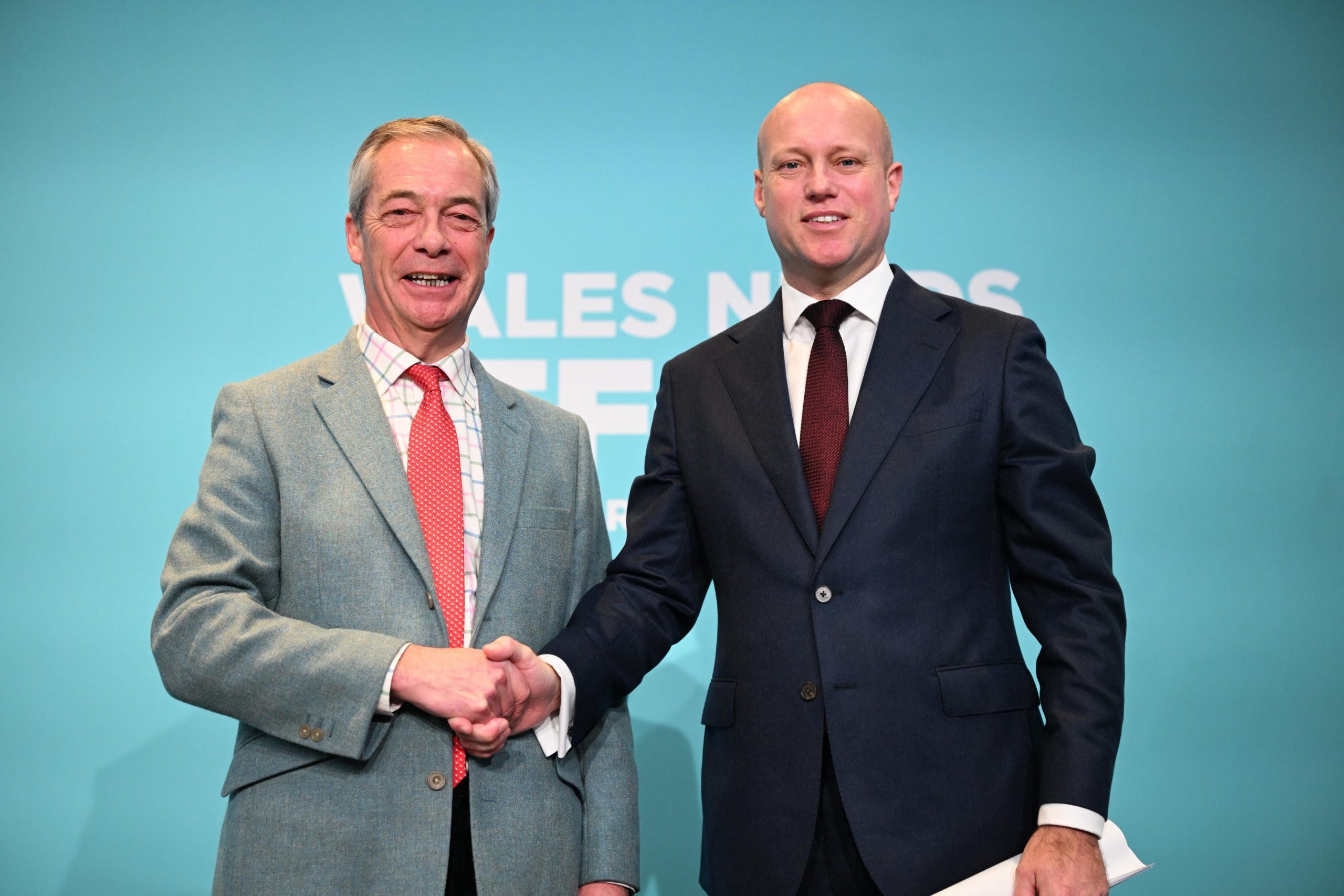
Monkton councillor tops Pembrokeshire list as party confirms Carmarthenshire names and includes Haverfordwest councillor in unwinnable Swansea spot
REFORM UK has unveiled its full list of candidates for the 2026 Senedd election, setting out its challenge across west Wales including Pembrokeshire and Carmarthenshire.
The party has named Susan Claire Archibald, a sitting councillor for Monkton on Pembroke Town Council, as its lead candidate for the Ceredigion Preseli, Mid and South Pembrokeshire regional list.
Speaking to The Herald, Archibald said: “I am honoured to represent Reform UK and Wales.” She added that a fuller statement outlining her priorities would be released in due course.
The remaining candidates on the Pembrokeshire regional list are Paul Marr, a former prison officer, Michael Allen, Elisa Randall, Peter John and Bernard Holton.
Carmarthenshire candidates named
Reform has also confirmed its list for the Caerfyrddin and Llanelli region, with Gareth Beer placed first, followed by Carmelo Colasanto, Sarah Edwards, Christopher Brooke, Alan Cole and Michelle Beer.

The announcement forms part of a nationwide rollout of candidates as the party seeks to establish itself as a credible electoral force ahead of the 2026 vote.
Thorley listed in Swansea region
Among the names included elsewhere is Scott Thorley, a Haverfordwest-based councillor and the first Reform representative elected to Pembrokeshire County Council.
Thorley appears on the party’s list for the Gower and Swansea West region, where he is placed sixth.
Under the Senedd’s proportional representation system, candidates placed lower on regional lists are significantly less likely to be elected, meaning his position is widely viewed as a paper candidacy to complete the slate.

Election framing
Reform Wales leader Dan Thomas said the party was offering voters a stark political choice.
He said: “After a hundred years of failure, Labour are finished in Wales. The choice at this election is what comes next — common sense and a fresh start with Reform, or independence by stealth with Plaid Cymru.”
The Herald understands that further announcements, including candidate profiles and policy details, are expected in the coming weeks as the campaign begins to take shape.


POLICE are appealing for witnesses following a serious assault in Fishguard that has left a man in hospital.
The incident happened on Main Street at around 11:00pm on Saturday (Mar 21), when the victim was reportedly punched, sustaining head injuries. He remains in hospital receiving treatment.
A 24-year-old man was arrested on suspicion of grievous bodily harm (GBH) and has since been released on bail while enquiries continue.
Dyfed-Powys Police are urging anyone who witnessed the incident, or who may have information that could assist the investigation, to come forward.
Anyone with information is asked to contact police quoting reference: 26*227686.
Information can be provided online via the Dyfed-Powys Police website, by emailing [email protected], by calling 101, or by sending a direct message on social media.
Alternatively, information can be given anonymously to Crimestoppers on 0800 555111 or via crimestoppers-uk.org.

Hourly rate to rise as costs increase
THE WELSH GOVERNMENT has confirmed an increase in the hourly rate paid to childcare providers under its Childcare Offer, following a review of funding levels.
The Minister for Children and Social Care, DAWN BOWDEN MS, announced that the rate will rise to £6.67 per hour from April 6, 2026. The increase of 4.18% comes after feedback from childcare providers and sector data gathered during 2025.
The Welsh Government said the change is designed to help providers cope with rising costs, including increases to the National Living Wage.
The Herald understands the review drew on responses from the Childcare Offer’s Annual Survey, as well as information from Care Inspectorate Wales’ Self-Assessment of Service Statement (SASS).
The move follows a policy shift announced last year to review the rate annually, rather than every three years, in a bid to make funding more responsive to pressures facing the sector.
As part of the update, the maximum charge for meals will also increase by 4.18%, which ministers say is intended to balance affordability for both providers and parents.
Dawn Boden said the Welsh Government remains committed to supporting the long-term sustainability of childcare services, adding that officials will continue working with the sector to explore further improvements.



News13 hours ago
Reform reveals west Wales candidates for Senedd battle
Monkton councillor tops Pembrokeshire list as party confirms Carmarthenshire names and includes Haverfordwest councillor in unwinnable Swansea spot REFORM UK...


Health20 hours ago
Clash over Withybush Hospital services as Paul Davies challenges First Minister
A HEATED exchange in the Senedd has laid bare growing tensions over the future of hospital services in west Wales....


Crime2 days ago
Police stop car in Pennar as three arrested in drugs investigation
Suspected drug driver report leads to major police response and multiple arrests DRAMATIC scenes were reported in Pennar on Monday...


Business2 days ago
New pilot vessel Llanion arrives at Milford Haven
State-of-the-art 22-metre craft marks reset after £3.6m pilot boat controversy THE PORT OF MILFORD HAVEN has taken delivery of a...


Community2 days ago
Sycamore Gap legacy tree to take root in Pembrokeshire landscapes
A SAPLING grown from the famous Sycamore Gap tree is set to become part of Wales’ protected landscapes — with...


Business3 days ago
Could Primark be coming to Haverfordwest? Major retailer in talks for former Wilko site
Council confirms advanced discussions as speculation grows over high street boost HAVERFORDWEST could soon see a major high street revival,...


Business3 days ago
Rail investment ‘could unlock 40,000 jobs and £11bn for Wales’ says new report
RAILWAY stations across Wales could help unlock around 40,000 jobs and more than £11 billion for the economy by 2036,...


Local Government3 days ago
Milford Haven set for £200m investment with schools, leisure centre and rail upgrade
Council outlines major plans for town with backing from Welsh Government MILFORD HAVEN is set for a major transformation with...


Community3 days ago
Broad Haven volunteers secure ‘national asset’ status for nature reserve
A SMALL stretch of woodland and former opencast coal mine has been transformed into a nationally recognised biodiversity site, in...


Entertainment5 days ago
Tenby steams up in spectacular style as crowds flock to festival
Colourful parade, towering creations and Victorian flair bring town centre to life TENBY was transformed into a vibrant Victorian fantasy...
-

 Health7 days ago
NHS waiting list falls — but cancer delays and diagnostic backlog worsen
-

 Crime6 days ago
Pembroke man remanded in custody over knife threat, assault and damage allegations
-

 Crime7 days ago
Illegal workers found at Cardigan takeaway after immigration raid
-

 Crime6 days ago
Broad Haven man remanded in custody over sexual harm prevention order breach
-

 News7 days ago
Council unveils plans for new state-of-the-art secondary school in Milford Haven
-

 Education7 days ago
Milford Haven school plans unveiled but funding not yet secured
-

 Farming7 days ago
£3 million secured to continue Welsh sheep genetics programme
-

 Community7 days ago
Former Neyland police officer Louis Knight dies aged 83