


News
Chaotic scuffle erupts at Pembroke’s Michaelmas Fair


‘PEMBROKE town centre bore witness to a tumultuous scene on Thursday evening when a dispute between a group of local youths escalated into a major fracas during the annual Michaelmas Fair.
Tensions flared and spiraled into what can only be described as a full-blown brawl, leaving onlookers stunned by the mayhem that unfolded.
Eyewitnesses recounted the ordeal, with one stating, “The fair attendees were attempting to defuse the situation, but the local youths were unrelenting. It quickly devolved into a mass brawl.”
The incident has ignited fervent calls for an immediate review of the security and oversight measures enforced by the Dyfed-Powys Police and the private security team responsible for managing the three-day extravaganza known as Pembroke’s Michaelmas Fair.
Expressing his concerns, Pembroke town and county councillor, Jonathan Grimes, commented, “I’m afraid the police presence in this vicinity leaves much to be desired. The Pembroke Fair has long been a contentious issue in the town. However, it is an event steeped in history and tradition, spanning centuries.”


Councillor Grimes further noted, “Efforts have been made to engage with the showmen and local businesses before they set up, but these attempts often fall through, and they simply materialize.”
He went on to highlight that nearly two-thirds of Pembroke’s town center is commandeered by rides and stalls, leading to a significant number of local merchants opting to keep their doors closed throughout the event.
“This event kicks off on Thursday evening and continues into Friday evening and all through Saturday, causing substantial disruption,” added Councillor Grimes. “Local shops don’t benefit, and the sole beneficiaries are the showmen.”
Concerns have also been raised regarding the fair’s social impact, particularly on the town’s younger residents. Councillor Grimes stated, “I’m aware that a considerable amount of underage drinking occurs in and around the fair, and naturally, we grapple with a significant drug problem here in Pembroke, as is the case throughout Pembrokeshire.”

Highlighting the role of street pastors, he continued, “Last year, the street pastors were present throughout, often responding to incidents long before the police or PCSOs could arrive. In light of the events on Thursday evening, it is imperative that the entire fair is thoroughly evaluated to prevent such occurrences in the future.”
In the meantime, the Pembroke and Pembroke Dock Neighbouring Police Team confirmed that they responded to the street fight incident on Thursday. They also disclosed plans to conduct a post-fair debriefing session with Councillor Grimes to assess this year’s event alongside previous editions.
The origins of the Michaelmas Fair can be traced back to Pembroke’s medieval charters, granting the town the privilege to host markets and fairs during specific times of the year. Traditionally held on the second Thursday in October, it was originally a hiring fair where farm workers sought servants and laborers for the upcoming year.














THIRTEEN volunteer crew members at Royal National Lifeboat Institution’s Angle Lifeboat Station have successfully completed a demanding week of assessments, marking the culmination of months of training and preparation.
The pass-outs strengthen the station’s operational capability and ensure the all-weather lifeboat remains fully crewed and ready to respond to emergencies across the Milford Haven Waterway and the wider Pembrokeshire coast.
Three crew members – Anthony Thomas, Gareth Thomas and Nathen Houston – qualified as All-weather Lifeboat (ALB) Navigators after completing a four-hour practical and theory assessment.

Their test covered a range of search and rescue scenarios, including simulated taskings, radar work, position fixing and traditional paper chart navigation – all skills vital during poor visibility and challenging sea conditions.
A further ten volunteers – Phil Jones, Tom Meehan, Nick Gale, Rob Davies, Finn Frost, James Findlay, Allen Price, Seymore Phillips, Graham Booth and Matt Nicholas – passed their Tier 2 ALB Crew assessments.
The qualification tests every aspect of lifeboat operations, from man overboard recovery and towing to mooring, berthing, helming and anchoring. Candidates were put through their paces by an RNLI assessor in realistic scenarios designed to mirror live shouts.
Station representatives said the results reflect the commitment and professionalism of the volunteer crew, many of whom balance training with full-time jobs and family life.
The latest qualifications come as the Angle crew continue to play a crucial role in rescues around Milford Haven and the south Pembrokeshire coastline, one of the busiest and most complex maritime areas in Wales.
A spokesperson said the achievements “demonstrate the dedication of our volunteers and the continued strength of lifeboat operations from the town of Milford Haven.”
With 13 newly qualified crew now ready to serve, the station is better equipped than ever to respond when the pager sounds.

A NEW tax on long-vacant plots of land could be introduced in Wales in a bid to force stalled housing sites back into use and speed up housebuilding, ministers have confirmed.
The Welsh Government and the UK government are preparing a joint consultation on devolving powers that would allow Wales to create a vacant land tax targeting sites that have planning permission but remain undeveloped.
Ministers say the move is aimed squarely at discouraging “land banking” — where land is bought and held in the hope its value will rise, rather than being built on — a practice they argue is worsening the housing shortage.
Research commissioned by the Welsh Government previously identified 456 “stalled” sites across Wales, including 376 earmarked for homes, that have failed to progress.
Finance secretary Mark Drakeford said the proposals were about behaviour, not revenue.
“This is not about raising money but changing behaviour and getting more houses built,” he said. “A tax on land that has been designated for development but has not yet been developed could encourage building within expected timescales.”
The powers would first need to be transferred from Westminster before any levy could be introduced by the Senedd Cymru.
Consultation expected
At Westminster, Welsh Secretary Jo Stevens told MPs the change would have a “positive and tangible” impact.
She said: “There are pockets of land being held for ever and ever and we need to bring them back into use.”
Officials have indicated the consultation will be launched soon, though it is not expected before the next Senedd election.
Any new tax would require approval from both Houses of Parliament and the Senedd before coming into force.
Political divide
The plans come as housing supply remains a major political battleground ahead of the election, with Plaid Cymru and other opposition parties pressing Labour to go further on devolution and regeneration powers.

First Minister Eluned Morgan has previously called for additional powers and funding from Prime Minister Keir Starmer, saying Wales needs more tools to tackle housing and infrastructure challenges.
Plaid Cymru has welcomed the consultation, though it argues Wales should also gain control over areas such as rail and the Crown Estate.
Stevens rejected calls to devolve the Crown Estate, warning it could disrupt investment and delay offshore energy projects.
Opposition scepticism
Welsh Conservatives questioned whether the proposals would deliver real change.
Shadow finance spokesman Sam Rowlands said ministers must provide clear data and timescales.
“If this is truly about building more homes rather than raising revenue, ministers should be upfront with the Welsh public about the impact,” he said. “Warm words are not enough.”
Ministers insist the aim is to encourage regeneration, prevent dereliction and unlock brownfield land for affordable homes — particularly in towns where unused plots have remained empty for years.
If approved, Wales would join a growing number of governments looking at fiscal measures to push developers to build sooner rather than later.
The proposal is not new. The Welsh Government first identified a vacant land tax as a priority back in 2018, when ministers began formally requesting powers from Westminster to introduce it. Research published by Senedd Cymru shows those discussions dragged on for years, with talks repeatedly stalling as the UK Treasury sought further evidence and clarification, leaving the plans effectively at an impasse. At one stage ministers said six years had passed with little progress. The latest joint consultation therefore marks the first real movement in nearly a decade — and could finally unlock a policy long promised as a way to bring derelict and unused sites back into productive use across Wales.

COMMUNITY pharmacies across Wales are being forced to sell some medicines at a loss because of an outdated NHS funding system that no longer reflects real-world costs, owners have warned.
Under current rules, pharmacists must dispense prescriptions at prices set nationally, even when those prices are lower than what they paid wholesalers — leaving them out of pocket on everyday items such as aspirin.
The situation has led to mounting debts, emergency loans and, in some cases, owners remortgaging their homes simply to keep their doors open.
Figures from the National Pharmacy Association suggest four in ten Welsh pharmacies were not profitable last year, with many described as “clinging on by their fingertips”.
Selling at a loss
Unlike normal retailers, pharmacies cannot set their own prices or refuse to stock products.

They are contracted to the NHS through the Welsh Government’s Community Pharmacy Contractual Framework, which fixes reimbursement rates for prescription medicines.
But wholesalers’ prices have risen sharply due to inflation, supply shortages and higher manufacturing costs.
That means the maths often no longer adds up.
In one example shared by pharmacists, a packet of 75mg aspirin costs £3.75 to buy but is reimbursed at just £3.05 — a loss of 70p each time it is dispensed.
Multiply that across hundreds of packs a month and dozens of other medicines, and small losses quickly turn into thousands of pounds.
One west Wales pharmacy owner told The Herald: “You wouldn’t run a corner shop selling bread for less than you paid for it. But that’s effectively what we’re told to do every day.”
‘Averaging out’ no longer works
The government’s model assumes that losses on some drugs will be balanced by profits on others.

But pharmacists say that system — once workable — has broken down.
Generic medicines that previously provided modest margins are now also rising in price, while reimbursement rates lag weeks or months behind market costs.
At the same time, running costs have surged.
Energy bills, staff wages, National Insurance contributions, fuel for deliveries and regulatory costs have all increased, while core NHS funding has remained largely flat in real terms for nearly a decade.
Owners say they are now busier than ever too, as GP surgeries redirect patients to pharmacies for minor ailments, vaccinations and clinical advice — work that takes time and staff but often brings little additional income.
Debt and closures
The result is growing financial pressure.
Some pharmacists report taking out short-term loans just to cover monthly payroll, while others have dipped into pensions or personal savings.
Across the UK, hundreds of community pharmacies have closed in recent years, with rural and small-town chemists particularly vulnerable.
Health campaigners warn that if closures continue, patients could lose easy access to prescriptions, advice and walk-in care — pushing more pressure back onto already stretched GP practices and hospitals.
Government response
The Welsh Government says it recognises pharmacies are an essential part of primary care and points to increased investment, including additional stability payments and grants for premises improvements.
A spokesperson said reimbursement prices are set using supplier data and that “while some medicines may be reimbursed below cost on occasions, this is offset by the profits pharmacies make on most of the medicines they dispense”.
But pharmacists argue that assumption no longer reflects reality.
A simple question
At the heart of the row is a basic principle.
If the NHS commissions a service, pharmacists say, it should at least cover the cost of providing it.
As one owner put it: “No business can survive by selling stock at a loss and hoping it balances out. Eventually the numbers catch up with you.”
Unless the funding formula changes, many fear more local chemists could disappear from Welsh high streets — and with them one of the most accessible parts of the health service.
Photo caption: Community pharmacies say fixed NHS prices are forcing them to dispense some medicines below cost (Pic: stock).



Crime1 day ago
Publican admits supplying cocaine and cannabis at Crown Court
Admits cocaine and cannabis supply but denies intent and cash allegations A MILFORD HAVEN pub landlord has admitted supplying cocaine...


Local Government1 day ago
Plaid win in Fishguard North East by-election
PLAID CYMRU has taken the Fishguard North East seat on Pembrokeshire County Council following this week’s by-election. Billy Shaw was...


News2 days ago
Man to return to court over alleged harbour collision
Three charges relate to navigation of vessel in Milford Haven A NEWPORT man is due to return to court later...


Business3 days ago
Computer Solutions Wales under fire from customers
Claims of unreturned devices, unpaid refunds and small claims court cases as company blames landlord dispute CUSTOMERS across west Wales...


News3 days ago
Starmer under fire as aides quit and Scottish Labour leader calls on him to resign
Two senior Downing Street exits in 24 hours as Anas Sarwar breaks ranks, but ministers insist the Prime Minister is...


News3 days ago
Fresh concerns over £60m A40 scheme after resurfacing works just months after opening
QUESTIONS are being asked about the condition of the newly-opened A40 Llanddewi Velfrey to Redstone Cross carriageway after sections of...

Charity3 days ago
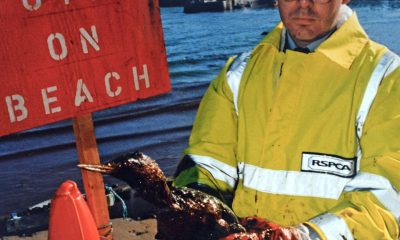
RSPCA looks back at the Sea Empress oil tanker disaster 30 years on
Charity reflects on one of the biggest environmental disasters to hit UK IN just a few days time it will...


Crime4 days ago
Pembroke Dock man admits threatening to hack woman’s head off with sword
Court imposes strict bail conditions and bans contact with named individuals ahead of sentencing A PEMBROKE DOCK man has admitted...


Crime5 days ago
Teenager remanded after teacher injured in knife incident at Milford Haven school
Fifteen-year-old charged with Section 18 grievous bodily harm and possession of a bladed article appears before Swansea magistrates A FIFTEEN-YEAR-OLD...

Crime5 days ago
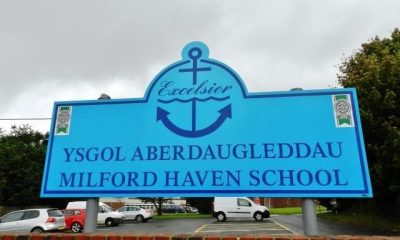
Police confirm teacher was stabbed at school as teenager appears in court
15-year-old charged with Section 18 GBH with intent and possession of a bladed article on education premises POLICE have confirmed...
-

 Health7 days ago
Health board targets rise in steroid and gym drug use across west Wales
-

 Health21 hours ago
Health Board to decide future of nine key services at two-day meeting
-

 Crime7 days ago
Teacher injured and teenager arrested for attempted murder at Milford Haven School
-
Business3 days ago
Computer Solutions Wales under fire from customers
-

 Business6 days ago
Six-figure negligence victory leaves retired builder trapped in divorce limbo
-

 News7 days ago
Reform appoints Dan Thomas to lead party in Wales
-

 Sport7 days ago
Wales name squad for Six Nations opener against England
-

 Business5 days ago
Minimum alcohol price to rise by 30 per cent as retailers warn of border impact