


Business
Wales needs airports overhaul to ‘boost economy and connectivity’


IT WAS highlighted this week that Wales is significantly lagging behind other UK nations in terms of airport capacity and usage, posing a stark disadvantage to its economy and global connectivity.
This concern is highlighted by the fact that while English, Scottish, and Northern Irish airports facilitate approximately four passengers per head of population annually, Welsh airports manage less than a tenth of that figure.
Cardiff airport is still struggling post-Covid, and Qatar airlines – who offer connections to most major international routes – failed to make a return to Cardiff in December 2023 despite many promises.
As Wales stands on the brink of potentially transformative changes in its aviation sector, the upcoming general election presents an opportunity for UK-wide support for a project that could significantly ‘level-up’ the region. With the new First Minister set to take office, prioritising a bold aviation strategy could mark one of the most substantial economic advancements for Wales since devolution.
Joel Strange, a director at Grant Thornton’s economic consulting practice, has emphasied the importance of this pivotal moment for Wales, advocating for a comprehensive and forward-thinking approach to aviation that could redefine Wales’s place in the global community.

Writing in an article for Business Live, he says that the central issue appears to be the location of Wales’s sole international gateway, Cardiff Airport, which is situated over ten miles from the city center and major transport links, essentially leaving it without a significant population base to serve. This geographic disadvantage has been linked to diminished economic benefits for Wales, as academic research from the US and Europe suggests a direct correlation between international airport access and various economic metrics, including productivity, GDP, wages, and employment.
With the majority of Welsh passengers and international visitors relying on airports in England, there is a growing concern that the current situation undermines efforts towards economic ‘levelling-up’ within the UK. Moreover, Wales’s inbound tourism sector is believed to be operating below its potential due to the lack of direct international travel options.
In light of these challenges, discussions are underway regarding the future of aviation in Wales. Proposals include the development of a new airport hub located between Cardiff and Bristol, ideally near the Severn Bridge, irrespective of the side of the border. Such a move could potentially consolidate Cardiff and Bristol airports into a single, more accessible location, which could handle over 20 million passengers annually, thereby transforming it into one of the UK’s largest airports outside London.
This proposition is not without precedent; cities and regions around the world have seen benefits from sharing airport facilities, with notable examples including the EuroAirport Basel-Freiburg-Mulhouse tri-national airport. The benefits of a consolidated airport in south-west Britain could be manifold, encompassing enhanced destination access, operational efficiencies, reduced environmental impact, and financial gains.

However, the idea of a new airport has been met with skepticism in the past, attributed to the perceived viability of Cardiff Airport in its current location and capacity constraints at Bristol Airport. Nevertheless, the evolving landscape, including the development of the South Wales Metro and the approaching capacity limits of Bristol Airport, has reignited discussions about the feasibility and necessity of a new aviation strategy for Wales.
The Welsh Government, having previously shown leadership through initiatives like the South Wales Metro, is now faced with the task of exploring long-term options for the region’s aviation assets. This exploration will need to consider environmental impacts, stakeholder collaboration, and the potential alignment of commercial incentives, especially with entities such as the Ontario Teachers’ Pension Plan, the owners of Bristol Airport.
Natasha Asghar MS, Shadow Transport Minister told The Pembrokeshire Herald this week: “It is deeply concerning that Qatar Airways is still not flying from Cardiff Airport. I have queried Cardiff Airport regarding this, and the response I received was inadequate, the route is still paused, and the Airport is still in detailed discussions to resume.

“With over £200m of taxpayers’ money ploughed into Cardiff Airport, it’s simple, enough is enough, no more money should be pumped into this failing airport.”












Claims of unreturned devices, unpaid refunds and small claims court cases as company blames landlord dispute
CUSTOMERS across west Wales have raised concerns about the trading activities of Computer Solutions Wales, alleging unpaid refunds, missing computers and prolonged periods of poor communication.
The Herald has spoken to several individuals who say they handed over laptops or desktop computers for repair or replacement, paid hundreds or in some cases thousands of pounds, and were then left without their property or a refund despite repeated attempts to resolve the matter.
In some cases, those affected say they have pursued the issue through the civil courts.
Court action taken
One customer said he handed over two custom-built desktop PCs for repair on Sunday (Mar 30, 2025) and later paid £710 after being told the work was complete. He says the computers were never returned.
After months of chasing, he took the matter to court. A hearing took place in October 2025, which he says the defendant did not attend. The court ruled in his favour and issued an order in November for the return of the two computers and repayment of £377 in court fees.

He says that deadline has since passed and the computers remain outstanding.
Other customers described similar experiences, including payments for repairs or replacement equipment followed by delays, cancelled appointments and repeated assurances that items would be returned or refunds processed.
Several said they were eventually advised to pursue claims through the small claims court.
One former worker also alleged unpaid wages during a period of employment.
The Herald has seen copies of text messages, payment confirmations and court paperwork relating to some of the complaints.
Company status questions
Companies House records show that Computer Solutions Pembs Ltd, the limited company associated with the business, was dissolved on Tuesday (July 29, 2025) following compulsory strike-off proceedings.
Filings show changes to directors and persons with significant control in the months before dissolution, along with a change of registered office address outside Wales.

Under company law, a dissolved limited company cannot trade or enter into new contracts.
Despite this, services continued to be advertised online under the Computer Solutions Wales name, including through a website and social media pages. Some customers told The Herald they believed they were dealing with an active limited company at the time they made payments.
Trading history
Archived photographs, marketing material and social media posts seen by The Herald show the Computer Solutions Wales name has been used publicly for several years, including from a high street premises in Pembrokeshire and in promotional material dating back to 2022.
Customers said they understood Computer Solutions Wales to be an established local business operating under the same branding throughout that period.
Police response
Dyfed-Powys Police confirmed they had reviewed information provided to them about the complaints.
In correspondence seen by The Pembrokeshire Herald, police said the matters raised did not constitute a criminal investigation and appeared to relate to civil liability and potential consumer protection issues. Complainants were advised to contact Trading Standards and pursue enforcement through the civil courts where appropriate.

Company response
Steven Grant, trading as Computer Solutions Wales, was contacted and offered the opportunity to comment. Publication of this article was delayed by one week to allow time for a response.
In a written holding statement, a spokesperson for the business said the issues stemmed from a dispute with a former landlord.
The statement said: “This issue began when Computer Solutions Wales was in dispute with its then landlord over building repair obligations and subsequent rent requirements.
“Since then, the landlord has denied CSW access to the property which contains a number of computers. These computers do not belong to CSW nor the landlord, but to CSW customers.
“CSW does not understand the legal position regarding ‘ownership’ of these computers, and is urgently seeking legal advice as to how the computers can be returned to their rightful owners at the earliest opportunity.
“CSW fully understands the frustration of its customers, and can reassure them that it is making strenuous efforts to resolve this matter as soon as is possible.”
The Herald asked Mr Grant to clarify several points arising from this explanation, including why customers were not kept informed during the alleged access dispute, how long access to the premises had been restricted, how many customer devices remained at the property, whether customers had been formally notified in writing, and the name of the landlord or managing agent so the circumstances could be independently verified.
He replied that he was travelling and had no further comment beyond the statement already provided.

STUDENTS training for careers at sea in Pembrokeshire are set to benefit from enhanced practical learning after fresh backing from the Port of Milford Haven.
Learners on the Marine Engineering Pre-Cadetship at Pembrokeshire College will now receive additional hands-on maritime training, funded by the Port, alongside their classroom studies.
Launched in 2023, the enhanced programme is aimed at young people hoping to enter the maritime, deck and engineering sectors. It combines technical teaching with industry-focused skills to help students prepare for work at sea.
For the past three years, the Port has covered the cost of uniforms to encourage professionalism and team spirit among cadets. This year, its support has been widened to include a series of accredited practical courses delivered through the Royal Yachting Association.
These include radar operations, first aid training for mariners, navigation and seamanship, and professional practices and responsibilities — qualifications designed to give students recognised safety and operational skills before entering the industry.
Brian Stewart, Assistant Harbourmaster at the Port of Milford Haven, said the training provides valuable real-world preparation.
He said: “The Pre-Cadetship training at Pembrokeshire College gives students a real insight into life in the maritime, deck and engineering sectors, while building key qualities such as discipline and teamwork. It’s great to see these enhanced practical opportunities being offered this year, which will provide students with invaluable experience and a clearer pathway into our diverse industry.”
Tim Berry, maritime lecturer in the college’s Faculty of Engineering and Computing, said the extra funding would make a “tangible difference” to learners.
He added: “These RYA-accredited practical courses allow the Pre-Cadets to translate classroom theory into real maritime skills, building their confidence and readiness for a career at sea. We’re incredibly proud of the opportunities this partnership continues to create for the next generation of marine engineers.”
The Port, one of the county’s largest employers, has increasingly worked with local education providers to encourage young people into maritime and energy-related careers, helping retain skills and opportunities within Pembrokeshire.
More information about the Marine Engineering Pre-Cadetship is available at pembrokeshire.ac.uk.
Cover photo:

Pre-Cadetship students with lecturer Tim Berry and Port of Milford Haven representatives Brian Stewart and Emily Jones (Pic supplied).

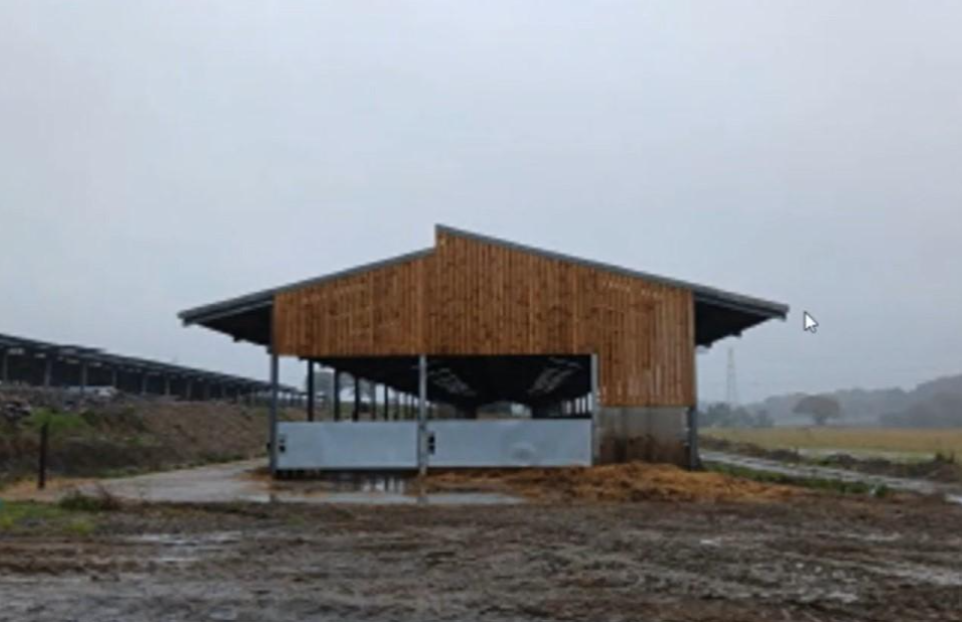
THE FINAL sign-off for plans for a heifer accommodation building and associated works at one of Pembrokeshire’s largest dairy farms, with a milking herd of 2,000 cows, have been given the go-ahead.
In an application backed by councillors at the December meeting of Pembrokeshire County Council’s planning committee, Hugh James of Langdon Mill Farms Ltd sought permission for a 160-metre-long heifer accommodation building, a slurry separation/dewatering building and associated yard areas at 1,215-hectare Langdon Mill Farm, near Jeffreyston, Kilgetty.
A supporting statement through agent Reading Agricultural Consultants said: “The holding currently has a milking herd of approximately 2,000 cows, which are housed indoors for the majority of the year, with dry cows and heifers grazed outdoors when weather and soil conditions permit.
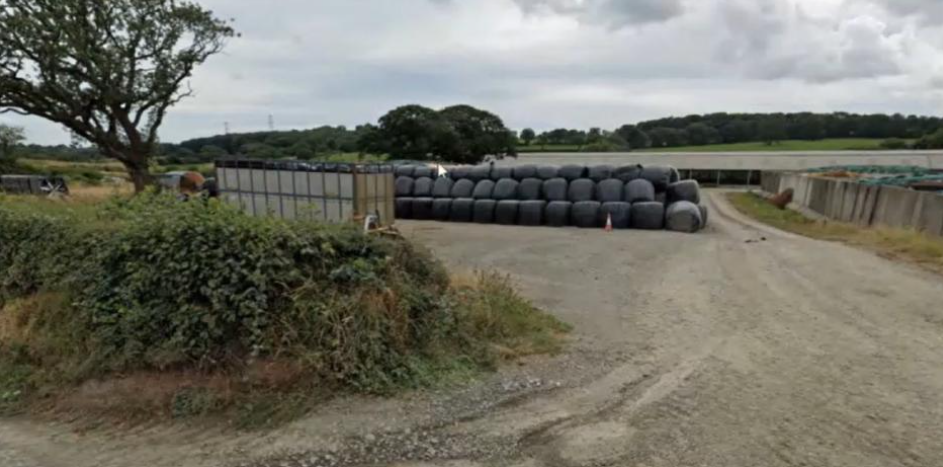
“There has been significant investment in buildings and infrastructure at the farm over the last decade in respect of cattle accommodation, slurry storage, milking facilities, Anaerobic Digestion (AD) plant, feed storage. Recently a calf and weaned calf accommodation buildings were approved by Pembrokeshire County Council with construction almost complete.
“The unit is efficient, achieving yields of more than 10,000 litres/cow/year, with cows being milked three times/day in the 60-point rotary parlour. Langdon Mill Farm currently directly employs 21 full-time, and three part-time staff. Of these, four live on site in the two dwellings opposite the farm, with the remaining staff living in the locality.”
It added: “Although the unit has previously purchased heifers to aid expansion, the farm now breeds most of its own replacements to improve genetics and to minimise the ongoing threat of bovine tuberculosis (bTB).”
It said the proposed building would be used by heifers between the ages of 7-22 months, the siting “directly influenced by the adjacent calf and weaned calf buildings, with livestock being moved from one building to the next as they get older”.
Members unanimously supported the recommendation of approval, giving delegated powers to the interim head of planning to approve the application following the final approval of a habitats regulations assessment.
An officer report published yesterday, February 5, said Natural Resources Wales confirmed it had received the assessment, and, “in consideration of the mitigation measures detailed and on the understanding there is no increase in stock, they agree with the LPA’s conclusion that an adverse effect upon the integrity of the SAC [Special Areas of Conservation] sites can be ruled out”.

Formal delegated approval has now been granted by officers.



Business9 hours ago
Computer Solutions Wales under fire from customers
Claims of unreturned devices, unpaid refunds and small claims court cases as company blames landlord dispute CUSTOMERS across west Wales...


News10 hours ago
Starmer under fire as aides quit and Scottish Labour leader calls on him to resign
Two senior Downing Street exits in 24 hours as Anas Sarwar breaks ranks, but ministers insist the Prime Minister is...


News11 hours ago
Fresh concerns over £60m A40 scheme after resurfacing works just months after opening
QUESTIONS are being asked about the condition of the newly-opened A40 Llanddewi Velfrey to Redstone Cross carriageway after sections of...


Charity18 hours ago
RSPCA looks back at the Sea Empress oil tanker disaster 30 years on
Charity reflects on one of the biggest environmental disasters to hit UK IN just a few days time it will...


Crime2 days ago
Pembroke Dock man admits threatening to hack woman’s head off with sword
Court imposes strict bail conditions and bans contact with named individuals ahead of sentencing A PEMBROKE DOCK man has admitted...


Crime2 days ago
Teenager remanded after teacher injured in knife incident at Milford Haven school
Fifteen-year-old charged with Section 18 grievous bodily harm and possession of a bladed article appears before Swansea magistrates A FIFTEEN-YEAR-OLD...


Crime3 days ago
Police confirm teacher was stabbed at school as teenager appears in court
15-year-old charged with Section 18 GBH with intent and possession of a bladed article on education premises POLICE have confirmed...


Crime3 days ago
Man arrested for murder following death of pensioner in Pembroke Dock
Officers called to Hawkstone Road property as investigation continues and residents urged to come forward DYFED-POWYS POLICE officers have launched...


Crime3 days ago
Teacher discharged as Milford School to reopen Monday after serious assault
Deputy head praises ‘calm and professional’ staff and pupils during lockdown A TEACHER injured in a serious incident at Milford...


Crime4 days ago
Teacher discharged as police step back from Milford Haven school after assault
Teenager remains in custody as school closes and patrols increased to reassure community POLICE have confirmed they are no longer...
-

 Health4 days ago
Health board targets rise in steroid and gym drug use across west Wales
-

 Crime5 days ago
Sex offender jailed after living off grid in Pembrokeshire and refusing to register
-

 News7 days ago
Princess of Wales visits historic Pembrokeshire woollen mill
-

 Crime4 days ago
Teacher injured and teenager arrested for attempted murder at Milford Haven School
-

 Crime6 days ago
Hakin man’s appeal delayed again as Crown Court seeks guidance on insurance law
-

 Crime5 days ago
Johnston man remanded in custody over knife and assault charges
-
Business9 hours ago
Computer Solutions Wales under fire from customers
-

 Business3 days ago
Six-figure negligence victory leaves retired builder trapped in divorce limbo