


Business
Co-op seeks two new council members in Wales

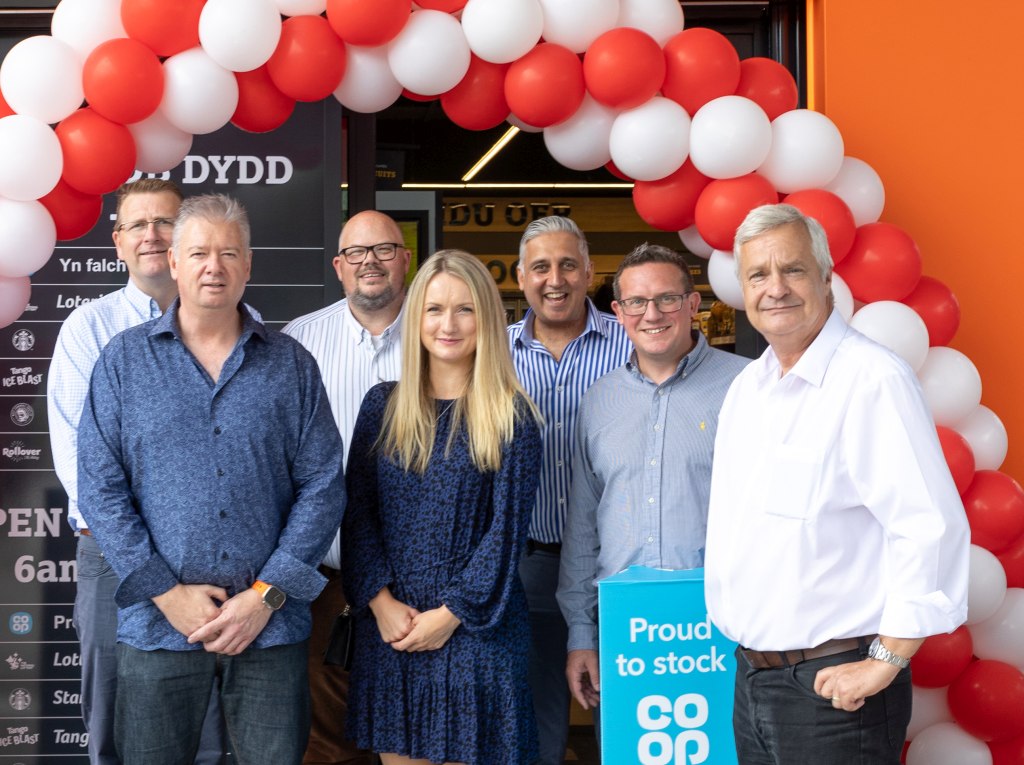
CO-OP has launched a recruitment drive across Wales, calling for two new member representatives to have a say in the running of the group and its food stores, funeral homes, legal business and insurance arm.
Members’ Council leaders have said that applications from members within under-represented societal groups are particularly welcome this year, including those from younger age groups, ethnic minorities, candidates with disabilities and those from the LGBTQ+ community.
Across the UK, there are 26 vacancies on the Co-op National Members’ Council, which works closely with the Board and senior managers to ensure the voice of more than 5 million active members is heard throughout the group. Co-op’s membership is growing and diversifying rapidly so it’s more important than ever that their views and needs are heard.
Denise Scott-McDonald, the Members’ Council’s President, is encouraging applications from people who want to help Co-op tackle the big issues that communities are facing.
Scott-McDonald said: “As a co-operative, we welcome applications from all eligible members, and I can’t stress that enough. If we want to create and deliver real value for our member-owners, we need to represent as many different voices as possible in our work and our Co-op.

“Right now, there’s so much to address and help out with. We know that people are keen to support however they can and being part of Co-op and the Members’ Council is a fantastic way to get involved and join something bigger. We also work closely with Member Nominated Directors and call on the business to take action with motions at our Annual General Meeting, all crucial to engaging with our members and including them in the Co-op they own”.
Council representatives can serve a term between one and three years. The 100 people that make up the Council come from all walks of life and include ordinary members (people who trade with Co-op’s businesses); colleague members, co-opted members and members from independent co-operative societies.
The Council continues to encourage all members to participate in Co-op’s governance, while educating, informing and planning how to champion what makes Co-op different. The Council helped shape our refreshed vision, strategy, and membership offer to make sure our member-owners are the heart of everything we do. It also called on Co-op to start and increase its campaigning against retail crime and violence, leading to the creation of the first ever Retail Crime Action Plan.
To qualify to stand for election as a Council representative, members need to have joined before January 2021 and have earned 500 membership points (the equivalent of spending around £10 a week on groceries in Co-op Food stores) between January 2023 and January 2024.
Candidates can find information at www.co-operative.coop/get-involved/councilelection and can apply until midday on 23 February.

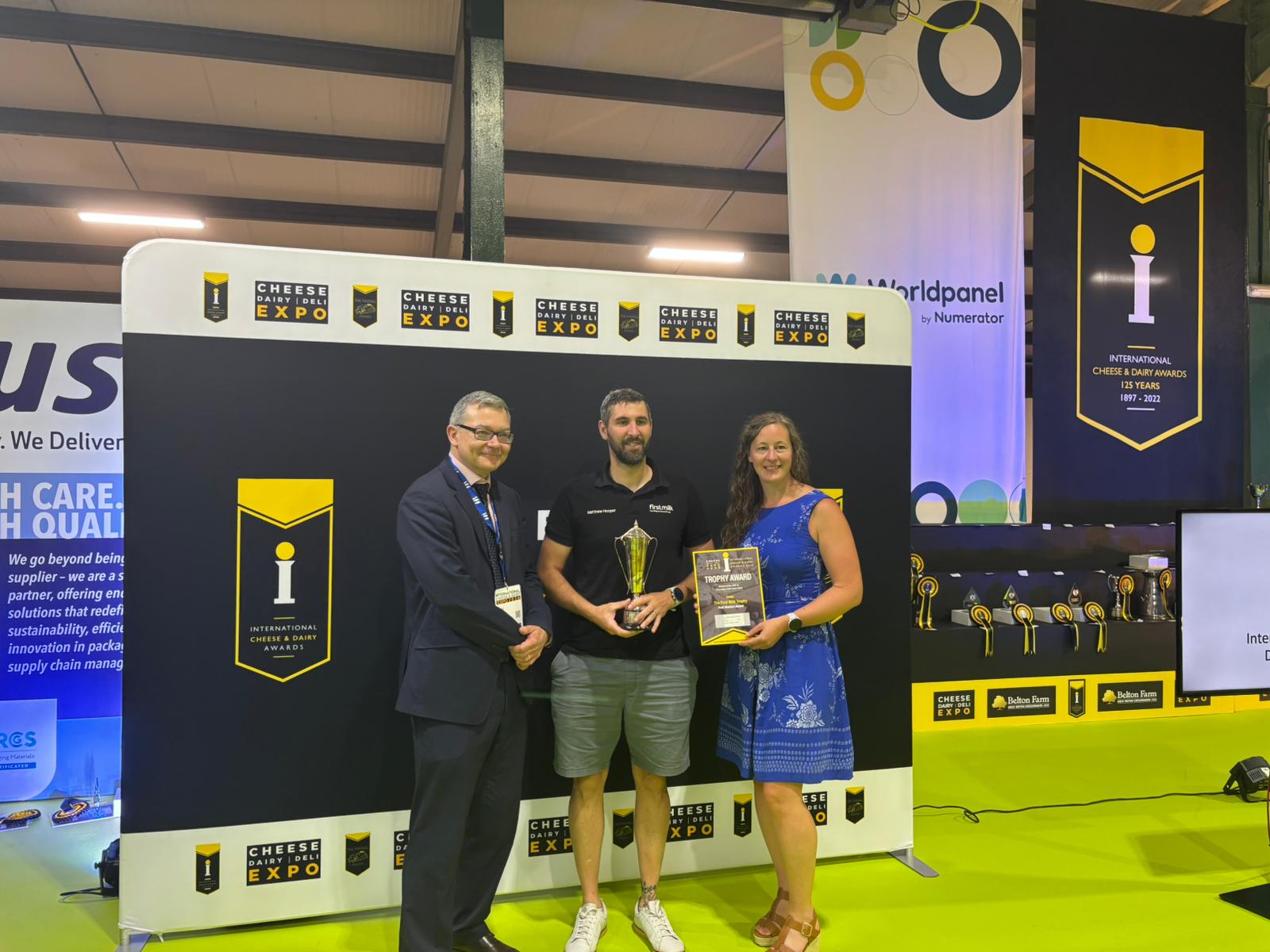
First Milk site secures four major trophies as co-operative celebrates 26 awards at International Cheese & Dairy Awards
FIRST MILK’S Haverfordwest Creamery has celebrated major success at this year’s International Cheese & Dairy Awards, after helping the farmer-owned co-operative secure 26 awards at the world’s largest cheese show.
First Milk won eight gold medals, 11 silver medals, one bronze medal and six major trophies at the prestigious awards, with cheese produced at Haverfordwest Creamery securing four of the competition’s top honours.
The Pembrokeshire creamery won the CHR Hansen Trophy for Champion Double Gloucester, the Tetra Pak Tebel Award for Best Extra Mature Creamery Block Cheddar, the ICDA Award for Best Medium Creamery Block Cheddar and the First Milk Past Masters Trophy.
The results underline the quality and consistency of the cheese produced at the Haverfordwest site, which continues to play a key role in First Milk’s award-winning cheesemaking operation.
Held annually, the International Cheese & Dairy Awards attracted its highest number of entries in several years, with many of the creamery cheddar classes receiving between 30 and 40 entries.
First Milk was recognised across a wide range of cheddar and regional cheese categories, including Double Gloucester, Red Leicester, Welsh cheese, vegetarian cheese and English creamery cheddar.
Jack Eade, Customer Quality Manager at First Milk, said the awards reflected the hard work of teams across the business.
He said: “These awards are incredibly hard won and reflect the dedication, expertise and passion of everyone involved in producing our cheese.
“To receive recognition across so many categories at one of the world’s most respected cheese competitions is something everyone at First Milk can be enormously proud of.
“While our grading team selects and prepares the entries, none of these achievements would be possible without the commitment of our farmer members producing exceptional quality milk, and the highly skilled teams at our creameries transforming it into consistently award-winning cheese.”
The latest success continues First Milk’s long-standing record at the International Cheese & Dairy Awards and reinforces Haverfordwest Creamery’s reputation as one of the leading producers of award-winning British cheese.
Photo caption:

Rod Addy, Director General of the Provision Trade Federation, with First Milk’s Matthew Hooper and Dawn Mason at the International Cheese & Dairy Awards

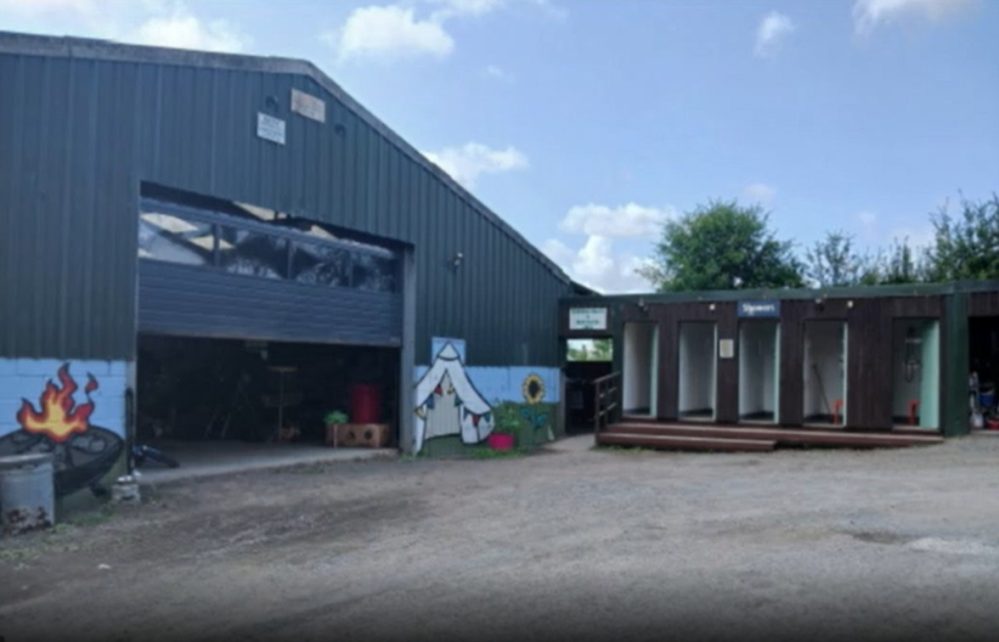
PLANS to expand facilities at a Pembrokeshire camping and glamping farm which hosts outdoor festivals have been given the go-ahead by Pembrokeshire County Council.
Dewslake Camping Limited, of Dewslake Farm, The Ridgeway, Lamphey, in an application through agent Argent Architects, sought permission for a change of use of the main barn at the farm to provide support facilities for camping and events.
The application was recommended for approval at the June 30 meeting of Pembrokeshire County Council’s planning committee.
A supporting statement accompanying the application said: “While remaining a working farm, camping, glamping and facilities for dining and refreshments are among the services provided. Outdoor festivals are held on the site periodically during the summer season.
“The main barn is centrally located within the farm and serves as overflow storage for the various activities and events offered at Dewslake. The campsite’s sanitary facilities are located in temporary structures at the perimeter of this building.
“The applicant wishes to expand the facilities offered on the site. The barn has the spatial capacity to accommodate a range of different events, both commercial and private. The idea is to bring in the operational capacity to service functions and events in the building and on the wider site, in the form of overflow catering, sanitary facilities and office and reception space.”
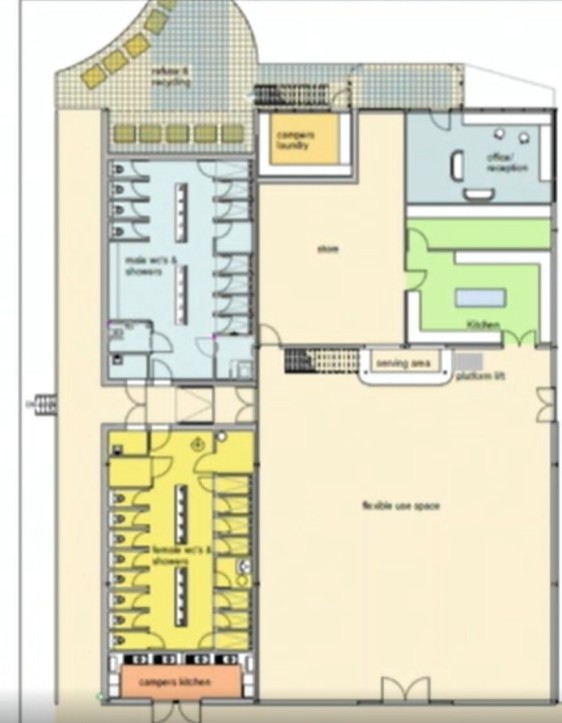
It says it is intended to create “a building that is inclusive, easy and enjoyable in use for all,” with wheelchair parking in the area currently occupied by the temporary facilities.
It says further expansions to Dewslake are also planned.
“The growing business model requires considerable on-site management and maintenance. The long-term plan is greatly invested in ecological enhancements and trades on this in the marketing approach taken in promoting the campsite.
“This approach requires a particular intensity in the management of the land, which when coupled with the day-to-day running of the campsite, increases the need for a round-the-clock management presence.
“The applicant is therefore intending to make a separate pre-application enquiry for the addition of a permanent farmhouse to serve this function.”
An officer report for planners said: “The proposal involves the comprehensive internal reconfiguration of the building and associated external alterations. The footprint of the existing structure would be largely retained, with development primarily focused on enclosing and extending into an existing open lean-to section along the building’s side (west) elevation.”

Approval was moved by Cllr Alec Cormack, described it as “an excellent use of the building,” with vice-chair of the committee Cllr Simon Hancock describing it as an “excellent application,” which was “entirely appropriate in the site”.
The application for conditional approval was unanimously approved by committee members.

Engineering, fintech and beauty brands feature in national growth rankings
THREE Welsh businesses have been named among Britain’s 100 fastest-growing companies, highlighting the growing diversity of Wales’ scale-up economy.
Avantis Group, an engineering business delivering marine and offshore energy upgrade projects, was the highest-ranked Welsh company in the ORESA Executive Search Growth Index 2026.
The company placed 43rd nationally after achieving two-year compound annual revenue growth of 105.9%.
It was joined on the list by fintech firm ANNA Money, ranked 56th, and fast-growing beauty brand Hair Syrup, ranked 67th.
Orlando Martins, founder of Growth Index, said the results showed the strength and breadth of Wales’ business community.
He said: “Wales continues to produce ambitious companies across a wide range of sectors.
“What is particularly encouraging is the range of businesses, both in the top 100 and among the companies that narrowly missed out, from engineering and fintech to consumer brands.”
Now in its fifth year, the ORESA Executive Search Growth Index ranks the 100 fastest-growing companies in the UK.
This year’s list points to the resilience of Britain’s scale-up economy, with the average company achieving compound annual revenue growth of 136.1% over two years.
Together, the Growth Index 100 generated more than £11 billion in annual revenues, with businesses on the list ranging from data centres and art galleries to GB News and Popeyes UK.
Financial services remained the largest sector represented, accounting for a quarter of all companies featured.
Healthcare also continued to rise, helped by strong performances from biotechnology businesses, while retail enjoyed a resurgence after several more difficult years.
The report also notes that pure-play AI businesses are beginning to make a visible impact on the rankings, although they have not yet come to dominate the list.
The Growth Index is compiled through independent analysis of Companies House data. Growth is measured by two-year compound annual growth rate in revenues, with companies required to have a minimum base-year turnover of £100,000 and a minimum final-year turnover of £5 million.



News26 minutes ago
A40 closed near Llandeilo following collision
A SECTION of the A40 in Carmarthenshire has been closed in both directions following a collision. The road is currently...

Local Government30 minutes ago
Award-winning Saundersfoot sauna faces refusal over location concerns
PLANS to allow an award-winning outdoor sauna to remain permanently at Saundersfoot Harbour have been recommended for refusal by Pembrokeshire...


Health3 hours ago
NHS at 78: A moment to give back to the service Wales helped create
As the health service marks its 78th birthday, people in Pembrokeshire are being urged to support local NHS charities helping...


Community18 hours ago
Saundersfoot Harbour regeneration project wins national planning award
SAUNDERSFOOT HARBOUR’S redevelopment has been named Best Project at the RTPI Cymru Awards for Planning Excellence 2026. The award recognises...


Business1 day ago
Pembrokeshire-based Ascona Group expands UK portfolio with Truckhaven acquisition
PEMBROKESHIRE-BASED Ascona Group has completed the acquisition of Truckhaven (Carnforth) Ltd, a major trunk road services area in Lancashire. The...

Health2 days ago
Wales begins early NHS winter planning after long waits and ambulance pressure
Ministers say health boards and councils must act now to ease pressure on hospitals, ambulances and social care before winter...


Crime3 days ago
Judge calls pensioner a ‘dirty old man’ as he avoids jail for exposing himself to women
Judge says 75-year-old Stewart Laugharne behaved ‘disgracefully’ as he avoids jail but is ordered to sign sex offenders register A...
Health3 days ago
Stroke services consultation reaches halfway point as public urged to have say
HYWEL DDA University Health Board is urging people to take part in its consultation on the future of stroke services,...


Business3 days ago
Welsh firms eye share of £5bn defence drone boom
WELSH defence and aerospace firms could be in line for a share of billions of pounds in new military spending...


Community5 days ago
Thousands line Cardigan streets for Lord Rhys homecoming parade
THOUSANDS of people lined the streets and quayside in Cardigan on Saturday as the town marked 850 years since Lord...
-

 Crime6 days ago
Dyfed-Powys Police rated only ‘Adequate’ in organised crime inspection
-

 News4 days ago
Biker dies and woman seriously injured in Black Mountain crash
-
Community5 days ago
Thousands line Cardigan streets for Lord Rhys homecoming parade
-

 Crime6 days ago
Swansea man jailed for 16 years after attacking vulnerable woman
-

 Crime3 days ago
Estate agent banned after drug-drive crash in Milford Haven
-
 Local History7 days ago
Pembrokeshire man rode into history with Custer’s Last Stand
-
 Local Government4 days ago
Flood defence scheme moves closer as community invited to view plans
-

 Community5 days ago
Civic service brings Pembrokeshire towns together in Haverfordwest