


News
Tenant fined for ignoring warnings to remove rubbish

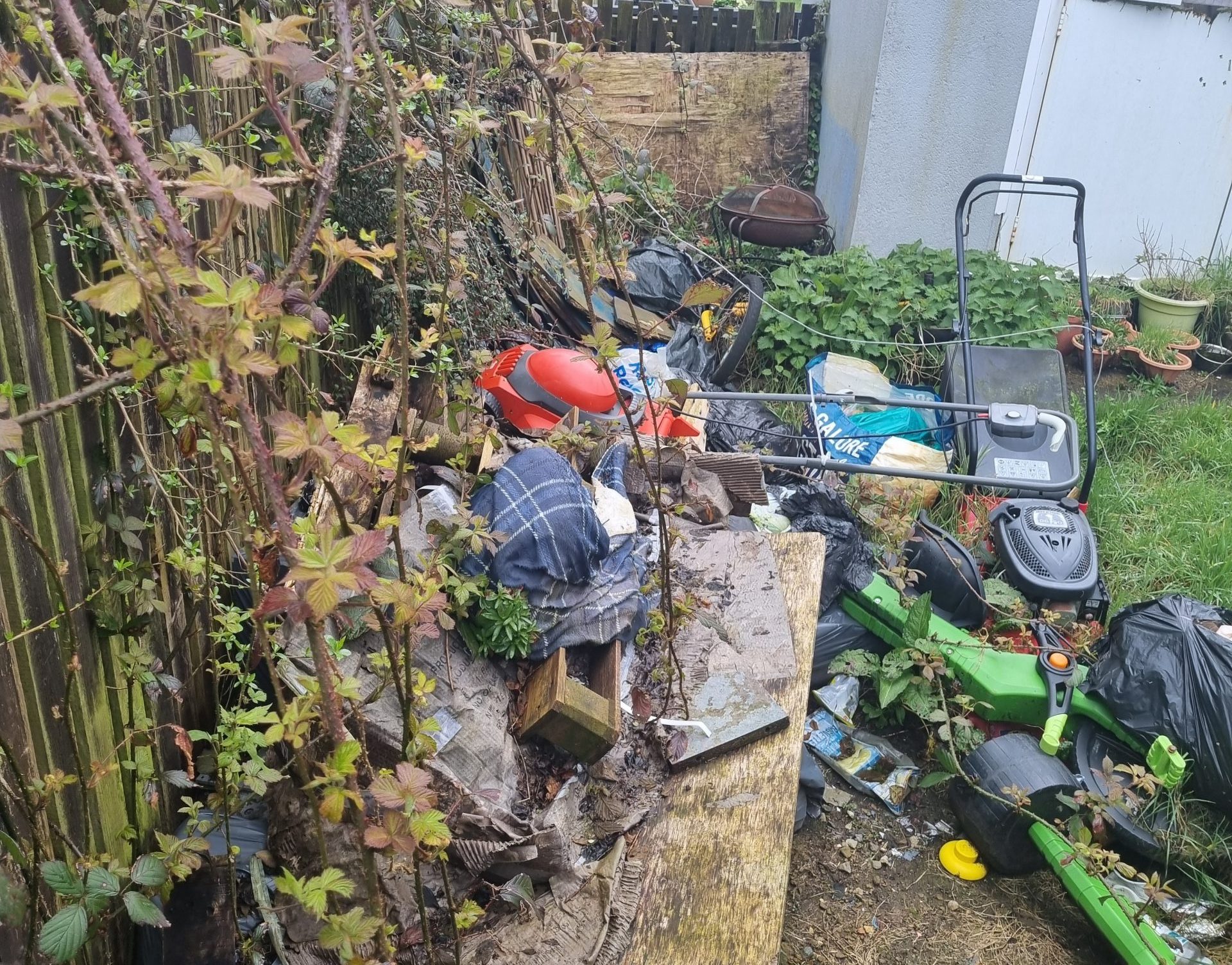
A TENANT who continued to let rubbish pile up outside his home despite receiving multiple warnings is facing a hefty court bill.
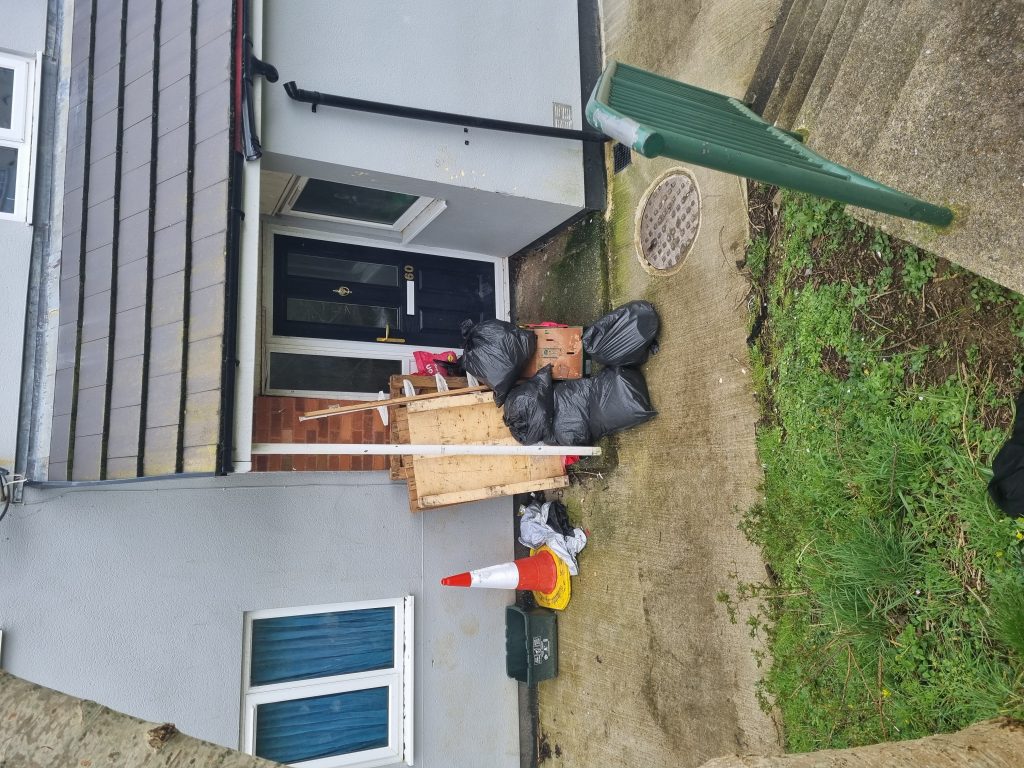
Richard Cook of Trafalgar Road, Haverfordwest, had been issued with a Community Protection Notice (CPN) following repeated incidents where refuse and household waste was left outside the property.
The situation reached a level where it was considered to be a risk to public health, safety and welfare and the rubbish was attracting rats.
Despite visits from Pembrokeshire County Council (PCC) Environmental Services staff to educate and offer advice, plus warnings from Public Health officers and Mr Cook’s landlords ATEB, the situation remained unchanged.
The CPN was issued on November 29th 2023, requiring Mr Cook to remove all refuse and household waste from the front and the rear grounds of the property and dispose of it appropriately within 14 days.

When the CPN was served there was a large accumulation of uncovered black refuse sacks containing household waste, old cardboard boxes and a smashed door left in the front of the property.
On Wednesday 13th December 2023, a PCC Public Health Officer attended again at the property and found there was still refuse/ household waste and a mass of uncovered black bags piled in a large heap at the front of the property.
The tenant had also made no effort whatsoever to clear the refuse and accumulated waste from the rear grounds of the property.
A prosecution was subsequently taken for breach of the CPN.
Mr Cook failed to attend Haverfordwest Magistrates Court on Thursday 4th April 2024 and the case was proved in his absence.
He was fined £440 and must pay surcharge of £176, plus full costs of £1,235.90.
The Council will now consider direct action and charging the outstanding amount back from Mr Cook.

Cllr Michelle Bateman, Council Cabinet Member for Housing Operations and Regulatory Services, said: “Our officers and partners from ATEB have tried many times to engage with Mr Cook and try to resolve this issue without having to resort to enforcement.
“However, the requests have simply been ignored and we have been left with no choice but to use the powers available to force removal of this waste which is attracting rats and vermin.
“I welcome the court’s decision to impose a significant fine in this case.”


Welsh Government has not announced a rabbit licence scheme, but ministers say animal welfare laws could be reviewed
A CALL for people in Wales to complete a short course before owning a rabbit has sparked a political row, with critics branding the idea a “bunny licence” while welfare campaigners say rabbits are among the country’s most misunderstood pets.
Labour MS Mike Hedges raised the issue in the Senedd during First Minister’s Questions, arguing that Wales should consider a wider package of animal welfare reforms.
His suggestions included cat microchipping, a ban on long-term horse tethering, restrictions on private primate ownership, ending cage breeding of game birds, banning Larsen traps, and allowing rabbit ownership only after basic training.
Mr Hedges said people should show they understand the needs of rabbits before taking one on.
The Welsh Government has not announced any formal rabbit licence scheme, and First Minister Rhun ap Iorwerth did not commit to introducing one.
However, he told the Senedd that Wales wanted to maintain high animal welfare standards and said legislation remained one option ministers would consider as part of a new animal health and welfare plan.
The exchange has prompted criticism from political opponents, with a Conservative source describing the idea as a “hare brained” proposal and accusing Labour of focusing on the wrong priorities.
But animal welfare charities say the row risks obscuring a more serious issue: rabbits are often bought cheaply, kept wrongly, bred accidentally, or abandoned when owners discover the cost and responsibility involved.
Rabbits are not low-maintenance pets. They need space, companionship, a suitable diet, enrichment, vaccinations, neutering, and regular veterinary care. They are also prey animals, meaning signs of illness or distress can be easy for inexperienced owners to miss.
The RSPCA says rabbits are one of the most misunderstood and neglected companion animals, with many kept alone, housed in unsuitable hutches, fed poor diets or denied proper veterinary care.
The charity says it has rescued more than 4,000 rabbits from abandonment and mistreatment in just two years, and is backing calls for stronger protection.
The Rabbit Welfare Association & Fund is also campaigning for rabbit breeders to be licensed, warning that online selling and mis-sexing of young rabbits can lead to unwanted litters and pressure on rescue centres.

In West Wales, Nibbles Rodent & Rabbit Rescue, based near Crymych, has already raised concerns about the way rabbits are protected under Welsh guidance.
The charity says the Welsh Code of Practice for the Welfare of Rabbits was published in 2009 and has never been formally reviewed, while the codes for dogs, cats and horses have been updated more recently.
Nibbles has launched its Rabbits Left Behind campaign, calling for the Welsh rabbit code to be reviewed and brought into line with modern welfare evidence.
Supporters of tougher rules argue that some form of owner education could help stop impulse purchases and reduce neglect. They say a short online course would be less about red tape and more about making sure people understand what they are taking on.
Opponents are likely to question whether such a system would be practical, affordable or enforceable. There may also be concerns that extra bureaucracy could discourage responsible people from adopting rabbits from rescue centres.
The Welsh Government already has a Code of Practice for the Welfare of Rabbits. It says owners must take reasonable steps to ensure rabbits have a suitable environment, a healthy diet, the ability to behave normally, appropriate company, and protection from pain, suffering, injury and disease.
For now, there is no confirmed plan to introduce compulsory rabbit training or a licence for owners in Wales.
But the Senedd exchange has reopened a wider debate about whether existing animal welfare guidance is enough, and whether rabbits should receive stronger legal protection similar to other companion animals.

A NEW report says confidence, cost, transport and rural isolation are among the biggest barriers stopping young people in Wales from pursuing music.
The Atsain Consultation Report, published by Anthem, found that young people are benefiting from face-to-face music projects across Wales, but many still struggle to access opportunities because of where they live, what they can afford, and whether they have the confidence to take part.
Anthem, Wales’ youth music charity, said the findings show the importance of safe, supportive spaces where young people can create, perform, build confidence and make social connections.
The report, undertaken by Ella Beavington, identified a lack of spaces, finance, equipment and transport networks as major challenges, with confidence described as the biggest barrier preventing young people from taking up musical opportunities.
The charity said the issue is particularly acute in rural communities, where young people often have fewer chances to meet others with similar interests, access rehearsal space, borrow equipment, or take part in free music sessions.
Small World Theatre, based in Cardigan, said young people in the area face significant challenges linked to low income, limited employment and rural isolation.
The organisation said young people with an interest in music often have few opportunities to connect with others or make music for free, adding that these barriers can contribute to poor mental health and limit access to the music industry.
It said its workshops aim to provide a supportive, non-judgemental environment where young people can build confidence, gain practical skills and develop a sense of belonging.
Anthem was established in 2018 following a Welsh Government report looking at ways to support young people’s music making and learning in Wales. Since then, it has invested in youth music projects and built partnerships across Wales and the wider UK music sector.
Through its Atsain fund, which ran from 2022 to 2025, Anthem supported 56 local youth music projects. Feedback from the projects found they helped young people build connections, improve mental health and wellbeing, and create new opportunities.
However, the charity said support and investment must be sustainable if the youth music sector is to continue developing.
Rhian Hutchings, Chief Executive of Anthem, said: “We know that lots of young people want to make, learn, or play music but it’s not always easy. Things like cost, travel, confidence, or even what’s available in their area can make it harder for them to get started.

“Despite these challenges, the consultation has highlighted the transformative value of accessible music projects for young people in Wales.
“The participants that Ella consulted with described meaningful increases in confidence, wellbeing, social connection and physical musical development as a direct result of their participation in the Atsain-funded projects.”
She said Anthem’s new vision is “a Wales in which young people lead a vibrant and connected youth music ecosystem.”
She added: “As Wales’ leading youth music charity, we create work that builds skills, confidence and community with young people who are passionate about music.
“We can only do this in collaboration with the wider youth music community across Wales, and the Anthem ethos is all about partnership, connecting organisations, and putting young people’s voices at the centre.”
The report also found that community, encouragement and early exposure play a major role in whether young people become involved in music.
Participants described friends, family, teachers, mentors and youth organisations as key influences. Schools, youth clubs, community settings and early opportunities to perform or experiment were also identified as important entry points.
But young people also pointed to gaps in school provision, limited genre representation and the need for broader music education that reflects contemporary music and different ways of creating it.
According to the research, 44% of young people said their family had helped them access their music project, while 24% said social media played a key role in helping them find and connect with music opportunities.
Anthem said that while there are growing concerns about young people’s use of social media, online platforms are still one of the main ways youth organisations reach 14 to 16-year-olds who are not already connected to formal music education, youth services or arts networks.
Emyr Afan OBE, Chair of Anthem and founder of the original Pop Factory Music Complex in Porth, said young people need more real-world opportunities if society wants them to spend less time online.
He said: “As Chair of Anthem, I know how much concern there is among parents, schools, youth organisations and young people themselves about the impact of addictive platforms, harmful content and always-on digital pressure. Keeping young people safe has to come first.
“But this change also brings a practical challenge. Right now, social media is one of the key ways that organisations like Anthem reach 14-16 year olds, especially those who are not already connected to formal music education, youth services or arts networks.
“So alongside regulation, we need a clear plan for connection, participation and opportunity.
“If young people are being asked to spend less time on social media, they need more real-world spaces where they can create, perform, belong and be heard.
“Music, sport, culture and youth-led activity cannot be treated as a nice-to-have. They are part of the infrastructure of wellbeing, confidence and community.”
Other groups involved in the research also highlighted social isolation, anxiety, lack of equipment and limited access to affordable lessons as key barriers.
Porthi Dre in Caernarfon said many children in its community do not have musical instruments at home and are aware their families cannot prioritise music lessons.
Wales One World Choir, based in Cardiff, said music can be a lifeline for young asylum seekers and refugees restarting their lives in a new country, often in a new language.
Anthem said the report shows that young people across Wales are eager to make music, but need the right spaces, support and investment to make that possible.
The full Atsain Consultation Report is available on Anthem’s website.

Ministers say face-to-face advice is vital, but questions remain over why support is still so difficult to access
OLDER people across Wales are being urged to check whether they are missing out on financial support as the Welsh Government promises to make the benefits system simpler, fairer and easier to use.
Deputy First Minister and Cabinet Minister for Social Justice, Sioned Williams, said ministers want to improve how Welsh benefits are delivered and ensure people can still access face-to-face advice where they need it.
But the announcement comes against a familiar backdrop of rising household bills, low benefit take-up and continuing concerns that many older people are put off by a complicated system split between Welsh, UK and local authority responsibilities.
Ms Williams visited Age Connects Morgannwg’s Cynon Linc on Thursday (July 2), where she met staff and service users to hear how welfare advice is helping older people access support they may be entitled to.
The Welsh Government said the visit highlighted the importance of trusted, community-based advice, particularly for older people who may be less likely to use online services.
It comes as energy bills remain under pressure, with Ofgem confirming a 13 per cent rise in the energy price cap from July 1 for a typical household paying by direct debit.
Welsh Government campaigns have previously warned that large sums in benefits go unclaimed in Wales every year. Earlier this year, ministers said previous winter campaigns had returned more than £10.5m to people across Wales since 2020, including support through Welsh and UK benefits, pensions, care costs and council tax reductions.
Eligible claimants could receive around £1,800 through Pension Credit or save around £800 a year on council tax, according to Welsh Government figures.
Speaking during the visit, Daisy Cole, Chief Executive of Age Connects Morgannwg, said many older people find asking for help the hardest step.
She said: “We are delighted to welcome the Deputy First Minister to Cynon Linc and the opportunity to show why, for many older people, reaching out for support is the hardest step.
“Older people often tell us the greatest difference isn’t simply the financial support they receive, it’s the peace of mind that comes from knowing someone has listened, understands their situation and can help them navigate what can often feel like a complex system.
“No one should miss out on the support they are entitled to because they don’t know where to turn, find the system too difficult to navigate or feel unable to ask for help.
“Peace of mind begins with knowing you don’t have to face things alone. That’s why relationships matter. They give people the confidence to take that first step, knowing someone will listen, understand and walk alongside them.”
The Welsh Government says it wants to work towards a Welsh Welfare System that is simpler and easier to navigate.
Ministers say they will review existing benefits and support schemes to make sure they are having the maximum impact, while also looking at ways to improve take-up.
They also plan to continue pressing the UK Government for greater welfare powers for Wales.
Ms Williams said: “We are working towards a Welsh Welfare System that is simpler, fairer and easier to navigate, making it as straightforward as possible for people to access the financial support they are entitled to.
“That includes improving how Welsh benefits are delivered while ensuring face-to-face advice and help remains available for those who need it.
“Services like Age Connects Morgannwg play a vital role in helping people understand what support is available and giving them the confidence to claim what they’re entitled to, so fewer older people miss out on financial support that could make a real difference to their lives.
“We’re also clear that decisions about welfare are best made as close as possible to the people they affect.
“That’s why we’ll continue to press the UK Government to devolve more welfare powers to Wales, so we can build a system that better reflects the needs and priorities of people here.
“If you think you, or someone you know, may be entitled to financial support, I encourage you to seek advice and find out what help is available.”
However, the challenge for ministers will be turning the promise of a simpler system into practical change for people who already struggle to know what help exists.
A Welsh Government accessibility audit published earlier this year found that only two of Wales’ 22 local authorities referred to the Welsh Benefits Charter on their websites, despite all councils having signed up to it.
The charter was designed to help create a more coherent Welsh benefits system, with an ambition that people should only have to tell their story once to access support.
For older people, the issue is not only whether support exists, but whether it can be found, understood and claimed without stress.
Many key benefits, including Pension Credit, State Pension, Attendance Allowance and Universal Credit, remain the responsibility of the UK Government. Other forms of help, including council tax reduction and some local support schemes, are handled in Wales or through councils.
That split can make the system harder to navigate, particularly for older people who are digitally excluded, isolated, or unsure whether asking for support will affect other payments.
The latest announcement is not the launch of a new benefit, but a renewed commitment to improve take-up and simplify access.
Across Wales, Advicelink Cymru’s Claim What’s Yours advisers can help people check whether they are eligible for extra income and guide them through the claims process.
For free and confidential advice, call 0800 702 2020.



Health21 hours ago
Wales begins early NHS winter planning after long waits and ambulance pressure
Ministers say health boards and councils must act now to ease pressure on hospitals, ambulances and social care before winter...


Crime2 days ago
Judge calls pensioner a ‘dirty old man’ as he avoids jail for exposing himself to women
Judge says 75-year-old Stewart Laugharne behaved ‘disgracefully’ as he avoids jail but is ordered to sign sex offenders register A...
Health2 days ago
Stroke services consultation reaches halfway point as public urged to have say
HYWEL DDA University Health Board is urging people to take part in its consultation on the future of stroke services,...


Business2 days ago
Welsh firms eye share of £5bn defence drone boom
WELSH defence and aerospace firms could be in line for a share of billions of pounds in new military spending...


Community4 days ago
Thousands line Cardigan streets for Lord Rhys homecoming parade
THOUSANDS of people lined the streets and quayside in Cardigan on Saturday as the town marked 850 years since Lord...


Crime5 days ago
Dyfed-Powys Police rated only ‘Adequate’ in organised crime inspection
A WATCHDOG has rated Dyfed-Powys Police only “Adequate” in its response to serious and organised crime, despite praise for the...


News5 days ago
Two taken to hospital after aircraft ditches in Cardigan Bay
Coastguard helicopter spotted two casualties after light aircraft came down off west Wales coast TWO people were taken to hospital...


Sport6 days ago
Long Course Weekend gets underway in Tenby as thousands head for county
Three days of swimming, cycling and running begin with The Wales Swim at North Beach THOUSANDS of athletes and supporters...


Climate6 days ago
Welsh waters, Westminster profits: Crown Estate row reignited in Wales
PLAID CYMRU has renewed calls for the Crown Estate to be devolved to Wales after figures showed income linked to...


News6 days ago
Reform MS: ‘I felt like shouting get out of the water’
Paul Marr says children playing in streams at Pembrokeshire beaches deserve better protection from pollution risks REFORM UK MS Paul...
-
Crime5 days ago
Dyfed-Powys Police rated only ‘Adequate’ in organised crime inspection
-

 Entertainment6 days ago
Torch cuts children’s cinema tickets to £5.25 for summer
-

 News3 days ago
Biker dies and woman seriously injured in Black Mountain crash
-
Climate6 days ago
Welsh waters, Westminster profits: Crown Estate row reignited in Wales
-

 Crime6 days ago
Former Swansea Prison inmate died 48 hours after release
-
News6 days ago
Reform MS: ‘I felt like shouting get out of the water’
-
 Crime5 days ago
Swansea man jailed for 16 years after attacking vulnerable woman
-

 Community6 days ago
Working-class young people ‘shut out’ of marine conservation careers in Wales