


Politics
Wales Audit Office chair forced to stand down over conflict with another job

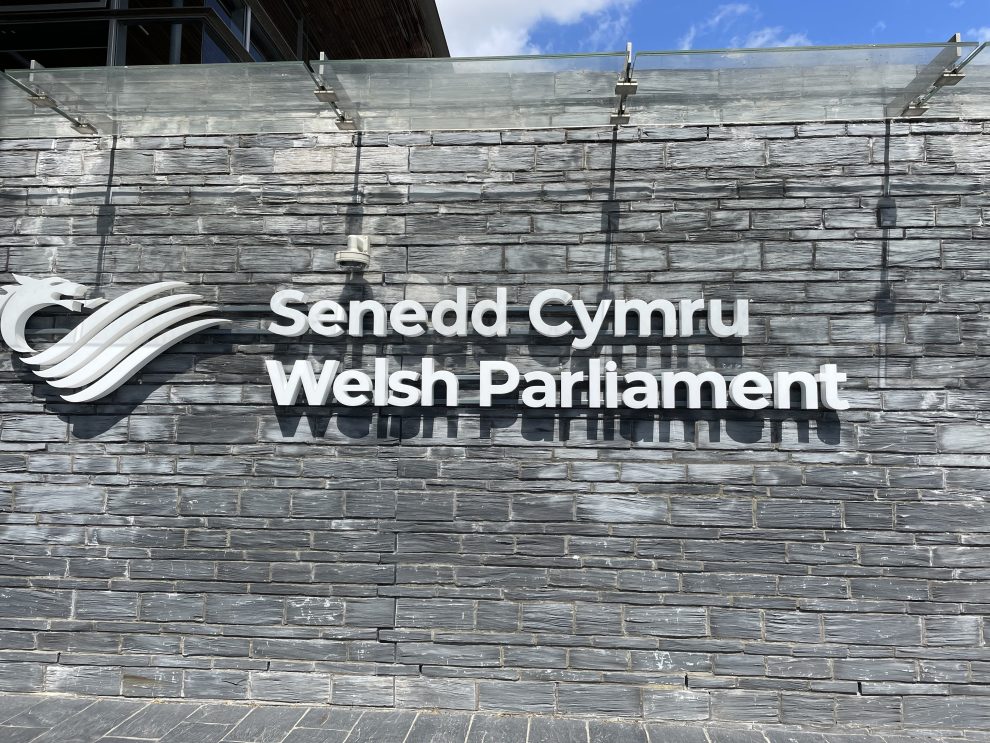
THE CHAIR of the Wales Audit Office was forced to stand down 12 months into a four-year term due to a conflict with another appointment, a report revealed.
Kathryn Chamberlain, who was appointed by the Senedd in March 2023, was disqualified from the public spending watchdog’s board after taking a post with the Welsh secretary.
She was appointed lead non-executive director of David TC Davies’ office in January 2024.
But an investigation found the role amounts to a Crown appointment, which Wales Audit Office members are not allowed to hold under the 2013 Public Audit Act.
Dr Chamberlain stayed on the board until mid-April according to a report by the Senedd’s finance committee, which is chaired by Peredur Owen Griffiths.

It said: “During March 2024, it came to light that Dr Chamberlain had commenced service as an independent non-executive director at the office of the Secretary of State for Wales.
“Further investigation established this role constitutes an appointment by, or on behalf of, the Crown, which is a disqualifying office under paragraph 26 of Schedule 1 to the 2013 Act.
“As a result, Dr Chamberlain was disqualified as a member and chair of the board, effective from January 1, and was informed of this by the chair of the committee on April 15.”
Mr Owen Griffiths wrote to Adrian Crompton, the auditor general for Wales, and the Wales Audit Office board in May to mitigate the risk of the error being repeated.

Calling for updated training, he reminded non-executive members of the requirements of the 2013 Act which limits the roles that can be undertaken while serving on the board.
Mr Owen Griffiths, the Plaid Cymru MS for South Wales East, requested any updates to the registers of interest for board members to be shared with the finance committee in future.
Due to Dr Chamberlain’s unplanned exit, the committee decided to invite members of the current board to express an interest for the position rather than advertise more widely.

The report recommends the Senedd appoints Ian Rees, who was the only applicant, as chair of the Wales Audit Office for four years from June 12.
Dr Rees, an education and training consultant, from Swansea, who has served on the board since 2020, was a member of the Arts Council of Wales for six years.
If rubber stamped, he will receive a £25,000-a-year salary despite concerns this exceeds the range offered by the Welsh Government for similar public appointments within its remit.
MSs on the finance committee, whose remit includes oversight of the Wales Audit Office, recommended two further public appointments to fill roles advertised in the first quarter.
Elinor Gwynn’s first term as a board member was due to expire in September but she tendered her resignation and will leave her post on May 31.
A three-person panel, which included Mr Owen Griffiths, considered applications from six women and 19 men before deciding to interview eight candidates.
The panel picked Richard Thurston and Mike Norman as nominees to serve on the board from June 2024 to May 2028. Members may serve a maximum of two four-year terms.
The Senedd is expected to sign off on the public appointments after Whitsun recess.
A spokesperson for the Wales Audit Office said: “The appointment of the chair is a matter for the Senedd.
“Since being informed in April of the finance committee’s view that Kate Chamberlain was disqualified, the auditor general and the rest of the board have taken all necessary steps to ensure the continued smooth running and effective governance of Audit Wales.”
Disqualification rules have caught out would-be Senedd members in the past – with two Liberal Democrats finding themselves in a similar situation after the 2012 election.
Aled Roberts, the former Welsh language commissioner, who died in 2022, was disqualified from the then-Assembly because he was a member of the Valuation Tribunal for Wales.
But the north Walian overturned his disqualification, winning a vote 30-20 in the Senedd, due to outdated Welsh-language guidance issued by the Electoral Commission.
His Lib-Dem colleague John Dixon stood down due to membership of the then-Care Council for Wales, with Eluned Parrott going on to represent South Wales Central instead.
Under forthcoming Senedd reforms, which are set to receive Royal Assent, candidates and members who are not registered to vote in Wales will be disqualified from 2026.



Concerns mount over transparency after Transport for Wales delays response on key documents
QUESTIONS are being raised over the future of a long-promised express coach service linking north and south west Wales, after a Freedom of Information (FOI) request triggered a delay by Transport for Wales.
The proposed express route between Bangor and Carmarthen was identified in a Welsh Government-backed business case in early 2025 as a key project capable of cutting journey times by up to 90 minutes.
However, more than a year after a public consultation was held, there has been no clear update on funding, delivery, or timelines.
Now, a detailed FOI request submitted to TfW is seeking answers — including business case documents, internal communications, and consultation results — but the transport body has said it needs more time to respond.
FOI delay sparks concern
In a reply dated Friday (Mar 27), TfW said it was relying on Section 43 of the Freedom of Information Act, which relates to commercial interests, and that it required additional time to carry out a public interest test.

The authority has indicated it will respond fully by April 28.
But the applicant, Dr John McTighe, has challenged that position, arguing that most of the requested information — including meeting dates, consultation documents, and performance data — cannot reasonably be considered commercially sensitive.
He has warned that failure to provide the non-sensitive material promptly could result in a referral to the Information Commissioner’s Office.
Contrast with north Wales rollout
The FOI request also highlights the introduction of the TrawsCymru T51 service between Wrexham and Rhyl, which was launched in 2025 and is set to receive a fleet of new vehicles this year.

Critics argue that while the north Wales route has progressed quickly, the west-coast express proposal — described as a “headline ambition” for improving north–south connectivity — appears to have stalled.
The Herald understands that the Bangor–Carmarthen route was backed by a positive business case and formed part of wider plans to improve long-distance public transport links across Wales.
Transparency questions
The request seeks details of meetings, internal correspondence, and consultation analysis — including the results of a public consultation which TfW said would be assessed using specialist software.

It also asks for information on how passenger numbers and performance data are monitored across the TrawsCymru network.
Concerns have been raised that key performance data, including annual passenger figures and punctuality statistics, are not routinely published in full.
Calls for clarity
The delay has prompted fresh calls for transparency over how decisions are made on publicly funded transport services in Wales.
There is particular concern in west Wales that strategic investment may not be progressing at the same pace as elsewhere, despite longstanding commitments to improve connectivity along the western corridor.
A spokesperson for Transport for Wales said the organisation is considering where the balance of public interest lies before releasing the requested information, and confirmed a full response will be issued by April 28.
The Welsh Government has been approached for comment.

Corey Edwards stood in Pen-y-bont Bro Morgannwg and appeared at national hustings shortly before stepping down
REFORM UK Senedd candidate Corey Edwards has stepped down from the upcoming election, just days after controversy over a photograph appearing to show him making a Nazi salute.
The party confirmed on Thursday (Mar 27) that Edwards had withdrawn from the race, citing mental health issues. A spokesperson said: “Corey Edwards has informed us that he is stepping down as a candidate for the Senedd election this May, citing issues with his mental health.
“We wish him well for the future and hope his privacy can be respected at this difficult time.”
Edwards had been selected as Reform UK’s lead candidate for Pen-y-bont Bro Morgannwg, meaning he was in a strong position to be elected if the party secured a seat in the constituency.
His withdrawal comes shortly after a photograph emerged, first published by Nation.Cymru, which appeared to show him performing a Nazi salute. Edwards said the image, taken in 2019, could be “misinterpreted” and claimed he had been imitating either a scene from Fawlty Towers or Welsh footballer Wayne Hennessey, who was previously involved in a similar controversy.
Reform UK leader Nigel Farage said the image “looked terrible” but confirmed Edwards would not be removed as a candidate at the time, describing him as “a human being” and referencing the sitcom scene as context.
Edwards had also appeared publicly as a Reform representative at a national youth hustings event in Cardiff on Thursday (Mar 19), alongside politicians from other major parties.
In a statement, Edwards said: “Like many young people, I have made mistakes. But I am proud of the person I am today and the values I stand for.”
The Herald understands that Reform UK has not yet confirmed whether a replacement candidate will be selected for the constituency.



PEMBROKESHIRE Coast National Park committee members are to see their basic salaries rise by just under 6.5 per cent following recommendations backed at its full authority meeting.
At the Park meeting of March 25, members were asked to note the Democracy and Boundary Commission Cymru’s decisions in relation to the basic and senior salaries payable to national park authority members for the financial year 2026/27, and to determine which post(s) should be remunerated with a senior salary.
Pembrokeshire Coast National Park Authority has 18 Members, 12 nominated by Pembrokeshire County Council, the remaining six appointed by the Welsh Government.
A report for members said: “The Commission has agreed that the basic salary for elected members will rise by 6.4 per cent, reflecting the increase in average earnings.
“In summary, the main changes to members’ remuneration for the financial year 2026/27 are: that the basic salary for ‘ordinary members’ is increased by £360 to £5,936 per annum; the senior salary for the chair of the authority will increase by £996 to £16,458, and the senior salary for the deputy chair of the authority and any other committee chairs or other senior posts will increase by £613 to £10,144.”

The new salary framework will come into effect on April 1.
The report stated: “In reaching its determinations, the Commission consider that a fair and reasonable remuneration package will continue to support elected and appointed members and not act as a barrier to participation.”
It added: “The annual report also reiterates the following facts: that a senior salary is paid inclusive of the basic salary; that there is a restriction on receiving double remuneration where a member holds more than one post.”
Three senior salaries are currently paid by the authority; the posts of chair and deputy chair of the authority, together with the chair of the development management committee, the report said.
Members unanimously approved the recommendations, with the remuneration rates for the three senior posts continuing as before.



Education8 hours ago
Ysgol Henry Tudor reassures parents over Sikh ceremonial kirpan
School says religious item worn by pupil is secured, symbolic and non-functional YSGOL HENRY TUDOR has moved to reassure parents...


Crime1 day ago
Teen jailed after starting fire while others slept
Fire set in shared home left sleeping residents at risk and caused £130,000 damage A TEENAGER who started a fire...

Health1 day ago
GP crisis driving NHS pressure in Wales, Senedd report warns
Falling GP numbers and funding gaps blamed for worsening hospital delays THE NHS crisis highlighted earlier this week is being...

News2 days ago
Reform reveals west Wales candidates for Senedd battle
Monkton councillor tops Pembrokeshire list as party confirms Carmarthenshire names and includes Haverfordwest councillor in unwinnable Swansea spot REFORM UK...


Health2 days ago
Clash over Withybush Hospital services as Paul Davies challenges First Minister
A HEATED exchange in the Senedd has laid bare growing tensions over the future of hospital services in west Wales....


Crime3 days ago
Police stop car in Pennar as three arrested in drugs investigation
Suspected drug driver report leads to major police response and multiple arrests DRAMATIC scenes were reported in Pennar on Monday...


Business3 days ago
New pilot vessel Llanion arrives at Milford Haven
State-of-the-art 22-metre craft marks reset after £3.6m pilot boat controversy THE PORT OF MILFORD HAVEN has taken delivery of a...


Community3 days ago
Sycamore Gap legacy tree to take root in Pembrokeshire landscapes
A SAPLING grown from the famous Sycamore Gap tree is set to become part of Wales’ protected landscapes — with...


Business4 days ago
Could Primark be coming to Haverfordwest? Major retailer in talks for former Wilko site
Council confirms advanced discussions as speculation grows over high street boost HAVERFORDWEST could soon see a major high street revival,...


Business4 days ago
Rail investment ‘could unlock 40,000 jobs and £11bn for Wales’ says new report
RAILWAY stations across Wales could help unlock around 40,000 jobs and more than £11 billion for the economy by 2036,...
-

 Business3 days ago
Taxi fare shock in Milford Haven as drivers switch to meters
-
Business4 days ago
Could Primark be coming to Haverfordwest? Major retailer in talks for former Wilko site
-
 Crime5 days ago
Child rapist found with abuse images after moving to west Wales
-

 Crime6 days ago
Milford Haven drug dealing pub boss who boasted of ‘best coke around’ jailed
-

 Health3 days ago
Average of 18 deaths a week in Wales linked to A&E delays, figures reveal
-

 Sport5 days ago
Haverfordwest secure bonus-point win over title-chasing Tumble
-

 Local Government4 days ago
Milford Haven set for £200m investment with schools, leisure centre and rail upgrade
-

 Community1 day ago
Hero female officer keeps job after sexual touching finding