


Politics
‘Major step back’ as gender quotas bill postponed


PLANS to introduce gender quotas in future Senedd elections suffered a “major step backwards” due to “unnecessary” delays.
Jane Hutt confirmed reforms under the electoral candidate lists bill – which would require half of would-be Senedd members to be women – could be delayed by four years.
In a letter to Senedd members, Ms Hutt said the 2030 election may be a “more prudent” timetable for implementation than the initial 2026 plan.
Ms Hutt, who is chief whip and Trefnydd, the Welsh Government’s business manager, stressed that she remains committed to making the Senedd more representative.
But concerns have been raised that Wales does not have the powers to pass the bill, which could face legal challenge, with equal opportunities legislation reserved to Westminster.

Plaid Cymru’s Sian Gwenllian was extremely disappointed by the new timetable for the bill, with stage one of the legislative process pushed back from June 18 to July 16.
She questioned the Welsh Government’s reasoning for delaying the first crunch vote, saying the rationale “doesn’t hold water” and warning the latest delay is a huge step backwards.
The Arfon MS, who chairs the cross-party group on women, said: “The whole timetable for the bill is being pushed back. What will running the clock down mean?
“We will have incomplete reform if the candidates bill, which is an integral part of the jigsaw, is not implemented.”

Ms Gwenllian said a Labour UK Government could make an order in council, giving powers to the Senedd to pass the bill and putting the proposals beyond any doubt.
During the business statement on June 18, she accused Welsh ministers of rowing back on a programme for government commitment to introduce gender quotas.
She said: “It’s not two Labour Governments working hand in hand for Wales but rather a weak Welsh Labour Government in Wales just taking their instructions meekly from London.”

Ms Hutt said the bill got off to a disappointing start, with Elin Jones – the speaker or Llywydd – ruling that the proposed legislation would not be in the Senedd’s legal powers.
She told the chamber: “This is one of the crucial things about how we take forward a bill where there are issues about that grey area.”
Ms Hutt, who has been a minister for 25 years, said a voluntary scheme could be introduced if mandatory gender quotas cannot be implemented in time for the next election.
She raised the reform bill committee’s warning that candidate quotas could lead to legal challenge, potentially endangering the outcome of the May 2026 election.
The Conservatives’ Gareth Davies urged the minister to get “back to the real world”, echoing his party’s calls for the candidates bill to be dropped entirely.
Ms Hutt hit back at the Vale of Clwyd MS: “I’m utterly disgusted by what Gareth Davies said, by saying ‘back to the real world’. Why do we need a gender quotas bill?
“Because we need better representation of women, and I have to say, let’s look over there, where we certainly need this gender quotas bill.”
Darren Millar, the Conservatives’ shadow constitution secretary, took issue with the timing of the delay until after the UK general election on July 4.
“This bill shouldn’t just be postponed, it should be ditched altogether,” he said. “Candidates should be elected on merit, not because of their gender or any other protected characteristic.
“The shelving of the bill during an election campaign suggests this is a desperate attempt to avoid talking on the campaign trail about the fact the Labour Party can’t define a woman.”
In a letter to MSs when the bill was introduced in March, Elin Jones explained her position that the bill relates to a reserved matter and is not within the Senedd’s powers.
She said her view is based on legal tests and advice rather than the merits of the policy, stressing that the question can only be definitely answered by the Supreme Court.



A BETTER financial settlement for Ceredigion from the Welsh Government along with a fresh grant is expected to see council tax bills in the county rising by less than five per cent this year, far below previous fears of a rise as high as nearly nine.
Last year, for the 2025-’26 budget, Ceredigion saw a council tax rise of 9.3 per cent.
While council tax makes up a proportion of the council’s annual revenue, a crucial area of funding is the Aggregate External Finance (AEF) rate from Welsh Government.
Ceredigion was to receive a 2.3 per cent increase on its settlement, some £3,388,000 for a total of £150,670,000, placing it at joint 13th of the 22 local authorities in Wales.
Following a later Welsh Government and Plaid Cymru agreement additional funding for local government was secured, giving Ceredigion additional funding.

Back in November, before the increased settlement was announced, Ceredigion Leader Cllr Bryan Davies said that early estimates indicated that an 8.9 per cent increase in council tax would be necessary, but an improved position of 6.9 per cent had been indicated as a result of a further modelling of service cost pressures and operational savings.
Following the improved settlement, members at the January meeting of Cabinet heard from Cabinet Member for Finance and Procurement Services Cllr Gareth Davies a recommendation for a 4.75 per cent council tax increase as part of a draft budget requirement of £221.493m was being mooted.
That position has improved again, following financial support towards the Mid and West Wales Fire Service Levy, members of the February 3 meeting of the council’s corporate resources overview and scrutiny committee heard, the funding now dropping the expected council tax increase to 4.7 per cent, equivalent to an extra £7.39 per month for the average Band D property for the next financial year.
Members of the committee agreed to note the 4.7 per cent figure, with the final council tax recommendation being considered by Cabinet on February 10; the final decision on the budget being made by full council on March 2.


Peter Mandelson has announced he will retire from the House of Lords with immediate effect, as mounting political and legal pressure grows over claims he shared sensitive government information with convicted sex offender Jeffrey Epstein.
Parliamentary officials confirmed that Peter Mandelson formally notified the Clerk of the Parliaments of his decision, ending his membership of the upper chamber from Tuesday (Feb 4).
The move follows reports that the Metropolitan Police Service is reviewing allegations of possible misconduct in public office connected to emails said to have been forwarded to Epstein while Mandelson was business secretary during the 2008–09 financial crisis.
Downing Street has confirmed that material has been passed to police after an initial Cabinet Office review.
Government fury

Prime Minister Keir Starmer told cabinet colleagues Mandelson had “let his country down”, according to No 10, and officials are now drafting legislation that could strip him of his peerage entirely.

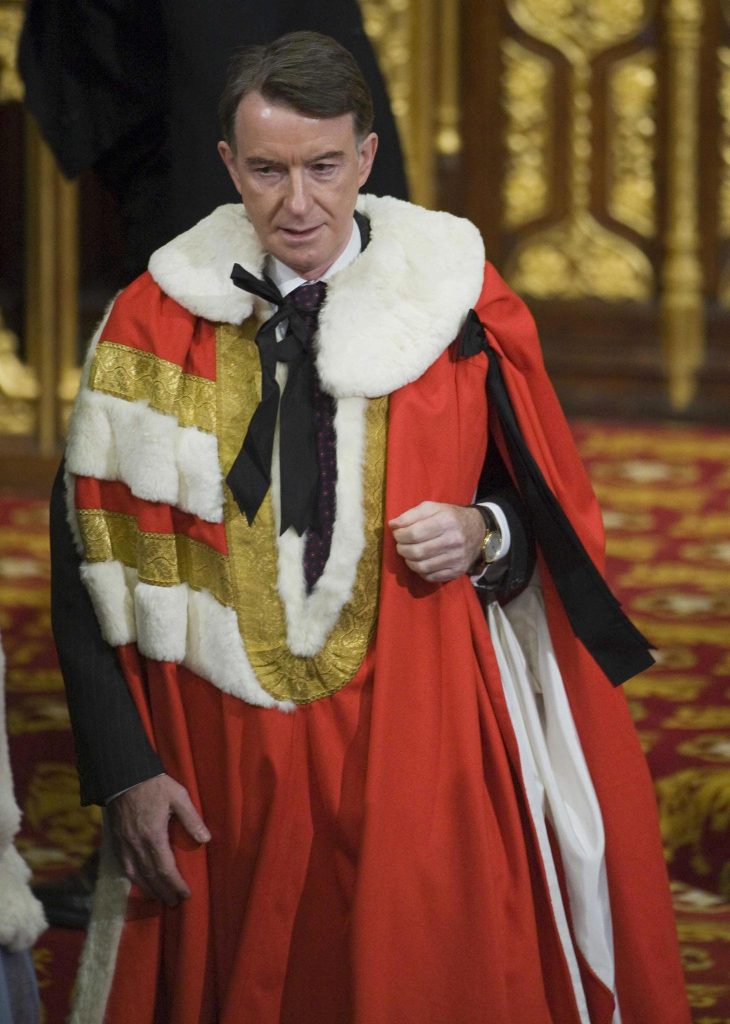
Removing a life peer is rare and would require an Act of Parliament.
If passed, Mandelson would lose the title “Lord” altogether — an extraordinary step that has only been considered in the most serious cases.
Senior ministers have described the alleged passing-on of market-sensitive government discussions as “disgraceful” and a “betrayal of trust”.
What police are examining
Misconduct in public office is a centuries-old common law offence that applies where someone in a position of public trust wilfully abuses that role. It carries a maximum sentence of life imprisonment.
Investigators will assess whether confidential information — particularly relating to government financial policy during the crash — was shared without justification and whether safeguards were breached.
At this stage, no charges have been brought.
Mandelson has previously apologised for maintaining contact with Epstein after the financier’s conviction, saying he regrets “ever having known him”, but he has disputed some of the latest claims and has not commented directly on the police review.

Political shockwaves
Opposition parties are pushing for further disclosure of documents relating to Mandelson’s vetting and his past roles.
Conservatives are expected to force a Commons vote demanding more information, while Liberal Democrats have called for a public inquiry.
Several MPs have also suggested Mandelson should be removed from the Privy Council.
The developments mark a dramatic fall for one of Labour’s most influential political figures of the past three decades, who only months ago was serving as the UK’s ambassador to Washington.
Now, with police examining evidence and legislation being prepared to remove his title, his public career appears effectively over.
More updates are expected as the investigation continues.

A PETITION opposing proposed changes for a north Pembrokeshire school is to be heard by councillors later this week.
At last May’s meeting, Pembrokeshire County Council considered a report of the School Modernisation Working Group which outlined the findings of a review of education provision in the Preseli area.
A later July meeting backed a general consultation to discontinue Cilgerran Church in Wales Voluntary Controlled School, and to establish it as a 3-11 community school.
“In particular, the review considered the extent of surplus school places in the area, set against a significant decline in the pupil population,” the council in its consultation has said.
The consultation closed on January 30.
Hundreds have opposed the proposed changes, with a petition, on the council’s own website opposing the changes recently closing after gaining 391 signatures.
Any petition of more than 100 signatures triggers a debate at one of the council’s scrutiny committees, in the case of Cilgerran that debate taking place at Pembrokeshire County Council’s February 5 schools and learning overview and scrutiny committee.
The Cilgerran e-petition, created by Louise Williams, raised concerns including the school could become part of a federation, a loss of permanent head teacher on site, a shared head teacher would have to oversee several schools, loss of funding control and the ability to maintain the school’s current healthy and stable funding, and a loss of commitment to the church, in turn could impact on the school’s and pupils values, beliefs and cultural beliefs.
It said: “Ysgol Cilgerran VC school has strong links with the Church community in Cilgerran and we believe this will have a negative impact on the children who attend the school, the community of Cilgerran and the links between the two.
“We are proud of our school ethos and values which are strengthened by our links with the church. The school has close and strong relationships with our Church in Wales federation governors one of which is also our safeguarding governor.
“Our Church Federation governors work closely with the school and are regular visitors to the school and the children. They provide vital support and guidance to the school and have a positive impact on the Children’s education. We believe these links will be weakened by this proposal to remove our VC status and we believe this is an un-necessary action.”
The proposals for Cilgerran are part of a wide range of potential education changes in the county.
Two petitions, opposing the potential closures of Manorbier and Ysgol Clydau schools, were recently heard at full council and a further petition opposing the potential closure of Stepaside School has recently been launched, which has generated enough support to be heard at a future council meeting.



Crime9 hours ago
Man spared jail after admitting child abuse image offences
Police seized devices after intelligence linked Pembrokeshire address to illegal cloud storage accounts A 23-YEAR-OLD Pembrokeshire man has avoided immediate...


Community12 hours ago
Cleddau at heart of major water reforms as ministers promise ‘fundamental reset’
New regulation plan aims to tackle pollution, sewage spills and ageing infrastructure COMMUNITIES along the River Cleddau could see tighter...


Crime14 hours ago
Man caught in hotel sting after trying to meet girl, 13
Laugharne defendant confronted by paedophile hunters at St Clears Travelodge before suspended jail term at Swansea Crown Court A LAUGHARNE...


News14 hours ago
Princess of Wales visits historic Pembrokeshire woollen mill
Catherine the Princess of Wales visited Melin Tregwynt, a historic family-owned woollen mill, today, highlighting the enduring traditions and skills...


Crime1 day ago
Arrest made after Carmarthen park stabbing investigation
Police thank community and media following public appeal to trace suspect AN ARREST has been made following last week’s stabbing...


Crime1 day ago
Search continues for attempted murder suspect after Carmarthen park stabbing
Police expand searches across riverbank and woodland as public urged to come forward with information DYFED-POWYS POLICE say their search for...


Community1 day ago
Flood alert issued for Pembrokeshire coast this evening
Pembrokeshire residents are being urged to prepare for possible flooding along the coastline between St Dogmaels, Cardigan and Amroth, after...


News2 days ago
Tributes paid to Pembroke Dock Councillor and former Mayor Pamela George
It is with great sadness that the Pembroke Dock community mourns the passing of Councillor Pamela George. Pamela, affectionately known...


Health2 days ago
Doctor struck off after sexual misconduct findings at Withybush Hospital
Tribunal history reveals medic was removed in 2012 for dishonesty before being allowed back to practise A DOCTOR accused of...


News2 days ago
Policing powers stay with Westminster as devolution debate reignites in Wales
THE UK GOVERNMENT has ruled out handing control of policing and criminal justice to Wales, triggering fresh political debate over...
-

 Health6 days ago
Consultation reveals lack of public trust in health board
-

 News7 days ago
Caldey still unsafe, survivors warn — despite Abbey’s reform claims
-

 Community6 days ago
Pembrokeshire students speak at national Holocaust Memorial Day event
-
News14 hours ago
Princess of Wales visits historic Pembrokeshire woollen mill
-
 News7 days ago
Kurtz raises Gumfreston flooding in the Senedd as petition deadline nears
-

 Crime4 days ago
Pembroke man accused of child sex offences sent to Swansea Crown Court
-

 Education6 days ago
Attendance concerns at Milford School reflect wider issue raised at the Senedd
-

 Education6 days ago
‘Vulnerable teen’ questioned by police at Milford Haven School