


Politics
How Pembrokeshire candidates will tackle the cost-of-living crisis


AHEAD of the July 4 general election, Mid and South Pembrokeshire general election hopefuls have outlined what they will do about the cost-of-living crisis.
As part of constituency changes, bits of north Pembrokeshire – including St Davids and– are joining the new Mid and South Pembrokeshire constituency.
Mid and South Pembrokeshire covers Letterston, Solva and St Davids down to Hundleton and Tenby, stretching eastwards to Amroth, Narberth and Lampeter Velfrey.
Other parts of the north of the county are now in the new Ceredigion Preseli constituency; which extends up past Aberystwyth and also includes Cilgerran, Crymych, St Dogmaels, Fishguard and Llanrhian.
There’s now a 15-candidate battle for the two seats, eight in Mid and South Pembrokeshire and seven in Ceredigion Preseli.

With a July 4 date set for the general election, the currently declared candidates for Mid and South Pembrokeshire are: Hanna Andersen (Women’s Equality Party); Alistair Cameron (Welsh Liberal Democrats); Stephen Crabb (Welsh Conservative); Stuart Marchant (Reform UK); James Purchase (Green Party); Vusi Siphika (Independent); Cris Tomos (Plaid Cymru); and Henry Tufnell (Welsh Labour).
In the run-up to the election, all candidates were asked: “What will you do to improve the economic situation/ help tackle to cost-of-living crisis in your constituency?”
Alistair Cameron (Liberal Democrat) said: “We need the UK Government to help provide the infrastructure in Pembrokeshire (particularly around the Milford Haven estuary) to develop floating offshore wind (which could provide up to one third of Britain’s domestic electricity needs) and green hydrogen. This should support our county’s economy and lead to high quality local jobs.
“I also want to see better trading links with our European partners in order to boost local trade and jobs, particularly as we have two ferry ports to Ireland in Pembrokeshire.

“We need to see government investment and support for our town centres and the tourism industry.
“Pembrokeshire has the fourth highest level of child poverty in Wales. Liberal Democrats would scrap the bedroom tax and replace the sanctions regime with an incentive-based system to help people into work.”
James Purchase (Green Party) said: “‘Ich Dien’ will be my motto (without the feathers) and I will serve the people of Pembrokeshire to ensure an economic mix of both industrial and rural that will bring well-being and a better quality of life for everyone, as well as protecting the environment and enabling us to tackle the climate crisis.

“The bitter cost-of-living crisis was largely caused by a not fit for purpose energy security policy; buying in fossil fuel energy when we should have been using nationalised Welsh wind, Welsh tides and Welsh water power. Privatisation has failed miserably and un-earned dividends are paid to shareholders whilst infrastructure is run into the ground. The Green Party is committed to public ownership of public services so that they are run to serve all.”
Hanna Andersen (Women Equality Party) said: “For 14 years the Conservatives have cut our services and driven policies that mean a third of children are now growing up in poverty.
“The old parties chase growth at all costs, but who benefits when we still can’t pay our energy bills or access care when we need it?
“At the Women’s Equality Party, we are committed to investing in care by introducing Universal Free Childcare and a National Social Care system, free at the point of use. We will end child poverty by increasing child benefit, putting a stop to the harmful two-child benefit cap and increasing carer’s allowance.”
Henry Tufnell (Labour) said: “I have been knocking on doors and listening to residents for over a year now, and the number one issue is the cost of living.
“The Tory Government has lurched from crisis to crisis, playing fast and loose with the public finances, and the result is an economy with high taxes, high interest rates, high inflation and low growth.
“Economic stability and security are vital for our county and our country. Labour’s manifesto is fully costed and fully funded, and designed to create the necessary conditions to partner with business and create economic growth.
“It is vital that we turn the page on this Tory chaos.”
Stephen Crabb (Conservative) said: “I have a reputation for getting things done in our community, and for helping people of all backgrounds. I helped lead the campaign to secure the Celtic Freeport, and I work closely with local industry to help bring new investment and jobs to the Haven Waterway.
“I have also worked hard to secure £27 million Levelling Up money for Pembrokeshire which will help to bring new activity back into our towns.
“During the pandemic, me and my team worked tirelessly to ensure that local families had their incomes protected: 18,000 people had furlough and 4,500 self-employed people received support.
“Fighting for new and better jobs for Pembrokeshire people will always be a key priority for me.”
Stuart Marchant (Reform UK) said: “In Pembrokeshire we need to revitalise our fishing fleet and support farmers to farm as well as aspiring to take full advantage of our tourist trade and possible developments.
“These three key industries have been attacked in recent years and decades and deprived Pembrokeshire of much-needed jobs. Jobs that encompassed both lower and higher payroll groups.
“I would strive to be a voice of support and change so that these three industries could play the crucial role that they ought to within the constituency. I would also seek out real and true financially rewarding developments that do provide local jobs.
“I also believe that my party’s policy of making work pay is key. A £20,000 starting tax threshold as well as a £70,000 upper tax threshold would, in my view, lead to making work pay.”
Vusi Siphika (Independant) said: “As the sixth richest country in the world we have the means and capability to ensure all our citizens maintain a comfortable standard of living.
“The cost-of-living crisis is as much about lifting up and supporting all our citizens and prioritising our working families who are in poverty, namely 24.7 per cent across Pembrokeshire.
“By enabling all our citizens to maximize their capabilities, create fair and good employment, narrow the wealth inequality via good wages supplemented by an increase in the threshold for universal credit and creating sustainable, good quality and affordable housing for all. Our roadmap to a healthier constituency.”
Cris Tomos (Plaid Cymru) said: “I recognise the inequality in economic performance of different nations and regions in the UK, Plaid Cymru propose an Economic Fairness Bill that will make levelling up a meaningful phrase, rather than a political slogan, ensuring that the impact of fiscal decisions are considered on a wider level than just what is best for the City of London.
“I campaigned in 2016 for Wales to stay in the European Union, recognising both the social and economic benefits which accrued from that membership. I respected the result of the referendum, but, with the Conservatives having led us down a path of destruction, we believe that the UK should re-enter the European Single Market and Customs Union at the earliest opportunity, in order to mitigate the impact of Brexit on Welsh business and reduce overheads and administrative costs.”


Politicians demand firm timeline from Hywel Dda
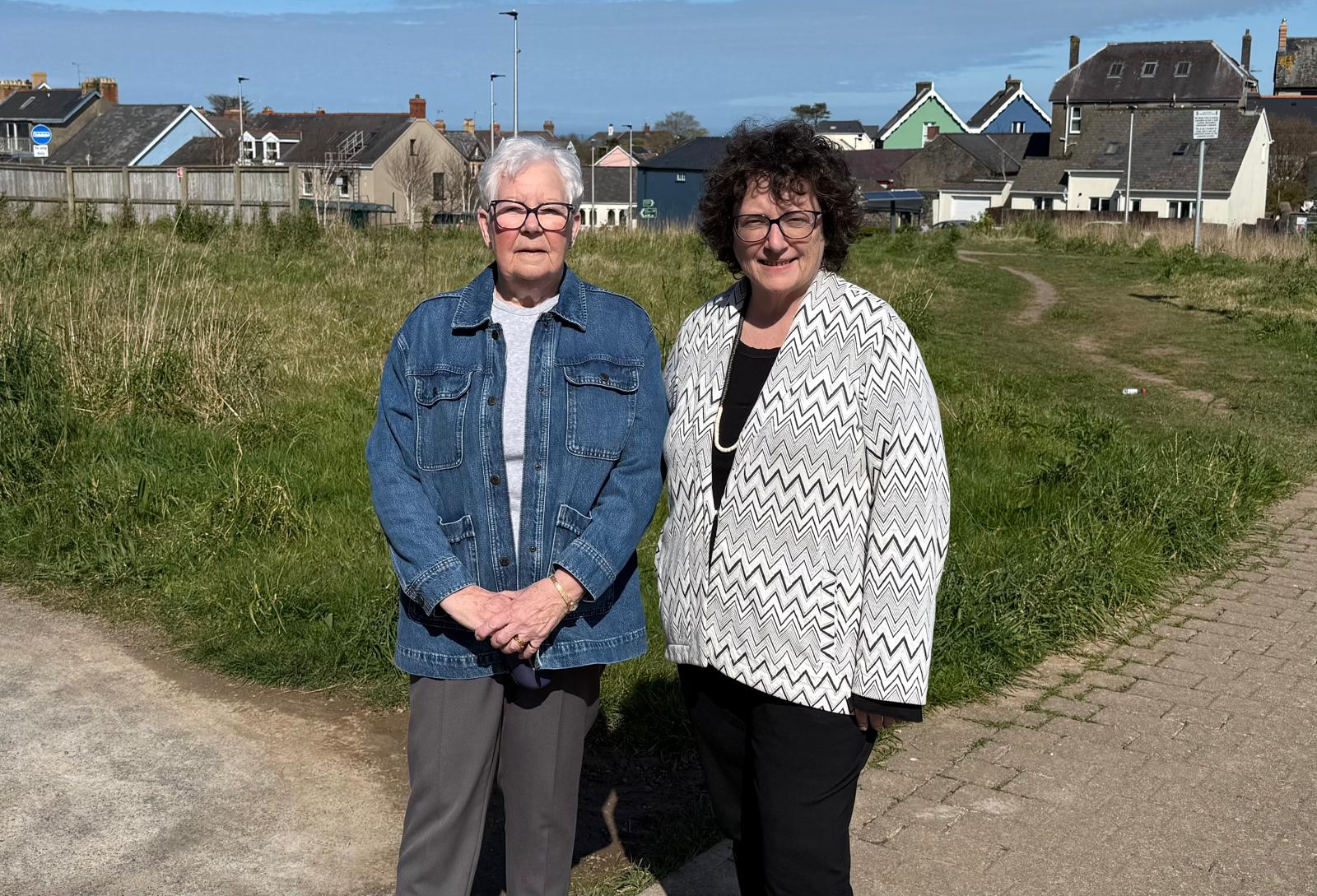
LOCAL politicians are urging Hywel Dda University Health Board to commit to delivering a long-promised integrated health and wellbeing centre for Fishguard — and to finally set out a clear timetable for the project.
The call has been made by Plaid Cymru Senedd candidate Elin Jones and Fishguard North West county councillor Pat Davies, amid growing concern that plans for the facility have stalled.
The proposed centre would serve communities across north Pembrokeshire, from St Davids and Solva to Newport, bringing a range of services together under one roof. However, despite previous expressions of support and public consultations, no confirmed funding package or delivery date has been announced.
The current health centre in Fishguard continues to operate from a building dating back to 1976.
Councillor Pat Davies said: “People in Fishguard and across north Pembrokeshire have been patient, but they deserve more than warm words. The health board has shown interest before, but interest alone is not enough.

“Our communities need a firm commitment and a clear plan. A modern, integrated health centre would transform local services and reduce the need for people to travel long distances for care that should be available on their doorstep.”
Politicians have pointed to the example of the Cardigan Integrated Care Centre, which opened in 2019. The purpose-built facility brings together GP services, dentistry, pharmacy, diagnostics, mental health and community care, and was funded through a Welsh Government budget agreement secured by Plaid Cymru.
Elin Jones said: “This is about putting in place the long-term infrastructure needed to serve north Pembrokeshire for generations.
“We have already seen what is possible when there is political will and investment. The Cardigan centre shows what can be achieved, and north Pembrokeshire deserves the same.
“I am urging Hywel Dda to move beyond the planning stage and set out a properly funded commitment to deliver this centre. If elected, I will continue to push for the investment this community needs.”
The health board has yet to confirm when, or if, the project will move forward.

Students urged to seek work overseas despite millions spent on training
NEWLY qualified paramedics in Wales are being advised to apply for jobs overseas after a recruitment freeze left graduates with no roles in the Welsh NHS.
The Welsh Ambulance Services NHS Trust has confirmed it will not be hiring newly qualified paramedics this year, citing financial and operational pressures.
The development, first reported by BBC Wales, has sparked anger among students and political figures, with some branding the situation “short-sighted” and a waste of public money.
Students left in limbo
Final-year paramedic students say they have been encouraged to look for work in countries including Canada, Australia and New Zealand.
Around 70 students are expected to graduate this summer from courses at Swansea University and Wrexham University, having completed degree-level training heavily subsidised by Healthcare Education and Improvement Wales.

Some students have undertaken placements more than 100 miles from home, expecting to move into frontline NHS roles after graduation.
Traditionally, graduates would enter the service as Newly Qualified Paramedics on Band 5 salaries, progressing to Band 6 after a period of mentorship.
However, opportunities have been shrinking. In 2025, only around a third of graduates secured paramedic posts, with others offered lower-paid technician roles instead.
‘Deeply disappointing’ decision
A spokesperson for the ambulance service said the organisation was facing a “difficult financial and operational landscape”.
They added: “Regrettably, as things stand, we are not in a position to employ newly qualified paramedics this year.”
Graduates are now being encouraged to consider roles as emergency medical technicians or to seek work elsewhere in the UK—or abroad.
Despite bursary conditions that would normally tie students to Wales, HEIW has confirmed the current cohort are now free to pursue employment outside the country.

Political backlash grows
The decision has prompted sharp criticism from across the political spectrum.
Jane Dodds described the situation as “a staggering waste of both talent and taxpayers’ money”, warning it made little sense while ambulance response times remain under pressure.
Plaid Cymru figures estimate that training costs of up to £150,000 per student could mean nearly £10 million of public investment failing to benefit Welsh patients.
Welsh Conservatives said the situation reflected a failure of workforce planning, while Welsh Labour insisted it remained committed to ensuring the NHS has the staff it needs.
Government response
A Welsh Government spokesperson said ministers were working closely with the ambulance service, HEIW and universities to address the issue and support affected graduates.
But for many students, the immediate reality is stark—after years of training for frontline roles in Wales, their careers may now begin thousands of miles away.
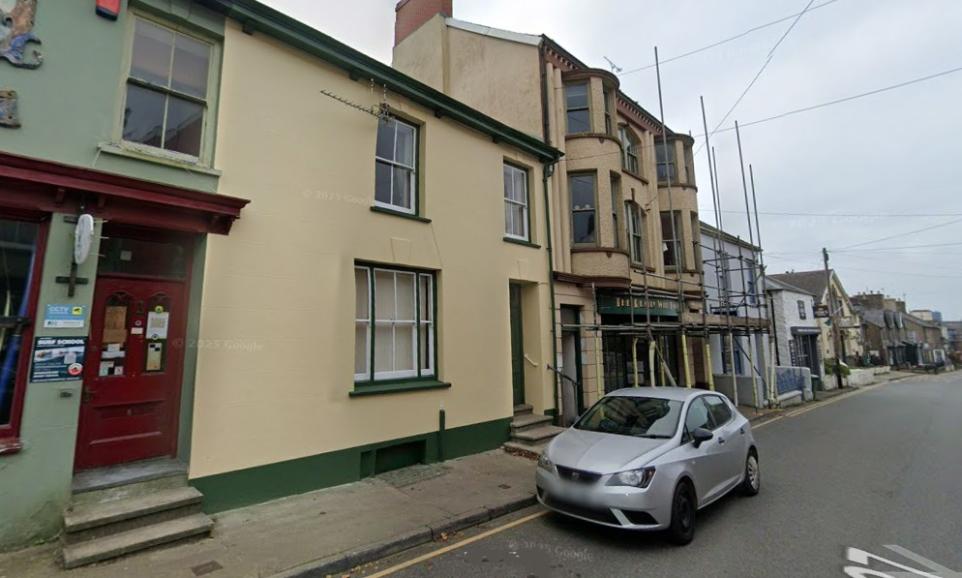
PLANS to change a former hairdressing salon in Pembrokeshire’s only city to a family-friendly coffee bar have been submitted to the national park.
In an application to Pembrokeshire Coast National Park, Gerallt Nash seeks permission for a change of use of 26 High Street, St Davids from a hairdressing salon to a family friendly coffee bar and children’s playroom.
The First floor, formerly used as accommodation of a tenant, would be used as an office and storage of business.
A supporting statement says: “It is proposed to open a family-friendly coffee bar with a children’s playroom on ground floor. It is not intended to cook food on the premises, therefore there will be no requirement for an extractor system.
“ Other than small scale repairs to part of one floor, and the installation of a sink and serving counter in the inner room (plumbing and electrics are already in place since its last use as a salon) the main work will be the redecoration of surfaces and ceilings, the provision of new light fittings and laying of new floor coverings.
“This part of High Street has been identified as a ‘commercial’ zone by PCNPA. Existing businesses close to No 26 include outdoor and surfing outlets; restaurants; clothes shops; holiday accommodation; ice cream parlour; fish and chips outlet; delicatessen and craft shops.
“The current proposal would fill a gap in the market, as most food outlets do not open until after 11am or 12pm, or only during the evenings in some cases. It would also provide somewhere for [young] families to go to unwind whilst their children can relax in the playroom.”
It says No 26, also known as ‘Preswylfa,’ was “part of a row of three shops (with dwelling accommodation above), built and owned by Thomas Evans of Solva probably during the late 1870s,” one “leased, and later purchased, by the applicant’s great grandfather, David Evans, who owned the local windmill”.
Detailing No 26’s history, it says: “Over the years, it has served as a grocery shop, veterinary surgery (before the current building at the rear of the property), café, and hairdressing salon (on at least three different occasions).
“Mrs Susan Bennett, who ran ‘Susan’s Hairdresser’ at No. 26, retired on 1 November 2024. Since then, the exterior of the property has been repainted. A new tenant, Keeley Rose, took over the lease on December 1, 2025.”
The application will be considered by park planners at a later date.



News7 hours ago
Health minister refuses to act on Withybush despite 15,000-signature petition
Senedd pressure grows as Welsh Government declines to intervene over surgery fears THE WELSH GOVERNMENT has refused to step in...

Business22 hours ago
Fishguard to Wexford rail tunnel plan backed by Elon Musk firm
Six-hour London to Dublin service proposed in £32bn project ahead of Senedd election PLANS for a rail tunnel linking west...

Charity1 day ago
Milford Haven charity honoured with King’s Award for voluntary service
A PEMBROKESHIRE charity supporting vulnerable young people has received one of the highest honours in the UK for voluntary work....


News2 days ago
Plaid Cymru launches bid to lead next Welsh Government
Party positions itself as ‘government-in-waiting’ ahead of May election PLAID CYMRU has formally launched its campaign for the 2026 Senedd...


Crime2 days ago
Police appeal after attempted child abduction in Haverfordwest
DYFED-POWYS POLICE has launched an appeal for witnesses following a reported attempted abduction of a 12-year-old girl in Haverfordwest. The...


Crime3 days ago
Gunshot fired by police during incident in Milford Haven
A POLICE officer discharged a firearm during an incident in Milford Haven on Saturday evening (March 28), prompting an investigation...


Community4 days ago
Three Amigos Easter Run roars through Pembrokeshire
MOTORCYCLE enthusiasts turned out in force today (Saturday, March 28) as the popular Three Amigos Easter Run returned to the...


Education6 days ago
Ysgol Henry Tudor reassures parents over Sikh ceremonial kirpan
School says religious item worn by pupil is secured, symbolic and non-functional YSGOL HENRY TUDOR has moved to reassure parents...

Crime6 days ago
Teen jailed after starting fire while others slept
Fire set in shared home left sleeping residents at risk and caused £130,000 damage A TEENAGER who started a fire...

Health6 days ago
GP crisis driving NHS pressure in Wales, Senedd report warns
Falling GP numbers and funding gaps blamed for worsening hospital delays THE NHS crisis highlighted earlier this week is being...
-

 Community6 days ago
Hero female officer keeps job after sexual touching finding
-
Education6 days ago
Ysgol Henry Tudor reassures parents over Sikh ceremonial kirpan
-
 Business6 days ago
Popular Italian restaurant hit with £278,000 tax bill plus £186,000 fine
-
Health6 days ago
GP crisis driving NHS pressure in Wales, Senedd report warns
-
 Climate6 days ago
Port Talbot confirmed as ‘cornerstone’ for wind — questions remain for Milford Haven
-
 Crime5 days ago
Taylor wins appeal as Crown Court quashes ‘no insurance’ conviction
-
 Business7 days ago
Haverfordwest Cartlett chocolate factory call refused
-

 Crime5 days ago
Appeal dismissed in blood sample case after court rejects PTSD defence